


Quick answer
The best portable power station for most UK buyers is the Anker SOLIX C1000 Gen 2 at £499: 1,024Wh of LiFePO4 capacity, 2,000W of output across four UK sockets and a full mains recharge in 49 minutes with its app-enabled HyperFlash mode, the fastest in this guide. If you only need phones, lights and a laptop covered, the Jackery Explorer 240 v2 does it for £189. For home backup, step up to the Bluetti Elite 200 V2 at £999. Prices checked 24 September 2026.
Our pick: Anker SOLIX C1000 Gen 2
- Best overall: Anker SOLIX C1000 Gen 2 (~£499)
- Budget pick: Jackery Explorer 240 v2 (~£189)
- Solar standout: Bluetti Elite 100 V2 (~£469)
- Campervan pick: Bluetti Elite 300 (~£1,399)
- Home backup: Anker SOLIX F3000 (~£1,899)
What is the best portable power station in the UK?
The best portable power station for most UK buyers is the Anker SOLIX C1000 Gen 2 at £499: 1,024Wh of LiFePO4 capacity, 2,000W of output across four UK three-pin sockets, and a full mains recharge in 49 minutes with its app-enabled HyperFlash mode, the fastest recharge in this guide. If you only need phones, lights and a laptop covered for a weekend, the Jackery Explorer 240 v2 does it for £189 at 3.6kg. For home backup or a campervan, step up to the Bluetti Elite 200 V2 at £999, with 2,073Wh, 2,600W of output and a 6,000-cycle battery. Prices checked 24 September 2026.
That is the short version. The long version is worth ten minutes of your time, because power stations are one of the few gear categories where the spec sheet and the price tag regularly point in different directions, and where buying the wrong size is expensive in both directions. New to the category entirely? Our power stations overview covers what these machines are, battery chemistry, care and how to buy safely; this guide is about which one to buy.
Every model here, 24 of them across EcoFlow, Anker, Bluetti, Jackery and DJI, uses LiFePO4 battery chemistry, is currently on sale in the UK, and starts at £189 for the entry units.
Not sure where to start? Answer a few questions in our Power Station Finder and it will narrow 24 models down to your shortlist.
The Portable Power Station Finder
Which portable power station should you buy? Seven questions
1. What's it mainly for?
Recommendations are computed from our verified spec inventory of every current UK model from EcoFlow, Anker, Bluetti, Jackery and DJI, with prices checked 24 September 2026.
Know which brand you want already? Each has its own page with every current model, bundle and expansion option broken down:

Bluetti
5 current models · from £199

Jackery
4 current models · from £189

DJI
4 current models · from £369
Pairing solar panels with your power station
How much power do you actually need?
Two numbers decide everything, and they answer different questions.
Watt-hours (Wh) are the fuel tank. Capacity tells you how long the station lasts. Watts (W) are the size of the pipe. Output tells you what you can plug in at all. A 288Wh station and a 3,072Wh station might charge the same phone; only one of them will boil a kettle.
Here is what the three common capacity classes actually deliver, calculated from rated capacity at a realistic 85% conversion efficiency:
- Around 288Wh (Anker SOLIX C300 DC, Bluetti Elite 30 V2): roughly 17 phone charges or 4 full laptop charges. A weekend of devices, lights and camera batteries.
- Around 1,024Wh (Anker SOLIX C1000 Gen 2, EcoFlow Delta 3 Classic, Bluetti Elite 100 V2): roughly 60 phone charges, 16 laptop charges or 45 drone batteries. Multi-day trips, plus real mains appliances in short bursts.
- From 2,000 to 3,072Wh (Bluetti Elite 300, Anker SOLIX F3000, Jackery Explorer 3000 v2): home backup and off-grid territory. About 181 phone charges from the 3,072Wh units, or a fridge through a long power cut.
For runtime on a single appliance, the maths is simple: usable capacity divided by the load. A 1,024Wh station holds about 870Wh usable, so a steady 100W load runs for roughly 8 to 9 hours.
The full recharge table below runs those numbers for every model in the guide, across phones, lanterns, drone batteries, tablets and laptops:
Recharges per full battery
How many times will it recharge your kit?
 EcoFlow
 AnkerBluettiJackeryDJI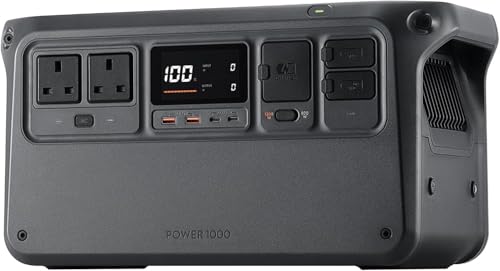
Calculated estimates from rated capacity at 85% conversion efficiency, not lab-tested. Devices: phone (iPhone 17), led lantern (Blukar 2000L, 4800mAh), drone battery (DJI Mini 4 Pro), tablet (iPad 11-inch), laptop (MacBook Air 13-inch). Real-world counts vary with temperature, charge speed and device state.
Then sanity-check the output side. A 300W output (Jackery Explorer 240 v2) handles phones, laptops, lights and camera chargers, but no heating elements. Around 1,800W (EcoFlow Delta 3 Classic, Bluetti Elite 100 V2) runs most mains appliances. For a full-size kettle you want 3,000W or more, and only a handful of models here qualify; the FAQ below names them.
One structural choice sits underneath the numbers: whether you need AC sockets at all. The cheapest and lightest unit in this guide, the £189 Anker SOLIX C300 DC, has no mains socket whatsoever, and if everything you carry charges over USB-C that is a saving rather than a compromise. Its sibling, the C300X at £249, adds two UK sockets and a 300W inverter for an extra 1.33kg. The overview page explains the AC-vs-USB split in full; the comparison table below flags every USB-only case.
How fast can you recharge a portable power station?
Faster than you would guess, and this is where the brands separate.
Mains is the everyday method. The fastest in this guide is the Anker SOLIX C1000 Gen 2: 0 to 100% in 49 minutes using its 1,600W HyperFlash mode, enabled in the app. The DJI Power 1000 V2 follows at 56 minutes, the Anker SOLIX C2000 Gen 2 at 58, and three EcoFlows (River 3 Plus, River 2 Max, Delta 3 Classic) all land on the hour.
A word on Jackery's numbers, because the marketing needs translating. The "full in 1 hour" claims on the Explorer 240 v2 and 1000 v2 are app-enabled emergency charging modes. Standard mains charging is 1.7 hours on the Explorer 1000 v2 and 2000 v2, 1.8 hours on the 3000 v2 and 2 hours on the 240 v2. Fine numbers, just not the headline ones.
Solar is where this category gets interesting. The standout is the Bluetti Elite 100 V2: with 1,000W of panels into its built-in MPPT controller it goes from empty to full in 70 minutes, the fastest solar recharge under £500 here. At the big end, the Bluetti Apex 300 takes 2,400W of solar for a 75-minute fill, and the Anker SOLIX F3000 does 90 minutes from its 2,400W dual inputs. One caveat when you compare solar times: each figure is based on a different panel wattage (the EcoFlow River 3 Plus's 90 minutes comes from just 220W of panel), so check the chart below rather than the headline minutes.
Panel pairing matters more than brand loyalty suggests. Check the station's maximum solar input, which runs from 100W on the small Anker and Jackery units to 2,400W on the Apex 300 and F3000, and check the connector: Anker uses XT60 inputs, the Bluetti Elite 200 V2 takes MC4, Jackery's v2 stations use DC inputs sized for its SolarSaga panels, and DJI needs its own Solar Panel Adapter Module, or the 1.8kW Super Fast Charger that lets the Power 1000 V2 and Power 2000 swallow up to 1,800W of solar. Our solar panels guide covers the pairings in full.
Car charging is the slow overnight option. The River 3 Plus fills in 3.3 hours from a 220W car input; the Jackery Explorer 240 v2 takes 5 hours; the big Jackerys take a day. For van dwellers there are faster alternator chargers: EcoFlow's 500W unit takes the Delta 3 Classic to 80% in 1.8 hours, and Anker's 800W alternator option refills the C2000 Gen 2 in around 2.6 hours.
0–100% charging time
How fast does each one charge?
EcoFlowAnkerBluettiJackeryDJIManufacturer best-case 0–100% claims for the UK models, fastest first within each brand. Hover a bar for the basis of each figure.
Why are some models missing?
- Anker SOLIX C300 DC — No AC input exists (mains); solar claim is 80% not 100%
- Anker SOLIX C300X — Only 80% figures published for both mains and solar
- EcoFlow Delta 3 Max — EcoFlow's '68 min' has no labelled percentage range; solar time not published
- EcoFlow Delta 3 Max Plus — Only 0-80% figures published (47 min AC, 96 min solar)
- Anker SOLIX F3000 — Mains only: no 0-100% AC minutes published
- Bluetti Elite 100 V2 — Mains only: 80% in 45 min is the only AC figure
- Bluetti Apex 300 — Mains only: no 0-100% time for direct wall charging
We chart only published 0–100% mains figures rather than estimating, so every bar traces to a manufacturer claim.
Every model compared
The table below covers all 24 current models in this guide: capacity, output, weight, ports, solar input, charge times and live Amazon UK pricing, checked 24 September 2026. Base prices run from £189 to £1,899, capacities from 256Wh to 3,072Wh.
One UK-specific trap to flag before you read reviews written for other markets: the DJI Power 1000 V2 has 2 AC sockets in its UK and EU version. The 4-socket count you will see quoted elsewhere belongs to the US, China and Japan models.
| Image | Model | Price | Buy |
|---|---|---|---|
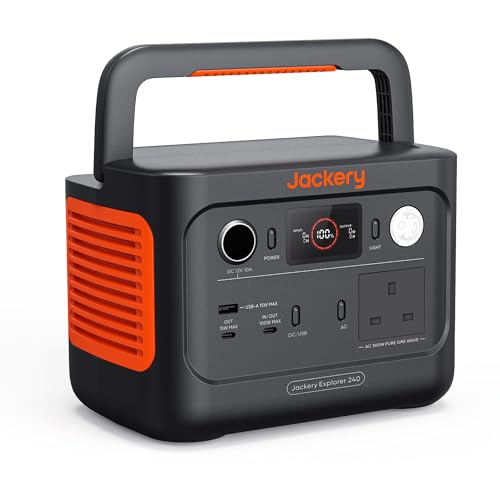 | Jackery Explorer 240 v2256Wh · 300W output · 3.6kg · up to 100W solarRead about the Explorer 240 v2 | £189 | Buy now |
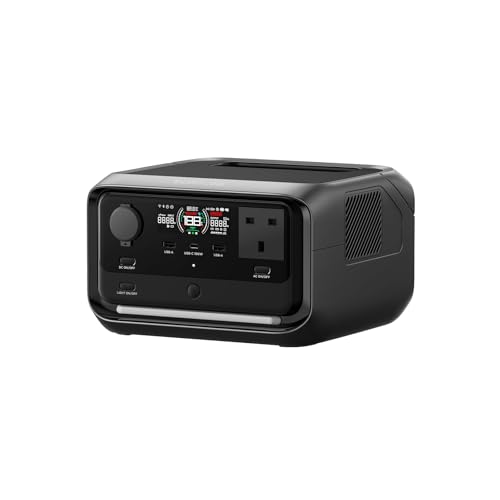 | EcoFlow River 3 Plus286Wh (expands to 858Wh) · 600W output · 4.7kg · up to 220W solarRead about the River 3 Plus | £219 | Buy now |
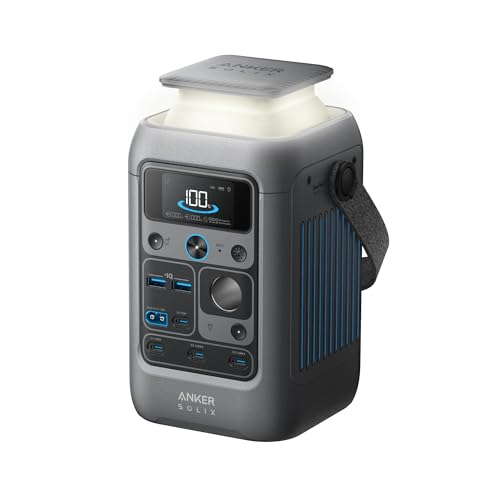 | Anker SOLIX C300 DC288Wh · USB & 12V only, no AC socket · 2.8kg · up to 100W solarRead about the SOLIX C300 DC | £189 | Buy now |
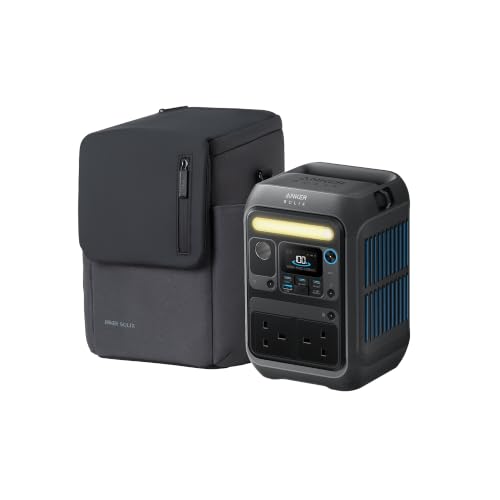 | Anker SOLIX C300X288Wh · 300W output · 4.13kg · up to 100W solarRead about the SOLIX C300X | £249 | Buy now |
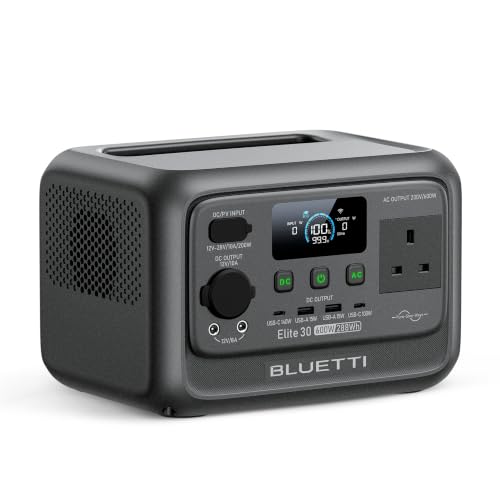 | Bluetti Elite 30 V2288Wh · 600W output · 4.3kg · up to 200W solarRead about the Elite 30 V2 | £199 | Buy now |
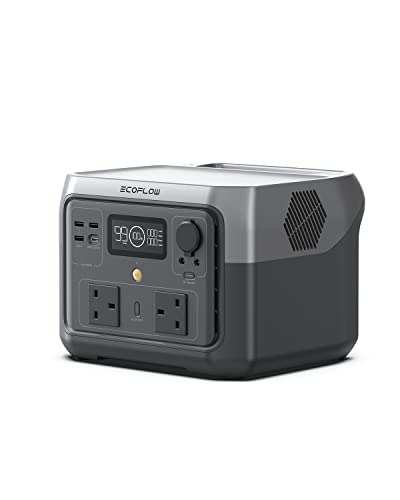 | EcoFlow River 2 Max512Wh · 500W output · 6.1kg · up to 220W solarRead about the River 2 Max | £328.99 | Buy now |
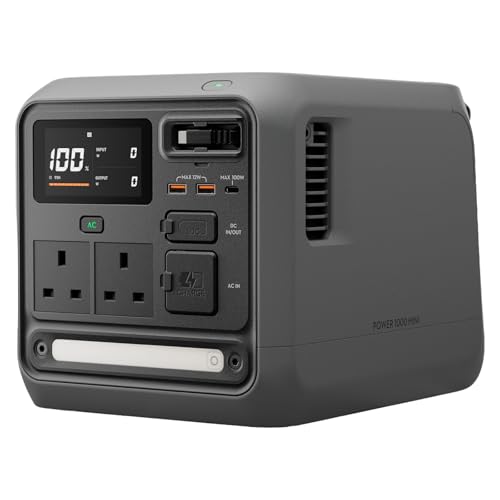 | DJI Power 1000 Mini1,008Wh · 1,000W output · 11.5kg · up to 400W solarRead about the Power 1000 Mini | £399 | Buy now |
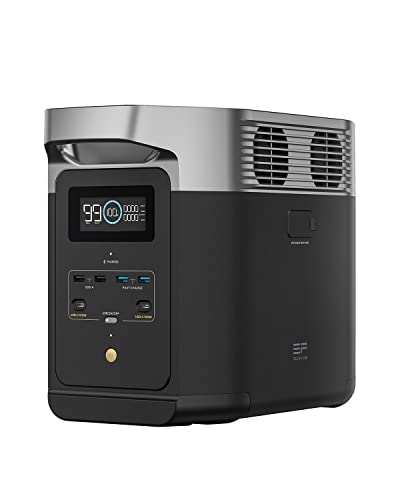 | EcoFlow Delta 21,024Wh (expands to 3,000Wh) · 1,800W output · 12kg · up to 500W solarRead about the Delta 2 | £449 | Buy now |
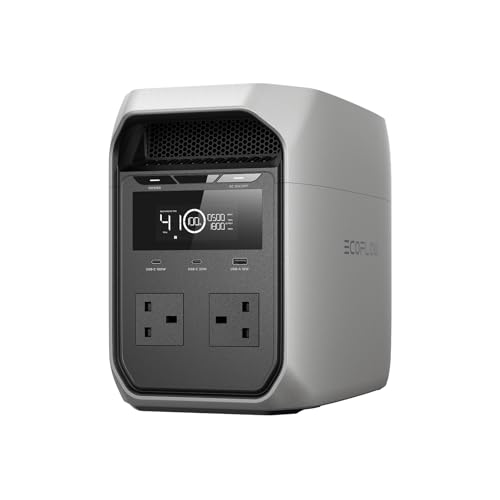 | EcoFlow Delta 3 Classic1,024Wh · 1,800W output · 12.1kg · up to 500W solarRead about the Delta 3 Classic | £399 | Buy now |
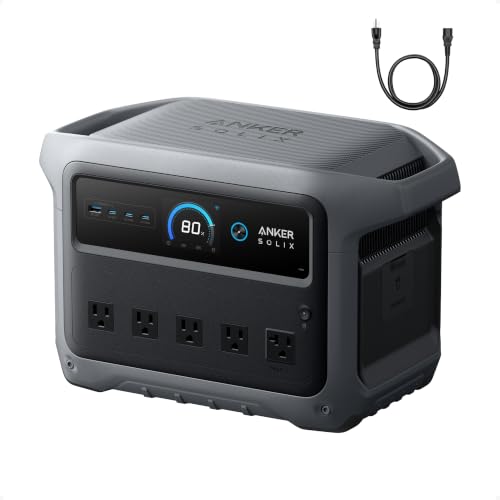 | Anker SOLIX C1000 Gen 21,024Wh · 2,000W output · 11.29kg · up to 600W solarRead about the SOLIX C1000 Gen 2 | £499 | Buy now |
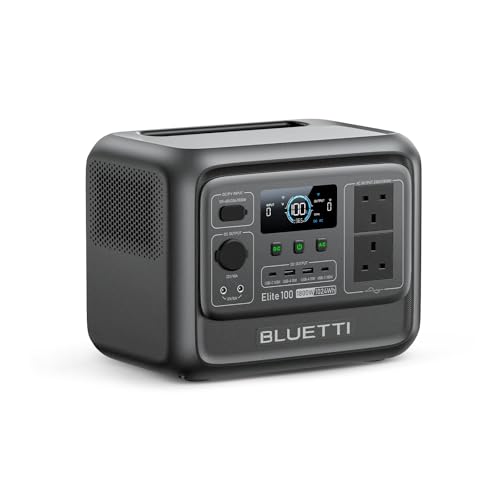 | Bluetti Elite 100 V21,024Wh · 1,800W output · 11.5kg · up to 1,000W solarRead about the Elite 100 V2 | £469 | Buy now |
| DJI Power 1000 (original)1,024Wh (expands to 11,264Wh) · 2,200W output · 13kg · up to 800W solarRead about the Power 1000 (original) | £369 | Buy now |
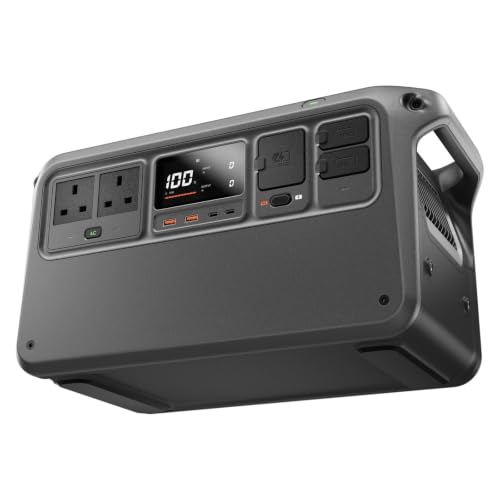 | DJI Power 1000 V21,024Wh (expands to 11,264Wh) · 2,600W output · 14.2kg · up to 1,800W solarRead about the Power 1000 V2 | £579 | Buy now |
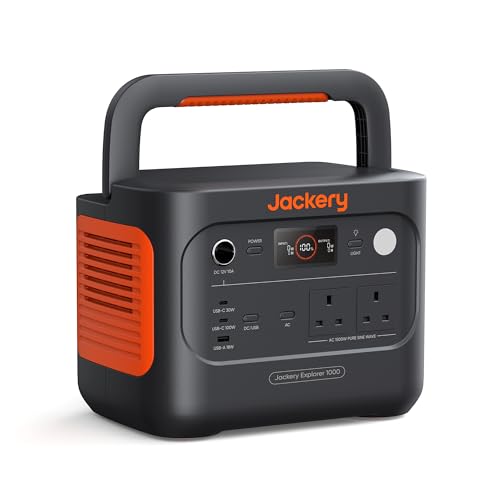 | Jackery Explorer 1000 v21,070Wh · 1,500W output · 10.8kg · up to 400W solarRead about the Explorer 1000 v2 | £499 | Buy now |
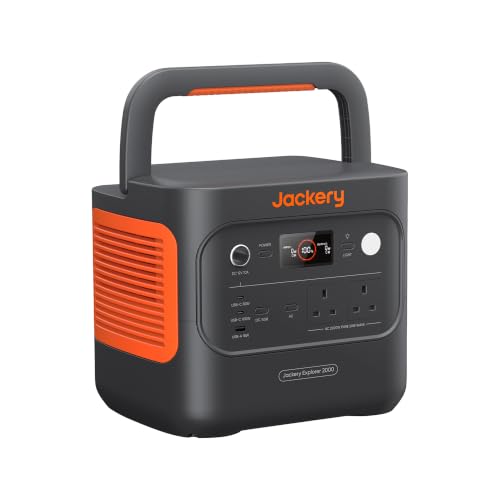 | Jackery Explorer 2000 v22,042Wh · 2,200W output · 17.5kg · up to 400W solarRead about the Explorer 2000 v2 | £899 | Buy now |
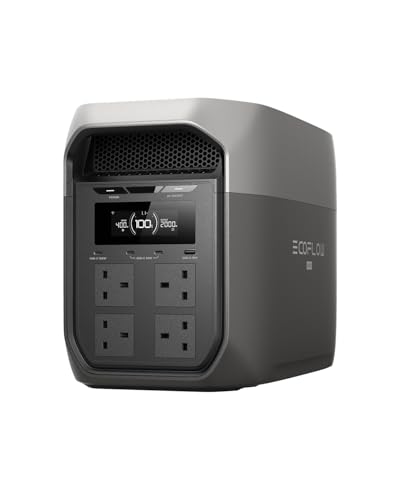 | EcoFlow Delta 3 Max2,048Wh · 2,400W output · 20.3kg · up to 500W solarRead about the Delta 3 Max | £999 | Buy now |
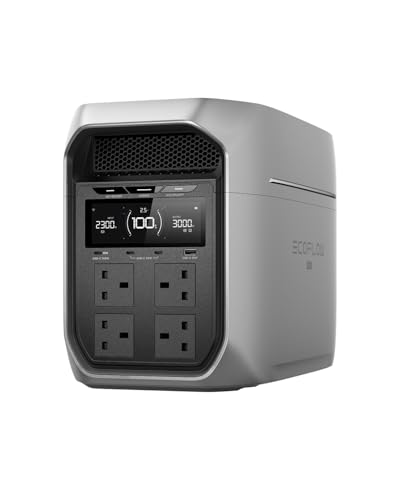 | EcoFlow Delta 3 Max Plus2,048Wh (expands to 10,000Wh) · 3,000W output · 22.1kg · up to 1,000W solarRead about the Delta 3 Max Plus | £1,099 | Buy now |
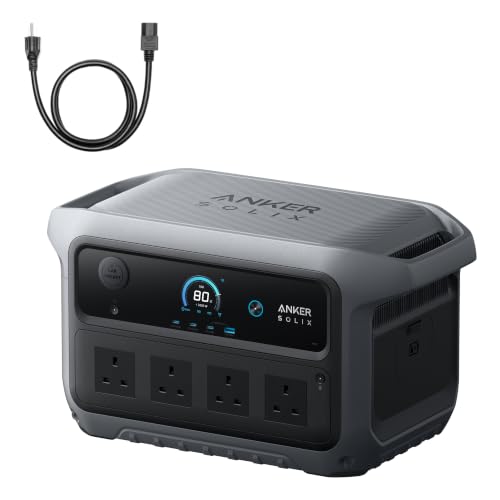 | Anker SOLIX C2000 Gen 22,048Wh (expands to 4,096Wh) · 2,400W output · 18.9kg · up to 800W solarRead about the SOLIX C2000 Gen 2 | £999 | Buy now |
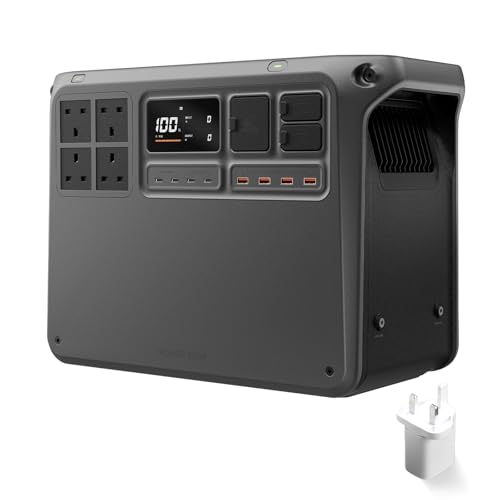 | DJI Power 20002,048Wh (expands to 22,528Wh) · 3,000W output · 22kg · up to 1,800W solarRead about the Power 2000 | £959 | Buy now |
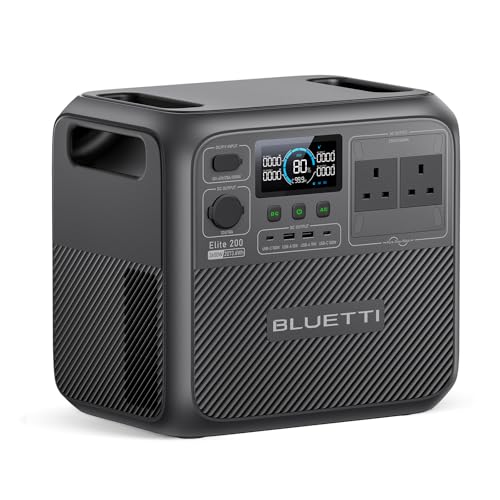 | Bluetti Elite 200 V22,073.6Wh · 2,600W output · 24.2kg · up to 1,000W solarRead about the Elite 200 V2 | £999 | Buy now |
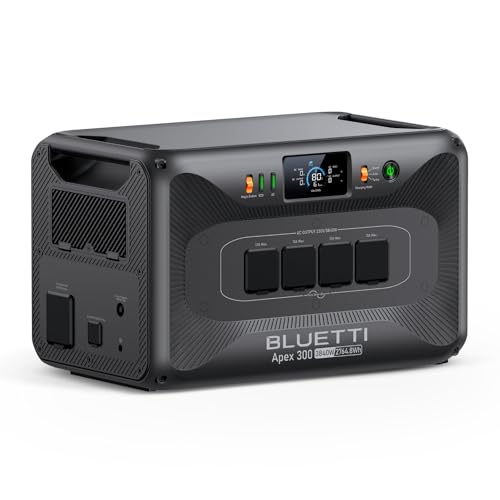 | Bluetti Apex 3002,764.8Wh (expands to 19,353.6Wh) · 3,840W output · 38kg · up to 2,400W solarRead about the Apex 300 | £1,499 | Buy now |
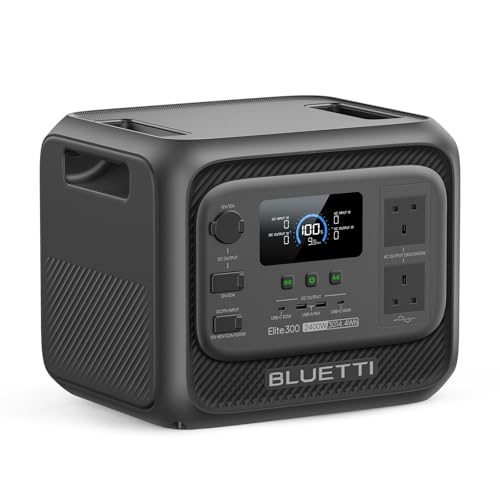 | Bluetti Elite 3003,014.4Wh · 2,400W output · 26.3kg · up to 1,200W solarRead about the Elite 300 | £1,399 | Buy now |
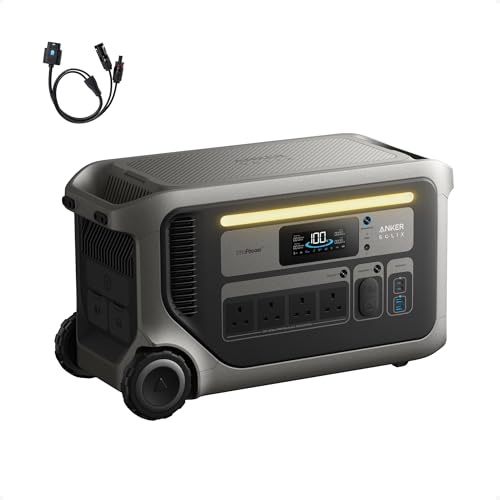 | Anker SOLIX F30003,072Wh (expands to 12,288Wh) · 3,600W output · 41.5kg (wheels) · up to 2,400W solarRead about the SOLIX F3000 | £1,899 | Buy now |
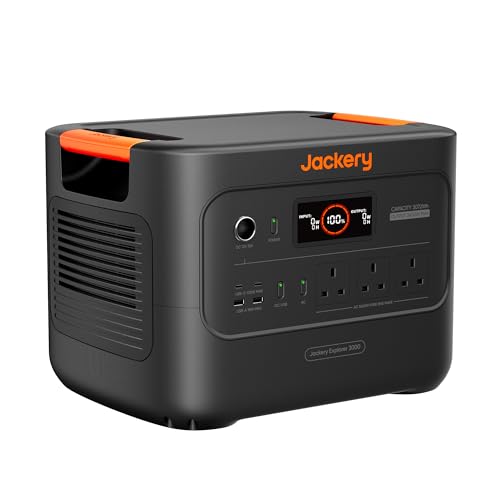 | Jackery Explorer 3000 v23,072Wh · 3,600W output · 27kg · up to 1,000W solarRead about the Explorer 3000 v2 | £1,599 | Buy now |
Tap a model name for its full range breakdown, including bundles and expansion options. Prices checked 24 September 2026.
Should you buy expandable, or buy the size you need? (Buy once or grow later)
Expandability is the cleanest brand-level split in the market, and it deserves a place in your decision because it cannot be retrofitted.
Jackery's v2 line: nothing expandable. The Explorer 240 v2, 1000 v2, 2000 v2 and 3000 v2 all lack an expansion input, so the capacity you buy is the capacity you keep.
EcoFlow's River 3 Plus: a wire-free ladder. The £219 base unit is 286Wh; stack an EB300 battery on top for 572Wh, or an EB600 for the full 858Wh, no cables. Watch the maths, though. The base unit plus the £329 EB600 comes to £548, while the River 3 Max Plus bundle, which is the same 858Wh combination sold together, was £399 at our check. Grow later if you must; if you already know you want 858Wh, the bundle wins by around £150.
Anker: one clean double. The SOLIX C2000 Gen 2 goes from 2,048Wh to 4,096Wh with a single BP2000 expansion battery. Its smaller sibling lost the feature: the original C1000 was expandable, the Gen 2 is not.
DJI: the biggest ceiling in the pool. The Power 2000 chains up to ten 2,048Wh expansion batteries over its SDC ports for a maximum of 22,528Wh, and even the Power 1000 models take five for 11,264Wh. Bluetti's Apex 300 plays the same game at scale, reaching 19,353Wh per unit with six B300K batteries, and EcoFlow's Delta 3 Max Plus grows to 10kWh.
This exact question is live in our own house right now. I am seriously considering a power station for our next major camping purchase: the power bank is great for topping everything up, but once you get into multi-days things do get more complicated. They are very popular at the moment, especially if you choose to use solar panels to charge them, and who doesn't love free electricity? What I keep weighing up is whether to go for the EcoFlow, which can be expanded with an additional battery, or the Jackery.
See the EcoFlow River 3 Max Plus (858Wh bundle) on AmazonWhich portable power station is best for you?
Best for home backup
Anker SOLIX F3000, £1,899
It stores 3,072Wh, pushes out 3,600W (enough for anything in a UK kitchen), rolls on built-in wheels with a towing handle because at 41.5kg it is not a carry item, and expands to 12,288Wh with up to three BP3000 batteries. Its 20ms UPS switchover keeps essentials running when the mains drops. If you want even more output and headroom, the Bluetti Apex 300 delivers 3,840W and expands to over 19kWh, though its base unit carries no USB ports, so it is a home unit first and a campsite unit only with its hub accessory.
Best for camper vans
Bluetti Elite 300, £1,399
The headline feature is a dedicated 12V/30A DC output, which is exactly what a compressor fridge and other 12V van kit want, on top of 3,014Wh of capacity and a 6,000-cycle battery. Two traps for van buyers elsewhere in the market: no DJI model has a 12V socket at all (DJI routes DC through its own SDC ports instead), and the EcoFlow Delta 3 Classic has no 12V output either. Check the DC ports before the price.
Best for camping weekends
Jackery Explorer 1000 v2, £499
At 10.8kg it is the claimed smallest and lightest station in the 1kWh LiFePO4 class, its 1,070Wh covers a family weekend of phones, lights, camera batteries and an evening film, and 1,500W of output handles proper appliances. It was the best seller in its Amazon UK category at our September price check, and for once the crowd is right. If you want to start lighter and cheaper, the 4.7kg EcoFlow River 3 Plus at £219 has IP54 splash protection and the expansion ladder above.
Best for solar-first buyers
Bluetti Elite 100 V2, £469
Its 1,000W solar input and built-in MPPT controller refill the 1,024Wh battery in 70 minutes of good light, which turns solar from a trickle-charge afterthought into the primary way you run the thing. Nothing else near this price gets close on solar input.
Best on the smallest budget
Anker SOLIX C300 DC, £189
The cheapest and lightest way in, as long as you accept USB-C-only output. If you need a proper UK socket, the Jackery Explorer 240 v2 at £189 gives you one with 300W of output, and the Bluetti Elite 30 V2 at £199 doubles that to 600W with a 1,500W Power Lifting mode for simple heating elements.
Best for drone flyers
DJI Power 1000 V2, £579
DJI's niche is real: the SDC ports on the Power 1000 V2 and Power 2000 fast-charge Mavic, Air and Inspire flight batteries directly, which no other brand here offers. The V2 pairs 1,024Wh with 2,600W of output, a 56-minute mains recharge and expansion to 11,264Wh, so it earns its place even before the drone trick.
Buying at this end of the market rewards a little diligence: every model in this guide passes our buyer-safety checklist, which also covers the four care habits that stretch these batteries to their full ten-plus years.
FAQs
Can a portable power station power a kettle?
How long does a portable power station last?
Can a portable power station run a fridge in a power cut?
What size portable power station do I need?
What can a 1,000Wh power station actually run?
Can a portable power station run an electric heater?
Can a portable power station run a CPAP machine overnight?
Can you use any brand of solar panel with a power station?
Can a portable power station power a whole house?
Go deeper
This page is the map. The brand pages above break every current model down against the same fact base, including the configuration options and bundles for each one, and the finder will shortcut the whole thing if you would rather answer seven questions than read five pages. For the basics of owning one, from battery care to buying safely, the power stations overview has you covered.
Wherever you land, buy on the two numbers, watt-hours and watts, check the 12V ports if a van is involved, and let solar do the refilling. Free electricity takes some beating.