


Quick answer
The best power bank for most UK buyers is the Anker 25,000mAh (165W) at £69.98: three 100W USB-C ports charge a laptop and the family's phones at once, two built-in cables mean no lead-hunting, a live display shows how long each device needs, and at about 90Wh it still flies in hand luggage. For a cheap second bank, and it pays to own a couple, the £14.98 Anker 10,000mAh slim covers pockets and forgetful teenagers.
Our pick: Anker Power Bank (25K, 165W)
The clocks have gone back, the government's new Be Ready campaign literally lists "a charged power bank" on its household checklist, and Storm Boelo just left tens of thousands of UK homes in the dark. Power banks have quietly become resilience kit as well as travel kit, and the market is drowning in no-name units with invented capacity figures. This guide cuts it down to the banks we would actually buy: several of them are the ones our own family uses daily, and every pick comes from a brand with a real UK safety and warranty footprint. One buying note before the list: it pays to own a couple, especially with a family. Power banks are the kit that is always somewhere else when you need it, a cheap one per person ends the arguments, and for the Be Ready drawer a charged spare is the whole point.
Best power banks at a glance
| Image | Product | Price | Buy |
|---|---|---|---|
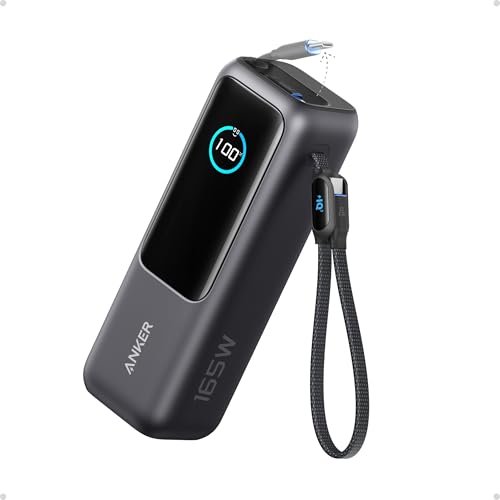 | Best overallAnker Power Bank (25K, 165W) | £69.98 | |
| 25,000mAh (~90Wh) · 3× 100W USB-C · built-in cables · fliesBest for Most people, families and laptops | |||
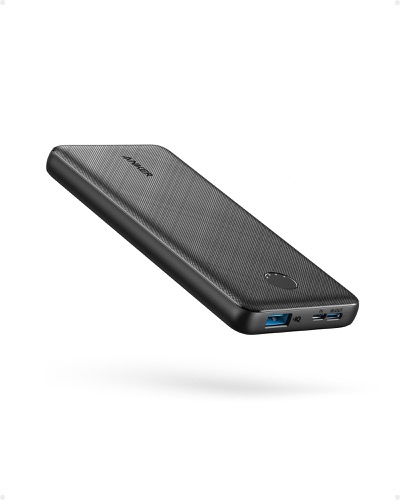 | Best first bankAnker Power Bank (10K, Slim) | £14.98 | |
| 10,000mAh · 244g, 1.5cm thin · drop-testedBest for Pockets and first power banks | |||
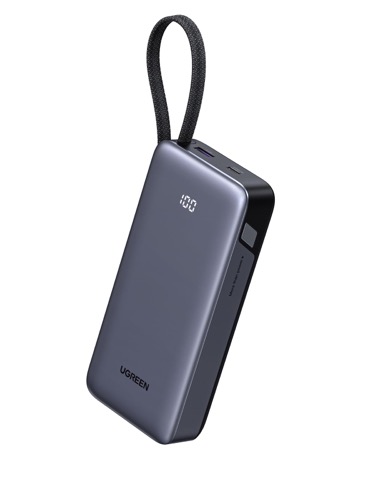 | UGREEN Nexode 45W (20K) | £23.98 | |
| 20,000mAh · 45W two-way · built-in cable/lanyardBest for Value with real charging speed | |||
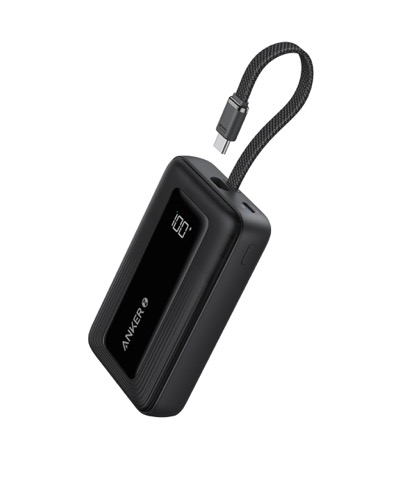 | Anker Zolo (20K, 30W) | £28.99 | |
| 20,000mAh · 30W · 10,000-bend built-in cableBest for Never carrying a cable again | |||
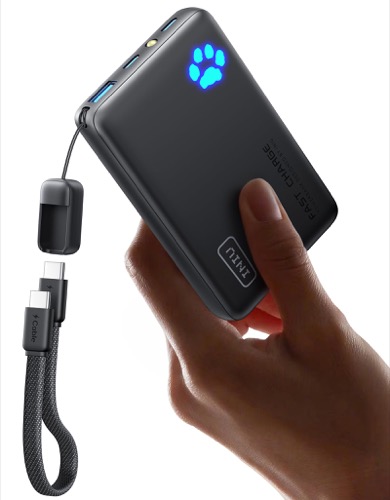 | INIU 45W (10K) | £18.63 | |
| 10,000mAh · 45W · 40% smaller TinyCell buildBest for The smallest 10K with proper speed | |||
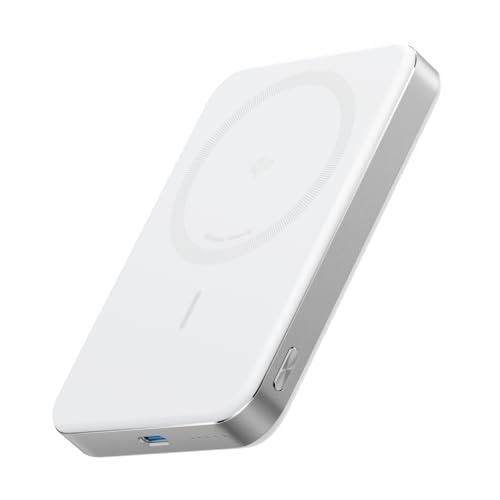 | Best MagSafeAnker MagGo (10K, Qi2) | £49.00 | |
| 10,000mAh · Qi2 15W magnetic · 30W USB-CBest for Cable-free iPhone charging | |||
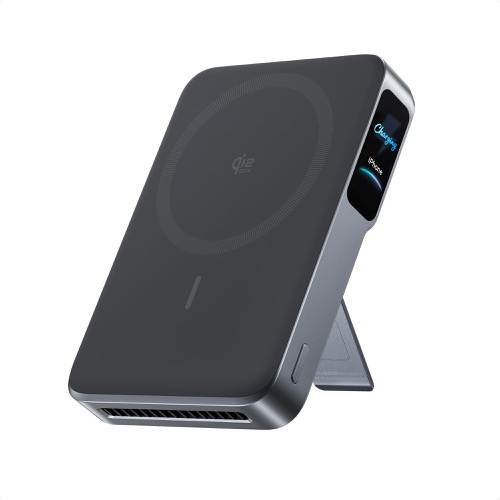 | Anker MagGo 2 Pro (Qi2 25W) | £99.99 | |
| 10,000mAh · Qi2 25W, cooling fan · smart displayBest for The fastest wireless charging made | |||
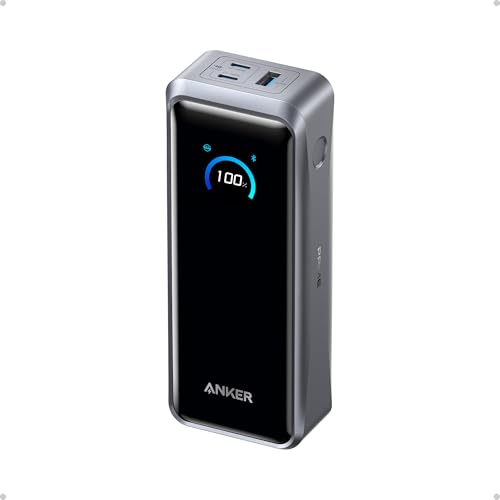 | Anker Prime (26K, 300W) | £148.99 | |
| 26,250mAh (99.75Wh) · 300W total · dual 140WBest for Flights and two-laptop days | |||
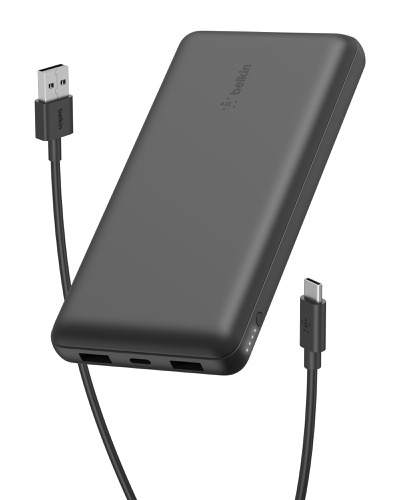 | Belkin BoostCharge (20K) | £27.99 | |
| 20,000mAh · 15W · 3 ports · 2-year warrantyBest for Simple, trusted multi-device charging | |||
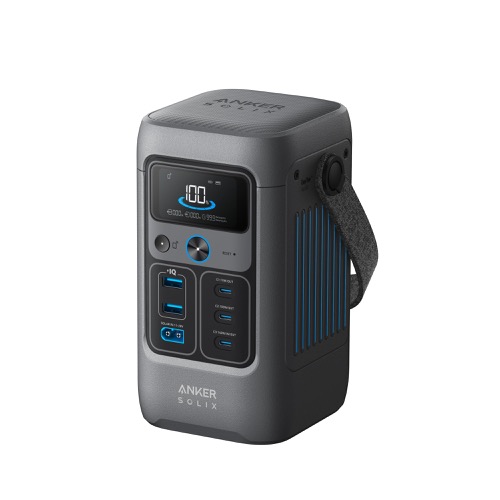 | Biggest capacityAnker SOLIX C200 DC | £129.00 | |
| 192Wh (~52,000mAh) · 200W · 5 ports · 1.9kgBest for Beyond power banks (cannot fly) | |||
Prices live where shown; otherwise from our 30 October 2026 check, and several are limited-time deals noted below.
How we choose
Three filters, applied in order. Safety first: every pick comes from a brand with UKCA-compliant products, honest capacity labelling and, crucially, a functioning recall mechanism; the no-name tier has none, and with UK lithium-battery fires up 147% since 2022 that filter is not optional (how to spot a dangerous power bank covers it in full). Honest maths second: we judge capacity by delivered energy, not label mAh, because every bank loses roughly a third of its rated figure to voltage conversion. Real use third: the Anker 25K, 10K slim and MagGo below are the banks this household actually runs, reviewed in full from months of family use, and the rest earn their slots on verified specs and deep review bases, not marketing copy.
Best overall: Anker Power Bank (25K, 165W)
The bank we would replace first if we lost it. 25,000mAh with three 100W USB-C ports and a USB-A means one unit charges a laptop at full speed and the family's phones simultaneously; two built-in cables (one retractable, one doubling as the strap) end cable-hunting; and the display shows not just percentage but how long each device needs, which changes how you plan a departure lounge or a campsite evening. At about 90Wh it remains flight-legal, and at £69.98 (22% off its usual £89.98 at our check) it is the complete answer for a multi-device household. Read the full Anker 25K review for the long version.
Best first power bank: Anker 10,000mAh Slim
The most frequently used power bank in our house, precisely because it is the least remarkable: pocket-thin, 244g, drop-tested, and good for two full phone charges. It is the one that gets grabbed by whoever forgot to charge their phone, and at £14.98 it is cheap enough to buy one per family member. If you only buy one thing on this page, buy this. The full review explains why boring is the highest compliment a power bank can earn.
Best value 20K: UGREEN Nexode 45W
The sharpest price-to-capability ratio in the guide: 20,000mAh with genuine 45W two-way speed (a Galaxy S25 Ultra to 61% in half an hour by UGREEN's figures), a built-in USB-C cable that doubles as a lanyard, three-device output and an LED charge readout, for £23.98 on its current deal (usually £29.99). UGREEN has grown into one of the most credible value brands in charging, and this is its best all-rounder.
Best built-in cable: Anker Zolo 20K (30W)
The Zolo's pitch is never carrying a cable again: the 15cm built-in USB-C lead is rated for over 10,000 bends, the cells are CB-certified, and Anker's ActiveShield monitoring checks temperatures millions of times a day. 30W output charges an iPhone to 57% in half an hour, and 20,000mAh is four full phone charges. At £28.99 it is the one to hand a less techy family member: nothing to lose, nothing to configure.
Best ultra-compact: INIU 45W 10K
INIU's TinyCell build makes this the smallest 10,000mAh unit with proper speed we could find, around 40% smaller than conventional designs, with 45W output that takes an iPhone 17 Pro Max to 76% in 30 minutes by INIU's figures, and a short detachable braided cable rather than a captive one. At £18.63 it slightly undercuts the Anker slim while out-accelerating it; the Anker counters with the longer track record. Either is a sound first bank.
Best MagSafe: Anker MagGo 10K (Qi2)
The magnetic bank this site has recommended across its hiking pages for a year: it snaps to the back of a MagSafe iPhone and charges it at Qi2 15W with no cable to snag, which matters double outdoors where the phone is also the map. 10,000mAh is 1.8 iPhone charges, there is a 30W USB-C for everything else, and at £49 on its current deal (usually £69) it has never been cheaper. The full MagGo review includes the trail stories and the comparison with its new big brother below.
Best premium wireless: Anker MagGo 2 Pro (Qi2 25W)
The MagGo's successor doubles the wireless speed to Qi2 25W, wired-speed charging with no wire, cooled by a small fan and graphene stack that holds the surface under 36°C, with a smart display and fold-flat stand. iPhone 17 Pro to 50% in 25 minutes, wirelessly, is genuinely new territory. At £99.99 it is for people whose phone lives on wireless charging; everyone else keeps £50 and buys the original.
Best for flights and big jobs: Anker Prime 26K (300W)
Anker builds this to the exact edge of the law: 26,250mAh is 99.75Wh, a quarter of a watt-hour under the airline ceiling, making it the most battery you can legally carry onto a plane. It then adds 300W of total output, enough to fast-charge two laptops at once at 140W each, a 250W dual-cable recharge, and a smart display with app control. Flight-heavy laptop workers are the obvious buyers, but do not let the travel framing narrow it: as a Be Ready drawer battery this is simply the most charge you can own in power bank form, and nobody has ever complained about having too much. At £148.99 it is the buy-once answer.
Best simple and trusted: Belkin BoostCharge 20K
Not the fastest here at 15W, but Belkin earns the slot on trust and simplicity: three ports (USB-C plus two USB-A for all the older cables in the drawer), a pre-charged out-of-box state, a 2-year warranty backed by a connected-equipment warranty up to £1,500, and 20,000mAh that Belkin rates at 78 hours of extra phone life. At £27.99 (20% off at our check) it is the set-and-forget drawer bank for a power cut.
Biggest capacity: Anker SOLIX C200 DC (192Wh)
When no power bank is enough, this is the next rung: 192Wh, about 52,000mAh in power bank language, double the flight limit, with a 140W two-way USB-C and five ports in a 1.9kg body for £129. This unit genuinely blurs the line between power bank and power station, it is that big: reputable brands stop making conventional banks at the 27,000mAh flight ceiling, and above it they build this instead. It cannot fly and it has no mains socket, but as the family's shared Be Ready reserve it embarrasses everything above it on this page for sheer stored energy, enough to keep a whole household's phones alive for well beyond the official three days. Full C200 DC review here, and if you need a mains socket too, that is power station territory, where our finder picks the right unit in seven questions.
What size power bank do you actually need?
The honest arithmetic the listings skip: a power bank delivers roughly 60 to 70% of its advertised mAh to your devices, because the cells store energy at 3.7V and your phone charges at 5V or more. So multiply the label by 0.65 and divide by your device's battery.
| Device | Energy per charge | From 10,000mAh (~24Wh usable) | From 20,000mAh (~48Wh usable) | From 25,000mAh (~60Wh usable) |
|---|---|---|---|---|
| Smartphone | 15-20Wh | ~2 charges | ~4 charges | ~5 charges |
| Tablet | 28-38Wh | Most of one | ~1.5 charges | ~2 charges |
| Laptop | ~60Wh | No (output too low) | ~1 charge (needs 45W+ output) | ~1 full charge |
| Head torch (USB-C) | ~4-6Wh | ~4-5 charges | ~8-10 charges | ~10-12 charges |
Two sizing rules follow. For one phone and a just-in-case habit, 10,000mAh is right and anything bigger is dead weight. For a family day, a laptop or the Be Ready drawer, 20,000 to 25,000mAh earns its bulk, provided the output wattage matches the job: a laptop needs 45W minimum and really wants 100W.
Can you take a power bank on a plane?
Yes, in hand luggage only, never the hold, under the ICAO rules UK airlines follow: up to 100Wh (27,000mAh) free and clear, 100 to 160Wh only with airline approval, over 160Wh banned. Everything in this guide except the C200 DC flies. Worth knowing after a power bank fire destroyed an airliner on the ground in Korea last year: several Asian and Gulf carriers now require banks kept in sight rather than in overhead bins, so pocket or seat-back is the smart habit everywhere.
The cheap bank warning
The £12 listings with heroic capacity claims are the one corner of this market to treat as dangerous rather than just disappointing. Which?'s marketplace investigation found 6 of 11 unknown-brand power banks failed basic safety tests, one melting during charging, and Electrical Safety First found 93% of electrical goods from third-party marketplace sellers failed theirs. Capacity lies are routine too: Hong Kong Customs lab-tested seized banks delivering barely 60% of their claimed figure. Every brand in this guide has UK compliance, honest labelling and a recall system; the full checklist for spotting the dangerous ones is in are cheap power banks safe?
Not sure which size? Let the finder decide
The same tool that sizes our power stations now covers power banks too: say what you need to keep running and it recommends the right battery, from a £15 pocket bank to a whole-home station, with smaller and bigger options either side. Two questions for a power bank, seven for a station.
The Portable Power Station Finder
Which battery should you buy? From pocket power banks to whole-home stations
1. How big is the job?
Recommendations are computed from our verified spec inventory of every current UK model from EcoFlow, Anker, Bluetti, Jackery and DJI, with prices checked 24 September 2026.
Keeping them charged: solar and the Be Ready drawer
The government's Be Ready checklist asks every household for a charged power bank, three days of self-sufficiency being the standard. The habit that makes it real: pick a drawer, keep two charged banks in it, and recharge them when the clocks change, the same rhythm as smoke-alarm batteries. For true grid-down longevity, a small folding solar panel (around 30W, £49-80) recharges a power bank in a day of decent light; our solar panel guide covers the pairings, including the trap of panels that will not feed certain units. And for the full power-cut picture, from torches to the free 105 line, our power cut preparation guide walks the whole Be Ready list with honest kit advice.