


Quick verdict
The EcoFlow Delta 2 is the 1kWh power station to buy if you want room to grow: 1,024Wh of LiFePO4 that expands to 3kWh with an extra battery, 1,800W of output (2,400W with X-Boost for simple heating elements) across four UK sockets, plus a 12V car socket and four USB-A ports, and an 80-minute full mains recharge for £449 at our September 2026 check. Buy it for expandability and 12V connectivity. If you only run mains and USB kit and want it £50 cheaper and faster to recharge, the EcoFlow Delta 3 Classic at £399 is the better buy; for the fastest recharge in the class, the Anker SOLIX C1000 Gen 2 at £499.
EcoFlow Delta 2: 4.6/5
1,024Wh of LiFePO4 that expands to 3kWh, with 1,800W of output and full 12V connectivity, for £449 at our September 2026 check.
The full review is below.
Should you buy the EcoFlow Delta 2?
The EcoFlow Delta 2 is the 1kWh power station to buy if you want room to grow: 1,024Wh of LiFePO4 that expands to 3kWh with an extra battery, 1,800W of output (2,400W with X-Boost for simple heating elements) across four UK sockets, plus a 12V car socket and four USB-A ports, and an 80-minute full mains recharge for £449 at our September 2026 check. Buy it for expandability and 12V connectivity. If you only run mains and USB kit and want it £50 cheaper and faster to recharge, the EcoFlow Delta 3 Classic at £399 is the better buy; for the fastest recharge in the class, the Anker SOLIX C1000 Gen 2 at £499.
Two things keep the Delta 2 on sale next to EcoFlow's newer, cheaper Delta 3 Classic. It expands, taking one Delta 2 Smart Extra Battery or one Delta Max Extra Battery to reach EcoFlow's stated 1 to 3kWh range, and it carries a full connectivity set the Classic dropped: a 12V car socket, two DC5521 barrel ports, four AC sockets and four USB-A ports. Where it gives ground is on the newer numbers. It recharges fully from the mains in 80 minutes against the Classic's 60, surges to 2,700W against 3,600W, and EcoFlow publishes no UPS switchover time and no noise figure for it where the Classic quotes both. Whether that trade is worth £50 is what the rest of this guide settles.
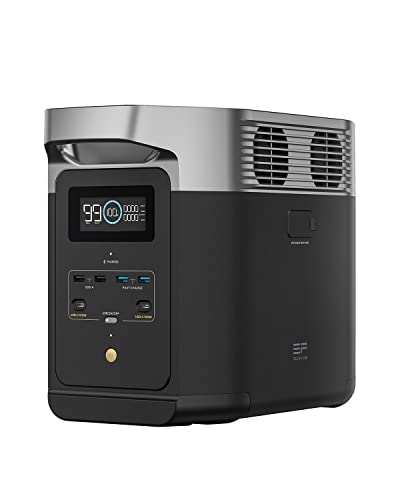
EcoFlow Delta 2 specs and buying options
Every spec below is verified against EcoFlow's UK pages, with the price checked at our 24 September 2026 check.
Delta 2, from £449
The older 1kWh Delta survives in the range for one reason: it's the only 1,024Wh EcoFlow you can expand, taking a Delta 2 or Delta Max extra battery to reach up to 3kWh. It also keeps the 12V car socket and DC ports the Delta 3 Classic dropped, with four AC sockets and 1,800W of output. The trade is an 80-minute recharge against the Classic's 60 and a £449 price against the Classic's £399 at our check. Buy it for the expansion or the 12V ports; otherwise the Classic is newer and cheaper.
- Delta 2 (1024Wh, expandable)£449Buy now
The Delta 2 is sold as a single base configuration on Amazon UK at £449, the unit on its own with the AC charging cable. Its expandability comes from EcoFlow's separate extra batteries, one Delta 2 Smart Extra Battery or one Delta Max Extra Battery, which plug in to lift capacity toward the stated 3kWh ceiling. The station also takes up to 500W of solar for a full recharge in a claimed three hours in good light, or three to six hours depending on the panel, so a bring-your-own-panel setup works without a bundled kit.
Why the Delta 2 still exists: expansion and 12V
The Delta 2 is the one 1kWh EcoFlow in the current Amazon UK range that expands. Its rated 1,024Wh is a starting point, not a ceiling: add one Delta 2 Smart Extra Battery or one Delta Max Extra Battery and it climbs toward EcoFlow's stated 3kWh. That matters for one buyer in particular, the person buying 1kWh now who can already see home backup or off-grid use coming. Buy the growth path once rather than replacing a fixed unit in two years.
The second reason is connectivity. The Delta 2 keeps a full DC output set: a 126W 12V car socket and two DC5521 barrel ports, the exact ports a compressor cool box, a 12V fridge or other cigarette-plug kit needs, and the exact ports the Delta 3 Classic drops entirely. Add four UK AC sockets and four USB-A ports (two at 12W, two fast at 18W) alongside its two 100W USB-C ports, and it is the better-connected of the two EcoFlow 1kWh units by a clear margin.
If neither expansion nor 12V is on your list, that is the signal to look at the cheaper Classic below. If either is, the Delta 2 earns its £50 premium on the spot.
Delta 2 or Delta 3 Classic?
These two share the core: 1,024Wh of LiFePO4 and 1,800W of output, with X-Boost stretching simple resistive loads to 2,400W on both. The £50 gap buys different things in each direction.
The Delta 2 wins on connectivity and growth. It has the 12V car socket and two DC5521 barrel ports the Classic lacks, four AC sockets against two, four USB-A ports against one, and it accepts an extra battery to reach up to 3kWh where the Classic is fixed at 1,024Wh for life. For a campervan, a 12V fridge or any plan to add capacity later, this is the £449 answer.
The Classic wins on everything newer. It charges fully in 60 minutes against the Delta 2's 80, surges to 3,600W against 2,700W, publishes a 10ms UPS switchover where the Delta 2's EPS mode has no published figure, and quotes a 30dB noise ceiling where EcoFlow lists none for the Delta 2. It is also £50 cheaper at £399. What it gives up is the 12V connectivity and the expansion, the two reasons to pay the Delta 2's premium.
The rule: 12V kit or future expansion, Delta 2; mains-and-USB only, Delta 3 Classic. The Delta 3 Classic is the better buy for the buyer whose kit list never touches a cigarette plug.
Check the EcoFlow Delta 2 price on AmazonWhat can the EcoFlow Delta 2 actually run?
The numbers below are calculated estimates, not lab tests: rated capacity multiplied by an 85% usable conversion efficiency, divided by each device's battery capacity, rounded down. On 1,024Wh that gives roughly 870Wh of usable energy.
- Phone (iPhone 17, 14.4Wh): around 60 full recharges
- LED lantern (4,800mAh, 17.8Wh): around 48 recharges
- Drone battery (DJI Mini 4 Pro, 19Wh): around 45 recharges
- Tablet (iPad 11-inch, 28.9Wh): around 30 recharges
- Laptop (MacBook Air 13-inch, 53.8Wh): around 16 recharges
For continuous loads the same 870Wh divides simply: a steady 60W draw runs for around 14.5 hours, a 300W draw for just under three hours, a full 1,800W for roughly 29 minutes. On the output side, 1,800W covers microwaves, most power tools and any appliance rated to 1,800W, and X-Boost stretches the ceiling to 2,400W for simple resistive loads such as kettles and heaters. Appliances rated above 2,400W, which includes 3kW full-size kettles, stay out of reach, so check the rating plate before you plan around one. The port count is the Delta 2's strong suit here: four AC sockets, two 100W USB-C, four USB-A and a 12V car socket mean most mixed kit plugs straight in without an extension lead.
EcoFlow Delta 2 alternatives
The EcoFlow Delta 3 Classic is the value play at the same 1,024Wh for £399, £50 less: a 60-minute full recharge against 80, a 3,600W surge against 2,700W, a published 10ms UPS switchover and a 30dB noise ceiling. Its catch is the one that keeps the Delta 2 alive: no 12V output at all and no expansion. If your kit is mains and USB only, the Classic; if it is not, the Delta 2.
The Anker SOLIX C1000 Gen 2 is our overall top pick across all five brands and the upgrade at £499: 2,000W of output against 1,800W, a 49-minute recharge against 80, 600W of solar input against 500W, and a higher published 4,000-cycle battery rating. It is not expandable, though, so the Delta 2 keeps the growth path the Anker cannot offer.
The Bluetti Elite 100 V2 at £469 is the solar specialist: 1,024Wh and 1,800W with a 1,000W solar input that refills it in a claimed 70 minutes of good light, double the Delta 2's 500W ceiling, plus a 12V socket and DC ports of its own. If panels are your primary charger it is the stronger buy, but it is not expandable, so for growth the Delta 2 still leads.
EcoFlow Delta 2 FAQs
Is the EcoFlow Delta 2 expandable?
Does the EcoFlow Delta 2 have a 12V car socket?
How fast does the EcoFlow Delta 2 charge?
Should I buy the EcoFlow Delta 2 or the Delta 3 Classic?
Can the EcoFlow Delta 2 run a kettle?
Does the EcoFlow Delta 2 work as a UPS?
Weighing it against the rest of EcoFlow's range, from the River 3 Plus ladder below it to the Delta 3 Max Plus above, the EcoFlow brand guide compares every current model. Across brands, the complete portable power station buying guide ranks all 25 current models side by side, or answer a few questions in the finder for a personal shortlist.
Head to head with its rivals, we compare the Delta 2 against the Anker SOLIX C1000 Gen 2 and the Jackery Explorer 1000 v2.