


Quick answer
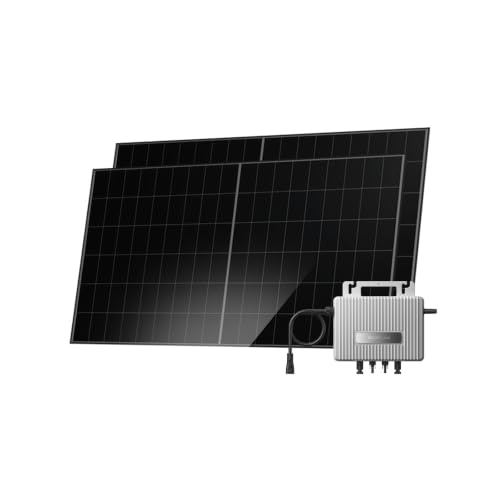
Plug-in solar is a small solar kit, one to four panels plus a micro-inverter, that feeds electricity into your home through a standard three-pin plug. It became legal in Great Britain on 27 August 2026, with output capped at 800W at the socket and up to 2,000W of panel capacity behind it. Your kit must be listed as compliant on the ENA register, and you must notify your electricity network operator within 28 days of switching on, done free in minutes at myplugin.solar. Northern Ireland is not covered.
What is plug-in solar, and is it legal in the UK?
Plug-in solar is a small solar kit, one to four panels plus a micro-inverter, that feeds electricity into your home through a standard three-pin plug. It became legal in Great Britain on 27 August 2026, with output capped at 800W at the socket and up to 2,000W of panel capacity behind it. Your kit must be listed as compliant on the ENA register, and you must notify your electricity network operator within 28 days of switching on, done free in minutes at myplugin.solar. Northern Ireland is not covered.
That one change explains why "plug in solar" has gone from a niche German search to one of the fastest-growing energy queries in the UK this year. For the first time, you can put a couple of panels on a wall, a balcony or a patio, plug them into an ordinary socket, and knock a chunk off your daytime electricity use without an electrician, scaffolding or a five-figure roof installation.
This guide covers what the law actually says, what the kits cost, what they realistically save, the registration and safety rules, and where plug-in solar fits alongside the portable power stations we cover on the rest of this site. They are different tools, and the difference matters more than the marketing suggests.
How do plug-in solar panels work?
The mechanics are refreshingly simple. The panels make DC electricity whenever daylight hits them. A micro-inverter, either built into the kit or clipped to the back of a panel, converts that into 230V AC, the same electricity your sockets carry. Plug the kit into a normal three-pin socket and your home simply uses the solar power first, drawing less from the grid while the sun is out. There is no switchover, no configuration and nothing to manage: the kettle does not know the difference.
Two consequences follow from that design. First, anything you do not use in the moment flows out to the grid, because these kits have no battery. Second, they do nothing in a power cut: grid-tied inverters shut down automatically when the mains fails, for the safety of engineers working on the lines. If backup power is what you actually want, that is a portable power station job, and we cover the difference properly further down.
When did plug-in solar become legal in the UK?
Until this summer, connecting any generation kit to your home through a plug was not permitted in the UK. That changed on 27 August 2026, when SI 2026/848 came into force and allowed what the regulations call "plug-in microgenerators" to connect through a standard three-pin plug for the first time.
The limits sit in a document with a bureaucratic name and real teeth: the DESNZ Plug-in Solar Device Interim Product Specification, version 2, published July 2026. The numbers that matter:
- 800VA maximum output at the socket (3.5A). Whatever the panels produce, the micro-inverter can never push more than that through the plug.
- Up to 2,000W of DC panel capacity behind the inverter, across a maximum of four panels, with no more than two wired in series.
- One device per household, set by G98 Issue 2 Amendment 1 2026, the engineering recommendation that governs small generation on the network.
- Above 960W of panels, the specification says consumers should consider a professional assessment of their wiring.
None of this was invented from scratch. The specification is explicitly modelled on Germany's DIN VDE V 0126-95 balcony-solar standard, and Germany has allowed Balkonkraftwerke, balcony power plants, for years. Britain is adopting a system with a long track record next door, not running an experiment.
Two caveats belong up front. First, the specification is interim: enduring standards are being developed, so details may shift. Second, this is a Great Britain regime, and Northern Ireland is out of scope. The government consultation that led to the change drew support from more than 85% of respondents, and DESNZ called the result "a practical and proportionate first step". For once, that phrasing feels about right.
Are plug-in solar panels worth it? What they cost and save
The reason this matters here, rather than being a curiosity for energy nerds, is the price of a British kilowatt-hour. UK domestic electricity is among the most expensive in the developed world: the highest among IEA members excluding taxes, and second only to Germany including taxes, on 2024 IEA data via Full Fact. Ofgem's price cap for October to December 2026 sets a unit rate of 26.32p/kWh and a standing charge of 54.83p a day, with VAT removed from electricity between 1 October 2026 and 31 March 2027.
Plug-in solar attacks the unit rate directly. While the sun is on the panels, your fridge, router, laptop and washing machine draw from the panels first and the grid second, so every solar kilowatt-hour you use is a kilowatt-hour you do not buy at 26.32p. It does nothing about the standing charge, and it produces nothing after dark, so the value depends almost entirely on how much electricity your household uses during daylight. A home that is empty from eight until six will see much less benefit than one with someone working from home and appliances running through the day.
On real numbers: Octopus estimates £50 to £150 a year in savings for its kit. Against a £450 to £650 purchase price, that is a payback measured in years, not months. It is a slow, steady trim to the bill, not a transformation, and anyone selling it as the latter is selling. Run your own numbers, because the answer genuinely changes with your household:
Break-even calculator
When does plug-in solar pay for itself?
The kit
Est. generation
782 kWh/yr
You use
469 kWh/yr
Annual saving
£123
Break-even
5.3 years
The sum: kit watts ÷ 1,000 × yield × your self-use share × unit price. Estimates, not promises: real output depends on aspect, shading, season and how your household uses power. Octopus's own estimate of £50 to £150 a year for its kit sits inside this calculator's range. Panels are warrantied for decades, so a 4 to 8 year break-even still means years of effectively free daytime electricity afterwards.
Exports are the catch. Most rooftop solar owners get paid for surplus through the Smart Export Guarantee, but SEG requires MCS or equivalent certification, which no plug-in kit currently holds, per current reporting. So most plug-in owners simply give their surplus to the grid for free, which is another reason the economics reward homes that use their daytime power rather than export it. The one exception: Octopus's Outgoing Prime export tariff (16p/kWh between 4pm and 7pm, 9p otherwise, on a 12-month fix), reported as available only if you bought Octopus's kit and Octopus supplies your energy.
Which plug-in solar kits can you buy in the UK?
The market is weeks old, so the shelf is short but real.
Octopus Energy sells one-panel (£450) and two-panel (£650) bundles: JA Solar 460W panels (roughly 1.8m x 1.1m and 22kg each), a micro-inverter capped at 800W, a 5m cable with a standard plug, and wall or ground mounting, all designed for DIY setup. Octopus states the kit is ENA-compliant, and delivery windows at the time of writing run from late September to mid November 2026.
Argos launched a dedicated plug-in solar category on 27 August, the day the law changed. Its range includes kits like the UKSOL 1260W Pro Max, two 630W panels feeding an 800W micro-inverter, which shows how the maths of the spec works in practice: more panel than plug, with the inverter enforcing the 800W ceiling.
EcoFlow's Stream system is the Amazon route. The Stream 800W micro-inverter with two 500W panels was £549 at our check and the number one product in its Amazon category. The compliance picture needs care, though. The ENA listed specific EcoFlow Stream kit and mount combinations as compliant on 22 September 2026, but the register entry reportedly covers flat-roof, facade and pitched-roof mounts rather than balcony or ground mounts, and the Amazon listing itself makes no ENA claim. So do not treat "EcoFlow Stream" as approved as a brand: match the exact kit and mount reference on the register against what is in the basket before you buy.
And Lidl? "Lidl plug in solar" is one of the breakout searches of the year, and the honest answer is that you are searching for a product that does not exist yet. Lidl sells balcony kits in Germany and was reported in March 2026 to be working on UK retail, but there is no verified UK Lidl kit at the time of writing. The search surge is anticipation. If a supermarket-priced kit lands, it will be worth a look; today it is a rumour with a famous logo on it.
To check whether any kit is compliant, there are two places to look: the ENA's type-test register, which added a "Plug-in Solar" device type in August 2026, and the independent tracker at pluginsolarregister.co.uk, which at our check showed 71 of 79 assessed devices listed as compliant. That tracker makes a point worth repeating: listed compliant is not the same as on sale.
Why I have ordered the Octopus plug-in solar bundle
I have put my own money where this article is: I recently ordered the two-panel Octopus plug-in solar bundle. It has not arrived yet, so treat this section as intent rather than review. I will add photos and real generation numbers once it is up and running.
The reasoning is exactly the daytime-usage maths from above. I often work from home, and we get through a decent amount of power during daylight hours, so I am hoping this trims a real slice off the electricity bill rather than a token one. The plan is to pair it with a smart export tariff and sell small amounts back.
I would love roof solar too, but that is obviously a much bigger investment and one for the future. Even when it happens, this kit will not be redundant; I can keep using it. The Octopus bundles cost more up front than some of the alternatives, but they recently gained ENA compliance, I am already an Octopus customer, and Octopus is releasing its Nook plug-in battery early next year, a 2kWh unit that stacks to 10.5kWh and plugs into a standard socket, which is where this setup is heading. More on that below, and real numbers to follow when the panels arrive.
Do you have to register plug-in solar? The rules and the safety checklist
Legal does not mean rule-free. There are two registration sides, and one of them is your job.
The product side is handled before you buy: the kit must be verified compliant on the ENA's type-test register, as covered above. The owner side is yours: you must notify your DNO, done in minutes at myplugin.solar, and G98 gives you 28 days from switch-on. That site is the official ENA service and routes the notification to the right network operator from your postcode. It is free. Have three things to hand: your 13-digit MPAN from your electricity bill, the inverter's make, model and serial number, and the commissioning date.
Then the safety rules, which come straight from the specification and are short enough to actually follow:
The plug-in solar safety checklist
- Plug straight into the wall socket. Extension leads, multi-way adaptors and travel adaptors are banned, and the plug carries a warning saying so.
- One plug-in device per household. That is the rule, not a suggestion.
- Socket circuits only, never lighting circuits.
- Do not use a damaged socket.
- If you have an older fuse board without RCBOs, have an electrician check it first.
- Mounting must be reversible, and is banned on timber cladding, timber balconies, ACM, MCM or HPL cladding, and any building under fire-safety remediation.
- Fit the supplied label at your consumer unit.
- Check your home insurance before installing. The specification makes that your responsibility, and insurers such as Tesco have urged safety checks.
- Renters and leaseholders need landlord or freeholder permission, plus any planning or listed-building consent that applies.
None of that is onerous. It is fifteen minutes of admin and a handful of don'ts, which is a fair trade for being allowed to plug generation kit into the same ring main as the kettle.
Can you connect plug-in solar to a battery?
No, and this catches people out, so it deserves its own section. The plug-in specification excludes batteries entirely, and requires kits to carry a warning against connecting battery storage. Whatever a retailer's ecosystem diagram implies, you cannot legally pair a plug-in kit with a storage battery today. The solar you do not use in the moment is exported, unpaid for most owners, as covered above.
Battery-integrated products already exist, but they live under the conventional rules: something like EcoFlow's Stream 5000 or Anker's Solarbank must be installed by an electrician, wired to the distribution board, not plugged into a socket.
Plug-in batteries are the expected next step rather than a fantasy. Octopus says early 2027, and its coming Nook range includes the Nook Cube, a 2kWh unit that stacks to 10.5kWh, plugs into a standard socket and is aimed squarely at renters, alongside the wall-mounted Nook Colossus in 5kWh and 10kWh sizes expanding to 30kWh, with a 12-year warranty and a reported 2027 UK launch. If storage is the part of this that excites you, the sensible move may be to wait a few months rather than buy a plug-in kit and wish it had a battery.
Plug-in solar or a portable power station?
Readers of this site will spot that a plug-in kit and a folding panel look like cousins. They are, but they do completely different jobs, and neither replaces the other.
Plug-in solar is grid-tied and fixed to your home. It cuts the bill while the sun shines, and that is the whole job. It stores nothing, and in a power cut it does nothing at all: there is no battery, and grid-tied inverters shut off when the grid goes down, deliberately, so they cannot back-feed a line an engineer is working on. A plug-in kit will not keep your fridge running in a blackout.
A portable power station with a folding panel is the opposite animal: off-grid and mobile. It works in a field, it works in a blackout, it travels to the campsite in the boot. It does not touch your electricity bill, because it never connects to your home's circuits.
Put plainly: plug-in solar trims the daytime bill, and a power station covers camping and outages. They compose rather than compete, and a household that cares about both energy costs and resilience might reasonably end up with one of each.
If the portable side is the gap in your setup, the complete power station buying guide compares every current model, the solar panels guide covers the folding panels that pair with them, and the Power Station Finder will turn your answers into a shortlist.
Plug-in solar FAQs
Is plug-in solar legal in the UK?
How does plug-in solar work?
How much money does plug-in solar save?
Can renters install plug-in solar?
Can you get paid for electricity a plug-in solar kit exports?
Does plug-in solar work in a power cut?
How many plug-in solar kits can one household have?
Is plug-in solar safe?
What happens next for plug-in solar in the UK
Plug-in solar is the most interesting thing to happen to home energy in years precisely because it is small: one socket, two panels, fifteen minutes of admin. It will not replace roof solar, and it will not replace a power station, but for the price of a decent camping battery it puts generation on the side of the house and takes a bite out of the most expensive daytime electricity in the IEA.
My own kit is on order, and this page will grow real numbers when it arrives. In the meantime, the resilience half of the equation lives in the power stations overview, the buying guide and the solar panels guide, because the sun that trims your bill at home is the same one that runs your kit in a field.