Quick answer
Cheap power banks from reputable brands are safe; cheap power banks from no-name marketplace sellers are the most dangerous product in the category. Which? found 6 of 11 unknown-brand power banks failed safety tests, with one melting as it charged, Electrical Safety First found 93% of electrical goods from third-party marketplace sellers failed theirs, and UK fire services now attend nearly five lithium-battery fires a day, up 147% since 2022. The safe route costs barely more: certified banks from Anker, INIU, UGREEN or Belkin start at £15 to £30, carry honest capacity labels, UK compliance and working recall systems. Before buying any bank, check the brand has a UK presence and a recall page, the listing states capacity in Wh as well as mAh, and the price passes the sanity test: a '50,000mAh' bank for £25 is a lie, not a bargain.
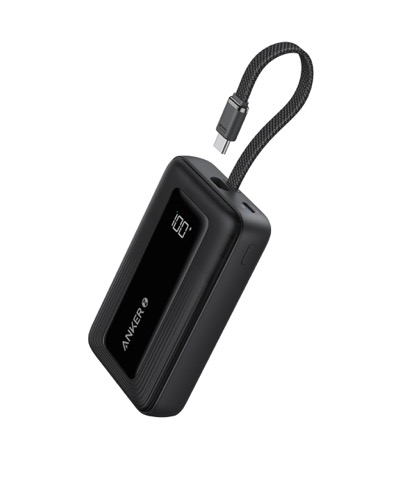
Our pick: Anker Zolo Power Bank (20K, 30W)
Are cheap power banks safe?
It depends entirely on what "cheap" means. A £15 bank from a brand with UK compliance, certified cells and a recall system is a perfectly safe purchase; our family's most-used bank costs exactly that. A £12 bank from a brand you have never heard of, with a heroic capacity claim and a seller name made of random letters, is a different product category: it is the one that fails safety tests, lies about capacity, and occasionally burns.
This is not scaremongering; the record is unusually well documented, and worth two minutes before the Black Friday listings start shouting.
What the record actually shows
The testing evidence. In Which?'s landmark marketplace investigation, 6 of 11 power banks from unknown brands failed safety tests, and one started to smoke and melt while charging. Electrical Safety First's snapshot investigations have found 93% of electrical items from third-party marketplace sellers failing safety tests, and in its 2026 round, 13 out of 13 devices bought from AliExpress, Amazon Marketplace and TikTok Shop failed, with two exploding during testing.
The fire statistics. A Freedom of Information study across 42 UK fire services found lithium-ion battery fires running at 4.8 per day in 2025, up 147% since 2022, with 45% of incidents involving phones, tablets, power packs and similar portable kit, and nearly half of all incidents happening in homes. London Fire Brigade, which attended 522 of them, puts it plainly in its ChargeSafe campaign: items bought online that do not meet UK safety standards are particularly prone to failure.
The worst cases. In the US, the Casely Power Pods recall was re-announced in April 2026 after a power bank caught fire on a woman's lap and killed her; another ignited mid-flight in February 2026. And in January 2025 a power bank in an overhead bin destroyed an Air Busan A321 on the ground, 176 people evacuated, after what Korean investigators traced to insulation breakdown inside the bank. That single fire is why several airlines now require power banks kept in sight, and why "never in the hold" is a rule, not advice.
The capacity lies. Hong Kong Customs lab-tested seized no-name banks and found them delivering roughly 62% of their claimed capacity. Even honest banks deliver only 60 to 70% of label mAh to your device because of voltage conversion; the no-name tier lies on top of that physics.
The part people get wrong: recalls are a good sign
Here is the counterintuitive bit. Anker has recalled over 1.68 million power banks across four US actions since 2023, INIU recalled 210,000 of its 2021-era 10,000mAh banks in December 2025, and Xiaomi recalled around 147,000 of its 33W 20,000mAh model, a recall that appears on the UK government's own product safety database.
That sounds damning and is actually the opposite. Lithium cells are a manufactured product with a failure rate; the question is what happens when a batch goes wrong. Reputable brands find out, publish serial numbers, refund customers and answer to regulators. The no-name tier simply vanishes and relists under a new name, and no mechanism exists to find the units already in bedrooms. When we say "buy a real brand", the recall system is most of what you are paying for. (It is also why we would still buy INIU's current models, and why we note their recall openly in our power banks roundup.)
The two-minute checks before you buy
- Does the brand exist? A real website, a UK support route, a published warranty, a recall page. If a search for the brand name plus "recall" or "support" finds nothing but the Amazon listing itself, walk away.
- Is the capacity stated in Wh as well as mAh? Honest brands state both (a 20,000mAh bank is about 74Wh). Listings that shout mAh and hide Wh are usually hiding something; listings claiming 50,000mAh+ for under £30 are lying outright.
- Sanity-check the price. Quality cells cost real money. The legitimate floor for a certified 10,000mAh bank is about £15, and for 20,000mAh about £25. Meaningfully below that, the corners cut are the ones that matter.
- Check the markings and the seller. UKCA or CE marking is required for GB sale; check the actual seller name on marketplace listings, not just the storefront.
- Check the ratings pattern. Thousands of reviews over years from verified purchases is a safety signal; a few hundred five-star reviews that all arrived last month is the opposite.
- Check the recall databases if buying second-hand or older stock: gov.uk's product recall list and the brand's own recall page, with the serial number in hand.
Using any power bank safely
The habits that matter, straight from fire-service guidance: charge on a hard surface, not bedding or a sofa; do not routinely charge unattended overnight; use a decent charger rather than the cheapest plug in the drawer; and retire any bank that swells, gets unusually hot, rattles or smells. Flying, keep banks in hand luggage always, under 100Wh (27,000mAh), and increasingly airlines want them in sight rather than in the overhead bin. And when a bank dies, it goes to battery recycling (most councils and supermarkets take them), never the bin, where crushed lithium cells are a leading cause of refuse-truck fires.
The safe cheap picks
The whole point of the checks above is that safety does not cost serious money. From our best power banks guide, the certified budget tier: the Anker 10K Slim at £14.98 (the bank our own family uses hardest), the INIU 45W 10K at £18.63, the UGREEN Nexode 20K at £23.98, and the Anker Zolo 20K below at £28.99 with CB-certified cells and continuous temperature monitoring. Every one of them is cheaper than the cheapest house fire. And if you are not sure what size you even need, the finder tool answers it in two questions.