


Quick answer
The EcoFlow River 3 Plus is the best small power station for buyers whose needs might grow: 286Wh and 600W of output (1,200W with X-Boost) at 4.7kg for £219 at our September 2026 check, stacking wire-free to 572Wh or 858Wh with extra batteries. If you already know you want the full 858Wh, buy the River 3 Max Plus bundle at £399 rather than adding a battery later, a saving of around £150. If you need to run proper mains appliances, step up to the £399 Delta 3 Classic instead.
Our pick: EcoFlow River 3 Plus
Should you buy the EcoFlow River 3 Plus?
The EcoFlow River 3 Plus is the best small power station for buyers whose needs might grow: 286Wh and 600W of output (1,200W with X-Boost) at 4.7kg for £219 at our September 2026 check, stacking wire-free to 572Wh or 858Wh with extra batteries. If you already know you want the full 858Wh, buy the River 3 Max Plus bundle at £399 rather than adding a battery later, a saving of around £150. If you need to run proper mains appliances, step up to the £399 Delta 3 Classic instead.
No other unit we cover works like this. Every rival at this size sells you a fixed box; the River 3 Plus sells you a base camp. The 286Wh unit is complete in itself, with three AC sockets, a one-hour mains recharge, a 10ms UPS switchover, IP54 splash protection and a 1m drop rating, and when a weekend of two phones becomes a family week of phones, tablets, lights and a drone, you click a battery underneath it instead of selling it and starting again. The catch is not the hardware, it is the shelf: EcoFlow's Amazon naming turns the ladder into a puzzle, and one £539 listing is not what its title says it is. This guide untangles all of it.
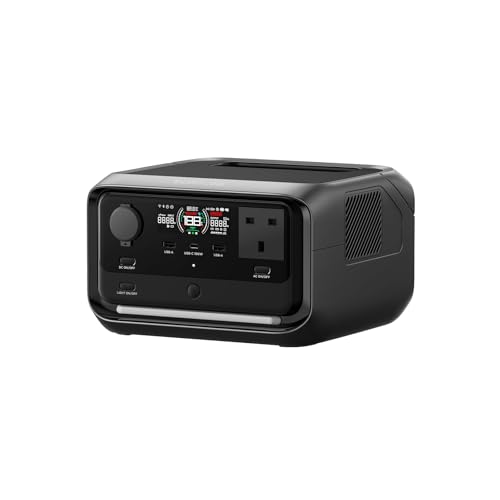
EcoFlow River 3 Plus specs and buying options
Every spec below is verified against EcoFlow's UK pages, with all eight Amazon buying configurations, including the ladder bundles, priced at our 24 September 2026 check.
River 3 Plus, from £219
The 286Wh base unit is the cleverest small power station EcoFlow makes: 600W of AC output (1,200W with X-Boost), 4.7kg, a one-hour mains recharge, IP54 splash protection and a 1m drop rating. Its party trick is wire-free stacking: an EB300 battery takes it to 572Wh, an EB600 to the full 858Wh, and the extra battery adds a 140W USB-C port while it's there. At £219 at our September 2026 check it's the cheapest EcoFlow and the only one that grows without cables. Read the configurations note below before you pay for capacity, because the bundle maths matters.
- River 3 Plus (286Wh, base)£219Buy now
- River 3 Plus + 110W solar panel£368Buy now
- EB600 extra battery (572Wh — takes the Plus to the full 858Wh)£329Buy now
- River 3 Max (572Wh = Plus + EB300 bundle)£299Buy now
- River 3 Max (572Wh) + 160W solar panel£458Buy now
- River 3 Max Plus (858Wh = Plus + EB600 bundle)£399Buy now
- River 3 Max Plus (858Wh) + 220W solar panel£848Buy now
- River 3 Plus (Wireless) — 286Wh + detachable 5000mAh magnetic power bank£539Buy now
River 3 Plus, Max or Max Plus: which rung of the ladder?
First, the decoding, because Amazon's shelf makes this look like three models when it is one. The "River 3 Max" and "River 3 Max Plus" listings are the River 3 Plus bundled with a wire-free stacking battery: an EB300 takes the 286Wh base to 572Wh, an EB600 takes it to 858Wh. EcoFlow's own UK site uses the same names, so the confusion is official. The stacking is the neat part: the battery locks under the unit with no cables, and adds a 140W USB-C port while it is there.
Now the maths, which firmly favours deciding your capacity up front. At our check the base unit cost £219 and the EB600 battery £329 separately, £548 for the pair. The Max Plus bundle, the identical pair in one box, cost £399. That is a saving of around £150 for knowing on day one that you want 858Wh. The middle rung tells the same story: the 572Wh Max bundle was £299, £80 more than the base unit for 286Wh of extra battery.
One listing deserves a warning in bold type. "River 3 Max Plus (Wireless)" at £539 is not an 858Wh station, despite the name and despite costing £140 more than the listing that is. It is the 286Wh base unit with a detachable 5,000mAh magnetic power bank, the "Wireless" referring to a 15W wireless-charging pad on that power bank. Verified from the listing's own small print and EcoFlow's UK product page. Unless a clip-on power bank is exactly what you want, skip it.
So the rung question comes down to trips. Solo weekends of phones, lights and a laptop: the £219 base unit is enough. Family weekends: the £299 Max bundle. A camping week, or any use where the station is the site's whole power supply: the £399 Max Plus bundle, bought as the bundle. And if you own the base unit already, the £329 EB600 remains the upgrade path, which is the whole point of the design.
What can the EcoFlow River 3 Plus actually run?
The numbers below are calculated estimates, not lab tests: rated capacity multiplied by an 85% usable conversion efficiency, divided by each device's battery capacity, rounded down. The base 286Wh unit gives roughly 243Wh of usable energy:
- Phone (iPhone 17, 14.4Wh): around 16 full recharges
- LED lantern (4,800mAh, 17.8Wh): around 13 recharges
- Drone battery (DJI Mini 4 Pro, 19Wh): around 12 recharges
- Tablet (iPad 11-inch, 28.9Wh): around 8 recharges
- Laptop (MacBook Air 13-inch, 53.8Wh): around 4 recharges
Climb the ladder and the same sums scale: the 572Wh Max configuration manages around 33 phone charges or 9 laptop charges, and the full 858Wh Max Plus around 50 phone charges, 25 tablet charges or 13 laptop charges. For continuous loads, the base unit's 243Wh runs a steady 60W draw for around four hours; the 858Wh stack runs the same draw for around 12 hours.
The fixed limit is output. Stacking batteries adds hours, not watts: every rung of the ladder puts out the same 600W, stretched to 1,200W by X-Boost for simple heating elements. That covers phones, laptops, lights, camera batteries, a projector, a TV and low-draw appliances, and rules out full-size kettles, microwaves and anything else rated beyond what 1,200W of X-Boost handles. If mains appliances are the job, no amount of ladder fixes it; the Delta 3 Classic at the same £399 as the Max Plus bundle trades the stacking trick for 1,024Wh and a real 1,800W inverter.
Check the River 3 Plus price on AmazonEcoFlow River 3 Plus alternatives
The Anker SOLIX C300X is the closest single-box rival: 288Wh with two UK sockets and a 300W inverter (600W SurgePad) at £249 with a carrying case at our check. It is lighter at 4.13kg and quotes 25dB, but it cannot grow, its inverter is half the River's, and its solar input caps at 100W against the River's 220W. Buy it for polish on small trips; buy the River for output and the upgrade path.
The Bluetti Elite 30 V2 matches the River's 600W output from the same 288Wh class at £199 at our check, 4.3kg with a 140W USB-C port and a 1,500W Power Lifting mode for resistive loads. Like the Anker it is sealed at its capacity, and its 70-minute mains recharge trails the River's 60. The £20 saving buys a fine box but no future.
The Jackery Explorer 240 v2 is the budget floor at £189 for 256Wh and 300W at just 3.6kg. Half the River's output, no expansion, and a two-hour standard recharge; the right buy only if the brief is phones and lights at minimum cost and weight.
EcoFlow River 3 Plus FAQs
Is the EcoFlow River 3 Max a different model from the River 3 Plus?
What is the EcoFlow River 3 Max Plus (Wireless)?
How long does the EcoFlow River 3 Plus take to charge?
Does adding an extra battery make the River 3 Plus more powerful?
Is the EcoFlow River 3 Plus waterproof?
How long will the EcoFlow River 3 Plus battery last?
Weighing it against the rest of the range? The EcoFlow brand guide compares the River ladder against every current Delta, including the £399 Delta 3 Classic that bookends this unit's biggest decision. Comparing across brands, the complete portable power station buying guide ranks all 24 current models, or let the finder shortlist for you.