


Quick answer
Buy the Anker SOLIX C300X at £249 if anything you own still charges through a three-pin plug: it takes the same 288Wh LiFePO4 core as the C300 DC and adds two UK mains sockets, a 300W inverter and a 10ms UPS for £60 and 1.33kg more. Buy the C300 DC at £189 if everything you carry charges over USB-C: at 2.8kg with two 140W USB-C ports, it is the lighter, cheaper and smarter buy. Prices from our September 2026 check.
Our pick: Anker SOLIX C300X
C300 DC or C300X: which should you buy?
Buy the Anker SOLIX C300X at £249 if anything you own still charges through a three-pin plug: it takes the same 288Wh LiFePO4 core as the C300 DC and adds two UK mains sockets, a 300W inverter and a 10ms UPS for £60 and 1.33kg more. Buy the C300 DC at £189 if everything you carry charges over USB-C: at 2.8kg with two 140W USB-C ports, it is the lighter, cheaper and smarter buy. Prices from our September 2026 check.
No pair of power stations makes the buying decision this clean. These are the same battery in two philosophies, and the gap between them, £60 and 1.33kg, is the cleanest answer in the market to a question every small-station buyer should ask before paying for an inverter: does anything I actually carry end in a three-pin plug? Empty your kit bag and check. Phones, laptops, tablets, head torches, camera batteries and most drone chargers all take USB-C now, and if that describes your bag, the DC gives you the same watt-hours for less money and noticeably less weight. One CPAP machine, camera charger or mains lantern in the bag and the answer flips to the C300X.
What the C300 DC and C300X share
The core is identical: 288Wh of LiFePO4, the long-life battery chemistry, in a boxy unit with a 100W maximum solar input through an XT60 connector, app control, a 12V/10A car socket, USB-A ports and two 140W USB-C ports capable of charging a serious laptop at full speed. Both carry seven ports, both have a built-in light for the tent or the power cut, and neither is expandable: 288Wh is what you buy and what you keep, on either unit.
They also share a recharging quirk worth knowing: Anker publishes 80% figures rather than 0 to 100% times for both, so neither appears in like-for-like full-recharge comparisons, and the times below are the manufacturer's 80% claims.
What £60 more actually buys you
The C300X, at £249 with a carrying case against £189 at our check, adds one thing and everything that follows from it: an inverter.
- Two UK three-pin sockets, 300W of AC output with a 600W SurgePad for brief spikes. The DC has no AC socket anywhere on the unit, confirmed by the port diagram in Anker's own manual.
- A UPS mode with a 10ms switchover. Plug a router or a fish tank in at home and the C300X bridges a power cut; the DC has no UPS mode.
- AC charging at 330W, for a claimed 80% in 50 minutes from the wall, with a quoted 25dB of noise from a metre away. The DC has no AC input at all and no wall adapter in the box: it recharges through its two 140W USB-C ports together (a claimed 80% in an hour, if your USB-C chargers can feed it), from up to 100W of solar (80% in 2.5 hours) or from the car.
- 1.33kg. The C300X weighs 4.13kg to the DC's 2.8kg, and it is a bigger box: 16.4 x 16.1 x 24cm against 12.4 x 12 x 20cm.
Read that last line again before defaulting to the C300X, because the DC's cuts are also its case. At 2.8kg it is the lightest unit in the pool we cover, it skips the cost, weight and conversion losses of an inverter entirely, and its port list is actually stronger on the DC side: a 100W USB-C alongside the two 140W ports, where the C300X pairs its two 140W ports with a 15W third. For a rucksack, a paddleboard base camp or a car boot full of USB kit, the DC is not the compromise option. It is the correct tool, £60 cheaper.
Anker SOLIX C300 DC and C300X specs and buying options
Both units verified against Anker's UK pages and official manuals, with every Amazon buying configuration priced at our 24 September 2026 check. The C300 DC first:
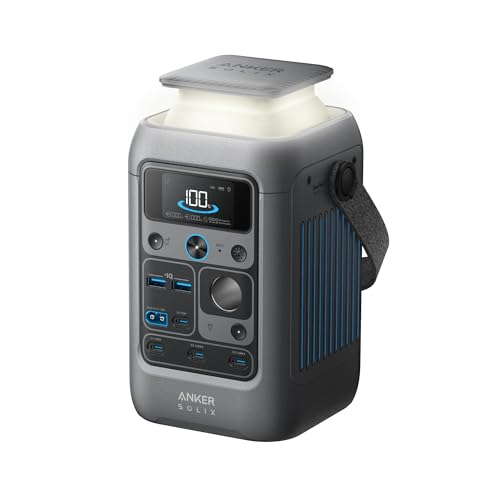
SOLIX C300 DC, from £189
288Wh, 2.8kg and seven ports, including two 140W USB-C outputs, with no AC socket anywhere on the unit. That's the point: if everything you carry charges over USB, you skip the weight and cost of an inverter and pay £189 at our September 2026 check. It recharges through the same USB-C ports (80% in a claimed hour), from solar or from the car; note there's no wall adapter in the box, so you'll need a decent USB-C charger. Not expandable, and it never pretends to be a mains replacement.
Remember the empty box: no wall adapter is included with the DC, so budget for a decent USB-C charger if you do not already own one. And the C300X:
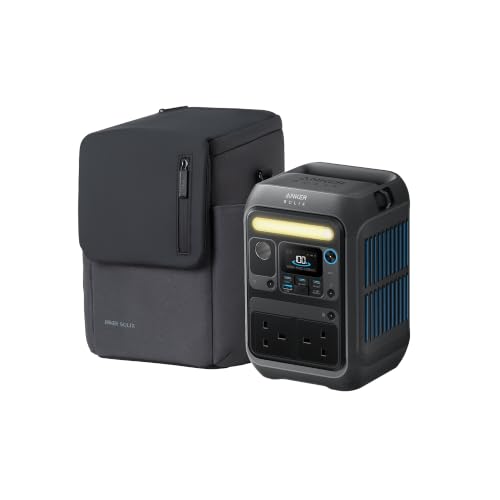
SOLIX C300X, from £249
The same 288Wh capacity as the C300 DC plus the things it deliberately leaves out: two UK three-pin sockets, a 300W inverter (600W SurgePad), AC charging and a 10ms UPS mode, for an extra 1.33kg at 4.13kg. At £249 with a carrying case at our check, the £60 gap to its sibling is the cleanest answer in the market to what a mains socket actually costs. Buy the C300X if any of your kit still ends in a three-pin plug; buy the DC if none of it does.
Both take the same solar bundles, a 60W or 100W panel, and both cap solar input at 100W, so buy the 100W bundle or nothing; a bigger panel would be wasted on either.
What can 288Wh actually run?
The sums are identical for both units. The numbers below are calculated estimates, not lab tests: rated capacity multiplied by an 85% usable conversion efficiency, divided by each device's battery capacity, rounded down. On 288Wh that gives roughly 245Wh of usable energy:
- Phone (iPhone 17, 14.4Wh): around 17 full recharges
- LED lantern (4,800mAh, 17.8Wh): around 13 recharges
- Drone battery (DJI Mini 4 Pro, 19Wh): around 12 recharges
- Tablet (iPad 11-inch, 28.9Wh): around 8 recharges
- Laptop (MacBook Air 13-inch, 53.8Wh): around 4 recharges
That is a long weekend of devices for one or two people, on either unit. The difference is what else fits. The C300X's 300W inverter covers a mains laptop charger, a CPAP machine, a TV, a games console or a camera charger, and its 245Wh runs a steady 60W mains load for around four hours; anything rated above 300W (600W briefly, via SurgePad) is out, so this is not a kettle machine and never claims to be. The C300 DC's 300W total flows entirely through USB and the car socket, which is exactly where phones, laptops and drone batteries want it.
Buy the Anker SOLIX C300 DC on AmazonWho buys which?
The C300 DC buyer carries a modern kit bag: USB-C laptop, mirrorless camera charged over USB, drone batteries, phones, a lantern. They want minimum weight and maximum USB throughput, and they would rather spend the £60 saved on a solar panel or a better USB-C wall charger. Hikers resupplying at a car, wild campers working from a van in summer, photographers on day shoots: DC.
The C300X buyer has one foot in the mains world. Something in their bag, or their home, still needs a three-pin socket: medical kit, an older laptop brick, a monitor, the router during a power cut, a heated blanket on a cold campsite within its 300W budget. They accept 1.33kg and £60 for never being caught without AC. Family campers, home-backup dabblers and anyone who cannot say for certain their kit is all-USB: C300X.
If you are still torn, buy the C300X. The regret risk is asymmetric: an unused mains socket costs you nothing but the weight, while a needed one that is not there sends you back to the shops.
Anker SOLIX C300 DC vs C300X FAQs
What is the difference between the Anker SOLIX C300 DC and the C300X?
Does the Anker SOLIX C300 DC have a plug socket?
How do you charge the Anker SOLIX C300 DC?
Can the Anker SOLIX C300X work as a UPS?
Are the Anker SOLIX C300 DC and C300X expandable?
What solar panel works with the Anker C300 DC and C300X?
Either C300 sits at the small end of a five-model range: the Anker SOLIX brand guide compares them against the C1000 Gen 2, our overall top pick, and the bigger units above it. Across brands, the complete portable power station buying guide ranks all 24 current models, or let the finder shortlist for you.