


Quick answer
Yes, waterproof socks genuinely work: a waterproof membrane is laminated between a tough knitted outer and a soft wicking lining, so rain, puddles, mud and wet grass cannot reach your foot, and brands like DexShell rate theirs to a 15,000mm hydrostatic head. The honest limits: water can still enter over the cuff (they are socks, not waders), they run warmer and dry slower than normal socks, and heavy sweat stays closer to the skin than in a regular sock. Worn next to the skin in the right size, they turn any shoe, including mesh trainers, into wet-weather footwear from around £20. They are not for swimming or deep fords, and a radiator will kill the membrane faster than any walk.
Our pick: SEALSKINZ Raynham (All Weather Mid)
Waterproof socks sound like a scam until you understand how they are built, and then they sound obvious. The clocks have gone back, every path in Britain is six months of mud deep, and the question fills hiking forums every autumn: do these things actually work? The short answer is yes. The useful answer, the one covering how they are made, the one place they fail, what they do to sweaty feet and why the two biggest brands disagree about what to wear underneath, is this guide.
How waterproof socks work
A waterproof sock is three layers bonded into one. The outside is a tough knitted shell, typically nylon with elastane for stretch, whose job is abrasion resistance. The inside is a comfortable wicking lining, merino wool or bamboo viscose, whose job is to manage moisture against your skin. And sandwiched between them is the part that does the magic: a waterproof, breathable membrane.
Each big brand has its own: Sealskinz calls its membrane Aquasealz, DexShell uses Porelle (made, in a lovely twist, by a specialist membrane manufacturer in King's Lynn, the same Norfolk town where Sealskinz is based), and Bridgedale's StormSock uses its Hydrotech membrane. All three work the same way: a solid hydrophilic film with no holes in it. Liquid water physically cannot pass through, while sweat vapour migrates through the material itself, moving from the warm, humid side (your foot) to the cooler, drier side (outside). DexShell publishes actual numbers: a 15,000mm hydrostatic head for waterproofness and 15,000g/m²/day breathability, which is rainwear-grade performance in a sock.
Because the membrane is a laminated barrier rather than a coating, two useful things follow: waterproof socks never need re-proofing the way a jacket does, and mud, grit and sweat salts do not clog them the way they degrade some porous membranes. The waterproofing is structural. It lasts as long as the membrane does, which is why care matters so much (more below).
Do they actually work? Honestly, yes, below the cuff
Submerge a waterproof sock to the ankle in a puddle, stand in a stream while you take the photo, walk through saturated grass for an hour: your foot stays dry. This is not marketing; it is a sealed membrane, and Sealskinz is confident enough to back it with a lifetime waterproofing guarantee: if the socks lose their waterproofness, they replace them.
The honest limit is the one the brands themselves state: the cuff is open, because your leg has to go in. DexShell puts it plainly: water can run down the leg and enter from the top of the sock. Rain running down a bare calf, a puddle deeper than the sock is tall, or an over-the-top welly moment all put water inside, and a waterproof sock full of water drains nowhere. Both brands sell a mitigation: Sealskinz's Hydrostop is an elastic taping inside the cuff that reduces water tracking down the leg, and DexShell's Dexlok cuff does the same job. Mitigation, note, not a seal; Sealskinz's own guarantee excludes standing in knee-deep water. Pair the sock height to the conditions, and in proper wet weather let your waterproof trousers overlap the cuff, the same logic as jacket cuffs over gloves.
How to wear them properly
Three rules cover almost everything.
Next to the skin, in the right size. Waterproof socks are complete socks, not overshoes: the wicking lining is designed to sit against your foot. Sizing matters more than with normal socks because of the membrane: Sealskinz's legacy listing opens with "PLEASE DO NOT SIZE TOO TIGHT TO MAINTAIN WATERPROOF PERFORMANCE", and models differ: the ankle-length Wretham tells you to consider a size up, while the lightweight Wiveton suggests a size down. Check the chart on the specific model; when between sizes on a mid-weight sock, go up.
Expect them to feel more structured. Three bonded layers are bulkier than one knitted one. In roomy boots that is irrelevant; in snug trainers or cycling shoes pick the thin models built for the job, DexShell's Ultra Thin (its lowest-bulk sock) or the seamless Sealskinz Wretham.
They turn any shoe waterproof. This is the quietly brilliant use case: mesh trainers plus waterproof socks equals dry feet, with all the breathability and comfort of the shoes you actually like. Whether that beats buying waterproof trainers, and when you genuinely want both, is a big enough question that we gave it its own guide.
The sweat question
"Do waterproof socks make your feet sweat?" is the most-asked question in the category, and the honest answer is: they do not make you sweat more, but they do hold more of it near your skin than a normal sock would. The membrane breathes by vapour diffusion, which is slower than the free airflow through a knitted sock. At walking effort in UK temperatures the system keeps up and feet feel normal. Under hard, sustained effort, a fast hike uphill, a long run, your sweat production can outpace the membrane, and the inside grows damp from you rather than the weather. DexShell, to its credit, says this straight out: the idea that waterproof kit should always feel bone dry inside is a misconception, and some moisture accumulation is normal.
The practical read: for walking, dog walks, commuting and cycling they feel like good socks. For high-output efforts in mild weather, a fast shoe that drains and dries may serve you better than any membrane; waterproof socks earn their place as the temperature drops and wet feet become cold feet.
Bamboo vs merino linings: which to choose
The lining decides the sock's character, and the brands split their ranges accordingly.
Merino wool blends are the warm option: insulating even when damp, naturally odour-resistant, the right call for autumn-to-spring walking. Sealskinz builds its all-weather and cold-weather socks this way (the Raynham and Starston both run merino-blend linings), as does DexShell's trekking line.
Bamboo viscose (rayon) is the cool option: soft, highly wicking and naturally antimicrobial, used where thinness and temperature management matter most: Sealskinz's seamless Wretham ankle sock, DexShell's Ultra Thin, and, sensibly, the kids' Berney. If you have read that bamboo socks are good for sweaty feet, this is why: the fibre moves moisture quickly and resists the bacteria that make feet smell. What bamboo cannot do, in a waterproof sock or any other, is stop sweat happening; it just handles it more gracefully than cotton, which holds moisture against the skin and is the worst thing you can put inside any serious sock.
Rule of thumb: merino for warmth and winter, bamboo for close-fitting shoes, warmer days and anyone whose feet run hot.
Blisters: the surprise benefit
Here is the connection almost nobody makes. Blisters are caused by friction, and skin blisters far more easily when it is wet: NHS guidance notes friction blisters form more easily on moist skin, and the British Mountaineering Council's medical guide explains that blisters form most readily where moisture makes frictional forces greatest. Soggy skin also softens (podiatrists call it maceration), losing its mechanical strength exactly when the miles are rubbing at it.
Which means dry feet are not just comfortable; they are blister prevention. A waterproof sock that keeps rain and puddle water off your skin removes the single biggest wet-weather blister multiplier. Sealskinz leans into this with construction too: the Mautby is sold as an anti-blister sock outright, pairing a 75% bamboo rayon lining for moisture control with Hydrostop at the cuff, and the running-focused Holverstone and kids' Berney both use hand-linked seams to remove the toe ridge that starts rubs. One honest note from Sealskinz's own listing: a minority of wearers find the grippy Hydrostop taping itself can irritate skin on very long wears, so treat Hydrostop models as outdoor socks rather than all-day-every-day ones.
The counterweight: a sock too thick for the shoe creates pressure and friction of its own. If adding a waterproof sock turns your trainers tight, that is a blister risk you have introduced; size the shoe-sock system together, or choose the thin models.
Liner socks: the one thing the big brands disagree on
Should you wear a thin liner sock under a waterproof sock? Delightfully, the two market leaders give opposite answers. Sealskinz says no: its help pages state the socks are designed to be worn directly next to the skin, liners optional only for extra warmth. DexShell says yes: its advice is that liners wick moisture that would otherwise increase friction, and it makes its own liner socks to pair with its waterproof range.
Both positions are defensible, which tells you the real answer is conditional. Next-to-skin is simpler and lower-bulk, and the linings are built for it. A liner adds warmth, manages heavy sweat better, and brings the two-sock friction benefits that genuinely do reduce blisters (a US Marine Corps study found recruits in a liner-plus-wool-sock system blistered far less than those in standard single socks). If your feet run sweaty or blister-prone, try the liner route; if not, skip the bulk. We cover the whole topic, including the picks, in the liner socks guide.
The socks worth buying
Our full comparisons live in the Sealskinz vs DexShell head-to-head, the women's guide and the kids' guide, but these are the key options, prices from our 31 October 2026 check (Amazon prices vary by size and colour):
| Image | Product | Price | Buy |
|---|---|---|---|
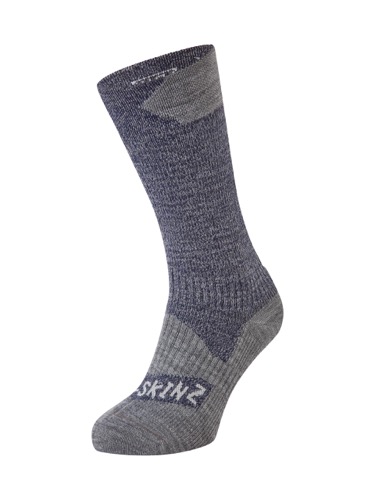 | Deal pickSEALSKINZ Raynham (All Weather Mid) | £17.79 (V1, 58% off) | |
| Merino lining · mid length · 4.5★ (464)Best for Year-round walking, the one to start with | |||
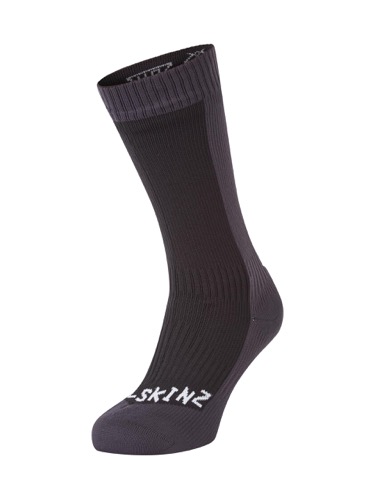 | SEALSKINZ Starston (Cold Weather Mid) | £28.00 | |
| Merino lining · 8 colours · 4.6★ (2,521)Best for Winter hiking, the Sealskinz best seller | |||
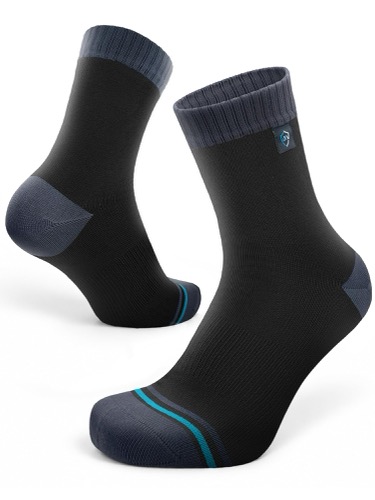 | Budget pickDexShell Ultralite | £19.79 | |
| Quarter crew · 8 colours · 4.3★ (3,185)Best for Everyday, commuting and dog walks | |||
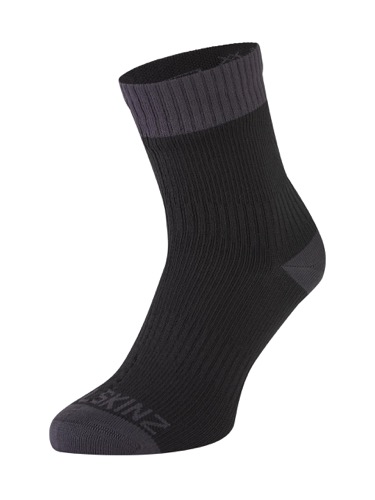 | SEALSKINZ Wretham (Ankle, Bamboo) | £24.00 | |
| Bamboo lining · seamless · 4.4★ (728)Best for Trainers and close-fitting shoes | |||
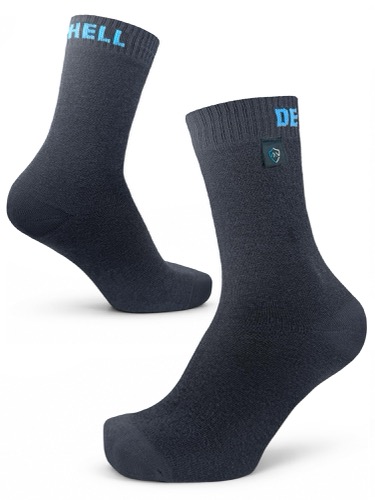 | DexShell Ultra Thin Crew | £25.92 | |
| Bamboo rayon · DexShell's thinnest · 4.3★ (203)Best for Cycling shoes and low-bulk fits | |||
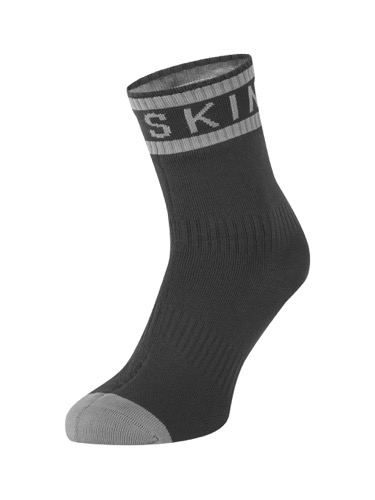 | SEALSKINZ Mautby (Anti-Blister Ankle) | £20.00 | |
| 75% bamboo lining · Hydrostop cuff · 4.3★ (248)Best for Blister-prone feet, runs and fast walks | |||
Washing and care: the rules that keep them waterproof
Heat is the membrane's enemy; every brand bans the radiator. Beyond that, the care rules genuinely differ by brand, so follow the label, not folklore:
| Sealskinz | DexShell | Bridgedale StormSock | |
|---|---|---|---|
| Wash | 40°C | 30°C, mild cycle and detergent | 40°C wool cycle, inside out |
| Dry | Low tumble or drip dry | Drip or line dry only, no tumble | Low tumble OK |
| Never | Dry clean, iron, bleach, radiators | Tumble dry, wring, iron, bleach, dry clean | Fabric conditioner, radiators |
DexShell is explicit about why: excessive heat can delaminate the layered construction, which is an unfixable death. Air-dry them inside out first, then the right way, away from direct heat, and accept the one genuine chore of the category: three bonded layers dry slowly, roughly twice as long as a normal sock, so on multi-day trips carry a second pair.
How long do waterproof socks last?
The honest answer is: it depends almost entirely on how abrasive your use is, and the internet's contradictions (claims range from months to many years) reflect that. Gentle, rotated use with correct washing keeps a membrane intact for years; hard, gritty, high-mileage use, especially trail running, wears any laminated sock measurably faster, with long-term users of the category reporting around 18 months of heavy use before leaks appear. The failure modes to watch: delamination from heat, thinning at the heel and toe, and cuff elastic tiring before the membrane does.
Two consumer protections are worth knowing. Sealskinz's lifetime waterproofing guarantee replaces socks that lose their waterproofness (lifetime meaning a reasonable product lifetime, and submersion excluded). DexShell's limited lifetime guarantee covers manufacturing defects. Different promises, worth understanding before you buy, and compared properly in the head-to-head.
When not to bother
Honesty section. Waterproof socks are the wrong tool for: swimming and submersion (water comes over the cuff, gets trapped, and the guarantee excludes it; swim socks are neoprene, a different product that warms wet feet rather than keeping them dry); deep fords (same cuff maths); hot-weather high-output efforts where a fast-draining shoe beats any membrane; and drying overnight on a radiator, which is not a use case but is how more pairs die than on any hill. For everything else wet and British, from towpath commutes to winter fells, they are one of the highest comfort-per-pound upgrades in outdoor kit.