Quick answer
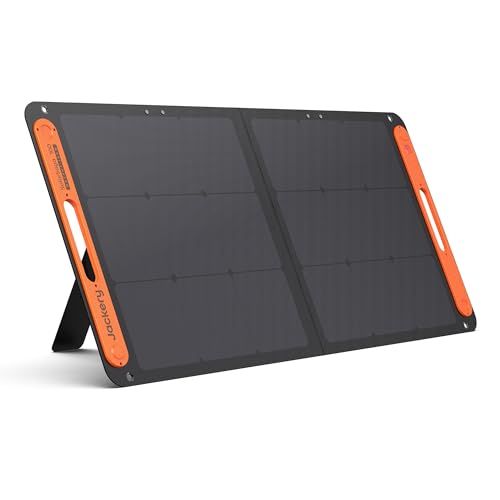
For most UK buyers the right solar panel is a 100W folder from the same brand as their power station, and our pick is the Jackery SolarSaga 100W at £199: IP68 rated, 3.6kg, adapter cable included, and matched to Jackery's Explorer stations from the 240 v2 to the 2000 v2. One compatibility rule decides everything else: the panel's open-circuit voltage must sit inside the station's solar input window, and the connector must match, Jackery's proprietary DC8020 family, EcoFlow's built-in XT60, Bluetti's MC4, Anker's XT60i cables. A same-brand panel or a bundle guarantees both.
Our pick: Jackery SolarSaga 100W
- Best all-rounder: Jackery SolarSaga 100W (~£199)
- Budget top-up: Jackery SolarSaga 40 Mini (~£69)
- Best value 200W: IBCPOWER 200W (DJI-store panel) (~£209)
- Big single panel: Anker SOLIX PS400 (~£529)
What solar panel do you need for a power station?
For most UK buyers the right solar panel is a 100W folder from the same brand as their power station, and our pick is the Jackery SolarSaga 100W at £199: IP68 rated, 3.6kg, adapter cable included, and matched to Jackery's Explorer stations from the 240 v2 to the 2000 v2. One compatibility rule decides everything else: the panel's open-circuit voltage must sit inside the station's solar input window, and the connector must match, Jackery's proprietary DC8020 family, EcoFlow's built-in XT60, Bluetti's MC4, Anker's XT60i cables. A same-brand panel or a bundle guarantees both.
The sizing logic follows the station: a 100W panel is a sensible match for anything up to about 1kWh, and past that you want 200W, 400W or several panels at once, because refilling a big battery from a small panel takes days, not hours. The two things that actually go wrong are electrical, not solar: a connector that does not fit and a voltage outside the station's input window. Both are covered below, along with every current standalone panel we track and the pairing that makes sense for each of the five station brands.
Still choosing the station itself? Start with the complete portable power station buying guide, which compares all 24 current models, then come back for the panel.
How solar charging actually works in the UK
Start with the number nobody prints on the box: a panel almost never delivers its rated wattage. The manufacturers' own bundle claims imply 65 to 87% of rated output in good sun, and our published estimates use 75% as the middle of that range. So a 100W panel is really a 75W charger on a good day, and UK weather, the season and how well you angle the panel at the sun all cut it further.
Run the maths and the sizing advice writes itself. At 75% yield, a 100W panel refills a 256Wh station like the Jackery Explorer 240 v2 in around 3.4 hours of good light, and Jackery's own figure for that exact pairing is 3.3 hours, so the estimate is honest. Point the same 100W panel at a 3,072Wh unit and you are looking at around 41 hours of good light, which in a British summer is the better part of a week.
The fix is wattage. Bigger panels, or several panels at once, charge proportionally faster, up to each station's input ceiling. At the extreme end the effect is dramatic: Bluetti claims the Elite 100 V2 goes from empty to full in 70 minutes with 1,000W of panels plugged into its built-in MPPT controller. The ceiling is the limit, though: pointing 400W of panel at a station with a 220W input gets you 220W, not 400W.
The two compatibility rules
Rule one: voltage and wattage. Every station publishes a solar input window, and the panel's open-circuit voltage must sit inside it. EcoFlow publishes the River 2 Max's window as 11 to 50V, for example, and most folding panels in the table below sit between 21 and 25V open-circuit, so they land comfortably inside windows like that. But not all panels are low-voltage: Anker states 48V PV output on its PS200 and PS400, which is exactly why you check the window before mixing brands, because a panel whose voltage sits above the station's input window can damage the unit. Wattage is simpler: it just needs to sit under the station's ceiling, which runs from 100W on the small Anker and Jackery units to 2,400W on the Bluetti Apex 300 and Anker SOLIX F3000.
Rule two: the connector. This is where brand ecosystems bite, and here is the verified map. Jackery uses its own proprietary DC8020 connector family, with adapter cables in the box. EcoFlow's current panels have the XT60 plug built into the panel cable. Bluetti works on MC4, the standard two-part connector from the rooftop solar world, on the Elite 200 V2 and Elite 300, while the Apex 300 carries two XT60 inputs. Anker ships every PS-series panel with a 0.5m XT60i cable that matches its stations' inputs. DJI is the odd one out: its stations take solar through their SDC ports, so you need DJI's Solar Panel Adapter Module or its MC4 cable, except the Power 1000 Mini, which has a built-in 400W MPPT controller and takes MC4 panels directly.
Adapter leads bridge most connector gaps for a few pounds, so a mismatched plug is an errand rather than a dead end. A mismatched voltage is the one that costs you a power station, so the connector is the second check, never the first.
Every panel worth buying
Every current standalone folding panel we track across the five brands, 17 of them from 40W to 500W, sorted by wattage with Amazon UK prices checked 25 September 2026:
| Image | Product | Price | Buy |
|---|---|---|---|
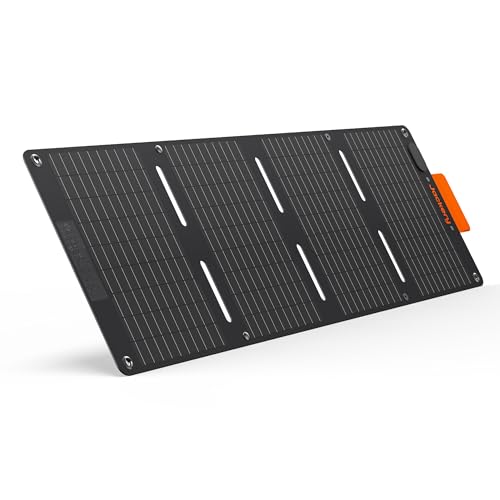 | Jackery SolarSaga 40 Mini | ~£69 | Buy now |
| 40W rated | |||
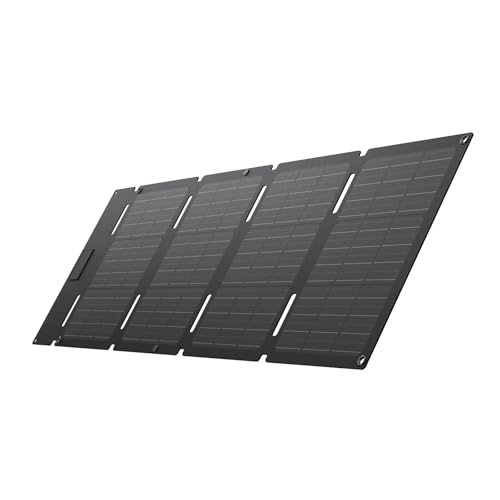 | EcoFlow 45W Portable Solar Panel | ~£79 | Buy now |
| 45W rated | |||
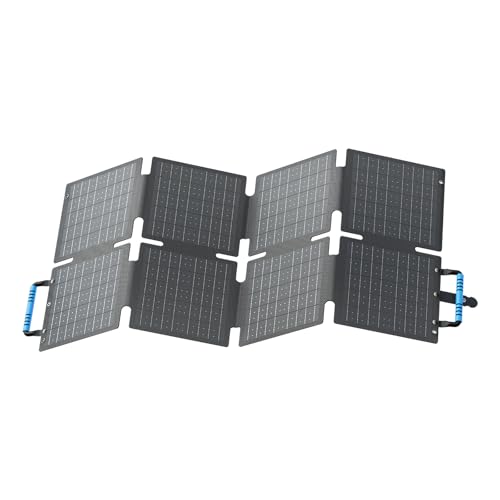 | Bluetti 60W Solar Panel (for Elite 30 V2) | ~£109 | Buy now |
| 60W rated | |||
| Jackery SolarSaga 100W | £199.00 | Buy now |
| 100W rated · Jackery proprietary · 21.6V open-circuit · 3.6kg · IP68 · 23% cellsBest for Jackery UK: Explorer 240 v2 / 500 v2 / 1000 v2 / 2000 v2 / 1000 Plus / 2000 Plus | |||
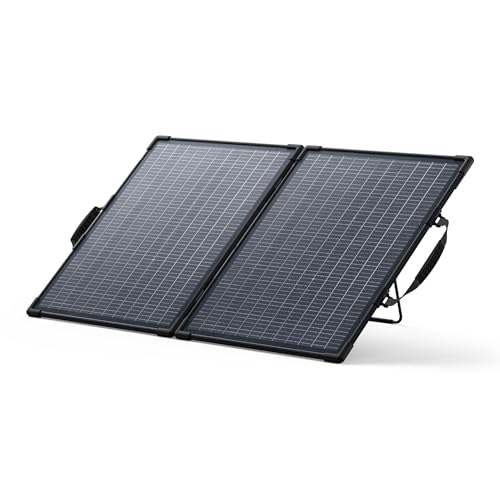 | Anker SOLIX PS100 Bifacial Portable Solar Panel | ~£179 | Buy now |
| 100W rated · cables included: 2x 2.5m solar cables + 0.5m XT60i · 2.8kg · IP68 · 25% cells | |||
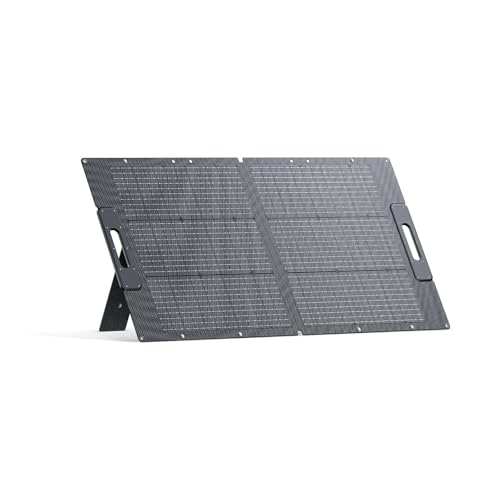 | Bluetti Solar Panel 100W | ~£199 | Buy now |
| 100W rated | |||
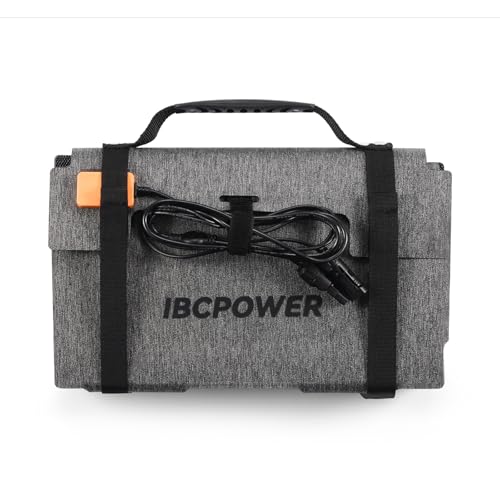 | IBCPOWER 100W Foldable Solar Panel (DJI-store panel) | ~£129 | Buy now |
| 100W rated · MC4 · 21.9V open-circuit · 3.19kg · IP67 · 24.8% cellsBest for DJI Power 1000 Mini direct via MC4 cable; other DJI Power stations via the Solar Panel Adapter Module (MPPT) | |||
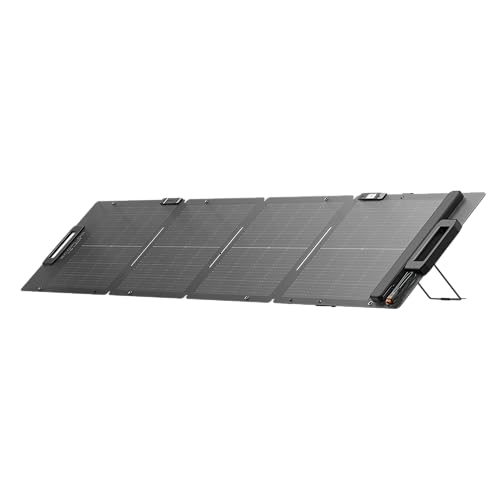 | EcoFlow 110W Portable Solar Panel | ~£149 | Buy now |
| 110W rated | |||
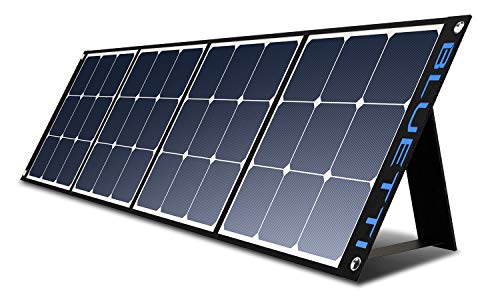 | Bluetti SP120 120W Solar Panel | ~£99.99 | Buy now |
| 120W rated · 23.7V open-circuit · 4.3kg · IP54 | |||
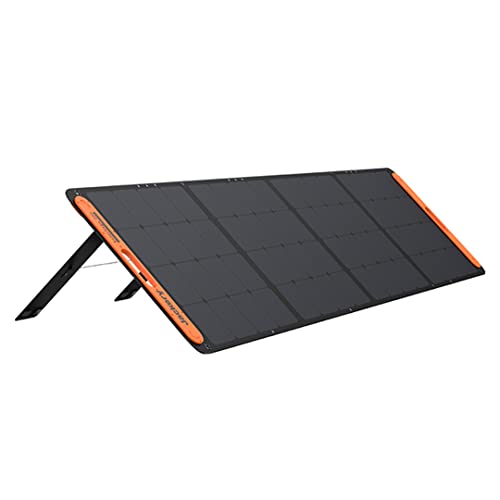 | Jackery SolarSaga 200W (bifacial) | ~£399 | Buy now |
| 200W rated · DC8020 proprietary · 22V open-circuit · 6.5kg · IP68 · 25% cells | |||
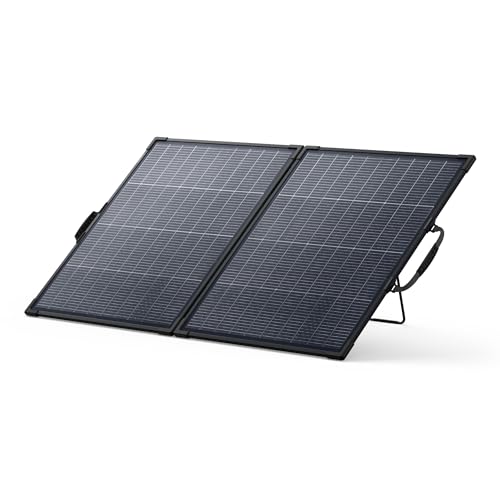 | Anker SOLIX PS200 Bifacial Portable Solar Panel | ~£329 | Buy now |
| 200W rated · cables included: 2x 2.5m solar cables + 0.5m XT60i · 4.8kg · IP68 · 25% cells | |||
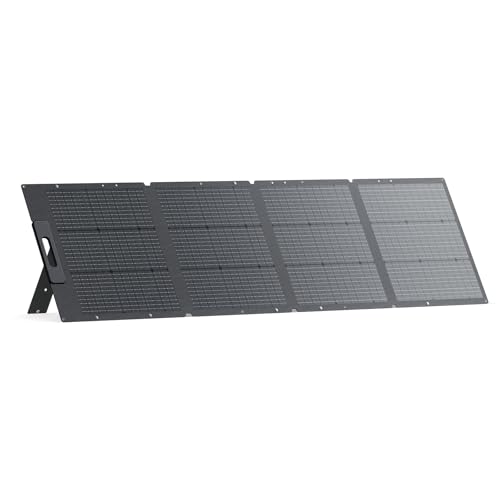 | Bluetti Solar Panel 200W (Elite series) | ~£299 | Buy now |
| 200W rated | |||
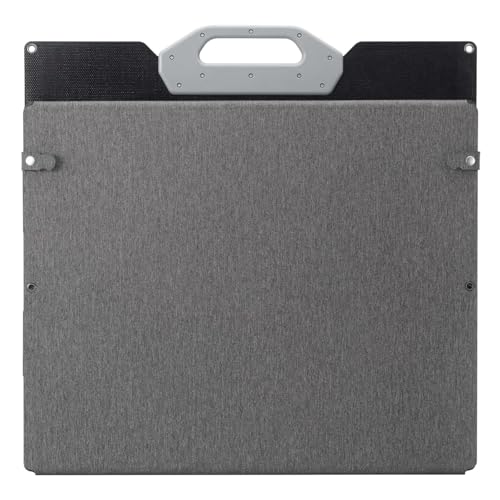 | IBCPOWER 200W Foldable Solar Panel (DJI-store panel) | ~£209 | Buy now |
| 200W rated · MC4 · 24.8V open-circuit · 8.25kg · IP67Best for DJI Power 1000 Mini direct; other DJI Power stations via MPPT adapter | |||
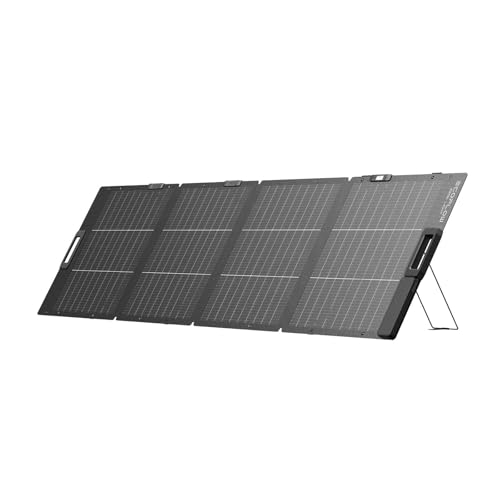 | EcoFlow 220W Lightweight Portable Solar Panel (bifacial) | ~£349 | Buy now |
| 220W rated | |||
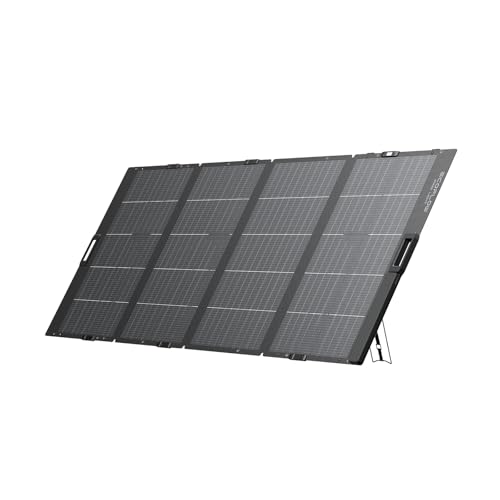 | EcoFlow 400W Lightweight Portable Solar Panel (bifacial) | ~£549 | Buy now |
| 400W rated | |||
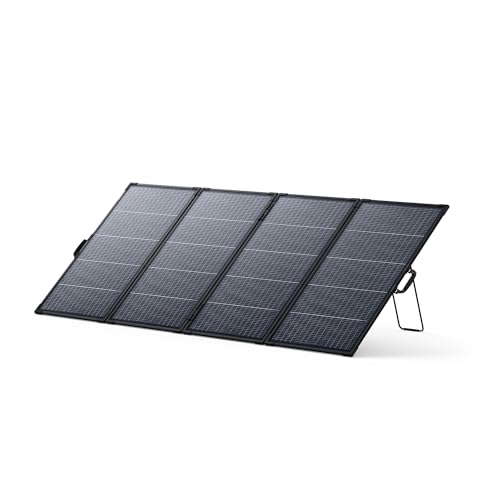 | Anker SOLIX PS400 Bifacial Portable Solar Panel | ~£529 | Buy now |
| 400W rated · cables included: 2x 2.5m solar cables + 0.5m XT60i · 9.95kg · IP68 · 25% cells | |||
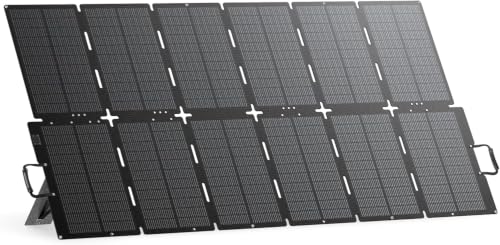 | Bluetti 500W Portable Solar Panel | ~£799 | Buy now |
| 500W rated | |||
Match the panel to your station
Jackery: SolarSaga sizes for 100W to 1,000W inputs
The Explorer 240 v2 caps at 100W of input, so the SolarSaga 100W fills its ceiling exactly, and Jackery quotes 3.3 hours for the pairing. The £69 SolarSaga 40 Mini is the budget alternative for topping the 240 up rather than refilling it. The Explorer 1000 v2 and 2000 v2 take 400W across two DC inputs, and Jackery's route to that ceiling is two SolarSaga 200W panels, one per input; the 3000 v2 raises the ceiling to 1,000W. The Jackery brand page covers the stations themselves.
Buy the Jackery SolarSaga 100W on AmazonEcoFlow: buy the bundle
The ceilings: River units take 220W, the Delta 2, Delta 3 Classic and Delta 3 Max take 500W, and only the Delta 3 Max Plus swallows the full 1,000W. EcoFlow's standalone panels run 45W at £79, 110W at £149, 220W at £349 and 400W at £549, but EcoFlow has refreshed its panel line and the standalone Amazon listings do not say which generation you are getting. So for EcoFlow, the bundle is the route we would take: River 3 Plus with a 110W panel at £368, or Delta 3 Classic with a 160W panel at £558 or two 100W panels at £617, all with fit guaranteed. Details on every station are on the EcoFlow brand page.
Anker: PS-series panels, XT60i cables in the box
The PS100 at £179 is the natural partner for the SOLIX C300 DC and C300X, whose ceilings are 100W, and at 2.8kg with an IP68 rating it is the lightest 100W panel here. The C1000 Gen 2 takes 600W and the C2000 Gen 2 takes 800W, which is PS200 and PS400 territory, and the F3000 accepts 2,400W across dual PV inputs; Anker sells it bundled with two 400W panels at £2,597. Every PS panel ships with the XT60i cable that matches Anker's inputs. The stations are compared on the Anker brand page.
Bluetti: the biggest input ceilings under £500
Bluetti's 60W panel at £109 is named for the Elite 30 V2, whose ceiling is 200W. The Elite 100 V2 is the solar standout of the whole market: 1,000W of input on a £469 station, and Bluetti's 70-minute full-charge claim rests on feeding it the lot, so this is the one station where a 350W or 500W panel earns its price. The Elite 300 takes 1,200W and the Apex 300 takes 2,400W over two XT60 inputs. One caution on the £99.99 SP120: it is the cheapest 120W panel here and the top-rated listing at our check, but Bluetti officially lists it only for its legacy stations and publishes no compatibility with the current Elite and Apex models, so treat it as a value pick for older Bluetti units rather than a safe default. The current range is on the Bluetti brand page.
DJI: the panels are IBCPOWER, and "400W" is not a panel
DJI sells no own-brand solar panel in the UK. The panels on DJI's own store are made by IBCPOWER, and the "400W solar" in DJI's marketing is an input ceiling, the rating of the Power 1000 Mini's built-in MPPT controller and of the Solar Panel Adapter Module, not a panel you can buy. The IBCPOWER 100W (£129, 3.19kg, IP67) and 200W (£209 on Amazon at our check against £339 on the DJI store) both terminate in MC4, which means they plug straight into the Power 1000 Mini; every other DJI station needs the adapter module, or the 1.8kW Super Fast Charger on the Power 1000 V2 and Power 2000. The full SDC story is on the DJI brand page.
Bundle or separates?
Bundles win twice: they guarantee the connector fits, and they are usually cheaper. The Explorer 240 v2 with a 100W panel cost £328 at our check against £388 for the station and SolarSaga 100W bought separately, a £60 saving, and the Anker C1000 Gen 2 with a 200W panel was £729 against £828 in parts, saving £99. Buy separates when you already own the station or you want a panel size the bundles do not offer.
One big panel or two smaller ones?
If your station has one solar input, the question answers itself: one panel, as big as the ceiling allows. One cable, one thing to angle, one thing to pack.
Plenty of stations take more than one, though: the Jackery Explorer 1000 v2, 2000 v2 and 3000 v2 all carry two DC inputs, the Bluetti Apex 300 has two XT60 inputs, and the Anker F3000 runs dual PV inputs. Two panels give you flexibility a single big one cannot: you can aim them at different parts of the sky as the sun moves, or keep one in clear light while the other dodges a tree line. The price for that is more cables, more setup and more to carry.
The money usually favours one big panel. Anker's PS400 costs £529 against £658 for two PS200s, for the same 400W and nearly the same weight (9.95kg against 9.6kg). So the rule: one big panel for simplicity and price, two panels when your station has the inputs and your pitch has moving shade. Either way, add up the rated watts and keep the total under the station's input ceiling, because anything over it is wasted.
FAQs
Can you use any brand of solar panel with any power station?
Do solar panels work with a power station in UK winter?
Can you leave a solar panel out in the rain?
What does bifacial mean on a solar panel?
How many watts of solar panel do you need for a power station?
Do solar panels charge a power station without direct sunlight?
Can you chain two solar panels together?
Is a solar panel bundle cheaper than buying the panel separately?
Go deeper
The panel is half the decision. The complete portable power station buying guide compares all 24 current stations, including each one's solar input ceiling and charge times, the power stations overview covers battery care and buying safely, and the Power Station Finder will turn your answers into a shortlist.
The Portable Power Station Finder
Which portable power station should you buy? Seven questions
1. What's it mainly for?
Recommendations are computed from our verified spec inventory of every current UK model from EcoFlow, Anker, Bluetti, Jackery and DJI, with prices checked 24 September 2026.
Each station brand also has its own deep-dive page: