


Quick answer
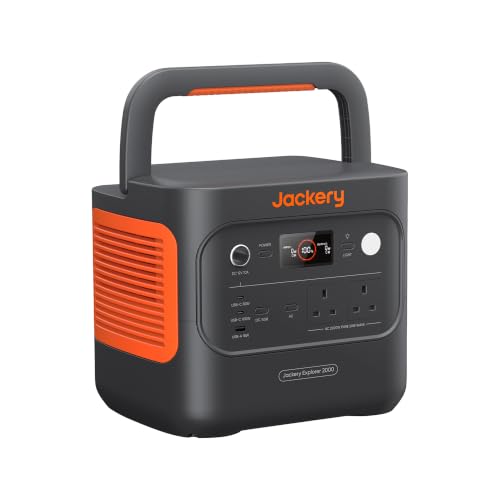
Buy the Jackery Explorer 2000 v2 at £899 if you want the lighter, smaller and cheaper 2kWh box: at 17.5kg with a 2,042Wh LiFePO4 battery, a 2,200W inverter (4,400W surge) and two UK mains sockets, it is £100 less and 2.8kg lighter than the Delta 3 Max, and Jackery bills it as the smallest and lightest 2kWh LFP station going. Buy the EcoFlow Delta 3 Max at £999 if you want more of everything that plugs in: 2,048Wh, a 2,400W inverter (3,200W X-Boost), four mains sockets to the Jackery's two, three USB-C ports, 500W of solar input and a quieter 25dB figure, at 20.3kg. Prices from our late-September 2026 check.
Our pick: Jackery Explorer 2000 v2
Explorer 2000 v2 or Delta 3 Max: which should you buy?
Buy the Jackery Explorer 2000 v2 at £899 if you want the lighter, smaller and cheaper 2kWh box: at 17.5kg with a 2,042Wh LiFePO4 battery, a 2,200W inverter (4,400W surge) and two UK mains sockets, it is £100 less and 2.8kg lighter than the Delta 3 Max, and Jackery bills it as the smallest and lightest 2kWh LFP station going. Buy the EcoFlow Delta 3 Max at £999 if you want more of everything that plugs in: 2,048Wh, a 2,400W inverter (3,200W X-Boost), four mains sockets to the Jackery's two, three USB-C ports, 500W of solar input and a quieter 25dB figure, at 20.3kg. Prices from our late-September 2026 check.
These two land within six watt-hours of each other, 2,042Wh against 2,048Wh, so this is not a capacity contest. It is a portability-versus-sockets contest, and the decision is unusually clean. The Jackery is the box you pick up. The EcoFlow is the box you plug things into. Everything below flows from those two sentences.
What the Explorer 2000 v2 and Delta 3 Max share
The core is near-identical. Both carry roughly 2kWh of LiFePO4, the long-life battery chemistry: 2,042Wh on the Jackery, 2,048Wh on the EcoFlow, a difference you will never feel. Both run a pure-question set of mains-grade kit through a full-size inverter, both take app control over Wi-Fi and Bluetooth, and both offer a UPS-style mode that keeps sensitive gear alive when the mains drops.
Both cap USB-C at 100W, enough to charge a serious laptop at full speed, and both carry a 12V car socket alongside their USB ports.
And crucially, neither is expandable. On both units, roughly 2kWh is what you buy and what you keep for the life of the station. If you think you will want more than 2kWh down the line, the Delta 3 Max is a dead end (expansion is the pricier Delta 3 Max Plus's feature), and so is the Jackery. Start with the capacity you need.
They also handle recharging differently on paper. Jackery publishes a clean full-recharge figure, 102 minutes from a standard wall socket, dropping to a claimed 80 minutes in the app's Emergency Super Charge mode. EcoFlow does not publish a clean 0 to 100% time for the Delta 3 Max: its spec table lists "2300W (68 min)" with no percentage range attached, so the two cannot be compared like for like on wall-charging speed. If a published, comparable recharge time matters to you, the Jackery is the one with the honest number.
What £100 more buys on the Delta 3 Max
The EcoFlow costs £999 to the Jackery's £899 at our check, and the extra £100 buys more of everything that ends in a plug:
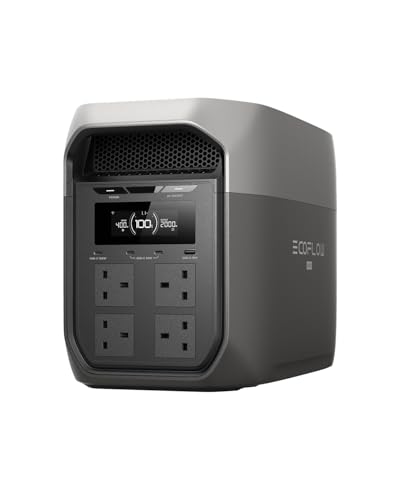
- Four UK three-pin sockets, against the Jackery's two. For a power cut or a busy campsite pitch, double the mains outlets is the single biggest practical difference between these two units.
- A stronger inverter: 2,400W rated with a 3,200W X-Boost mode, against the Jackery's 2,200W rated. The Jackery's headline surge is actually higher at 4,400W (EcoFlow's is 4,800W), but for sustained resistive loads the Delta's 2,400W rating and X-Boost give it more continuous headroom.
- Three USB-C ports (one 100W, two 30W) to the Jackery's two (one 100W, one 30W).
- A 500W solar ceiling, against the Jackery's 400W across its two DC inputs. If you plan to run a big panel array, the EcoFlow takes 100W more.
- A quieter published figure, 25dB at 600W, against the Jackery's 30dB. Read that one carefully: Jackery's 30dB applies to its app quiet-charging mode rather than every load, so this is not a clean like-for-like, but the EcoFlow is the one that markets itself on running quietly.
- A faster UPS switchover, 10ms against the Jackery's 20ms. Both are EPS-class transfer switches rather than true online UPS, and both are quick enough for a router, a laptop or a home office; 10ms simply gives the EcoFlow a little more margin for fussy electronics.
Now read the Jackery's case, because its cuts are also its point. It is 2.8kg lighter (17.5kg against 20.3kg) and it is a noticeably shorter box: 33.5cm long against the Delta's 49.4cm, which is 16cm of car boot or cupboard shelf you get back. Jackery markets it as the smallest and lightest 2kWh LFP station on the market. It is £100 cheaper. And it is the one with a published, comparable full-recharge time. For anyone who will actually carry this thing, to a pitch, a festival, a van, a second home, the Jackery is not the compromise. It is the correct tool, £100 cheaper.
Jackery Explorer 2000 v2 and EcoFlow Delta 3 Max specs and buying options
Both units verified against the manufacturers' UK pages and Amazon UK listings, with every buying configuration priced at our late-September 2026 check. The Jackery first:
Explorer 2000 v2, from £899
2,042Wh and 2,200W at 17.5kg, which Jackery claims as the lightest and smallest in the 2kWh class, with a GaN inverter and the same 20ms UPS mode as the rest of the line. Standard mains charging is 1.7 hours; the headline Super Fast Charge figure is the app's emergency mode. Solar input is capped at 400W, which is modest for this capacity and matters if panels are your plan. £899 at our September 2026 check, 15% off list. Not expandable.
And the EcoFlow:
Delta 3 Max, from £999
2,048Wh and 2,400W of output in a 20.3kg box, with a quiet 25dB rating at 600W and nine ports including a 12V car socket. The problem is its own sibling: the Max Plus delivers 3,000W, expands to 10kWh, takes double the solar and charges USB-C at 140W, and on EcoFlow's own UK store it listed £100 cheaper than this at our check. On Amazon the Max was £999 against £1,099 for the Plus. Buy the Max only if you're certain you'll never expand, never pass 2,400W and never run more than 500W of solar.
Both are sold bundled with solar panels as well as bare, so if you already own panels with the right connectors, buy the base unit and skip the bundle premium.
What can 2kWh actually run?
The sums are effectively identical for both units, because their capacities are. The numbers below are calculated estimates, not lab tests: rated capacity multiplied by an 85% usable conversion efficiency, divided by each device's battery capacity, rounded down. On roughly 2kWh that gives around 1,740Wh of usable energy on either unit:
- Phone (iPhone 17, 14.4Wh): around 120 full recharges
- LED lantern (4,800mAh, 17.8Wh): around 97 recharges
- Drone battery (DJI Mini 4 Pro, 19Wh): around 91 recharges
- Tablet (iPad 11-inch, 28.9Wh): around 60 recharges
- Laptop (MacBook Air 13-inch, 53.8Wh): around 32 recharges
That is a long off-grid weekend for a couple, or days of device-charging for a solo trip, on either box. Where they diverge is mains work. Both run fridges, TVs, routers, CPAP machines, power tools and laptop chargers within their inverter ratings; the Delta's 2,400W (3,200W X-Boost) gives it a little more room than the Jackery's 2,200W for high-draw kit. A standard UK kettle, typically around 3kW, sits above the Jackery's 2,200W rating and at the very edge of the Delta's 3,200W X-Boost, so treat neither of these as a reliable kettle-boiler. That is not what a 2kWh station is for.
Buy the EcoFlow Delta 3 Max on AmazonWho buys which?
The Explorer 2000 v2 buyer moves their power station. Car camper, van-lifer, festival-goer, someone hauling backup to a caravan or a second home: they want the lightest, shortest 2kWh box they can get, they will happily take two mains sockets and a power strip over four, and they would rather keep the £100. The published 102-minute recharge is a bonus when you are turning the unit around between trips. For portability-first buyers, the Jackery is the pick.
The Delta 3 Max buyer keeps their power station mostly in one place and plugs a lot into it. Home backup during outages, a work-from-anywhere base station, a campsite that powers several things at once: they want four sockets, the higher sustained output, the quieter run and the faster 10ms UPS, and 2.8kg and a longer footprint do not bother a unit that mostly sits still. For socket count and output, the EcoFlow is the pick.
If you are genuinely torn, weigh how often you will lift it. A station that lives in a cupboard and comes out for power cuts should be the Delta 3 Max. A station that goes in the boot most weekends should be the Jackery. The one you carry is the one you will actually use.
Jackery Explorer 2000 v2 vs EcoFlow Delta 3 Max FAQs
What is the difference between the Jackery Explorer 2000 v2 and the EcoFlow Delta 3 Max?
Is the Jackery Explorer 2000 v2 or the EcoFlow Delta 3 Max lighter?
How many plug sockets do the Jackery Explorer 2000 v2 and Delta 3 Max have?
Which charges faster, the Jackery Explorer 2000 v2 or the Delta 3 Max?
Are the Jackery Explorer 2000 v2 and EcoFlow Delta 3 Max expandable?
Which power station is better value, the Jackery or the EcoFlow?
Want the full picture on the cheaper unit? Our Jackery Explorer 2000 v2 review goes deeper on it, and the Jackery brand guide and EcoFlow brand guide set each maker's full range in context. Across brands, the complete portable power station buying guide ranks every current model, or let the finder shortlist for you.