


Quick answer
To be ready for a UK power cut, follow the government's Be Ready standard: enough to manage for 3 days. The core kit is a torch with spare batteries (torches are safer than candles), a charged power bank per person (a 20,000mAh bank gives about four phone charges), a battery or wind-up radio, bottled water (3 litres per person per day), food needing no cooking, cash, warm layers and your medications. Know the free 105 number, which reaches your network operator from any phone, and join the Priority Services Register if anyone in the home is medically vulnerable, elderly or under five. Worth knowing: the average UK home loses power for about 38 minutes a year, so this is insurance against the storm-driven exception, not the rule, and the best preparedness kit is the kind you would use for camping and days out anyway. This is general advice; always follow official guidance.
The clocks have gone back, and the government has a new campaign asking every UK household to be able to look after itself for three days. Within a day of its launch, two named storms knocked the power out for tens of thousands of homes, "emergency kit" searches jumped 180%, and supermarkets started reporting runs on tinned food and candles. Toilet rolls 2.0 was visibly warming up.
So let's do this properly instead. I live in Dorset, I spend my life outdoors with kit that happens to be exactly what a power cut calls for, and this guide is the Be Ready checklist worked through calmly: what actually fails when the power goes, what the honest numbers are, and which kit earns its place because you would use it anyway. No bunkers, no 50 tins of beans.
What's actually going on
Three facts to hold at once. First, the campaign is real: the Cabinet Office launched Be Ready on 22 October 2026, replacing the old Prepare site, and its standard is simple: being ready to manage for 3 days helps you cope while support reaches those who need it most. Local councils are actively pushing the same message.
Second, the government itself says there is no specific or imminent threat. The campaign was prompted by last winter's storms, the summer's wildfires and a run of cyber incidents, not by something they know and you don't. The grid operator's own winter outlook says supply looks secure this winter, with a healthy margin.
Third, the baseline risk is genuinely low: the average UK household loses power for roughly 38 minutes a year, usually in one short, local cut. What the preparation is really for is the long tail: storms Austen and Boelo just put six-figure numbers of homes in the dark, some for days, and rural areas in the South West, Wales and Scotland sit at the sharp end of that tail. Preparedness is insurance against the exception, and the premium is about £50 of kit you would use anyway.
What dies first in a power cut (some of it will surprise you)
The obvious things go: lights, kettle, TV, fridge. The surprises matter more.
Your gas boiler dies. Nearly every modern gas central heating system needs mains electricity for its ignition, pump, fan and controls, so a gas supply does not mean heating in a blackout. That is why warm layers and blankets are on the official list even for gas-heated homes.
Your broadband dies instantly, because the router is mains-powered, and with it go Wi-Fi calling, smart speakers and most "smart" anything. Cordless phone base stations die too. Mobile networks usually stay up, mast batteries are finite in a long cut, but a charged phone with mobile data becomes your lifeline, which is why the power bank is the single most important item on the list.
Your fridge and freezer are fine for hours, if you leave the doors shut. Official guidance is blunt on this: keep them closed and most food survives a typical cut easily.
The checklist, properly
The official Be Ready list, with the practical version of each line:
- Torch and spare batteries, one per person ideally, and the campaign's own words are worth quoting: torches are safer than candles. More on this below, because it is the one line people are currently ignoring en masse.
- A charged power bank: the government's own wording. One per person is the comfortable standard; the maths is below.
- Battery or wind-up radio: when the router is dead and the phone is being rationed, local radio is how you find out what is happening.
- Water: 3 litres per person per day for drinking, so a 3-day store for a family of four is 36 litres. Supermarket multipacks or refilled containers both work.
- Food needing no fridge or cooking for 3 days: tins, dried fruit, nuts, crackers, spreads. Buy things you actually eat and rotate them through the cupboard.
- Cash, coins and notes: card machines and ATMs are mains-powered.
- Warm layers and blankets: see the boiler point above. This is where a household with hiking kit is already sorted; a decent fleece and an insulated jacket are a power-cut heating system you already own.
- First aid kit, a week of medications, printed documents and written-down phone numbers, plus supplies for babies and pets if that is your household.
Light: torches beat candles, and it is not close
Searches for emergency candles are up five-thousand percent. Please don't. When Spain and Portugal lost power for ten hours last year, several of the deaths that followed were from candle fires and the fumes of generators run indoors, not from the blackout itself. The official advice exists because the failure mode of a candle is your house catching fire, and the failure mode of a torch is a dead battery.
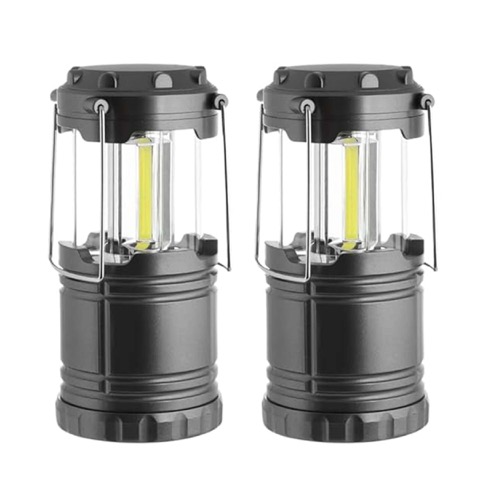
The practical setup, from kit we genuinely use: a lantern per living space beats a torch for rooms, because it lights everyone at once with no hands involved; our battery-operated hanging lanterns live in the tent in summer and the kitchen drawer in winter. A head torch per adult covers the hands-free jobs, finding the fuse box, the loo trip, checking on the kids. And a stock of AA and AAA batteries plus a set of rechargeables keeps all of it honest. Our full lighting rundown, lanterns, torches and the battery strategy, is in the power-cut lights guide.
Power: the honest battery maths
Here is the arithmetic the scare-coverage never does. A phone needs 15 to 20Wh per full charge. A 20,000mAh power bank holds about 74Wh and delivers roughly two-thirds of it after conversion losses, call it four phone charges. A laptop charge costs about 60Wh. A home router draws 8 to 10W, which is around 190 to 240Wh per day.
So the ladder looks like this, and you climb only as far as your household actually needs:
- A charged power bank per person (£15 to £30 each) keeps phones alive for the full 3 days. This is the government's own checklist item and the only tier most homes truly need. Our best power banks guide covers the safe picks from £15, and the cheap-bank safety warning covers what to avoid.
- A small power station (£169 to £259) adds the router, a lamp and a CPAP: a 256Wh unit like the Jackery Explorer 240 v2 runs a router for about a day and has a real mains socket plus a UPS mode, so the broadband never even blinks.
- A 1 to 2kWh station (£399 up) is the fridge-and-beyond tier for households that want genuine backup; our power station finder sizes it in seven questions, and the buying guide ranks all 28 current models.
- A small solar panel (£49 to £80) future-proofs any of the above: in daylight it recharges a power bank even mid-outage, which turns a 3-day plan into an indefinite one. The pairings, and the traps, are in our small solar charger guide.
One habit beats all hardware: pick a drawer, keep the banks in it charged, and top them up when the clocks change.
Hot food and drink
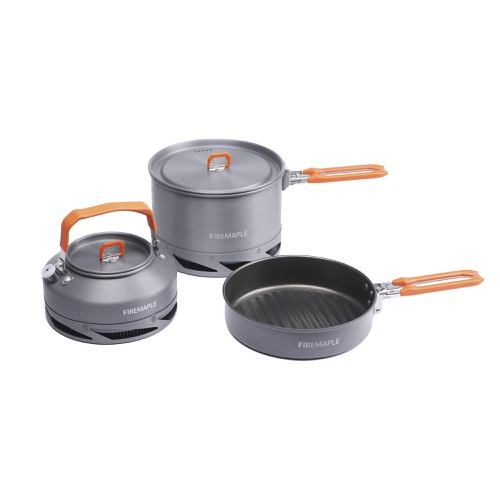
Three days of cold crackers is survival; a hot coffee and a hot meal is morale, and I would be properly grumpy without the coffee. The answer is the same single-burner gas stove that already does our trail coffees: our Fire Maple runs off screw-top canisters, boils water in minutes, and this week I added a stock of big 500g canisters and a heat-exchanger pot set to the cupboard, bought knowing that if winter never needs them, they will do beach days and camping trips instead.
The non-negotiable safety line: gas stoves, BBQs and generators are outdoor equipment. Cook outside or at a wide-open door with real ventilation, never in a closed room and never in a tent; carbon monoxide from cooking and generators indoors kills people in every major blackout, including last year's Iberian one. If you cannot cook safely outside, eat it cold and keep the coffee for daylight.
Staying informed
With the router dead and the phone on rations, a battery or wind-up radio is how you hear what your area is doing: local BBC radio carries emergency information during major outages. A wind-up model with a torch and a USB port doubles as backup light and a trickle of phone charge; ours is a basic one that has so far only had to prove it works, which is exactly the point. If you prefer a household-name brand, Philips makes a rechargeable portable FM/AM set. Both options are in the lights and radios guide.
The 105 number, the Priority Services Register and compensation
Three official things to set up in the next ten minutes:
Save 105 in your phone. It is free, works from any phone in England, Scotland and Wales, and connects you to your local network operator to report or check a power cut. (Northern Ireland uses 03457 643643.) Your electricity supplier is not who fixes the wires; 105 reaches the people who do.
Join the Priority Services Register at thepsr.co.uk if anyone in your home is medically dependent on power, elderly, pregnant, or has children under five. It is free, and it gets you advance warning of planned cuts, priority support in unplanned ones, and proactive contact during storms. If someone in your home runs medical equipment overnight, this plus the small-station tier above is the setup that matters; our CPAP guide covers the specifics.
Compensation is automatic. Under Ofgem's guaranteed standards you are owed payments for long cuts (broadly £100 after 12 hours in normal conditions, storm thresholds differ, capped in severe events) and it is paid without claiming. Do not pay anyone who offers to "process" it for you.
The buy-it-calmly principle
The sell-out headlines are the argument for sorting this in a quiet week, not the reason to panic in a loud one. And the test for every purchase is the one this whole site runs on: buy preparedness kit you would use anyway. The power bank charges your phone on every trip. The lantern goes camping. The stove makes trail coffee. The batteries run the kids' toys at Christmas. The radio comes to the beach. If the lights never go out, you have lost nothing; if they do, a dark evening becomes an inconvenience with hot coffee in it.
That is the whole plan. No bunker required.