

Portable Power Stations UK
Silent, fume-free battery power for campsites, campervans and power cuts, and free electricity once you add a solar panel. Everything you need to know about choosing, running and looking after one, plus every current model from the five brands worth buying in the UK.
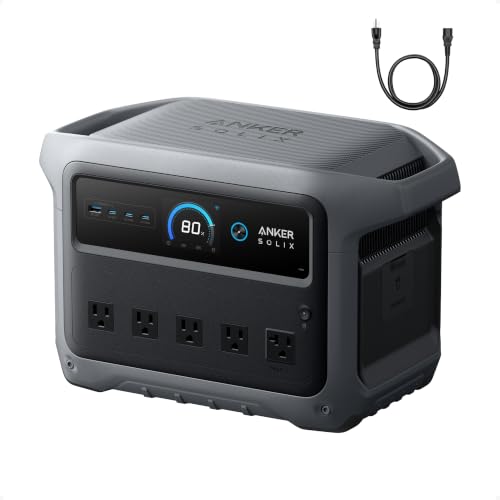
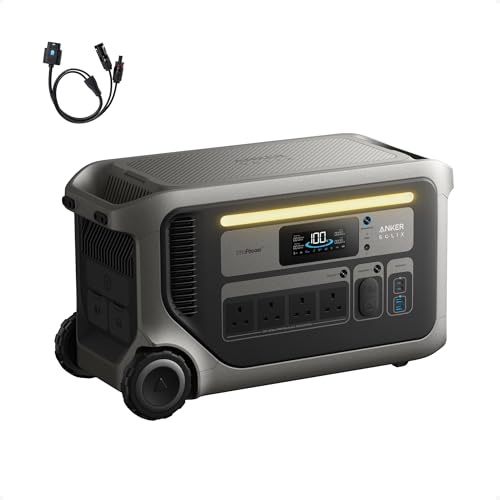
Our top pick: the Anker SOLIX C1000 Gen 2
What is a portable power station?
A portable power station is a big rechargeable battery with a built-in inverter, so it feeds standard 230V UK plug sockets as well as USB ports. You charge it from the mains, a car, or folding solar panels, and it releases that power silently wherever you need it: a campsite, a van, or your kitchen during a power cut.
Two things it is not. It is not a petrol generator: there is no engine, no fuel, no fumes and almost no noise, which is why you can run one inside a tent or a living room. And it is not a power bank: a power bank tops up phones over USB, while power stations store between 256Wh and 3,072Wh and most can run mains appliances directly.
Two numbers decide everything. Watt-hours (Wh) are the fuel tank: how long it lasts. Watts (W) are the size of the pipe: what you can plug in at all. A 288Wh station and a 3,072Wh station might charge the same phone; only one of them will boil a kettle. The complete guide runs those numbers for every current model.
Our top picks
The short answers. The complete guide explains every verdict. Prices checked 24 September 2026.
Best overall
Anker SOLIX C1000 Gen 2
1,024Wh, 2,000W, and a 49-minute full recharge. The all-rounder.
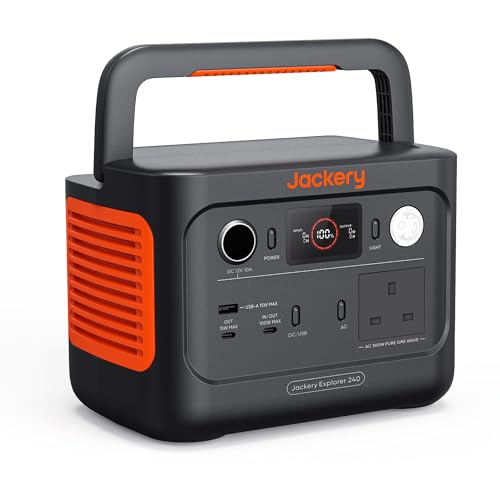
Budget pick
Jackery Explorer 240 v2
Phones, lights and a laptop covered for a weekend, at 3.6kg.
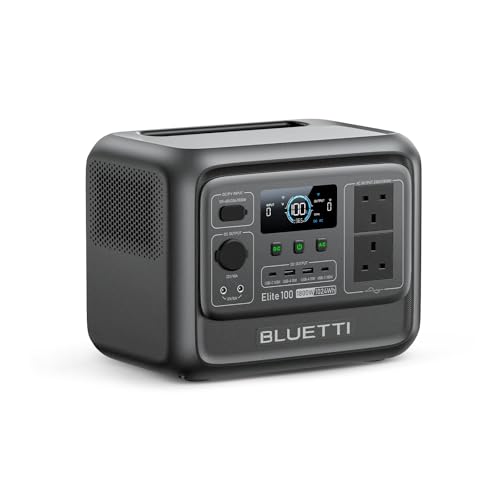
Solar standout
Bluetti Elite 100 V2
Accepts a huge 1,000W of solar input for its size and price.
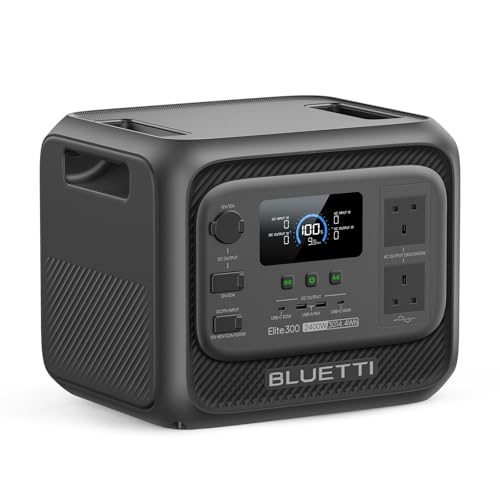
Campervan pick
Bluetti Elite 300
3,014Wh with a dedicated 12V/30A port for the van fridge.
The complete buying guide
Every current model compared in one table, our top pick and best-for verdicts, charging speeds on mains and solar, and whether to buy your capacity up front or grow it later.
Read the guideThe Power Station Finder
Answer seven quick questions about what you want to run, for how long, and whether you want solar charging, and it narrows every current UK model to the right one for you.
Find yoursPlug-in solar is now legal
Panels that plug into a normal socket became legal in the UK this August. The new rules, the kits you can buy, what it saves, and the catches nobody mentions.
Read the storyBrowse by brand
Every current model in each range, with the best configuration for your use case.

EcoFlow
The fastest-growing name in the market: the River capacity ladder for camping and the Delta workhorses for everything bigger.
6 current models · from £219

Anker SOLIX
Charging speed and polish, from the pocket C300 pair to the home-backup F3000, with the fastest mains recharge in the business.
5 current models · from £189

Bluetti
The Elite V2 range: class-leading cycle life and quiet running.
5 current models · from £199

Jackery
The biggest name in the market, and the lightest units in every class.
4 current models · from £189

DJI
The drone-flyer's choice: SDC fast charging for flight batteries, and the biggest expansion ceiling of all.
4 current models · from £369
Pairing solar panels with your power station
Panel sizes, compatibility, and what solar charging really delivers in UK conditions.
What to look for when you buy
AC sockets, or USB-only?
The least understood split in the category. A few units, like Anker's SOLIX C300 DC, skip the mains socket and inverter entirely: cheaper and lighter, and no compromise at all if everything you carry charges over USB-C. But the moment you want to plug in anything with a UK three-pin plug, you need an inverter model, and the wattage on that inverter decides what it can run.
LiFePO4 chemistry
Buy LiFePO4 (also written LFP). It trades a little weight against older NMC chemistry for far longer cycle life and better thermal stability, exactly what you want in a box that lives in a cupboard, a boot or a van. Compare the cycle rating: 3,000 cycles is the entry standard, the best units run to 6,000-plus, and manufacturers translate 3,000 as roughly ten years of regular use.
Charging options
Mains is the everyday method, and the fastest current units refill in under an hour. Solar is the one to plan for: check the maximum solar input in watts (it runs from 100W to 2,400W across the market) and the connector type, because that ceiling decides whether panels are a trickle-charge or a genuine off-grid supply. Car charging works everywhere but is the slow overnight option.
Owning one: care and safety
The four care habits
- Store at 50 to 60% charge when idle, not full and not flat.
- Keep it roughly between 20 and 80% in regular use; the occasional full cycle is fine.
- Avoid charging in extreme temperatures: not a frost-bound shed, not a car boot in July.
- Expect less on cold mornings: cold cuts performance before it causes harm.
The buyer-safety checklist
- Look for published certifications: UKCA or CE as a baseline, plus marks such as TUV or UL/IEC standards.
- Prioritise LiFePO4 chemistry, for thermal stability as much as lifespan.
- Respect the load limits: a 300W inverter asked for 2,000W is a fault waiting to happen.
- Avoid unattended charging, especially overnight, as with any large battery.
The risks around very cheap units centre on poor chemistry, missing certifications, defective wiring and inadequate battery management. Every model we recommend passes this checklist.
One product keeps appearing in power station searches that is a different thing entirely: the Anker SOLIX Solarbank 4 Pro is installed home energy storage, hardwired to your distribution board by a qualified electrician, with no USB ports and no carry handle. Serious kit for cutting electricity bills (5,024Wh expandable to 30kWh, 10,000 cycles), and the number one seller in Amazon UK's off-grid solar category at our check, at £1,789 on Amazon, but not a portable power station.