


Quick answer
For most UK hillwalkers the Arc'teryx Beta is the jacket to buy, a three-layer Gore-Tex shell that is light enough to carry and tough enough for real hill days. Choose the Beta SL for the lightest packable shell, the Beta AR for the toughest winter build, the Atom as a synthetic insulated midlayer, the Thorium for down warmth, the Gamma as a breathable softshell and the Squamish as an ultralight windshell. The Alpha and Alpha SV are Gore-Tex Pro climbing shells that most walkers do not need.
Our pick: Arc'teryx Beta Jacket
- Best one-jacket-does-all: Arc'teryx Beta Jacket (~£350)
- Lightest waterproof: Arc'teryx Beta SL (~£450)
- Toughest all-rounder: Arc'teryx Beta AR (~£600)
- Best insulated midlayer: Arc'teryx Atom Hoody (~£260)
- Warmest (down): Arc'teryx Thorium Hoody (~£450)
- Best softshell: Arc'teryx Gamma Hoody (~£280)
My first experience of Arc'teryx was borrowing a colleague's waterproof one lunchtime when it was absolutely chucking it down. I did not really know the brand or the name. I just knew that I stepped outside into a proper downpour and the top half of me stayed completely dry. So I asked him the obvious question: nice jacket, where did you get it, and how much? The answer stopped me in my tracks. But he lived in Wales, he spent hours outdoors every week, and he knew exactly what he was paying for.
That is the thing about Arc'teryx. You see someone on the trail wearing it and you know, without a word, that they are serious. The brand has sat at or near the top of the technical-outdoor pile for a very long time, and it has done it on merit rather than marketing. So let me say the quiet part out loud: if you have landed on a page comparing Arc'teryx jackets, you are not here to be told the brand is good. You already know it is the benchmark. You already know you are buying the best-made shell money can reasonably buy. The only thing left to work out is which one.
And that is genuinely hard, because Arc'teryx names its jackets like a military parts catalogue. Beta, Beta AR, Beta SL, Alpha, Alpha SV, Atom, Atom SL, Gamma, Thorium, Squamish. Eleven jackets in the current UK range, and a naming system that tells you everything once you crack it and nothing until you do. This guide cracks it. By the end you will know exactly which Arc'teryx jacket fits your walking, and the only decision left will be which colour.
The whole range at a glance
Here is the entire range, cheapest to dearest. Read it as a ladder of capability rather than a ranking, because the £180 windshell and the £800 alpine shell are both doing exactly the job they are built for.
- Squamish Hoody
- Windshell, ~£180
- Atom SL Hoody
- Light synthetic insulation, ~£240
- Atom Hoody
- Synthetic insulation, ~£260
- Gamma Hoody
- Softshell, ~£280
- Beta Jacket
- Waterproof shell, ~£350
- Beta SL Jacket
- Superlight waterproof shell, ~£450
- Thorium Hoody
- Down insulation, ~£450
- Beta AR Jacket
- All-round waterproof shell, ~£600
- Alpha Jacket
- Gore-Tex Pro alpine shell, ~£650
- Rush GORE-TEX Ski
- Ski shell, ~£750
- Alpha SV Jacket
- Gore-Tex Pro flagship shell, ~£800
Decoding the names: SL, AR, SV, LT
Crack the suffix system and half the confusion disappears. The letters after the model name tell you where a jacket sits on the light-to-tough scale:
- SL (Superlight): the lightest, most packable version, stripped to the minimum. Built for fast, light days and for carrying just in case. Least abrasion resistance.
- No suffix (the standard jacket, historically LT for Lightweight): the balanced middle. Light enough to carry, tough enough for real use. The do-everything option, and where most people should start.
- AR (All Round): heavier, tougher, more features. Built to take a beating from rock, pack straps and winter use without flinching.
- SV (Severe): the most durable and most weatherproof, built for the worst conditions on earth. The heaviest fabric, the highest price, and more jacket than most walkers will ever need.
So Beta SL, Beta and Beta AR are the same jacket concept in three weights of armour. Once you see that, "Beta vs Beta AR vs Beta SL" stops being a mystery and becomes a simple question: how tough does your jacket need to be?
The one table that tells you which to buy
This is the table to bookmark. Find the column that matches how you actually walk, run your eye down it, and the ticks point you at your jacket. Simple as that.
| Jacket | Waterproof | Insulated | Everyday & travel | Hillwalking | Serious mountain | Packs small | Price |
|---|---|---|---|---|---|---|---|
| Squamish Hoody | ❌ | ❌ | ✅ | ✅ | ❌ | ✅ | £ |
| Atom SL Hoody | ❌ | ✅ | ✅ | ✅ | ❌ | ✅ | ££ |
| Atom Hoody | ❌ | ✅ | ✅ | ✅ | ✅ | ✅ | ££ |
| Gamma Hoody | ❌ | ❌ | ✅ | ✅ | ❌ | ❌ | ££ |
| Beta Jacket | ✅ | ❌ | ✅ | ✅ | ✅ | ✅ | £££ |
| Beta SL Jacket | ✅ | ❌ | ✅ | ✅ | ❌ | ✅ | £££ |
| Thorium Hoody | ❌ | ✅ | ✅ | ✅ | ✅ | ✅ | £££ |
| Beta AR Jacket | ✅ | ❌ | ❌ | ✅ | ✅ | ✅ | ££££ |
| Alpha Jacket | ✅ | ❌ | ❌ | ✅ | ✅ | ✅ | ££££ |
| Alpha SV Jacket | ✅ | ❌ | ❌ | ❌ | ✅ | ❌ | ££££ |
| Rush GTX Ski | ✅ | ❌ | ❌ | ❌ | ✅ | ❌ | ££££ |
A tick under "Serious mountain" means the jacket is genuinely built for committing terrain and winter conditions, not that it is the only place it works. A blank under "Everyday & travel" means the jacket is overkill for the school run, not that you cannot wear it there. The point is to steer you to the right tool, and to stop you spending Alpha SV money on a jacket you will only ever wear on the coast path.
The waterproof shells: Beta and Alpha
This is the heart of the range and the reason most people are here. Arc'teryx splits its hardshells into two families: Beta for all-round mountain and hill use, and Alpha for climbing and the most severe alpine conditions. Within each family, the suffix tells you how tough.
The Beta family: Beta SL, Beta, Beta AR
Beta Jacket (~£350). The one to start with, and for most walkers reading this, the one to finish with too. It is a three-layer Gore-Tex shell with a balanced weight-to-durability ratio: light enough to stuff in a pack and carry on the off-chance, tough enough for genuine hill days in genuine weather. If you want one Arc'teryx jacket that does almost everything, this is it. It is the jacket my colleague was wearing in that lunchtime downpour, and it is the honest answer for the majority of UK hillwalkers.
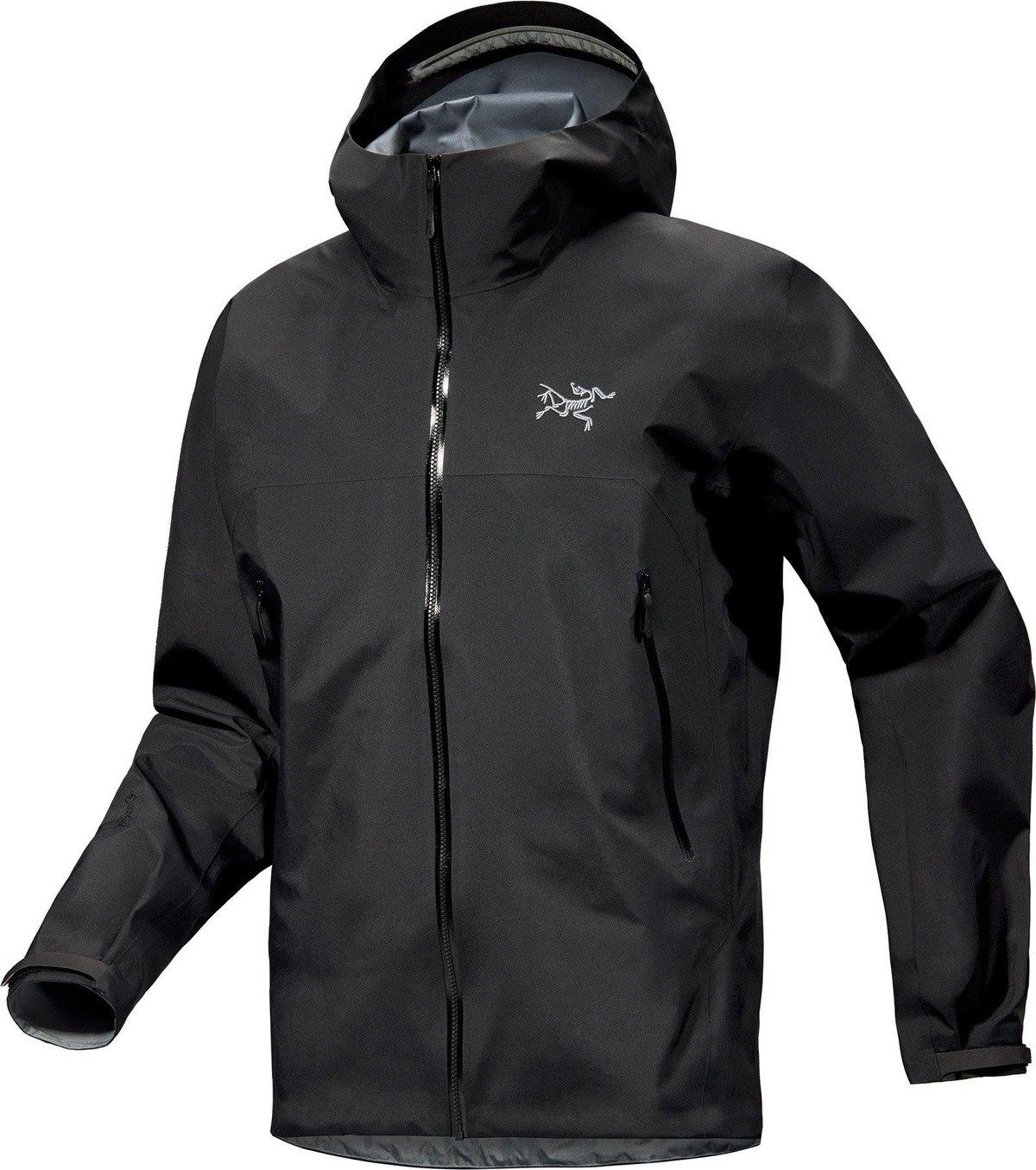 Buy the Arc'teryx Beta at Tiso
Beta SL Jacket (~£450). Here is the one that trips people up. SL means Superlight, so people expect it to be the cheap Beta. It is not. It is more expensive than the standard Beta, because it is a specialist minimalist shell built with PFAS-free Gore-Tex and a softer C-KNIT backer, tuned to pack down tiny and weigh almost nothing. It is the shell for fast-and-light days, for the walker counting grams, and for the "just in case" jacket that lives in the bottom of the pack. The trade is durability: the featherweight face fabric is the least abrasion-resistant of the three, so it is not the one for bashing through gorse and dry-stone stiles week in, week out. Buy it for the weight, not for the price.
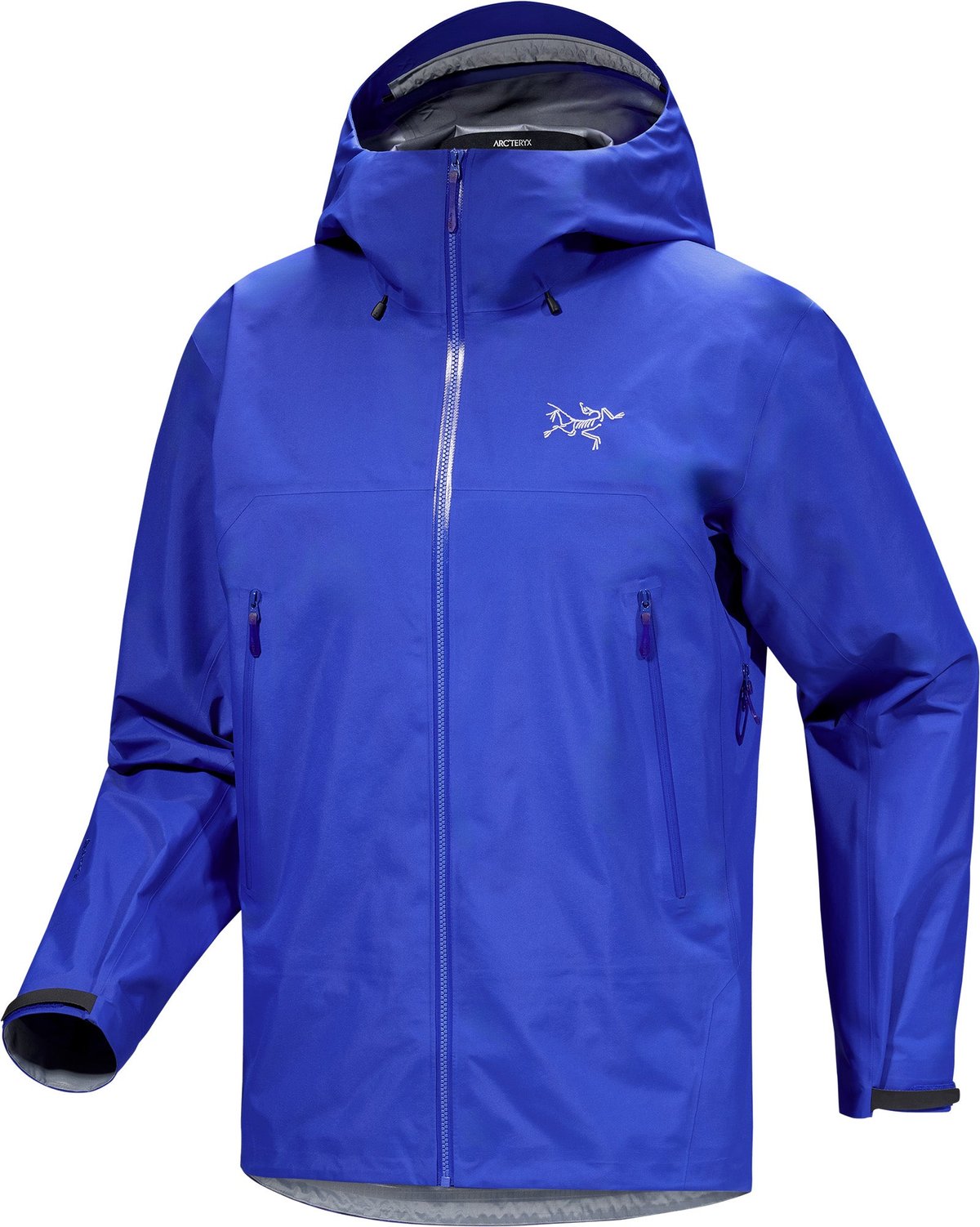 Buy the Arc'teryx Beta SL at Tiso
Beta AR Jacket (~£600). AR is All Round, and this is the burly one. It uses the tougher Gore-Tex Pro membrane, the most durable fabric of the trio, and it comes with the proper mountain features: the DropHood with full helmet coverage, a stiffened brim and deep side shields for when the weather is genuinely trying to hurt you. If you are booting up a winter gully, scrambling on rough rock, or you simply want a shell that will outlast everything else you own, the AR is the Beta to buy. For coast-path and rolling-hill use it is more jacket than you need, and that is the only reason not to buy it.
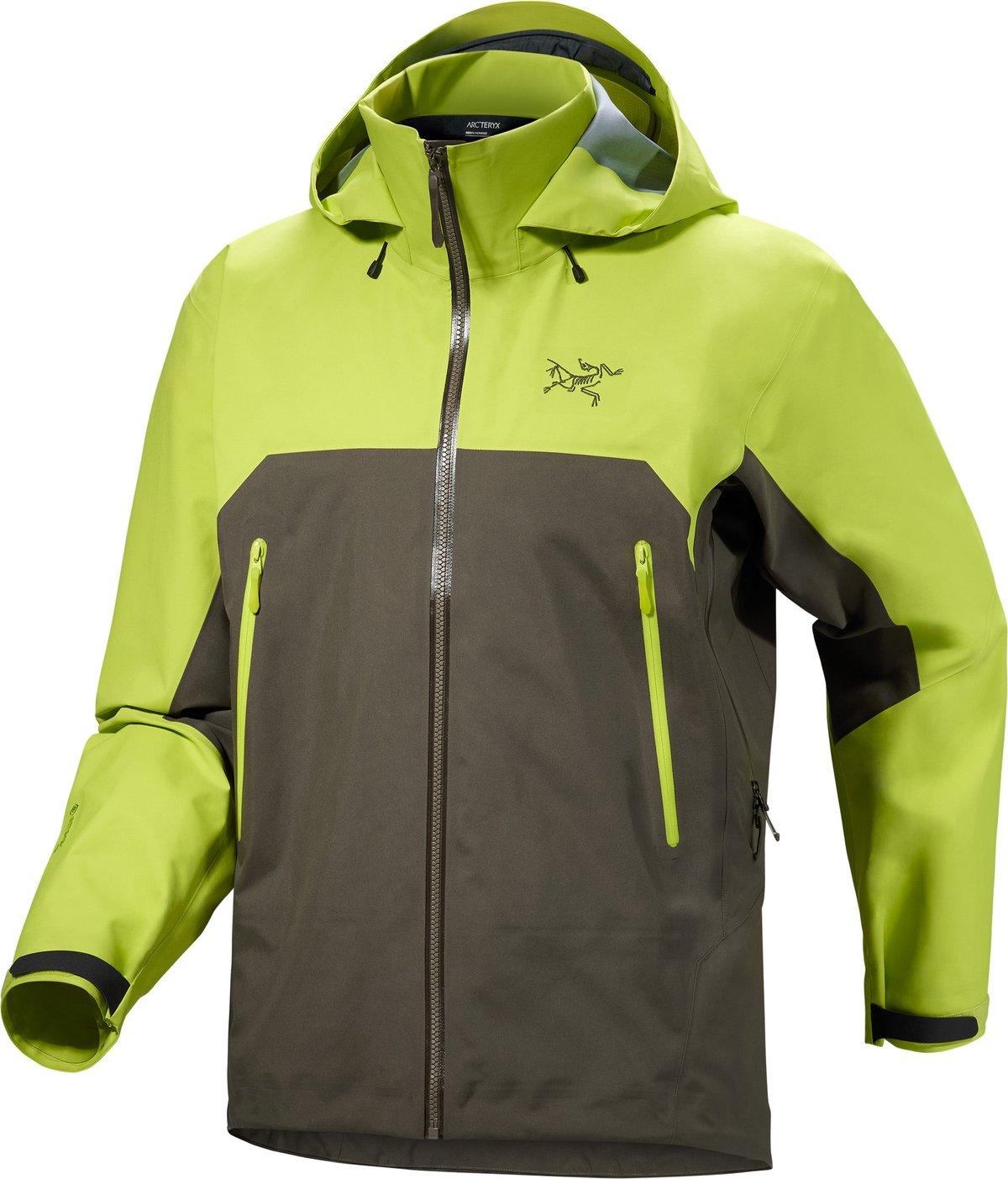 Buy the Arc'teryx Beta AR at Tiso
For the three Betas side by side and a clear buy recommendation, read our full Beta vs Beta AR vs Beta SL comparison.
If you are weighing the Beta family against kit we already rate, our best waterproof jackets guide puts the Rab Kangri and Rab Latok head to head with shells at this level, and both are strong, cheaper alternatives worth a look before you commit.
The Alpha family: Alpha and Alpha SV
The Alpha jackets step up from hillwalking into climbing and full alpine use. Both now use the latest PFAS-free Gore-Tex Pro membrane, so the difference between them is fabric weight and durability.
Alpha Jacket (~£650). The lighter, more breathable Gore-Tex Pro shell, built around a climbing-focused cut with a lighter face fabric. It is the alpine all-rounder: serious weather protection for people who are moving fast over technical ground.
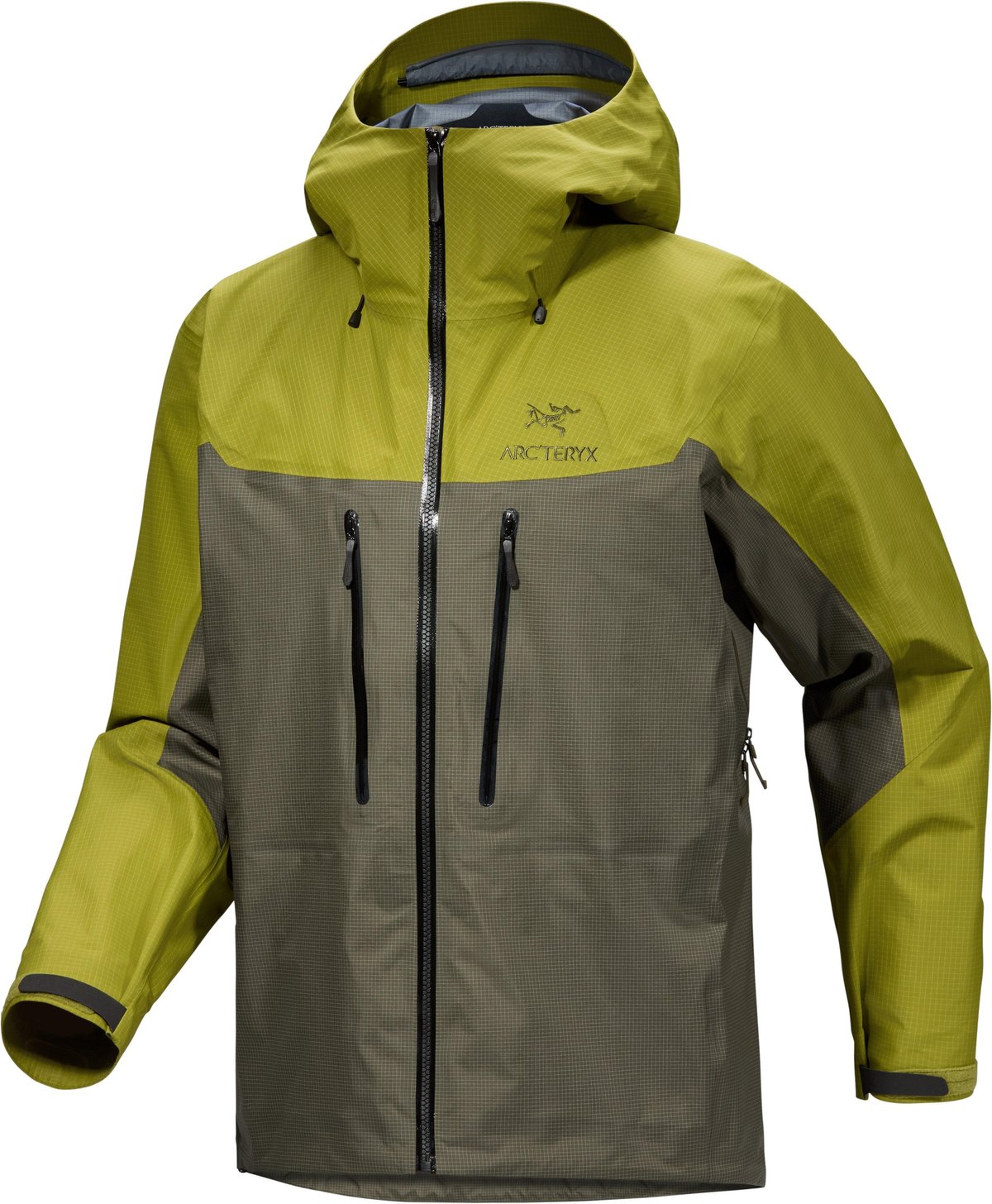 Buy the Arc'teryx Alpha at Tiso
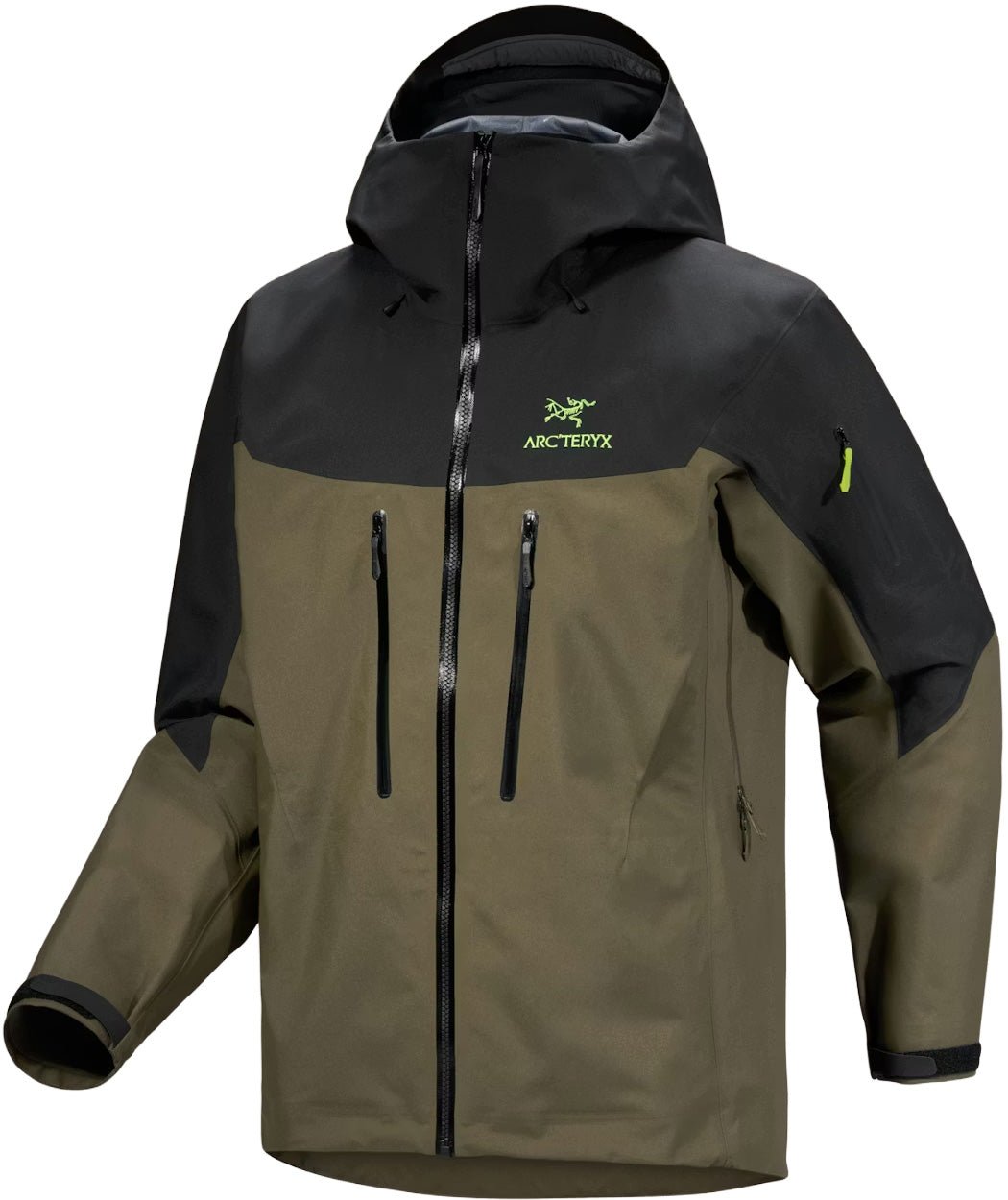
Alpha SV Jacket (~£800). SV is Severe, and this is the flagship: the most durable, most weatherproof shell Arc'teryx makes, with a heavy 100-denier face fabric built to survive the worst conditions on the planet. It is roughly a third heavier, a third pricier and less breathable than the standard Alpha, and every gram of that is aimed at expedition and hard winter climbing. Unless that is genuinely your world, this is not the jacket you need, and there is no shame in that.
 Buy the Arc'teryx Alpha SV at Tiso
For these two Gore-Tex Pro shells head to head, see our Alpha vs Alpha SV comparison.
The direct comparison from our own shelves is the Rab Latok, a Gore-Tex Pro mountaineering shell that plays in exactly this space for meaningfully less money. If you want Gore-Tex Pro protection without Arc'teryx pricing, it is the one to read up on.
The softshell: Gamma
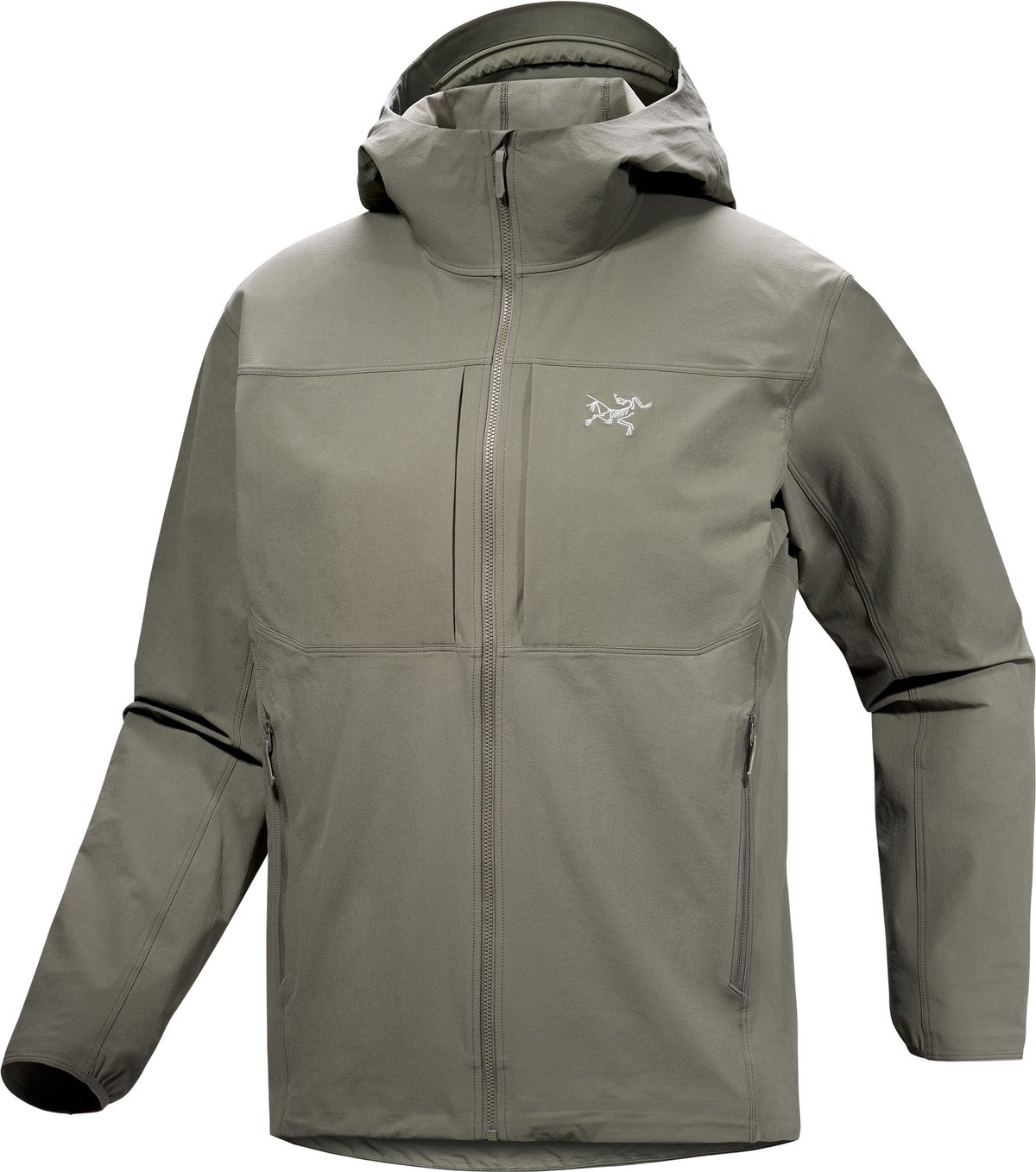
Gamma Hoody (~£280). The Gamma is the range's most misunderstood jacket, so let me be clear up front: it is a softshell, not a waterproof. It uses a four-way-stretch woven fabric with a DWR finish that shrugs off showers and shakes off snow, but it will wet out in sustained rain. What it does instead is breathe brilliantly and move with you, which makes it a lovely jacket for cold, dry, active days: crisp winter hill walks, high-output climbs, anything where a hardshell would leave you clammy. Think of it as the jacket you wear when it is cold and nasty but not actually raining. Pair it with a packable waterproof for when the sky opens.
 Buy the Arc'teryx Gamma at Tiso
Read the full Arc'teryx Gamma Hoody review for the detail on the softshell.
The insulation: Atom
The Atom is Arc'teryx's synthetic insulated midlayer, and it is one of the most versatile jackets the brand makes. Synthetic (rather than down) means it keeps insulating when damp and dries fast, which is exactly what you want in the British climate. It comes in two weights.
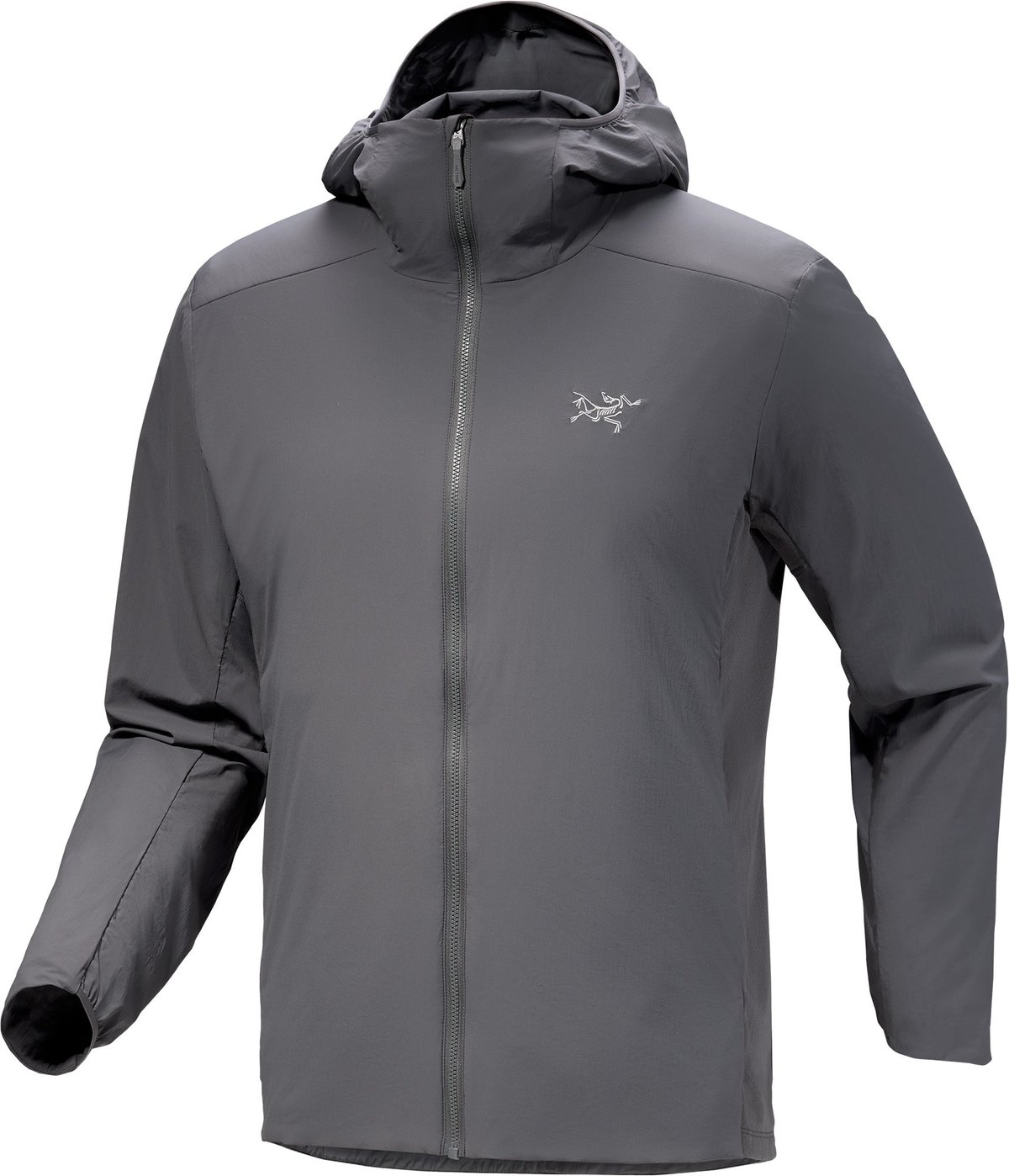
Atom SL Hoody (~£240). The lighter one, using Arc'teryx's lowest-density CoreLoft Stretch insulation (40g/m²). It is built for milder conditions and high-output days: a chilly pre-dawn start, or a hike that turns on you when the cloud rolls in. Wonderfully light, and the one to reach for if you run warm or move fast.
 Buy the Arc'teryx Atom SL at Tiso
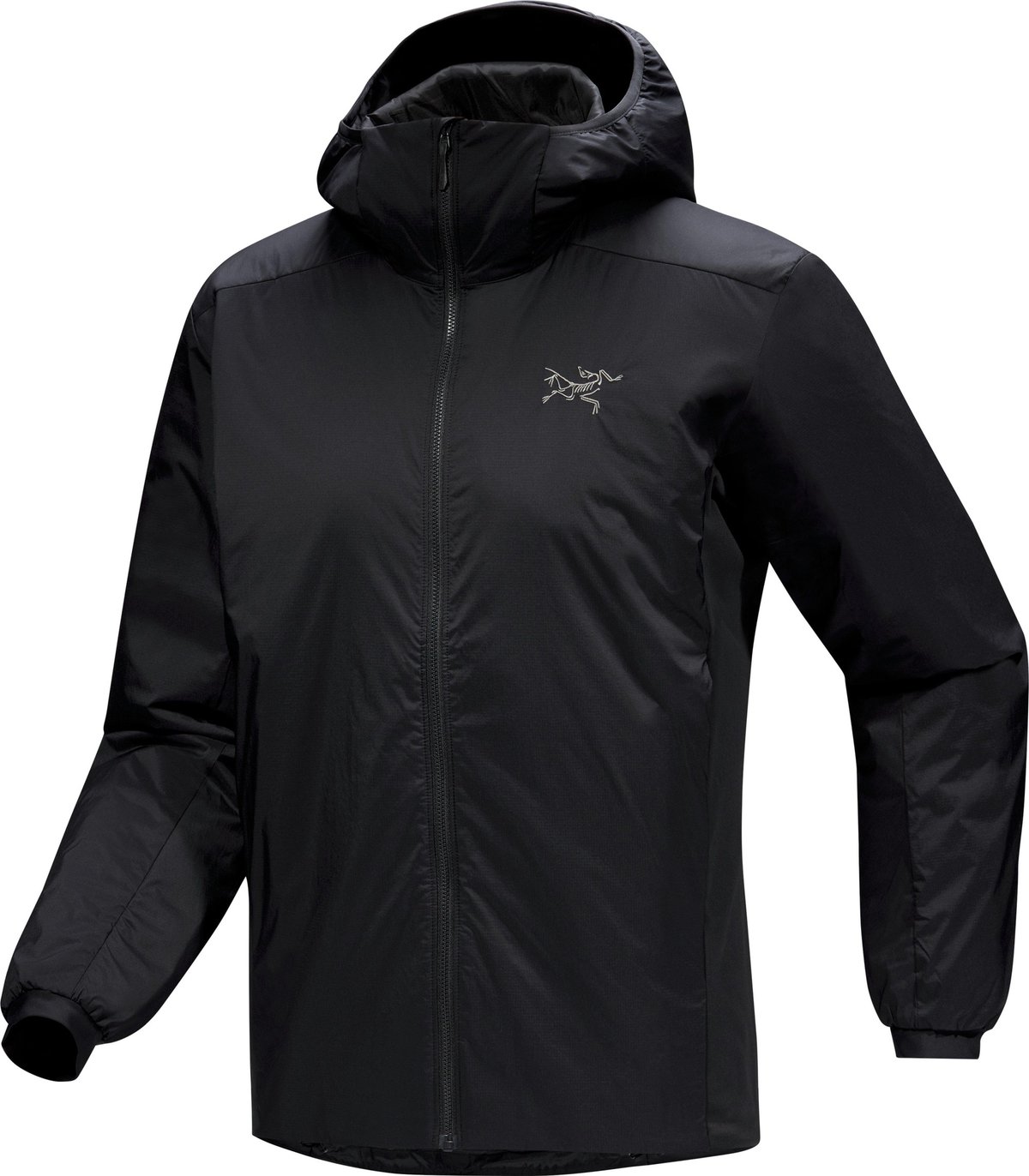
Atom Hoody (~£260). The standard Atom uses warmer CoreLoft Compact insulation (60g/m²), and it is the more versatile of the two by a good margin: warmer, more useful across more of the year, and a genuine do-everything midlayer. It works as a standalone jacket on cold days, as a midlayer under a shell when the weather turns, and as the insulation you throw on the moment you stop moving. For most people, the standard Atom is the Atom to buy.
 Buy the Arc'teryx Atom at Tiso
For the two Atom weights compared and which to pick, read our Atom vs Atom SL comparison.
The Atom's closest rival on our own site is the Rab Cirrus, a synthetic insulated midlayer that does the same job for less, and our Rab insulated jackets guide covers the wider field if you want to compare before you spend.
The down: Thorium
Thorium Hoody (~£450). When you want proper warmth rather than an active midlayer, the Thorium is the answer. It is a down jacket, using warm 750-fill-power goose down through the body and sleeves, with a clever twist: Arc'teryx maps synthetic insulation into the moisture-prone zones (the shoulders and cuffs) so the jacket keeps performing where down would otherwise struggle with damp. That makes it a more sensible down jacket for the British hills than a pure-down design. It is the one to wear when you stop, on cold belays, cold summits and cold camp evenings.
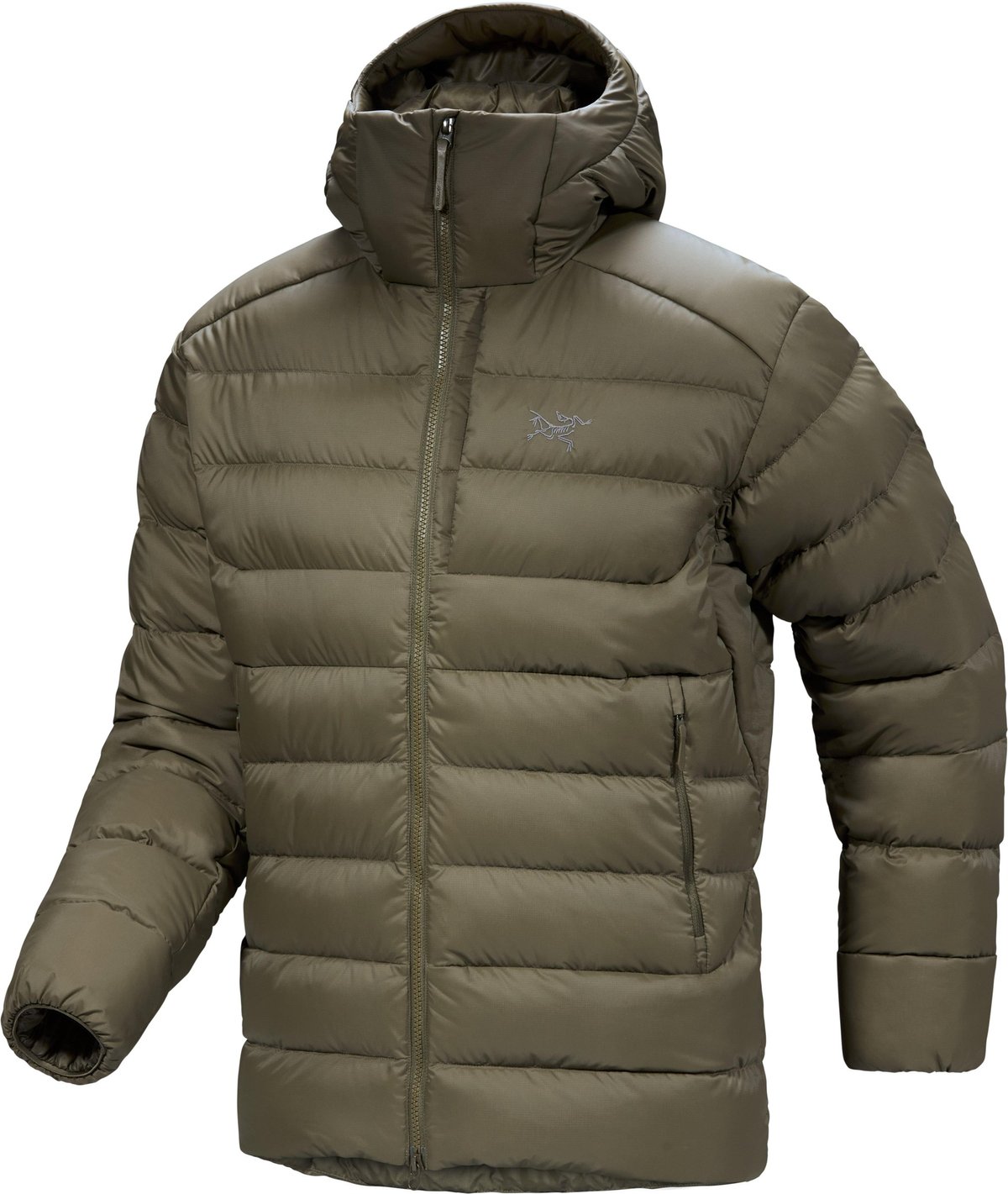 Buy the Arc'teryx Thorium at Tiso
Read the full Arc'teryx Thorium Hoody review for the detail.
For how down stacks up against synthetic for UK conditions, and the Rab down jackets that compete with the Thorium (the Microlight Alpine, Electron Pro and Nebitron Pro), our Rab insulated jackets guide is the piece to read.
The windshell: Squamish
Squamish Hoody (~£180). The most affordable jacket in the range, and one of the most useful. The Squamish is an ultralight windshell: a thin, wind-resistant, highly breathable layer that stuffs into its own chest pocket and weighs next to nothing. It is not waterproof and it is not insulated. What it does is stop the wind stripping the warmth out of your baselayer and midlayer, which on an exposed ridge makes a huge difference for almost no weight or bulk. It lives in the pack all year and comes out more than you would expect.
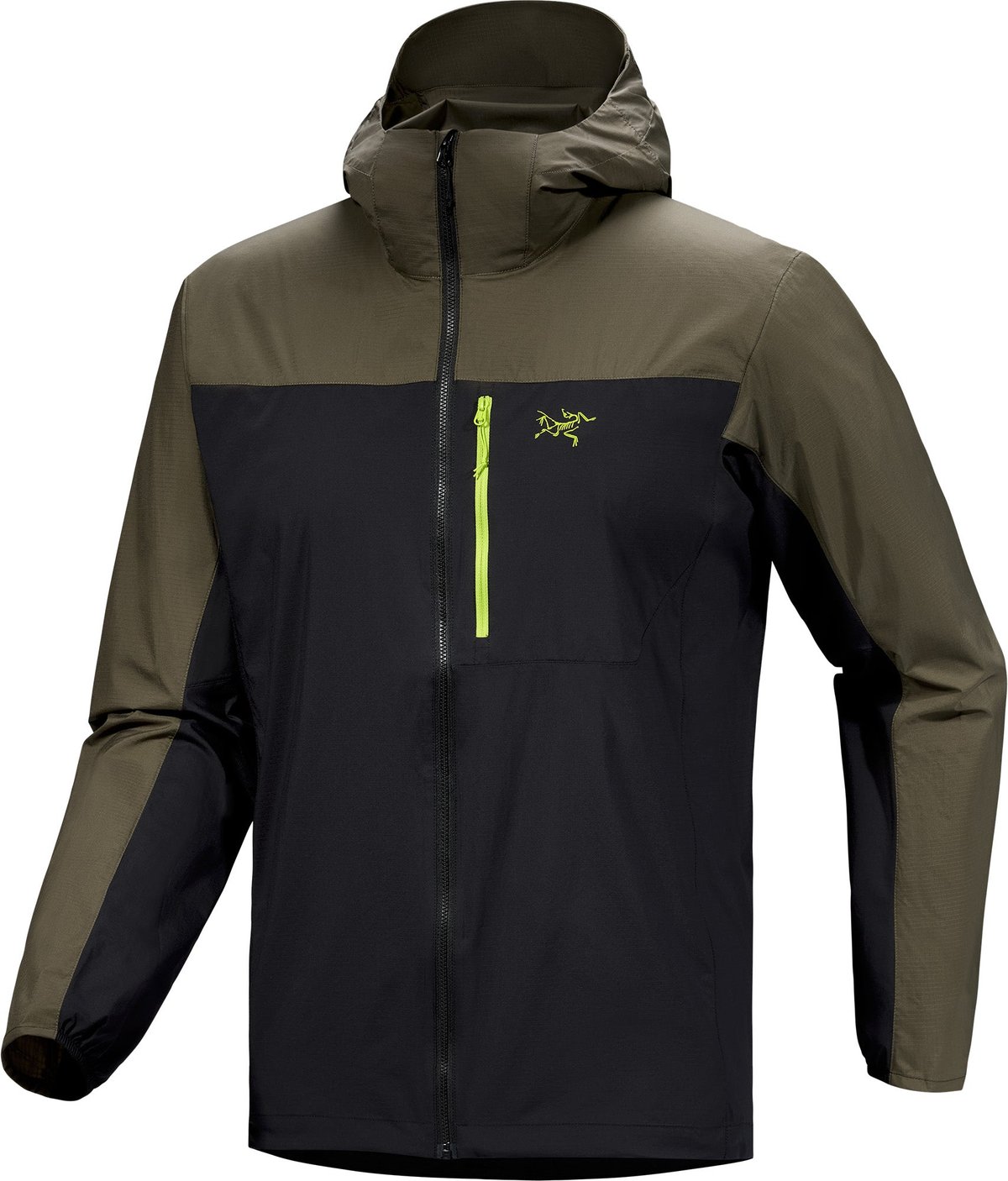 Buy the Arc'teryx Squamish at Tiso
Read the full Arc'teryx Squamish Hoody review for the detail on the windshell.
The outlier: Rush ski jacket
Rush GORE-TEX Ski Jacket (~£750). Included here for completeness, because it shows up in the same Arc'teryx jacket listings, but this is a ski jacket, not a hiking one. It is built for lift-served and backcountry skiing, with a longer cut, a powder skirt and ski-specific features that add weight and bulk you do not want on the hill. If you ski, it is excellent. If you are here for walking, skip it and buy a Beta.
How these work with a fleece or midlayer
None of these jackets is a complete system on its own, and this is where a lot of Arc'teryx money gets spent badly. A shell like the Beta keeps the weather out but adds no warmth. So what goes underneath matters just as much as the jacket on top.
My own everyday layer under a shell is a grid fleece, and the one I actually live in is the Arc'teryx Delta Hoody: a superlight micro-grid that breathes hard on the climb and disappears under a jacket. That combination, a grid fleece plus a Beta, covers the overwhelming majority of UK walking. On colder days the Atom slots in as the warm layer, either over the fleece under the shell when it is truly cold, or straight over a baselayer when it is dry. The Squamish windshell does a different job again, going over a fleece to block wind without the sweatiness of a full waterproof.
If you are building the layers rather than just buying the jacket, start with our best hiking fleeces guide, which covers the Delta and the whole grid-fleece field and explains how to put a layering system together. Get the midlayer right and even the cheaper shells in this range punch above their price.
Women's versions
The range above is the men's line, but women's versions are available too, with the same technology and the same names in a women's-specific fit. The two most relevant to this guide are the women's Beta Jacket, the do-everything three-layer shell, and the women's Beta SL, the superlight packable version. Everything said above about the men's Beta and Beta SL applies: the standard Beta is the sensible one-jacket choice, the SL is the specialist featherweight, and the fit is cut for women rather than a scaled-down men's pattern.
Women's Beta at Tiso Women's Beta SL at TisoSo which one should you actually buy?
If you want the short version, here it is by type of walker:
- The one-jacket UK hillwalker: the Beta. It is the honest answer for most people and the jacket the rest of the range is measured against.
- The gram-counter and fast-and-light walker: the Beta SL for the shell, the Atom SL for insulation, the Squamish for wind. Light, packable, specialist.
- The winter and rough-ground walker: the Beta AR. Tougher fabric, a proper helmet-compatible hood, built to last.
- The climber and alpinist: the Alpha for all-round hard use, the Alpha SV when conditions are genuinely severe.
- The layering buyer who already has a shell: the Atom Hoody as your do-everything midlayer, or the Thorium when you want real warmth for stopping.
- The cold-but-dry, high-output walker: the Gamma softshell, with a packable waterproof alongside it.
Get that far and you have made every decision that matters. The last one, and genuinely the only one left, is which colour you are getting it in.
Getting Arc'teryx for less
Arc'teryx is a lot of money, and there is no pretending otherwise. But if you cannot quite stretch to full RRP, there is one honest way to get top-tier gear for less, and it is worth knowing about.
It is the Arc'teryx official outlet. It is a genuinely useful resource: previous-season colours and models at reduced prices, straight from the brand. The catch is that sizes and colours are limited and you are usually buying last year's version rather than the current line, but the gear itself is the same top-tier build, and it is a smart way in if the current-season price is a stretch.


