


Quick verdict
The Arc'teryx Squamish is a windshell, an ultralight, highly packable wind-resistant layer, not a waterproof and not insulated. It blocks the wind that strips warmth from your fleece and baselayer, breathes well enough to climb hard in, and stuffs into its own chest pocket. The men's Squamish Hoody (150g, £180) is the all-round pick; the hoodless Squamish Jacket (145g, £160) saves £20 and the hood and adds two hand pockets. Both come in men's and women's fits, all in Tyono 30 fabric. It sheds a passing shower but wets out in sustained rain, so it pairs with a waterproof shell rather than replacing one. It is the cheapest way into the Arc'teryx range and one of the smartest.
Arc'teryx Squamish Hoody: 4.6/5
An ultralight, highly breathable windshell that stuffs into its own chest pocket and weighs next to nothing. Not waterproof and not insulated, but the layer that stops wind stripping the warmth out of everything underneath. The cheapest way into the Arc'teryx range and one of the smartest.
- Hoodless, cheaper: Arc'teryx Squamish Jacket (~£160)
- The waterproof it is not: Arc'teryx Beta Jacket (~£350)
The full review is below.
The Arc'teryx Squamish is a windshell, an ultralight, wind-resistant layer you pull on to stop the wind stripping the warmth out of everything underneath, not a waterproof and not insulated. It is also the cheapest jacket the brand makes, and the one most people get wrong. Look at the price next to a Beta or an Alpha and it is tempting to read it as the budget waterproof, the entry-level shell, the Arc'teryx you buy when you cannot stretch to the real thing. It is none of those things. It is a windshell, a distinct category with a specific job, and once you understand that job it becomes one of the most useful pieces of kit you can carry.
Should you buy the Arc'teryx Squamish?
The Squamish is an ultralight, wind-resistant, highly breathable layer that stuffs into its own chest pocket and weighs next to nothing. It is not waterproof and it is not insulated. What it does is stop the wind from stripping the warmth out of your baselayer and midlayer, and on an exposed ridge that makes a real difference for almost no weight or bulk.
Bought expecting a waterproof, it will disappoint you the first time it rains. Bought for what it actually is, it is a smart, versatile jacket that lives in the pack all year and comes out far more than you expect. It is also the cheapest way into the Arc'teryx range at around £180, and unlike a lot of cheapest-in-range products, it is not a compromise. It is a properly good example of exactly what it sets out to be.


What the Arc'teryx Squamish is: windshell, not waterproof
A windshell is a very thin, tightly woven outer layer built to block wind while letting sweat and heat escape freely. That is the whole idea. It is not trying to keep the rain out and it is not trying to keep you warm. It is trying to do one thing, cut the wind, and to do it while adding almost nothing to the weight on your back.
That matters more than it sounds. Wind is what steals your body heat fastest. You can be perfectly comfortable in a fleece on a sheltered climb, crest onto an exposed ridge, and feel the warmth pulled straight off you the moment the wind hits. A windshell stops that. It traps the still air your midlayer is holding and keeps the moving air on the outside, so the layers you are already wearing carry on doing their job.
The Squamish is a benchmark example. The Tyono 30 fabric is light enough to scrunch into a fist, breathable enough to keep on during a hard climb without cooking, and cut with a hood that actually stays put. It is not insulated, so it adds no meaningful warmth on its own. Put it on over a bare baselayer in still air and you will barely notice it. Put it on over a working midlayer in a stiff wind and the difference is immediate.
Arc'teryx Squamish vs a waterproof shell
This is the confusion worth clearing up, because it is where the money gets spent badly. A windshell and a waterproof shell look similar and both go over your other layers, but they solve different problems.
A waterproof shell, like the Arc'teryx Beta, is built to keep sustained rain out. To do that it uses a waterproof membrane, and even the best membranes trade away some breathability to hold the water back. That is why a full waterproof can leave you clammy on a hard, dry climb: you are sealing sweat in to keep rain out.
A windshell makes the opposite trade. It gives up rain protection almost entirely in exchange for weight, packability and breathability. The Squamish will shrug off a passing shower thanks to its DWR finish, but it is not waterproof and it will wet out in real rain. What it gives you back is a layer you can climb hard in without steaming up, that packs to nothing, and that you will happily wear for hours where a waterproof would come straight back off.
The two are not rivals. They are different tools. A well set-up walker often carries both: the windshell for the cold, dry, windy majority of the day, and the waterproof for when the sky actually opens. If you only own one, and rain is a real risk, that one should be a waterproof. The windshell is what you add once the waterproof is sorted. For the full picture of where the Squamish sits in the line-up, our Arc'teryx jackets explained guide maps the whole range against each other.
Arc'teryx Squamish Hoody vs Jacket
The Squamish comes in two forms, and the choice is just about the hood. Both use the same Tyono 30 fabric and do the same windshell job.
The Squamish Hoody (150g, ~£180) is the all-round pick. The hood adds real wind protection around the head and neck exactly where you feel it most on an exposed top, and tucks away when you do not need it. It has a single zip chest pocket that the whole jacket packs into.
The Squamish Jacket (145g, ~£160) drops the hood, which saves a few grams and £20, and suits anyone who wears a helmet or already has a hood on their shell. It is the better-featured of the two for pockets, adding two zipped hand pockets alongside the packable chest pocket. If you rarely use a windshell hood, the Jacket is the cleaner, cheaper choice.


Women's Arc'teryx Squamish range
Both forms come in women's versions, on a women's-specific cut with the same Tyono 30 fabric, and a touch lighter than the men's:
- The women's Squamish Hoody (123g, ~£180) is the hooded all-rounder.
- The women's Squamish Jacket (120g, ~£160) is the hoodless version with the extra hand pockets, saving £20.
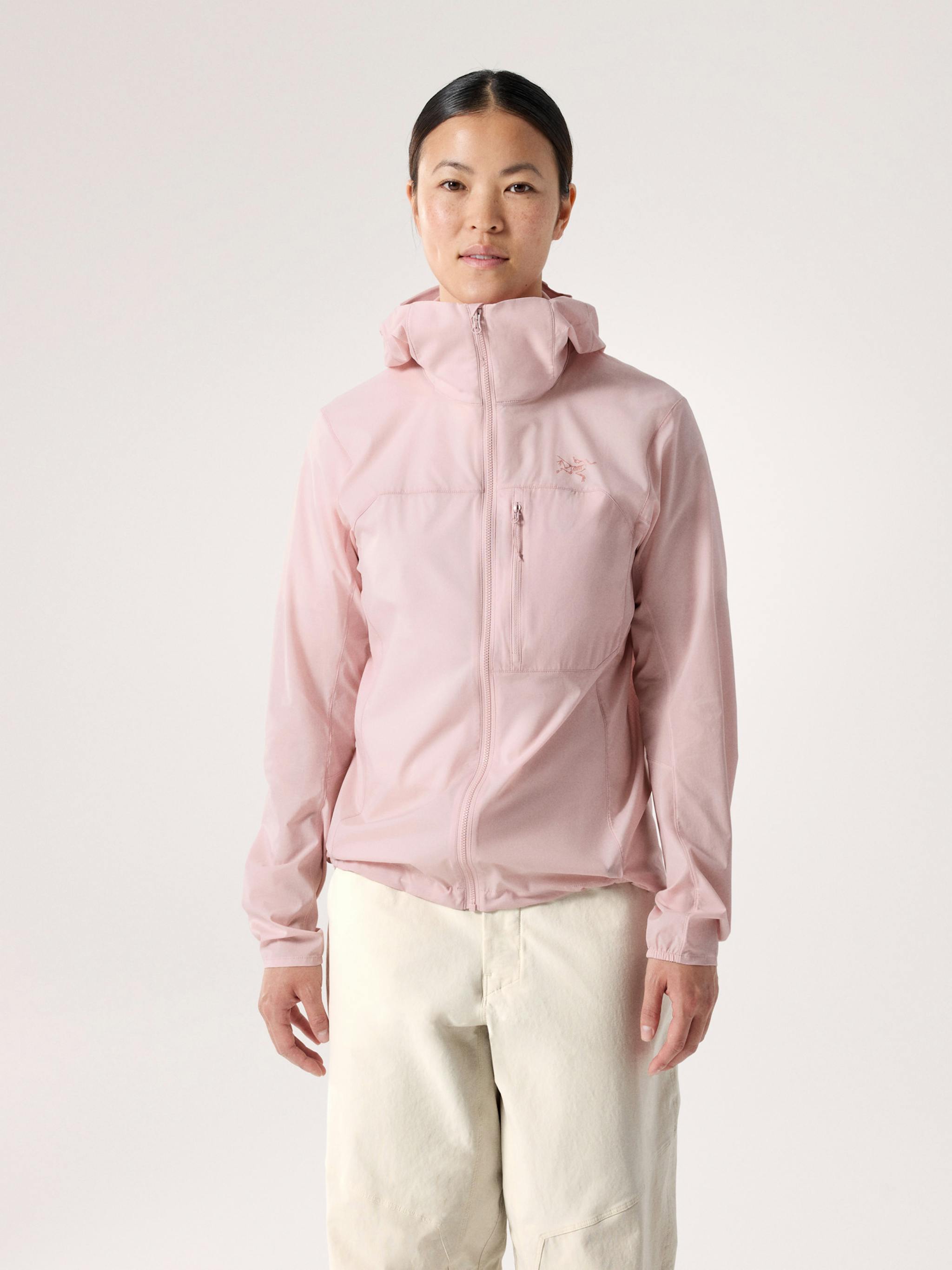
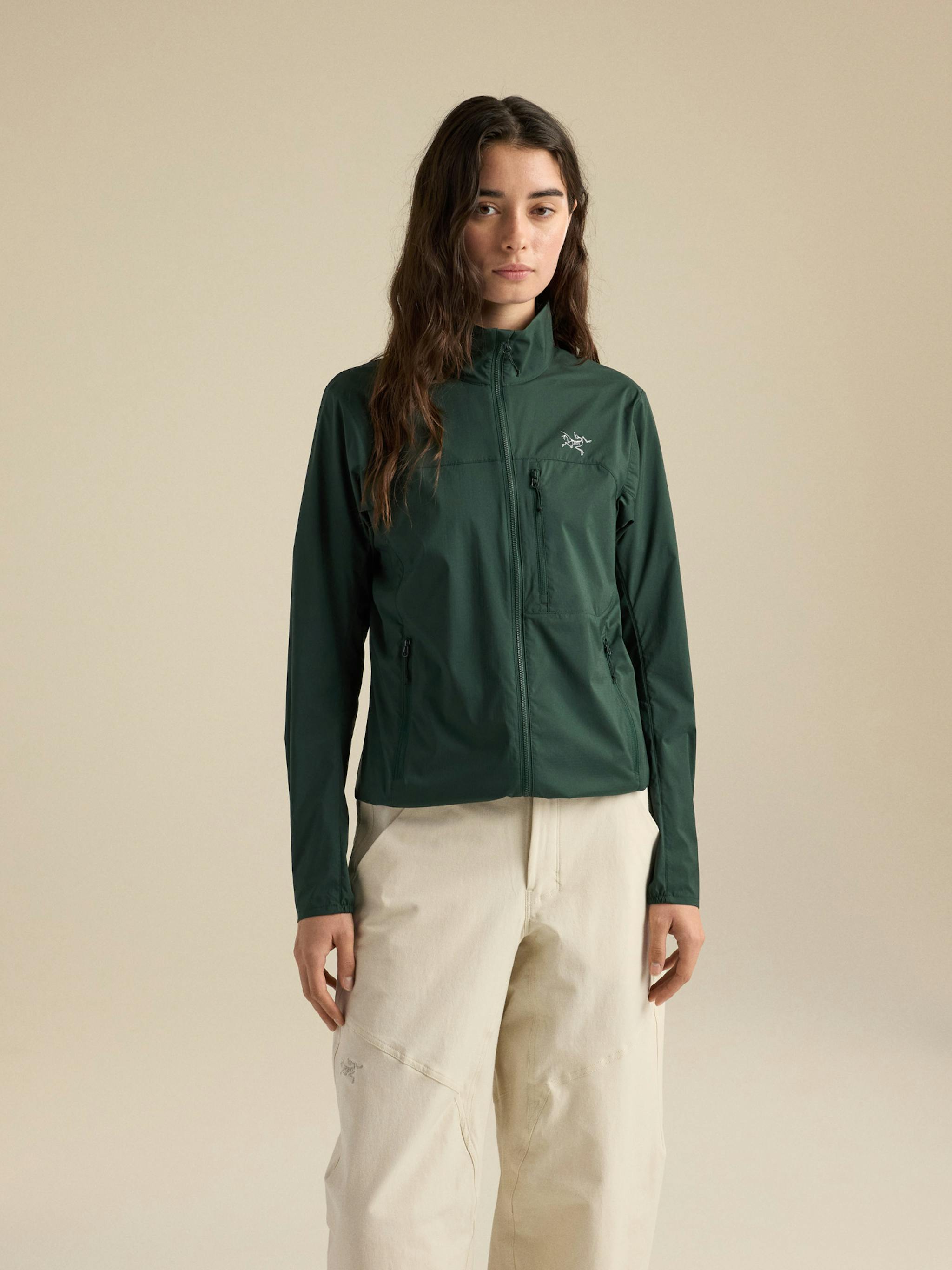
Who the Arc'teryx Squamish is for
The Squamish suits the walker who has the basics covered and wants to walk more comfortably. If you already own a waterproof and a fleece, this is the piece that fills the gap between them: the layer for cold, dry, breezy days where a fleece alone gets stripped by the wind but a full waterproof is overkill.
It is at its best over a fleece. A grid fleece breathes hard on the climb and holds a layer of warm air, but on its own that warm air blows straight through in wind. The Squamish goes over the top and seals it in, without the sweatiness of a full waterproof. That combination, fleece plus windshell, covers a huge amount of British walking: coast paths, rolling hills, exposed ridges on dry days, anything breezy that is not actually raining. If you are building that side of your system, start with our best hiking fleeces guide, because the fleece underneath is what the Squamish is designed to work with.
It also suits the fast-and-light walker and the gram-counter, for the simple reason that it costs almost nothing to carry. It is the classic "just in case" layer that earns its place in the pack precisely because you never notice it is there until you need it.
Who is it not for? Anyone expecting rain protection, and anyone who wants warmth from the jacket itself. It is a wind layer. Judge it as one.
Arc'teryx Squamish packability and weight
This is where the Squamish justifies living in the pack all year. It stuffs into its own chest pocket, packing down to roughly the size of a small fruit, and weighs so little that it disappears in the bottom of a daypack. There is no honest reason to leave it at home, whatever the forecast, because it costs you nothing to bring.
That is the quiet argument for a windshell over almost anything else. The value of a layer is partly how good it is and partly how often you actually have it with you. A jacket you leave at home because it is bulky protects you on zero days. The Squamish is so small and so light that it comes every time, which means it is there on the day the wind gets up unexpectedly on an exposed top. Over a year of walking, that reliability is worth more than a headline feature.
Arc'teryx Squamish pros and cons
- Genuinely ultralight and stuffs into its own chest pocket, so it comes on every walk
- Highly breathable: you can climb hard in it without overheating
- Blocks wind effectively, keeping the warmth in your fleece and baselayer
- The cheapest way into the Arc'teryx range at around £180, or £160 for the hoodless Jacket
- A DWR finish shrugs off passing showers
- Hood stays put and the fit works well over a midlayer
- Not waterproof: it will wet out in sustained rain
- Not insulated, so it adds no warmth on its own
- Easy to misunderstand as a budget waterproof, which it is not
- The lightweight fabric is not built for bashing through rough, abrasive ground


