


Quick verdict
The Arc'teryx Gamma is a softshell, a stretchy, breathable, wind- and abrasion-resistant jacket for cold, dry, active days, not a waterproof. It comes in three tiers: the Gamma Lightweight (Fortius DW 1.0, coolest and most packable, from £240), the standard Gamma (Fortius DW 2.0, the durable everyday mid-weight, £280 hooded), and the fleece-backed Gamma MX (Fortius 2.0, the warmest, for alpine and ski touring, £350 hooded). Most hillwalkers want the standard Gamma Hoody. Each tier comes as a hood or a hoodless jacket, in men's and women's fits. Its DWR finish sheds showers and snow but it wets out in sustained rain, so pair it with a waterproof shell rather than replacing one.
Arc'teryx Gamma Hoody: 4.5/5
The durable, do-everything softshell and the Gamma most hillwalkers want. A four-way-stretch Fortius DW 2.0 woven that breathes hard and moves with you, built for cold, dry, active days where a hardshell would leave you clammy. Not a waterproof, and not trying to be.
- Lightest, high-output: Arc'teryx Gamma Lightweight Hoody (~£240)
- Warmest, alpine & ski: Arc'teryx Gamma MX Hoody (~£350)
The full review is below.
The Arc'teryx Gamma is a softshell, a stretchy, breathable, wind-resistant jacket for cold, dry, active days, not a waterproof. It is also the most misunderstood jacket in the entire Arc'teryx range, and almost every unhappy owner made the same mistake before they bought it. They saw the price, saw the Arc'teryx name, saw a hood and a technical-looking fabric, and assumed they were buying a waterproof. They were not. The Gamma is a softshell, and a softshell is a completely different tool from a waterproof shell.
Get that one distinction right and the Gamma is one of the nicest jackets you can own for UK hill days. Get it wrong and you will end up cold, wet and cross on a ridge somewhere, wondering why your expensive Arc'teryx let the rain straight through. So before anything else: the Gamma is not a waterproof, and it was never designed to be.
Which Arc'teryx Gamma should you buy?
For most hillwalkers the standard Gamma Hoody (~£280) is the one to buy. It uses Arc'teryx's durable Fortius DW 2.0 four-way-stretch woven fabric with a DWR finish, and it is the do-everything softshell: tough, weather-resistant for its type, and happy on cold, dry, active British hill days.
Step down to the Gamma Lightweight (~£240) if you run hot or want the most breathable, packable softshell for fast, warm-day efforts. Step up to the fleece-backed Gamma MX (~£350) if you want the warmest, most weatherproof version for alpine climbing and ski touring. None of them is waterproof: the DWR sheds showers and snow but the jacket wets out in sustained rain, so you carry a waterproof shell alongside it.


What the Arc'teryx Gamma actually is
A softshell like the Gamma has no waterproof membrane at all. It is a tightly woven stretch fabric with a DWR coating on the outside. That coating makes water bead and roll off, which handles a passing shower or dry, powdery snow without a problem, but there is nothing stopping water once the surface saturates. In steady or heavy rain the fabric wets through, the DWR gives up, and you get wet. That is not a fault. It is simply what a softshell is.
What you get in return is the two things a hardshell cannot give you: breathability and stretch. With no membrane fighting your body heat, warm damp air moves straight out through the weave, so you stay dry from the inside on a hard climb. And the four-way-stretch fabric moves with you rather than against you. The Gamma is the jacket for when it is cold and nasty but not actually raining, and in that window it is more comfortable than any waterproof.
Arc'teryx Gamma vs a waterproof shell
This is the section that matters more than any other, so here it is plainly.
A waterproof (a hardshell, like the Arc'teryx Beta) has a waterproof membrane bonded inside it. Water cannot pass through that membrane, so in sustained rain you stay dry. The trade is breathability: even the best membranes move moisture more slowly than open fabric, so working hard in a hardshell on a dry, cold day can leave you damp with sweat from the inside.
The Gamma has no membrane. Its DWR-treated weave sheds a passing shower but wets through in real rain. In exchange it breathes far better and moves far more freely. So the two jackets are not competitors, they are different tools:
- If the defining problem is rain, you want a waterproof.
- If the defining problem is staying comfortable while working hard in cold, dry or lightly showery conditions, you want the Gamma.
The reason this trips people up is the price and the badge. Nobody expects a £280 Arc'teryx jacket to let rain in, but that expectation is about the price tag, not the technology. The Gamma is expensive because it is a beautifully made softshell, not because it is a secret waterproof. If it is rain protection you are after, our Arc'teryx Beta guide covers the waterproof shells instead.
Arc'teryx Gamma tiers: Lightweight, standard and MX
The Gamma is not one jacket but a three-tier range, all softshells, split by fabric and warmth. Getting the tier right matters more than any other Gamma decision.
Gamma Lightweight (~£240 hooded, ~£220 as the hoodless Jacket). The thinnest and most breathable, built on Fortius DW 1.0 and weighing around 350g for the men's hoody. This is the warm-day, high-output softshell: fast ascents, milder conditions, anyone who runs hot.
Gamma standard (~£280 hooded, ~£260 as the hoodless Jacket). The durable everyday mid-weight, and the one most hillwalkers want. Fortius DW 2.0 is burlier and more weather-resistant than the Lightweight's fabric, at around 465g. The do-everything Gamma for cold, dry, active British hill days.
Gamma MX (~£350 hooded, ~£320 as the hoodless Jacket). The warmest and most weatherproof, built on a different Fortius 2.0 fabric with a bonded fleece backing, around 585g. MX stands for mixed conditions: it is aimed at alpine climbing and ski touring, where you want real warmth and protection from the softshell itself.
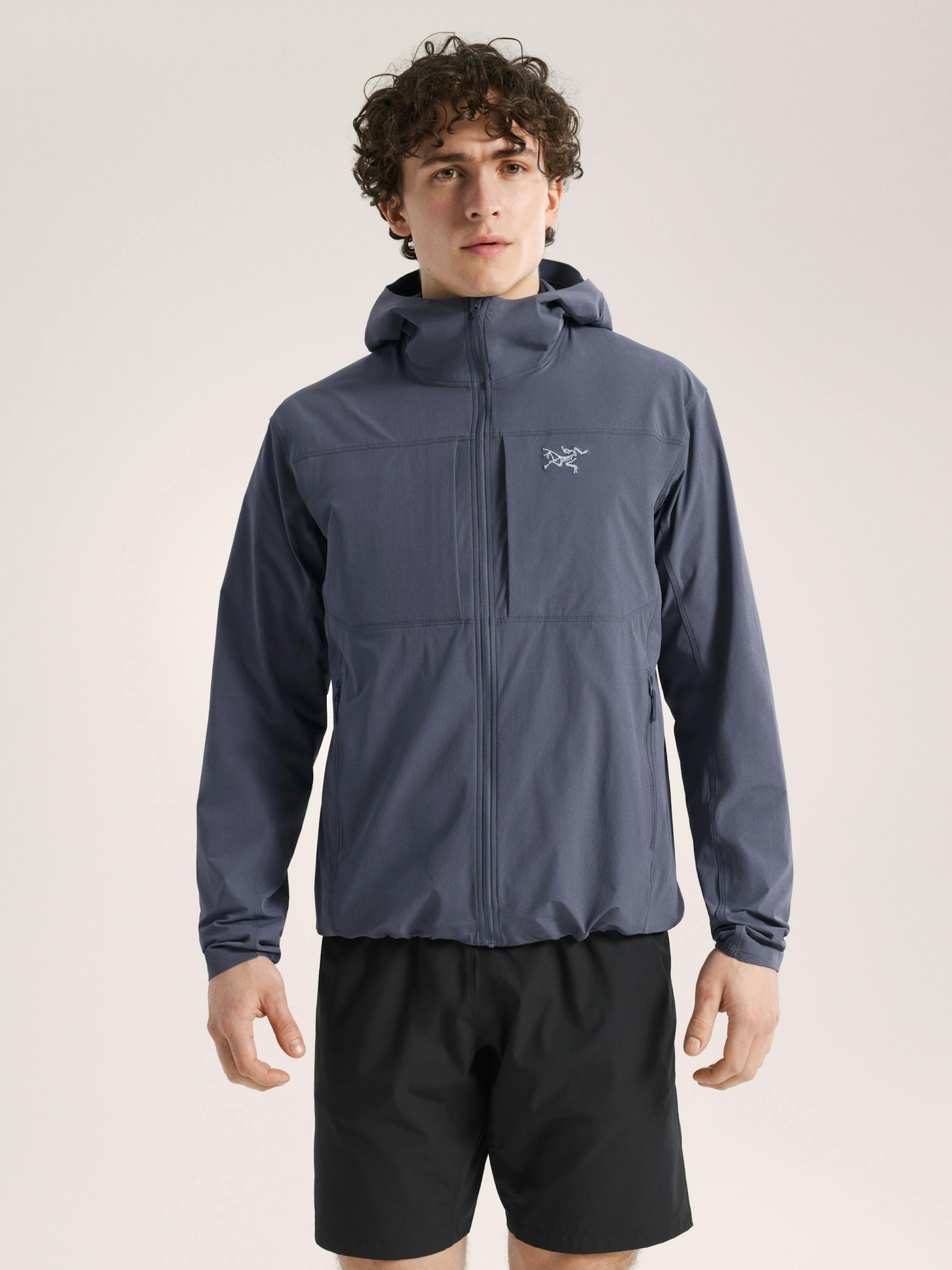
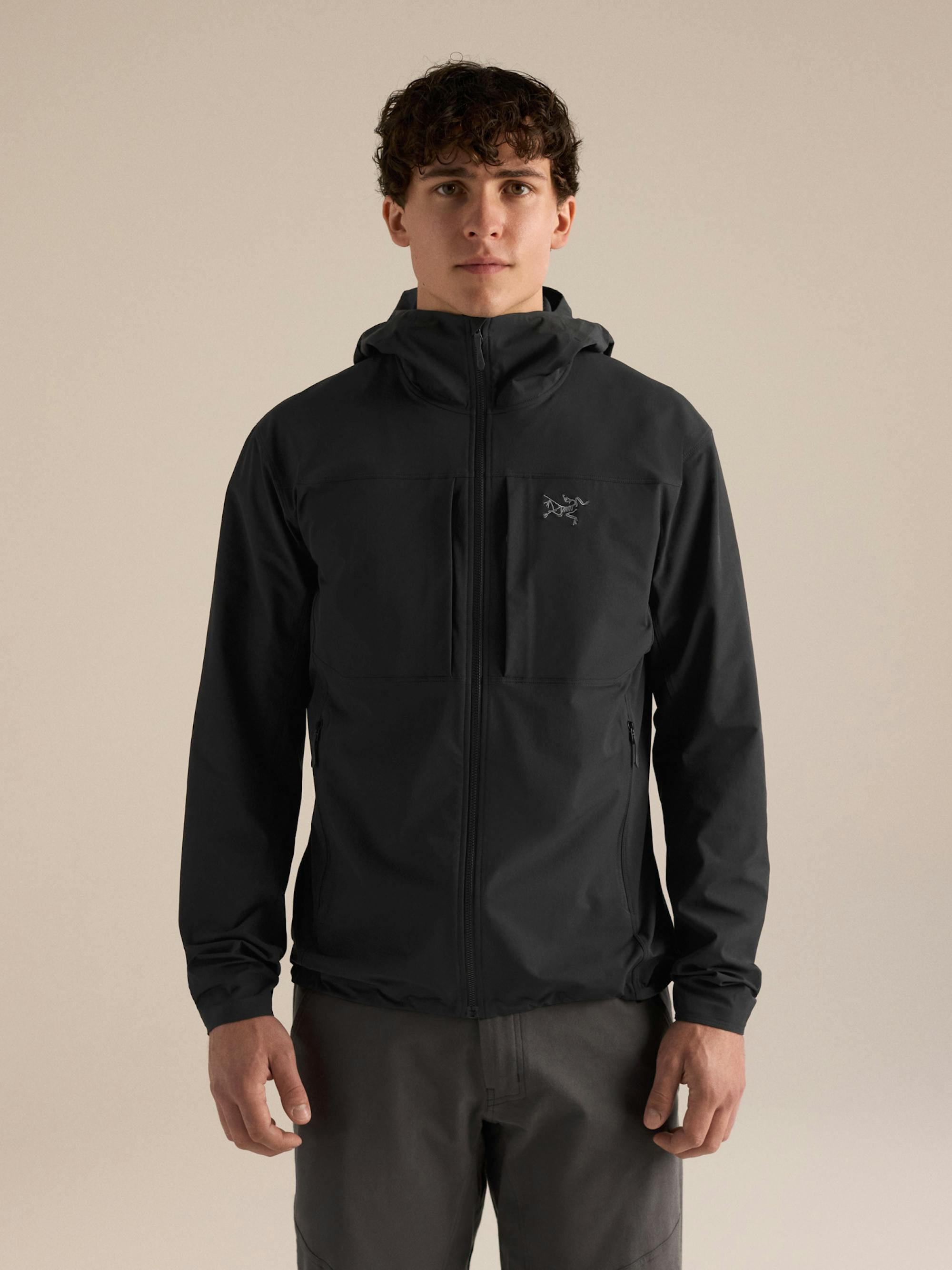
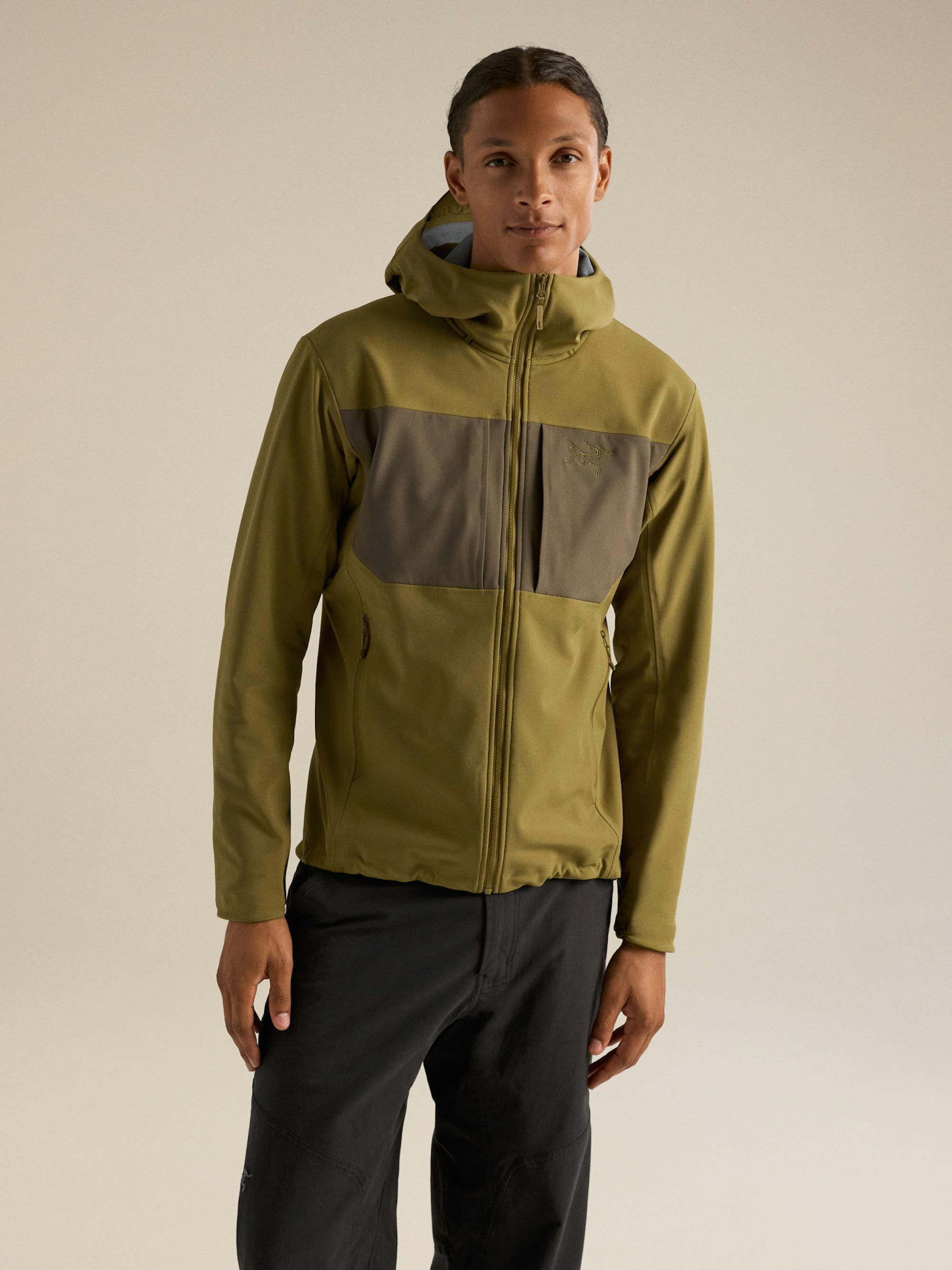
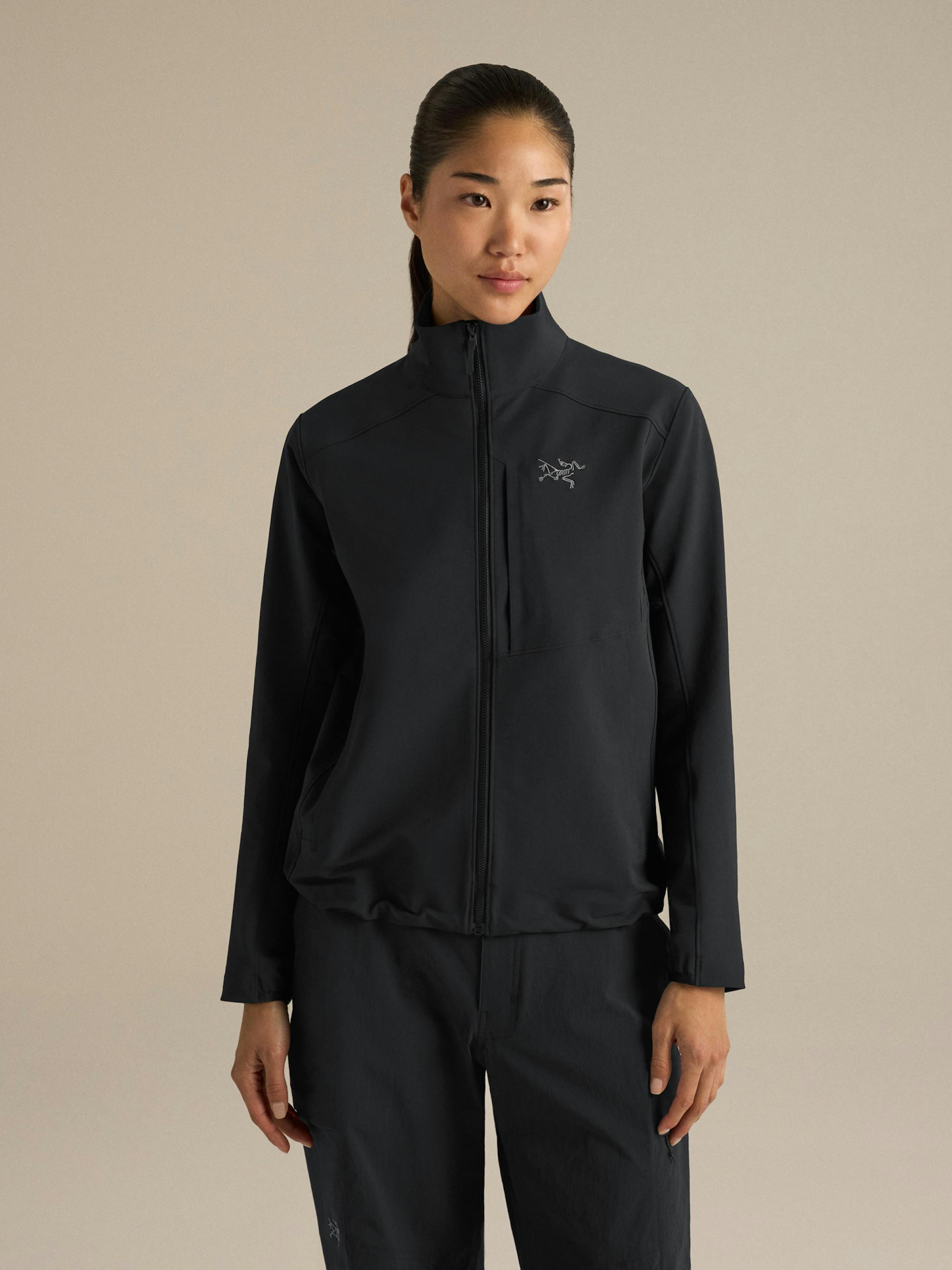
Each tier (except the women's lines) also comes as a hoodless Jacket, which saves the hood and around £20 to £30. Choose a Jacket if you wear a helmet or already have a hood on your shell; otherwise the Hoody is the more versatile pick.
Women's Arc'teryx Gamma range
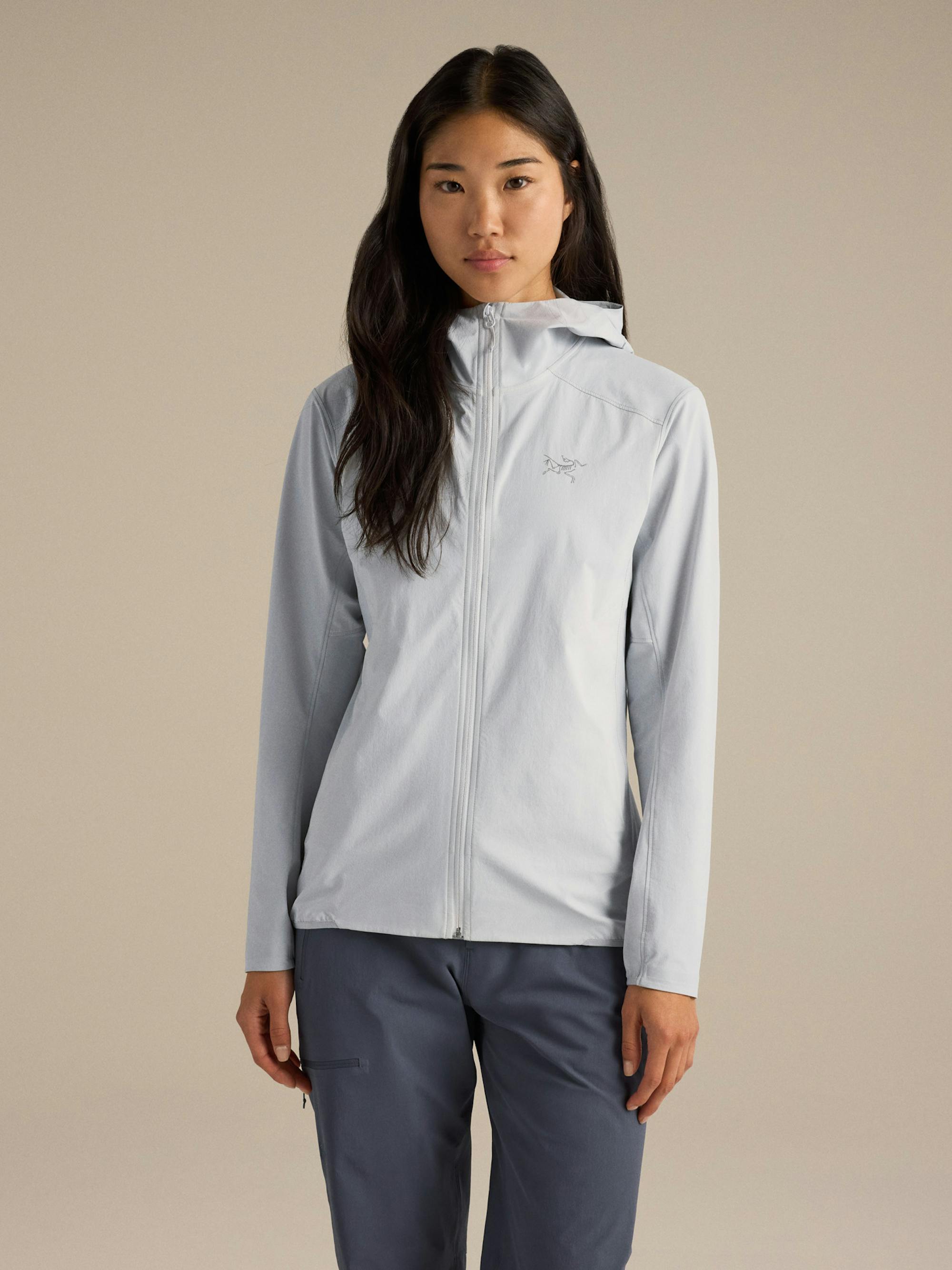
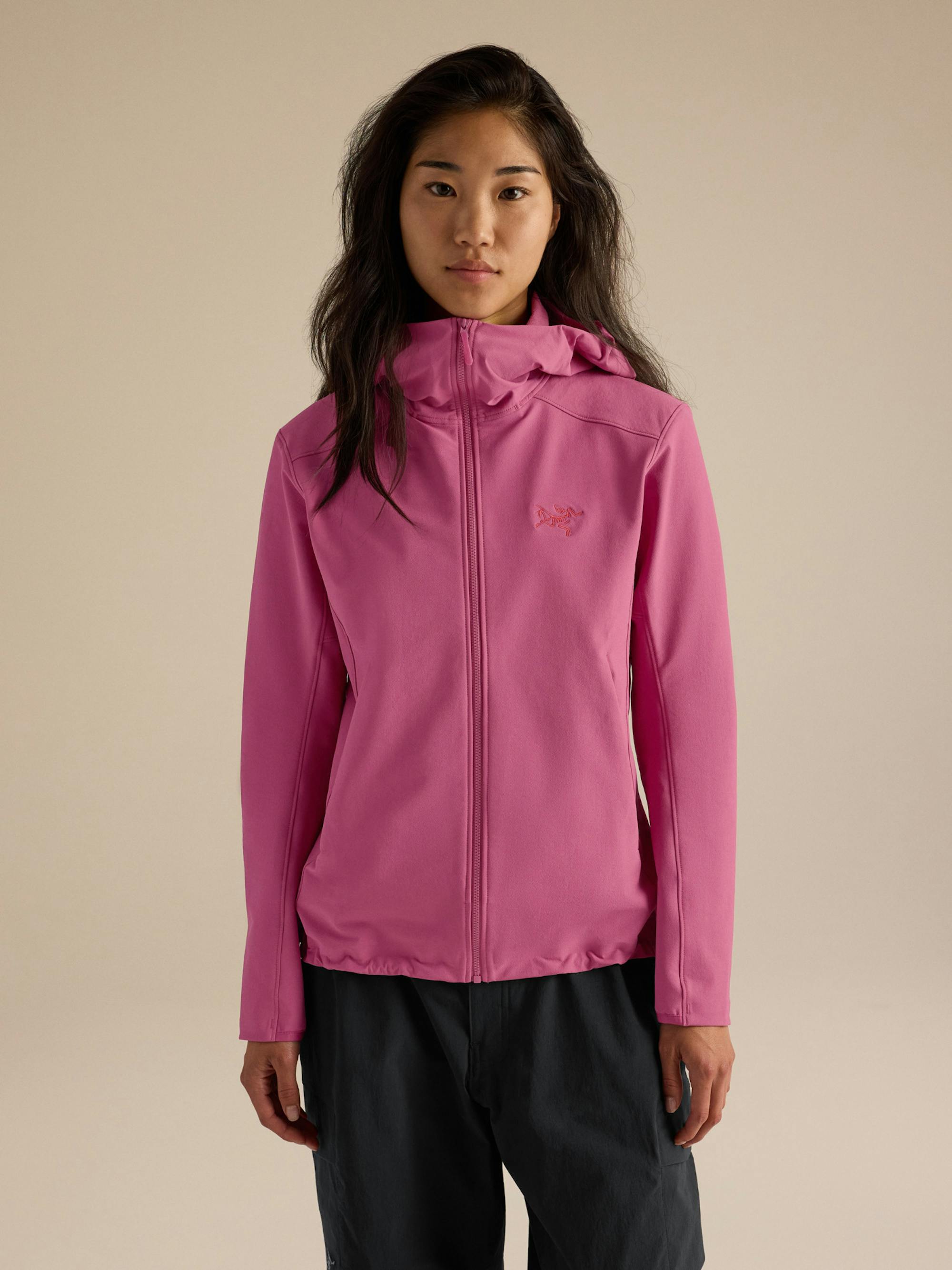
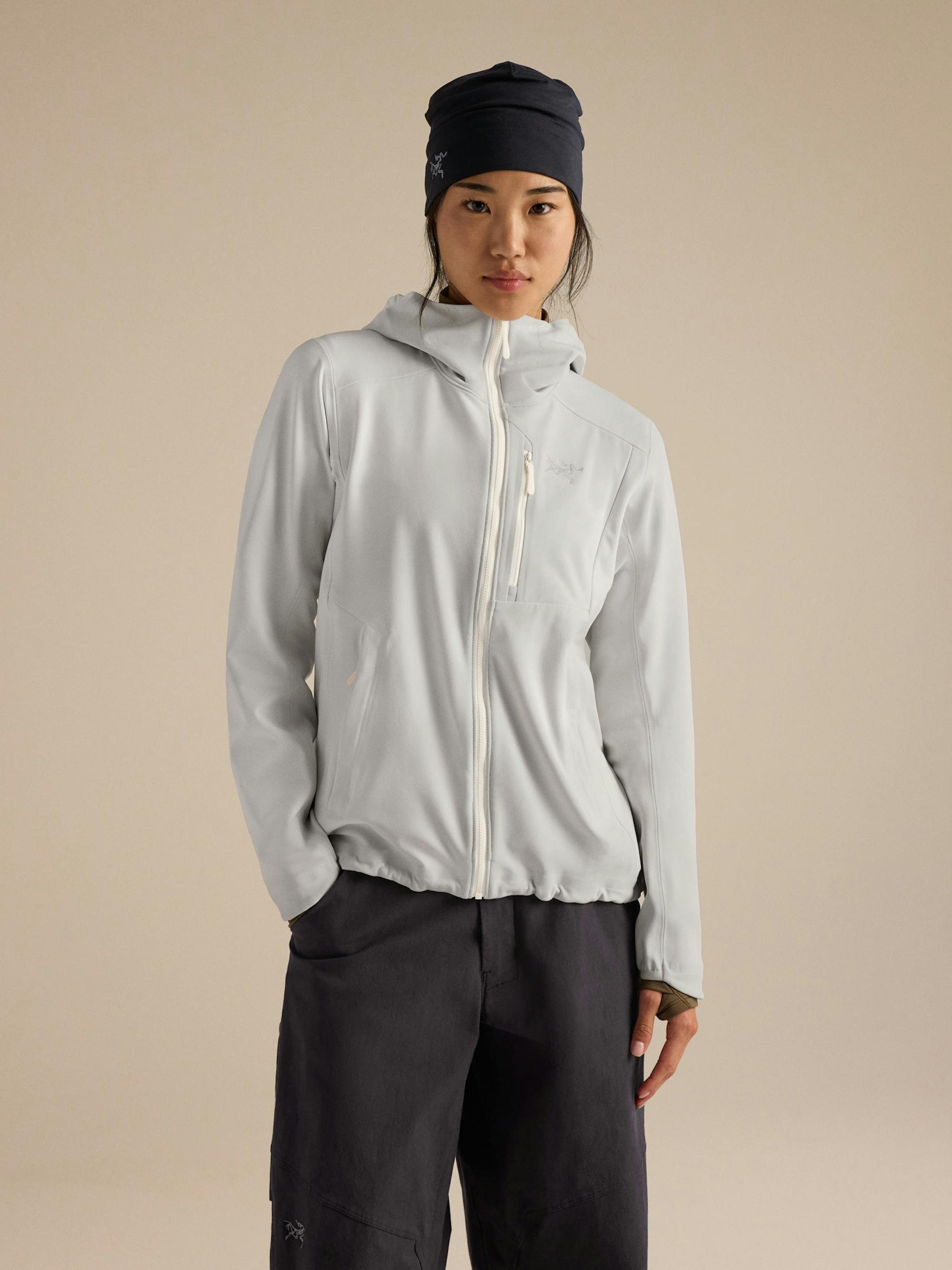
The women's Gamma comes on a women's-specific cut with the same Fortius fabrics, running lighter than the men's at each tier. The range is hoody-led, with a hoodless standard Jacket:
- The women's Gamma Lightweight Hoody (~£240) is the coolest, most packable, around 260g.
- The women's Gamma Hoody (~£280) is the durable everyday mid-weight, around 425g.
- The women's Gamma Jacket (~£260) is the hoodless standard version, around 350g.
- The women's Gamma MX Hoody (~£350) is the warmest, fleece-backed for alpine and ski use, around 510g.
What the Arc'teryx Gamma is great at
Once you stop asking the Gamma to be a waterproof, its strengths are obvious.
It breathes. With no membrane fighting your body heat, warm damp air moves straight out through the weave. On a hard climb in cold air you stay dry from the inside, which is exactly where a hardshell struggles. This is the single biggest reason to own a softshell.
It moves with you. The four-way-stretch fabric flexes in every direction, so there is no fighting the jacket when you reach, scramble or high-step. It feels more like a heavy stretch top than a technical shell, and after a full day that freedom of movement matters.
It shrugs off the light stuff. The DWR finish sheds showers and snow, so for the cold-and-dry British hill day, spitting sleet and blowing snow included, the Gamma keeps the weather off without ever making you clammy. It is only sustained rain that defeats it.
It handles wind and cold air well. The dense weave takes the bite out of the wind far better than a fleece, and the fabric has enough substance to feel warm and protective in cold, dry conditions on its own over a baselayer.
Arc'teryx Gamma fit and features
The Gamma is cut as a trim, athletic layer meant to go over a baselayer or a thin fleece, not over bulky insulation. That trim fit is deliberate: a softshell works best worn close, where its stretch and breathability do their job. Size up only if you plan to layer a thicker midlayer underneath.
The standout feature on the hooded versions is the helmet-compatible hood. It is sized and adjustable enough to fit over a climbing or ski helmet, and it cinches down neatly to sit over a bare head or a hat without flapping. For a jacket aimed at active mountain use, that hood is a proper feature rather than an afterthought.
Elsewhere it is clean and functional: articulated sleeves that stay put when you lift your arms, a hem adjustment to seal out draughts, zipped hand pockets, and low-bulk cuffs that sit under gloves. It is bulkier folded than a thin windshell like the Squamish, but it earns that with warmth, stretch and durability the windshell does not have.
Arc'teryx Gamma pros and cons
- Breathes far better than any hardshell, so no clammy sweat-out on hard, cold efforts
- Four-way stretch fabric moves with you and never fights your reach
- DWR sheds light showers and shakes off dry snow with ease
- Three tiers (Lightweight, standard, MX) to match warmth to your use
- Excellent helmet-compatible hood for climbing and winter use
- Cuts the wind far better than a fleece over a baselayer
- Not waterproof: it will wet out in sustained or heavy rain
- You still need to carry a packable waterproof for real weather
- Trim fit leaves little room for a thick midlayer underneath
- Softshell price sits close to some full waterproof shells
Who the Arc'teryx Gamma is for
The Arc'teryx Gamma is for the cold-but-dry, high-output walker and climber: someone who runs warm when moving, hates the clammy feel of a hardshell on a working climb, and does most of their walking in cold, dry or lightly showery conditions rather than steady rain. Most will want the standard Gamma Hoody; pick the Lightweight for fast warm-day efforts or the fleece-backed MX for alpine and ski use. Wear it with a packable waterproof kept in the pack for when the weather turns. It is not the jacket for anyone whose main enemy is rain, and it should never be your only outer layer on the UK hills.


