


Quick verdict
For most climbers and alpinists the standard Arc'teryx Alpha (around £650) is the one to buy: a light, breathable Gore-Tex Pro shell with a climbing cut for moving fast over technical ground. Go lighter with the Alpha SL (around £450, 232g) as a fast-and-light or emergency shell, or heavier with the Alpha SV (around £800, 492g) for expeditions and severe conditions. All three use the same Gore-Tex Pro membrane; the difference is face-fabric weight and durability. Most UK hillwalkers do not need an Alpha at all and are better served by the cheaper, lighter Beta. The whole line comes in women's fits too.
Arc'teryx Alpha Jacket: 4.8/5
The more versatile of the Alpha shells for most buyers. A light, breathable Gore-Tex Pro jacket with a climbing-focused cut, built for moving fast over technical ground without the weight and stiffness of the SV.
- Lightest, fast-and-light: Arc'teryx Alpha SL Jacket (~£450)
- Most severe (expedition flagship): Arc'teryx Alpha SV Jacket (~£800)
The full review is below.
The Arc'teryx Alpha is a waterproof hardshell jacket built for climbing, a Gore-Tex Pro shell for serious alpine and mountain use. If you are looking at the Alpha shells, you have already climbed past the part of the range that most walkers ever need. These are the brand's dedicated climbing and alpine hardshells, a clear step above the Beta family, and all three are built on the latest PFAS-free Gore-Tex Pro membrane. So the question is not whether they are good. They are the best-made alpine shells money can reasonably buy. The question is which one, and the answer comes down to a single trade-off: weight and breathability against sheer durability and weather protection.
Here is the short version before the detail.
Which Arc'teryx Alpha should you buy?
The Alpha (~£650) is the one most people should buy. It is the balanced, breathable Gore-Tex Pro shell, with a climbing-focused cut, and it is the alpine all-rounder for moving fast over technical ground.
The Alpha SL (~£450) is the featherweight. At just 232g it is the lightest Gore-Tex Pro shell Arc'teryx makes, a fast-and-light and emergency layer rather than a jacket for hard daily abuse. Unusually, it is also the cheapest Alpha.
The Alpha SV (~£800) is the flagship. SV stands for Severe, and it earns the name: a heavy 100-denier face fabric and the most durable, most weatherproof shell Arc'teryx builds, at 492g. It is roughly a third heavier, a third pricier and less breathable than the standard Alpha, and it is built for expeditions and hard winter climbing.
For most buyers the standard Alpha is the smarter choice. The SL is a specialist featherweight and the SV a specialist expedition tool, and buying either for general use means paying for a jacket tuned to an extreme you will not meet. If none of these descriptions sounds like your walking, the honest answer is that you want a Beta instead, and we will come back to that.
What Arc'teryx Alpha SL, Alpha and SV mean
Arc'teryx names its jackets like a parts catalogue, but the logic is consistent once you crack it. The model name tells you the family, and the suffix tells you how tough.
Alpha is the family: climbing and alpine hardshells, cut for reaching, scrambling and moving over technical terrain, and built a clear step above the Beta hillwalking range. Where the Beta is the sensible do-everything shell for UK hills, the Alpha is aimed at people on rope, rock and ice.
SL is Superlight and SV is Severe, the two ends of the scale. SL means the lightest, most pared-back version, built with the thinnest face fabric for the lowest weight. SV means the most durable, most weatherproof version, built with the heaviest fabric for the worst conditions on earth. The standard Alpha sits in between.
All three now use the current PFAS-free Gore-Tex Pro membrane, so the waterproofing and breathability of the laminate itself is the same on paper. The real-world difference comes from the face fabric bonded to it: a gossamer 20-denier Hadron on the SL, a heavy 100-denier weave on the SV, and a mix in between on the standard Alpha.
Arc'teryx Alpha SL: the superlight


SL is Superlight, and the Alpha SL is the featherweight of the line: Arc'teryx calls it the lightest Gore-Tex Pro shell it has ever made, at just 232g. It pairs the same Gore-Tex Pro membrane as its bigger siblings with an ultra-thin 20-denier Hadron face fabric, which is where the weight goes, and a trim, pared-back cut with the climbing features stripped to the essentials.
This is the shell for the fast-and-light alpinist and the emergency layer that lives in the pack for when the weather turns. At around £450 it is also, unusually, the cheapest Alpha, because here Superlight genuinely means less jacket rather than a pricier specialist, the opposite of how the Beta SL is priced. The trade-off is the obvious one: that 20D face fabric is the least durable in the Alpha line, so it is built for counting grams, not for grinding up abrasive rock day after day.
Buy it if your priority is the lowest possible weight and packed size in a genuine Gore-Tex Pro shell, and you will treat it with a little care. If you want one Alpha to climb in hard and often, the standard Alpha below is the tougher, more versatile choice.
Buy the Alpha SL direct at Arc'teryxThe Arc'teryx Alpha Jacket


The standard Alpha is the balanced, breathable one, and for the great majority of climbers and alpinists it is the right one. It pairs the Gore-Tex Pro membrane with a mixed 20 and 50-denier face fabric, which keeps the weight down to 358g while adding durability where it counts, and lets the shell breathe hard when you are working. The cut is climbing-focused: articulated for reaching overhead, sized to layer over insulation, and finished with a helmet-compatible hood for when the weather turns on committing ground.
What that adds up to is an alpine all-rounder. It is the shell for people moving fast over technical terrain who want serious Gore-Tex Pro weather protection without the weight and stiffness of a full expedition jacket, or the fragility of the featherweight SL. On a long day with a lot of ascent, where you are generating heat and want the shell to shift moisture as hard as it keeps rain out, the Alpha is the more comfortable jacket to live in.
At around £650 it sits above the Beta AR in the range, which tells you where it belongs: not a hillwalking shell that happens to be tough, but a climbing shell first. If you climb, scramble or move fast in the mountains and you want one hardshell to do it in, this is the Alpha to buy.
Buy the Alpha direct at Arc'teryxThe Arc'teryx Alpha SV Jacket


The Alpha SV is the flagship, and it is worth being clear about what that means. This is the most durable and most weatherproof shell Arc'teryx makes, full stop, and the whole jacket is engineered around surviving conditions that would destroy lesser kit. The headline is the heavy 100-denier face fabric, a burly weave bonded to the Gore-Tex Pro membrane that shrugs off rock, ice, crampon points and years of hard use in a way the lighter Alpha fabrics are not built to match.
That durability comes at a cost, and the cost is exactly what you would expect. At 492g the SV is roughly a third heavier than the standard Alpha, roughly a third more expensive at around £800, and less breathable, because the heavier face fabric does not shift moisture as freely. Every one of those trade-offs is deliberate. This is a jacket built for expedition use and hard winter climbing, where the priority is armour and total weather protection rather than gram-counting or high-output comfort.
For that world, nothing Arc'teryx makes is better. On a big cold face, on a multi-week expedition, or anywhere the weather is genuinely trying to hurt you and the jacket has to keep working regardless, the SV is the one. But for a fast summer alpine route, or a UK winter hill day, it is overkill, and that is an honest point to make rather than a criticism. You are carrying weight and paying money for durability you will not use.
Buy the Alpha SV direct at Arc'teryxWomen's Arc'teryx Alpha Jacket range
The Alpha line comes in women's versions too, on a women's-specific cut and using the same Gore-Tex Pro constructions. The women's lineup differs at the light end: instead of a full-zip SL jacket, the superlight option is the three-quarter-zip Alpha SL Anorak, a pull-on shell for alpine minimalism.
- The women's Alpha (~£650) is the all-round technical alpine shell, the pick for most.
- The women's Alpha SV (~£800) is the severe-conditions flagship, around 420g with harness-friendly pockets.
- The women's Alpha SL Anorak (~£400) is the superlight three-quarter-zip pullover, just 183g, for minimal bulk under a harness.
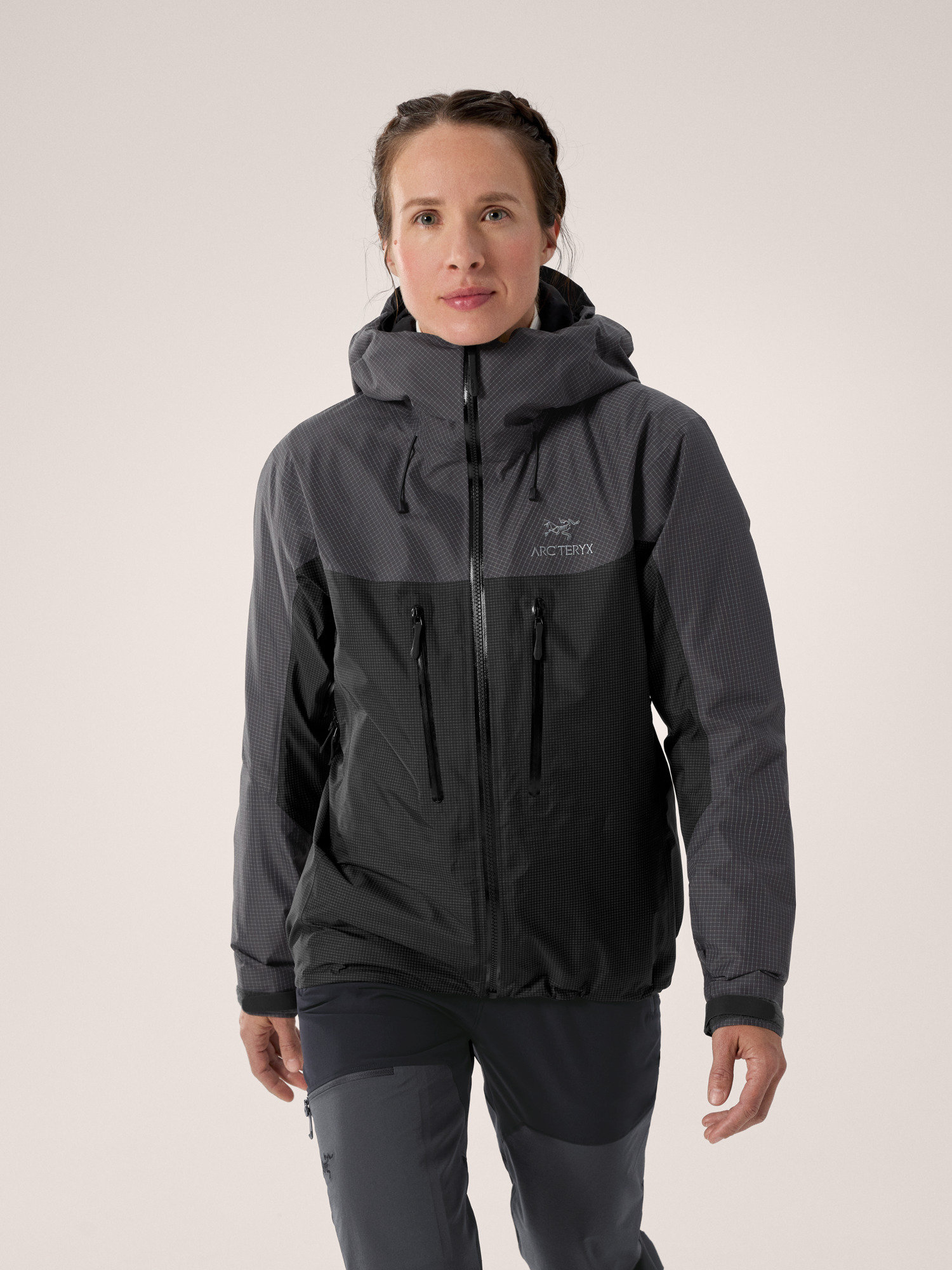
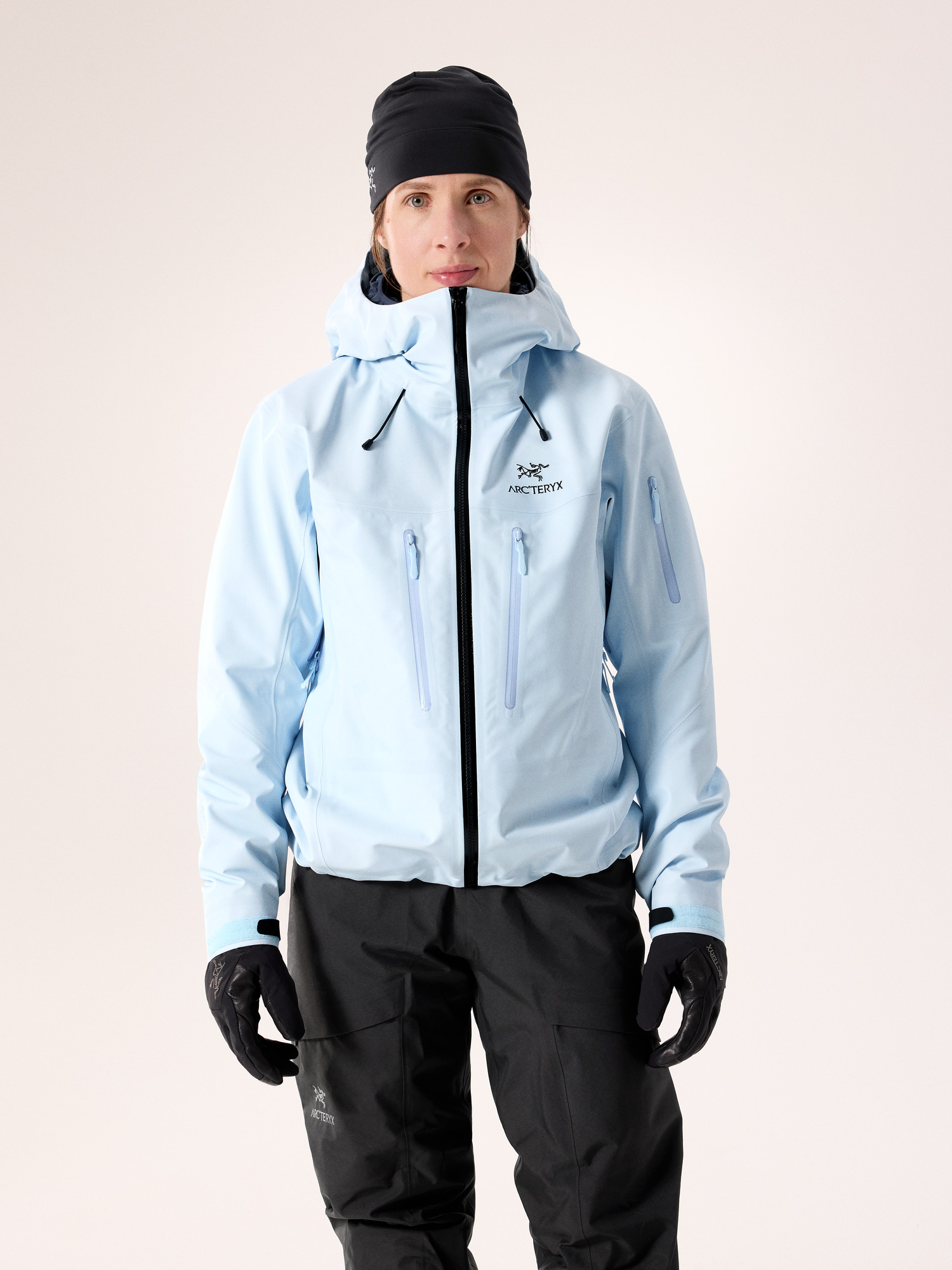
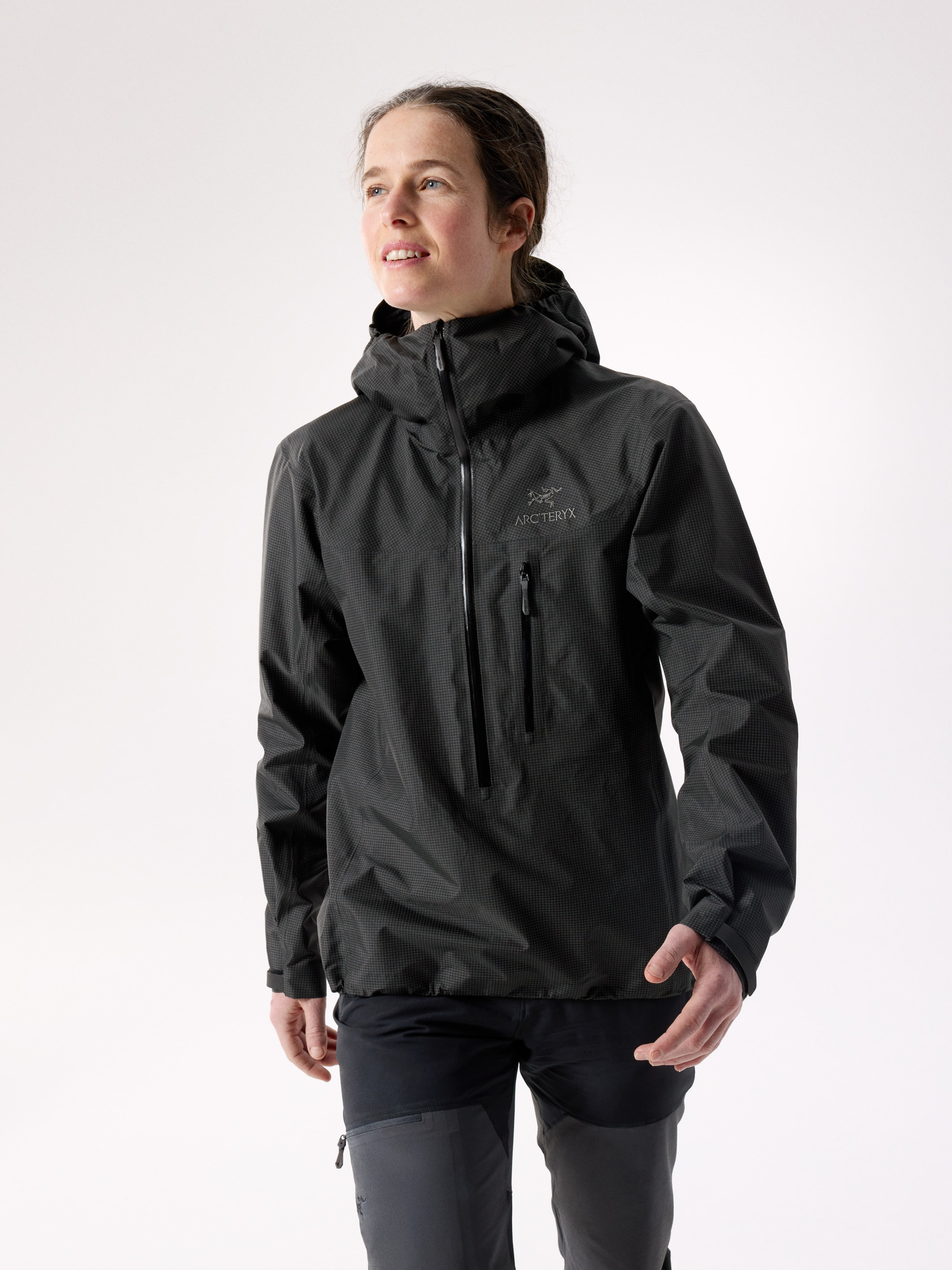
Who each Arc'teryx Alpha is for
- Buy the Alpha if: you climb, scramble or move fast over technical alpine ground, you want serious Gore-Tex Pro protection that still breathes hard on the ascent, and you value a balanced, comfortable shell for the majority of your days. This is the all-rounder, and the one most buyers should choose.
- Buy the Alpha SL if: you count grams. Fast-and-light alpine missions, or an emergency Gore-Tex Pro shell that packs to almost nothing in the lid of the pack. Accept the delicate 20D face fabric and treat it with care.
- Buy the Alpha SV if: you are heading somewhere severe. Expeditions, big cold faces, hard winter climbing, or any environment where the fabric has to survive sustained abrasion and the worst weather on the planet without complaint. You are choosing armour over weight, on purpose.
Put simply, the Alpha is the jacket for how most people actually climb, the SL is for the gram-counters, and the SV is for the hardest days most people will never have. If you are genuinely torn between them, that itself is a sign the standard Alpha is enough.
Do you even need an Arc'teryx Alpha?
This is the question worth pausing on before you spend Alpha money. All three of these are dedicated climbing and alpine shells. For general UK hillwalking, even in winter, the sensible pick is the standard Arc'teryx Beta, covered in our Arc'teryx Beta Jacket guide and the wider Arc'teryx jackets explained range guide. The Beta is lighter on the wallet, plenty tough for coast paths, rolling hills and real British weather, and it is the jacket the rest of the range is measured against. Most walkers do not need an Alpha at all, and there is no shame in that.
The Alphas come into their own the moment your days involve rope, technical ground and committing conditions rather than paths and open hill. If that is your walking, read on. If it is not, save the money and buy the Beta.
And if it is Gore-Tex Pro durability you are after rather than the Arc'teryx badge specifically, the Rab Latok is worth a serious look. It is a Gore-Tex Pro mountaineering shell that plays in exactly this space for meaningfully less money, and we cover it in our best waterproof jackets guide. For a lot of buyers it is the smarter spend.


