


Quick answer
For most UK hikers the answer is the Nebitron Pro: synthetic fill that keeps insulating in damp British cold, warm enough for winter summits, at a sensible £200. If you want a packable down layer for drier days and travel, buy the Microlight Alpine instead. Spend more only if you know exactly why: the Electron Pro when the Microlight is not warm enough, the Positron Pro or Mythic G for serious alpine cold.
Our pick: Rab Nebitron Pro
- Best for UK conditions: Rab Nebitron Pro (~£200)
- Best packable down: Rab Microlight Alpine (~£210)
- Best lightweight down: Rab Glaceon Pro (~£260)
- Best premium down: Rab Electron Pro (~£300)
- Warmest in the range: Rab Positron Pro (~£400)
- Lightest and most technical: Rab Mythic G (~£415)
When I bought the Rab Cirrus a couple of years ago, I did not fully understand what Rab actually made. I bought the Cirrus because it kept coming up in research, spent about three times what I had previously spent on a piece of outdoor clothing, and got on with it.
Two and a half years later I have used it constantly, got rid of most of my other coats, and started paying proper attention to the rest of the Rab insulated range. What I found was a lineup that is genuinely confusing if you approach it cold. Nine insulated jackets, two types of fill, three levels of warmth, and one that is simultaneously their lightest and one of their warmest. That last one took some explaining to get my head around.
This guide is what I wish had existed when I started looking. It covers all nine jackets, explains the differences that actually matter, and tells you which one to buy depending on what you are actually doing.
The nine jackets at a glance
The whole range in one table. Tap a name to jump to the full write-up, or the buy button to check today's price.
| Image | Product | Price | Buy |
|---|---|---|---|
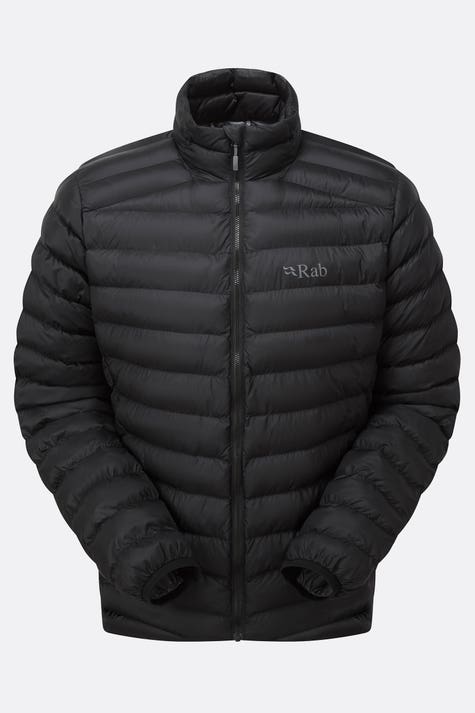 | The entry pointRab Cirrus | £153.00 | |
| Cirrus Featherless synthetic fill · packs small, no stuff-sack calculationBest for Your first serious insulated layer, and the jacket that converted me to proper kit | |||
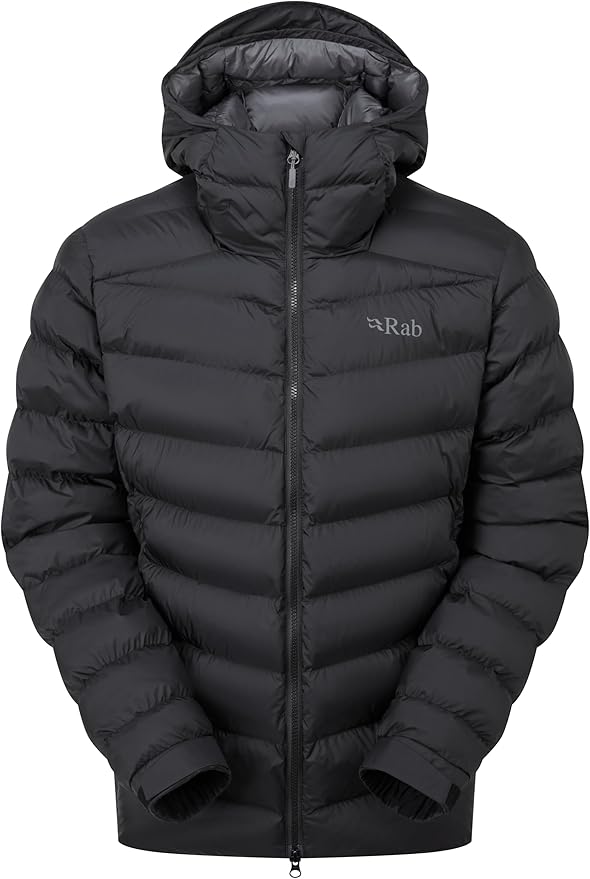 | Best for UK conditionsRab Nebitron Pro | £189.00 | |
| PrimaLoft Silver RISE synthetic, 279g fill · ~490g total · insulates when dampBest for UK hiking in damp and cold, the one most walkers should buy | |||
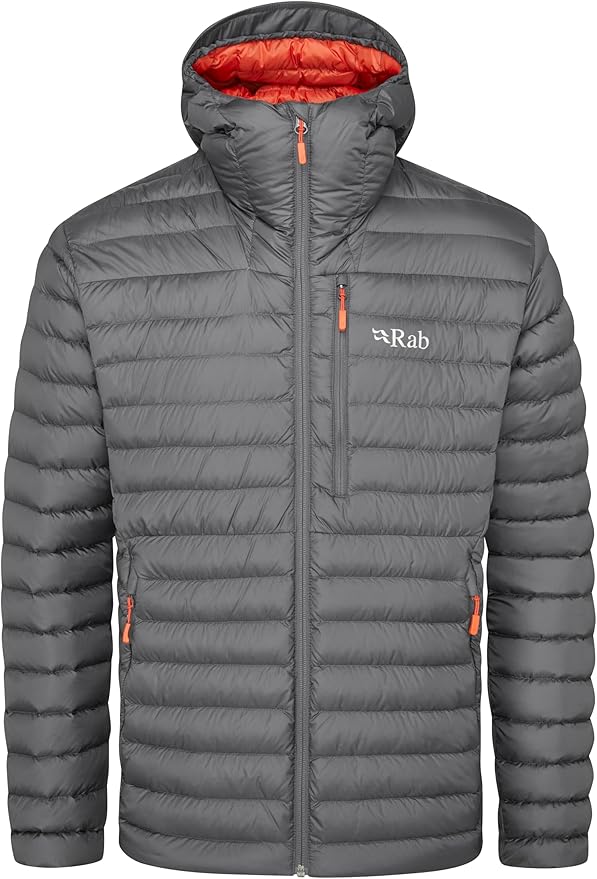 | Best packable downRab Microlight Alpine | £198.00 | |
| 700FP recycled hydrophobic down, 153g fill · 30D Pertex Quantum shell · ~425g totalBest for A packable everyday down layer for drier cold days and travel | |||
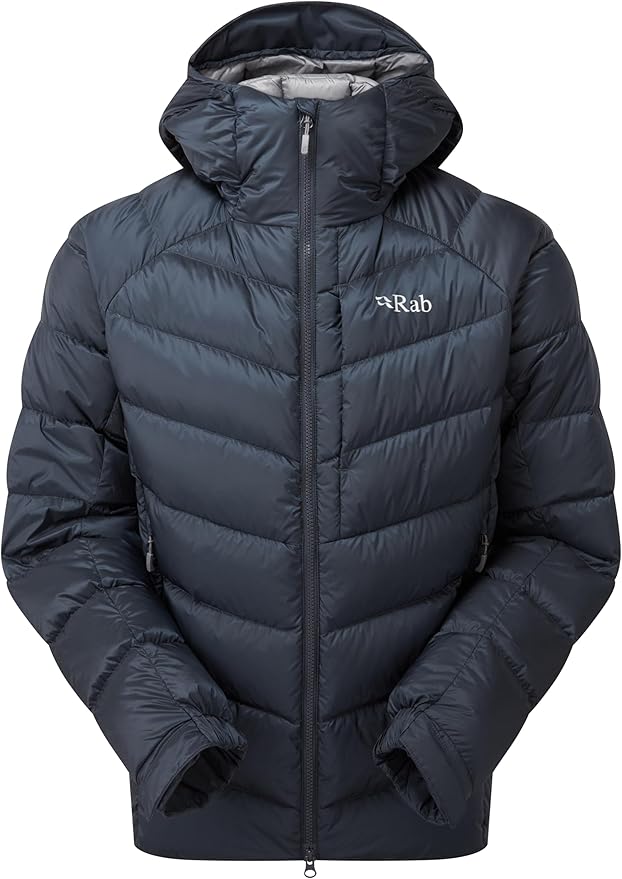 | Best lightweight downRab Glaceon Pro | £234.00 | |
| 700FP recycled hydrophobic down, ~120g fill · 20D Pertex Quantum Pro shell · ~265g totalBest for Gram-counters and technical routes where weight matters | |||
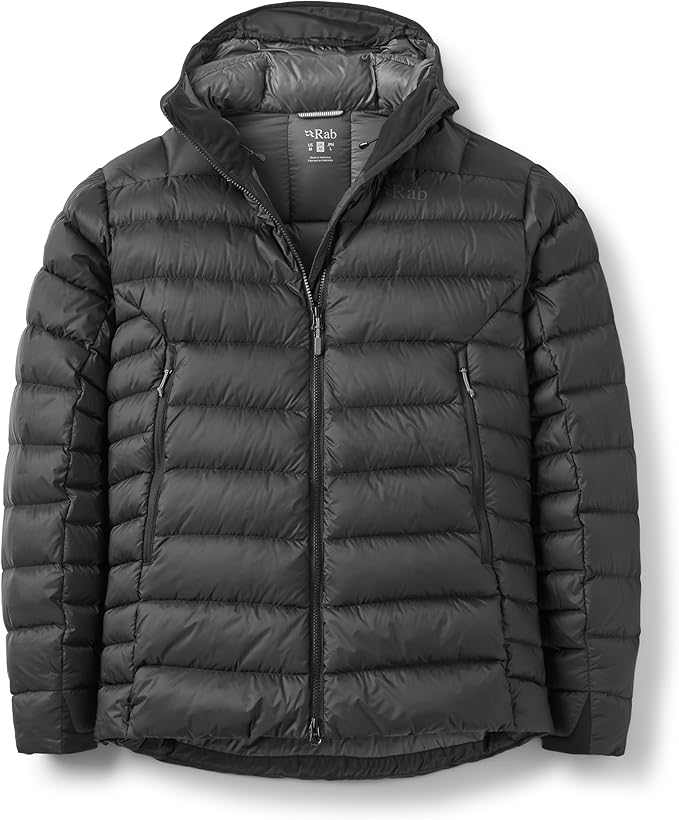 | Best premium downRab Electron Pro | £270.00 | |
| 800FP European goose down, 179g fill · ~490g totalBest for Proper cold-weather warmth when a 700FP layer is not quite enough | |||
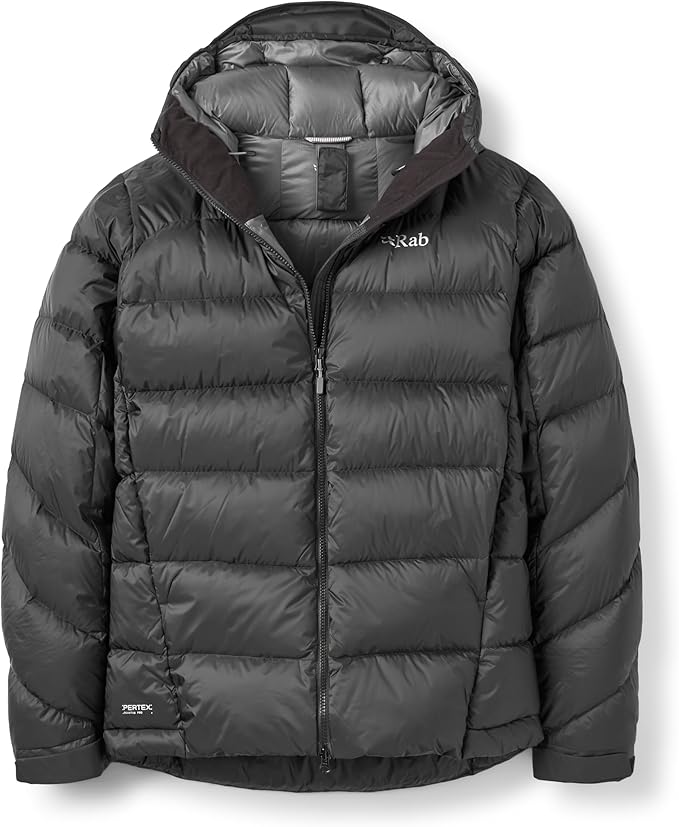 | Rab Neutrino Pro | £315.00 | |
| 800FP down, 212g fill · ~595g totalBest for Serious winter mountaineering and belay warmth, the most fill in the range | |||
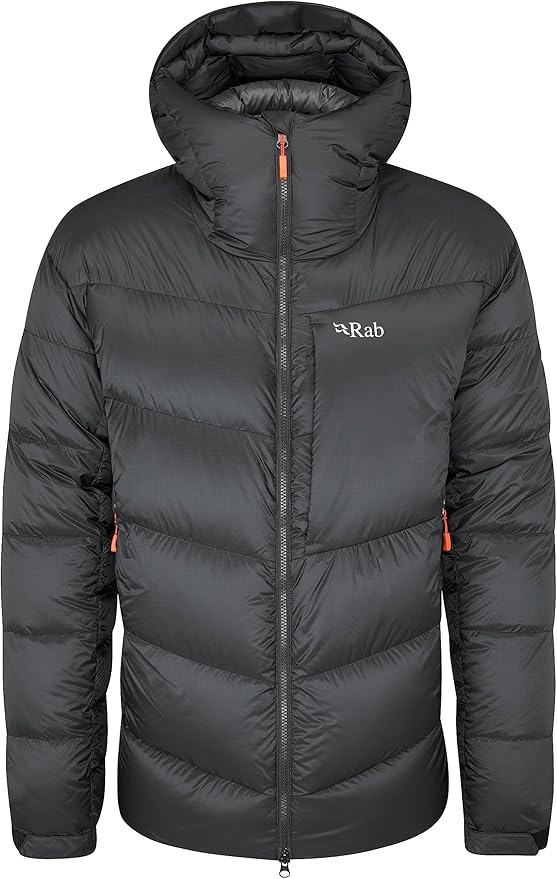 | Warmest in the rangeRab Positron Pro | £400.00 | |
| 800FP down in boxwall baffles, ~250g fill · ~600g totalBest for Serious alpine cold and static warmth | |||
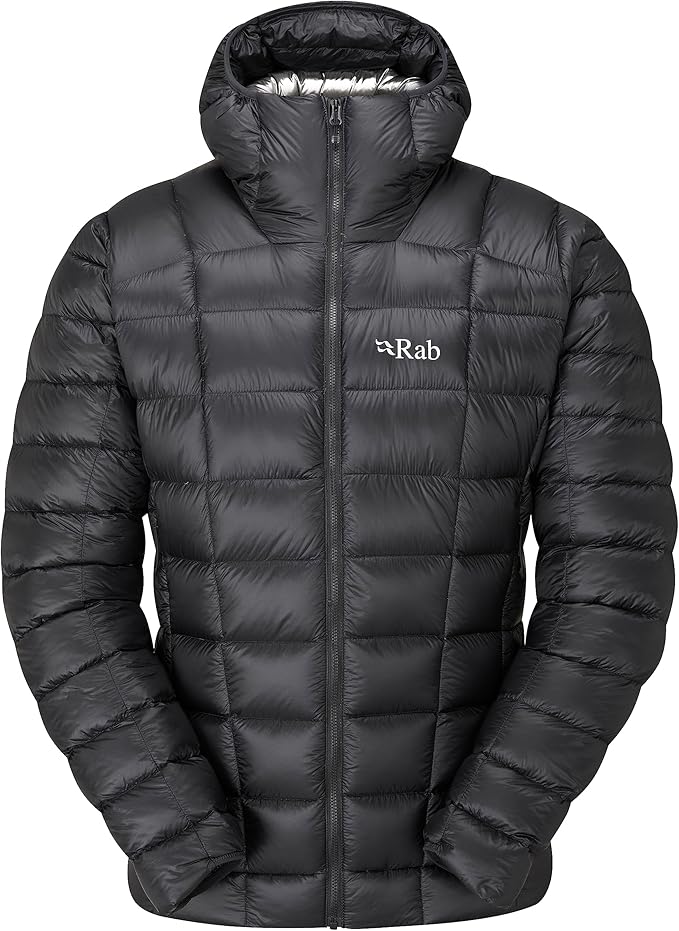 | Lightest and most technicalRab Mythic G | £414.00 | |
| 1000FP European goose down, 127g fill · 277g totalBest for Ultralight and ultra-warm, the range's engineering flex | |||
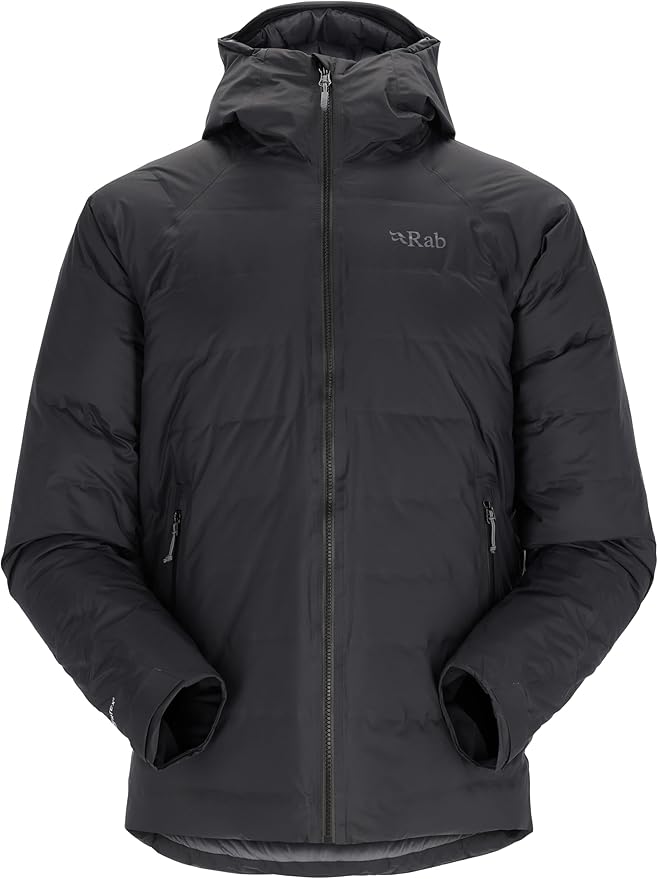 | Rab Valiance | £319.32 | |
| 700FP down, 205g fill · waterproof Pertex Shield shell · ~740g totalBest for Down warmth in wet weather, the insulated jacket that shrugs off rain | |||
Specs for men's size medium at time of writing. Check the manufacturer's site before purchasing.
The women's versions. Most of these jackets come in a women's-specific cut, and that is more than a smaller size. Rab builds them on a different pattern, with a shorter back length, narrower shoulders, shaping through the waist and hip and shorter sleeves, in the same fabrics and insulation as the men's. Where a women's version exists you will see a second teal buy button next to the men's one.
The Cirrus is the jacket that started this whole guide, and it now takes its place in the lineup below rather than a footnote. If you are newer to insulated layers and not sure how much to spend, start there.
Down vs synthetic: which suits UK hiking?
This is the question that catches most people out because the answer depends entirely on what you are doing and where.
Down is warmer for its weight than any synthetic fill. The same amount of warmth weighs less in down, compresses smaller, and lasts longer at genuinely low temperatures. High fill power down traps more air per gram: 1000FP, which fills the Mythic G, produces extraordinary warmth from just 127g of fill. Modern hydrophobic treatments on down (Nikwax Hydrophobic, Grangers, DriDown) have improved moisture resistance considerably, but wet down still loses loft and warmth faster than synthetic.
Synthetic fill does not care about moisture. PrimaLoft Silver RISE, which fills the Nebitron Pro, holds most of its warmth when wet and dries quickly. It is heavier than down for equivalent warmth. In the damp and variable conditions that characterise most UK hiking, that trade-off is often worth it.
For UK hiking specifically:
- If you are hiking in the Lake District in November, the Brecon Beacons in January, or anywhere that persistent damp is likely, synthetic gives you more reliable warmth for the conditions.
- If you are doing drier routes, travelling abroad, or you care about weight above all else, down makes more sense.
- A lot of regular UK hikers end up with one of each: a synthetic layer for the wet and cold, a lighter down jacket for dry days and travel.
The Valiance sits between both categories with a waterproof outer and down fill. More on that at the bottom.
Down care: what nobody tells you
Down jackets need more attention than synthetic. A few things worth knowing:
Wash with a specialist down cleaner (Nikwax Down Wash Direct or Grangers Down Wash) rather than standard detergent, which strips the natural oils from the down and destroys loft. Tumble dry on low heat with a couple of clean tennis balls to break up clumped down as it dries. Store down jackets loosely, never compressed, otherwise the fill loses loft permanently over time. If your jacket uses hydrophobic down, the treatment degrades with washing and can be refreshed using a Nikwax or Grangers down proofing product.
Rab Cirrus, ~£160
The Cirrus is where my own Rab story started, and two and a half years of constant use later it is still the mid layer that lives in my pack on every hike. Cirrus Featherless synthetic fill mimics down for loft and warmth-to-weight but keeps insulating in the damp, which is exactly the property UK conditions reward. It packs down small enough that there is no take-it-or-leave-it calculation: it just comes along.
It is the entry point to this range, warm enough as a standalone layer in reasonable conditions and a proper mid layer under a shell in anything worse. When you outgrow it, you will know exactly why the Nebitron Pro exists: same synthetic logic, more warmth, built for winter summits rather than three-season walking.
It also comes in three versions: the standard Cirrus covered here at around £160, the hooded Cirrus Alpine at around £170 to £180, and the slim, stretch-panelled Cirrus Flex Hoody at around £150. The full breakdown of the three is just below.
Your first serious insulated layer, and the everyday mid layer for three-season UK walking.
Rab Cirrus, Cirrus Alpine or Cirrus Flex: which to buy?
Three jackets, the same recycled PrimaLoft Silver RISE synthetic, built for three slightly different jobs. The standard Cirrus is the no-hood all-rounder. The Cirrus Alpine is the warmest of the three: more fill, bigger baffles and a proper mountain hood. The Cirrus Flex is the odd one out, less fill but with stretch-fleece side panels, so it breathes and moves with you rather than sitting still as a belay layer.
| Image | Product | Price | Buy |
|---|---|---|---|
| Rab Cirrus | £153.00 | |
| 214g PrimaLoft Silver RISE · no hood · 30D shell · 472gBest for The no-fuss all-rounder, and the cheapest way in | |||
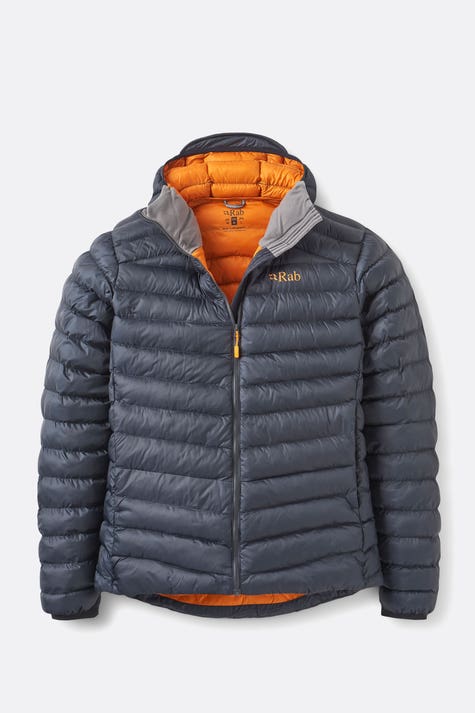 | Rab Cirrus Alpine | £165.92 | |
| 232g fill, the most of the three · hooded · 30D shell · 516gBest for The warmest Cirrus, with a hood for the hills | |||
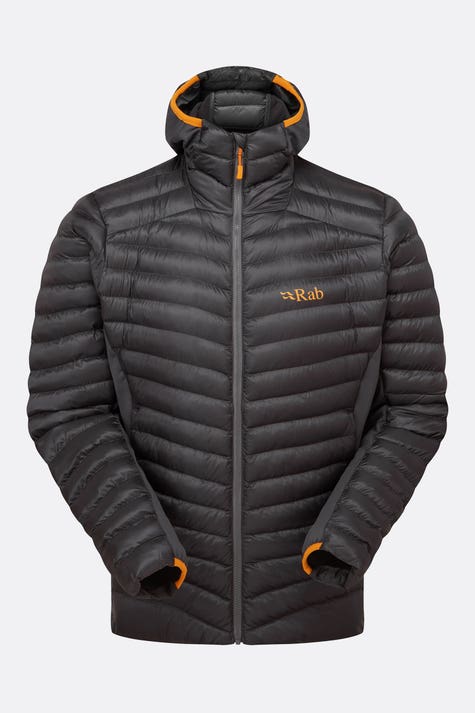 | Rab Cirrus Flex Hoody | £132.99 | |
| 157g fill · hooded · 20D shell plus stretch-fleece sides · 446gBest for Active insulation to wear on the move | |||
Rab Nebitron Pro, ~£200
The Nebitron Pro is Rab's warmest synthetic jacket and the one that makes the most sense for most UK hikers. The fill is PrimaLoft Silver RISE, 279g of it, in a 30D Pertex Quantum Pro shell. That shell offers genuine wind and light weather resistance, meaning it works as a standalone outer on cold, dry days without a shell on top.
The reason it beats the down options in this guide for most UK walkers comes down to what British weather actually does. Not dramatic storms, but persistent damp: the drizzle that is not quite rain, the condensation, the sea spray on a coastal path, the moisture that accumulates on a long day out. Down begins to lose effectiveness in those conditions. Synthetic does not.
PrimaLoft Silver RISE is engineered to maintain warmth when wet and dry quickly when it does get damp. It is heavier than equivalent down warmth, and the Nebitron Pro is not a jacket you forget is in your pack the way the Microlight Alpine is. But for cold, unpredictable UK conditions, it is the right tool.
- Warmest synthetic jacket in the Rab range
- PrimaLoft Silver RISE maintains warmth when wet
- 30D Pertex Quantum Pro shell: wind and water resistant
- Packs into its own pocket
- Works as a standalone outer in cold dry conditions
UK hikers who deal with damp, variable weather. The sensible first choice if you want one insulated jacket that handles what British conditions actually throw at you.
Rab Microlight Alpine, ~£210
The Microlight Alpine is the jacket that built Rab's reputation in down insulation. It uses 153g of 700FP recycled hydrophobic down in a 30D Pertex Quantum shell, a combination that has been refined over many iterations into something that does exactly what a packable down layer should do.
It is not the warmest jacket here and it is not trying to be. What it is, is a very good packable down layer at a price that makes sense. It compresses to roughly the size of a 500ml water bottle. The hydrophobic down treatment means it handles light moisture better than untreated down, though a shell over the top is still the sensible call in anything more than drizzle.
If you already have a synthetic mid layer and want a lighter, more compressible down option for dry cold days, travel, or routes where weight matters, the Microlight Alpine is the answer. A proven classic at a price that has stayed sensible.
- 153g of 700FP recycled hydrophobic down
- Compresses to roughly 500ml bottle size
- 30D Pertex Quantum shell
- Proven design refined over many seasons
- Good price for genuine down performance
Hikers who want a packable down layer for drier conditions, travel, or as a second jacket alongside a synthetic layer. The baseline down option for most walkers.
Rab Glaceon Pro, ~£260
The Glaceon Pro and the Microlight Alpine use the same fill power down. The difference is in the construction. The Glaceon Pro uses a 20D Pertex Quantum Pro shell (thinner, lighter, and more technical than the 30D shell on the Microlight Alpine), which is why it comes in at roughly 265g total against the Microlight Alpine's 425g.
That 160g saving matters on long days, multi-day routes, or any situation where pack weight is part of the equation. What you give up is durability and a little price headroom: 20D fabric scuffs more easily than 30D, and the Glaceon Pro costs around £50 more for less total jacket weight. The helmet-compatible adjustable hood and belay-friendly two-way zip flag its intended use: technical hiking and climbing rather than everyday dog walks in November.
For most day hikers the Microlight Alpine is the better value. For anyone who counts grams, does technical routes, or wants the most refined construction in the 700FP bracket, the Glaceon Pro is worth the premium.
- One of the lightest down jackets in the Rab range at ~265g
- 20D Pertex Quantum Pro: more technical construction than the Microlight Alpine
- 700FP recycled hydrophobic down
- Helmet-compatible adjustable hood
- Belay-friendly two-way zip
Gram-conscious hikers and those doing technical routes where weight matters. Better value for most walkers comes from the Microlight Alpine.
Rab Electron Pro, ~£300
The Electron Pro is where the Rab down range steps up to 800FP European goose down. That step up is not just a number: 800FP fill lofts more per gram than 700FP, which means more warmth for equivalent fill weight. The Electron Pro carries 179g of it in body-mapped baffles, a mix of micro and midi chambers arranged to put warmth over the core and allow more movement where the arms need it.
At £300 it is a meaningful purchase. What you get for that money is clear warmth that the 700FP options in this guide do not match, in a construction that has been thought through properly rather than just filling a jacket with down and hoping for the best. The 20D Pertex Quantum Pro shell keeps the weight sensible at around 490g total while providing wind resistance and a measure of water resistance.
This is the jacket for walkers who have tried the Microlight Alpine and found it not quite enough on the days that really matter: the cold January summit, the late afternoon on a long February route when the temperature drops fast and tired legs are not generating the warmth they were at the start.
- 800FP European goose down: clear step up from 700FP options
- Body-mapped micro and midi baffles for warmth and mobility
- 20D Pertex Quantum Pro shell
- Grangers fluorocarbon-free hydrophobic finish on down
- Serious warmth for cold-weather UK hiking
Regular hikers who need proper cold-weather warmth and have outgrown what a 700FP down layer provides. The right call when the Microlight Alpine is not quite enough.
Rab Neutrino Pro, ~£350
The Neutrino Pro carries 212g of 800FP down, more fill weight than any other jacket in this guide, in a stitch-through baffle construction. That construction is simpler than the body-mapped baffles of the Electron Pro: the baffles are stitched directly through the shell, which is more durable and easier to manufacture but creates thin points at each seam where the down is compressed and warmth escapes marginally.
At ~595g it is the heaviest down jacket here, which reflects the amount of fill, and at around £350 it now sits above the Electron Pro on price. Rab position it squarely as an alpine down hoody for serious winter mountaineering and alpine climbing, and that is exactly how to read it.
For UK day hiking the Neutrino Pro is more jacket than most people need. It earns its place on serious routes: winter mountaineering, alpine faces and belay duty, where the extra fill weight is the point. If you are doing those things, this is the tool for the job. If you are not, the Electron Pro gives you better-engineered warmth for less money in a lighter package.
- 212g of 800FP down: most fill weight in the range
- Serious warmth for winter mountaineering and belay use
- Durable stitch-through construction
Winter mountaineering, alpine routes and belay use. Overkill for most UK day hiking but exactly right when the cold is the objective rather than the backdrop.
Rab Positron Pro, ~£400
The Positron Pro uses boxwall baffles rather than stitch-through. Boxwall chambers stand away from the shell rather than being stitched flat, allowing the down to loft fully in all directions without the cold spots that form at stitch-through seam points. The result is Rab's warmest conventional down jacket, designed for summit use in serious alpine conditions.
At £400 it is a clear statement of intent. This is not a jacket for wondering whether you need a mid layer. This is the mid layer for situations where the cold is the main thing you are managing: winter summits, multi-day routes above the snowline, climbs where stopping to belay means your temperature drops fast and you need the warmth to be immediate and reliable.
For UK day hiking, the Positron Pro is more than most people will ever need. The only domestic scenarios where it earns its price are extended winter days at real elevation: Snowdonia in February, the northern Cairngorms, the kind of routes where the summit temperature is a different proposition from the car park.
- Rab's warmest conventional down jacket
- Boxwall baffle construction: maximises loft, no cold spots
- 800FP down fill
- Summit-ready performance in serious alpine cold
Alpine routes, multi-day winter expeditions, and serious cold-weather climbing. Not designed for everyday UK hiking.
Rab Mythic G, ~£415
The Mythic G appears in Rab's lightweight category and their ultra-warm category. Both descriptions are accurate, which is the thing that takes a moment to understand.
It weighs 277g total. Lightest insulated jacket in the Rab range. But it contains 127g of 1000FP European goose down (the highest fill power commercially available) and is lined with TILT (Thermo Ionic Lining Technology), which works like a lightweight emergency blanket, reflecting radiant heat back towards the body. The combination produces warmth that outperforms most other jackets in this guide from a package that weighs less than most people's fleeces.
The paradox is real. 1000FP fill produces so much loft per gram that 127g of it outperforms 179g of 800FP from the Electron Pro. Add TILT, and the total warmth from a 277g jacket exceeds what you would expect from the weight. This is not a marketing claim. It is physics applied to materials that cost serious money to produce, which is why the Mythic G costs serious money to buy.
The shell that achieves 277g is necessarily very thin. This is not the jacket you haul over boulders or stuff into a pack covered in buckles that will snag it. You look after it. At £415, you will want to.
- 277g total weight: lightest insulated jacket in the Rab range
- 1000FP European goose down: highest loft per gram available
- TILT lining reflects radiant heat, adds warmth without weight
- Genuinely both ultralight and ultra-warm
- Compresses to roughly 1 litre bottle size
Ultralight hikers, weight-conscious backpackers, and anyone who wants the best warmth-to-weight ratio available and is prepared to pay for it. Treat it carefully.
Rab Mythic G, Mythic Ultra or Mythic Alpine: which to buy?
The Mythic name covers three very different down jackets. The Mythic G above is the ultralight flex: 1000FP down and a reflective TILT lining in a feather-thin 7D shell, the lightest here and the most delicate. The Mythic Ultra is the warm one, 900FP hydrophobic down with by far the most fill and TILT across the torso, in a tougher 10D shell, which makes it the expedition and belay pick, and the heaviest. The Mythic Alpine is the sensible middle: the same hydrophobic 900FP and tough 10D shell as the Ultra, but much less fill and no TILT, so it is lighter, cheaper and more weather-tolerant for everyday mountain days.
| Image | Product | Price | Buy |
|---|---|---|---|
| Rab Mythic G | £414.00 | |
| 1000FP down · 127g fill · 277g · 7D shell · TILT liningBest for Lightest and warmest for its weight, treat it gently | |||
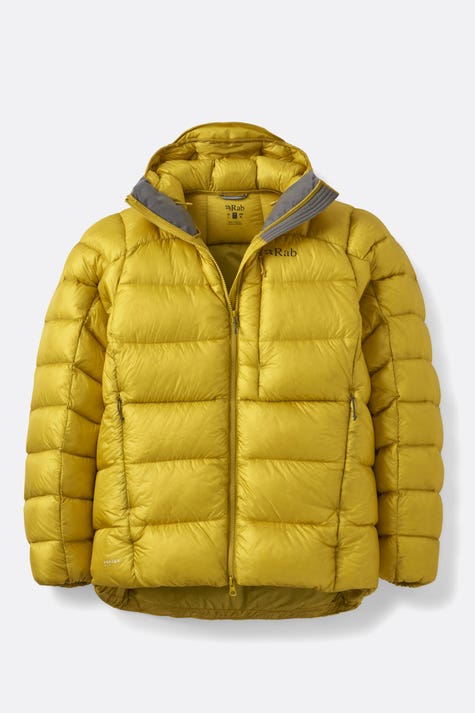 | Rab Mythic Ultra | £396.00 | |
| 900FP hydrophobic down · 240g fill, the most · 537g · 10D shell · TILTBest for The warmest Mythic, for expeditions and belays | |||
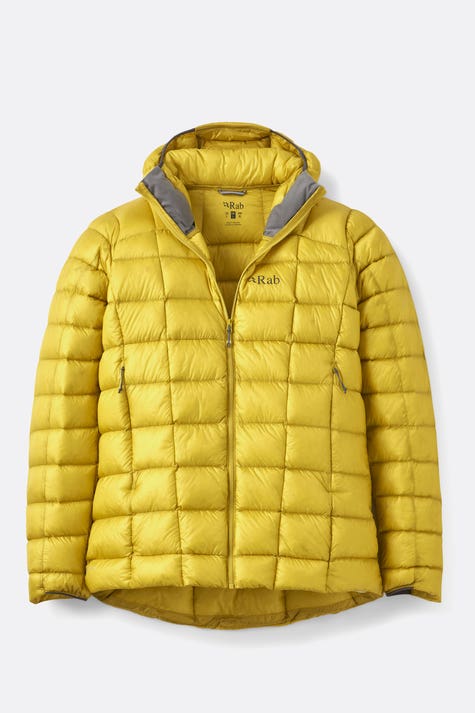 | Rab Mythic Alpine | £297.00 | |
| 900FP hydrophobic down · 140g fill · 313g · 10D shell · no TILTBest for The lighter, cheaper, more weatherproof all-rounder | |||
Rab Valiance, ~£330
The Valiance does not fit cleanly into the categories above, which is the point. It has a Pertex Shield outer with fully taped seams, a genuinely waterproof shell, wrapped around 700FP recycled hydrophobic down insulation. Warm and waterproof in a single jacket.
The appeal in the UK is obvious. The limitation is also obvious: it weighs around 740g, heavier than any non-waterproof jacket here, and a waterproof shell over down insulation compromises breathability. On a hard multi-hour hike you will notice the difference compared to a dedicated insulated layer under a separate breathable shell.
For shorter cold-weather walks, or anyone who would rather carry one jacket than manage a layering system, the Valiance is a good jacket. It is also the answer if you are caught out in rain without a shell and need warmth that will not soak through. For longer active days on technical routes, the combination of a lighter insulated layer and a proper waterproof shell remains more versatile.
- Waterproof Pertex Shield outer with taped seams
- 700FP recycled hydrophobic down insulation
- Warm and waterproof in a single jacket
- Boxwall construction: good loft for its category
Short cold walks where you want one jacket rather than two. Good for anyone who hates layering and will accept the breathability trade-off for simplicity.
Which one should you buy?
For most UK hikers the answer is the Nebitron Pro. British conditions favour synthetic fill: damp, variable, and rarely so cold or so dry that the warmth-to-weight advantage of high fill power down becomes the deciding factor. The Nebitron Pro handles the full range of what UK weather does without requiring a specific forecast to make sense.
If you already have a synthetic layer and want to add a down option for drier conditions or travel, the Microlight Alpine gives you proven down at a price that does not require much justification. The Glaceon Pro is the lighter option if weight is a factor, and it is frequently discounted, which can make it the standout deal in the range when the price drops. The Electron Pro is the step up when the Microlight Alpine is not quite enough on the coldest days.
The Neutrino Pro and Positron Pro are for genuine expedition and alpine use. If you are doing multi-day winter routes or serious climbing, they make sense. For UK day hiking, the Electron Pro is as much jacket as you realistically need.
The Mythic G is the rational choice for anyone who has properly understood the warmth-to-weight numbers and is prepared to pay for the result. It is the most expensive jacket here and by some measures the best one.
The Valiance is for anyone who wants the simplicity of one jacket rather than a layering system and is prepared to accept heavier weight and reduced breathability for that.
If you are starting out, the Cirrus is the entry point to the range and the jacket I would recommend most readily to someone new to this. It is what converted me to buying kit for performance rather than appearance, and the full review tells that story.


