


Quick verdict
For most UK hillwalkers the standard Arc'teryx Beta (around £350) is the one to buy: three-layer Gore-Tex, light enough to carry and tough enough for real British weather. Step up to the Beta AR (around £600) for winter, scrambling and rough ground, or the Beta SV (around £700) for severe alpine conditions. Choose the lighter but pricier Beta SL (around £450) only if you count grams. The suffixes are a toughness ladder, not a price ladder, which is why the Superlight SL costs more than the standard Beta, not less. All four come in men's and women's fits.
Arc'teryx Beta Jacket: 4.8/5
The balanced middle Beta and the best one-jacket choice for most UK hillwalkers. Three-layer Gore-Tex, light enough to carry, tough enough for real hill days, and the natural starting point in the Beta range.
- Lightest and most packable: Arc'teryx Beta SL (~£450)
- Tough all-rounder, winter & rough ground: Arc'teryx Beta AR (~£600)
- Toughest, for severe mountain conditions: Arc'teryx Beta SV (~£700)
The full review is below.
The Arc'teryx Beta is a waterproof hardshell jacket, a three-layer Gore-Tex shell you pull on over your layers when the weather turns. Arc'teryx makes four of them, and picking between them trips up almost everyone who looks. They share a name, a silhouette and a job, but they are built in four different weights of armour for four different kinds of day on the hill. Get the choice right and you own the best-made waterproof for your walking. Get it wrong and you have either spent too much or bought too little jacket.
The confusion is the naming. Beta SL, Beta, Beta AR and Beta SV read like a size ladder, so people assume SL is the entry model and SV is the top one, and that price climbs neatly with capability. It does not work like that, and the Beta SL is the proof: it costs more than the standard Beta, not less. This guide sorts all of it out. If you want the wider picture of where these sit in the brand's line-up, our Arc'teryx jackets explained hub decodes the whole range, but for the Beta decision itself, everything you need is here.
Which Arc'teryx Beta should you buy?
If you want one line before the detail: choose your Beta by how tough the jacket needs to be, not by price.
- The Beta Jacket (~£350) is the balanced one and the right answer for most UK hillwalkers. Standard three-layer Gore-Tex, light enough to carry, tough enough for real weather.
- The Beta SL (~£450) is the featherweight specialist. Buy it for the low weight and tiny packed size, not because Superlight sounds like the cheap option, because it is not.
- The Beta AR (~£600) is the tough all-rounder, built on harder-wearing Gore-Tex Pro with proper mountain features, for winter, scrambling and rough ground.
- The Beta SV (~£700) is the toughest of the lot, full heavyweight Gore-Tex Pro armour for the most severe mountain conditions. More jacket than most UK walkers will ever need.
Everything below is the reasoning behind those four lines.
What the Arc'teryx Betas have in common
Before the differences, the shared DNA, because it explains why all four carry the same name.
Every Beta is a three-layer waterproof Gore-Tex shell. Three-layer means the waterproof membrane is bonded between a face fabric and an inner backer as a single laminate, which is the most durable and best-performing hardshell construction there is. All of them are fully seam-sealed, all have a helmet-compatible hood, pit zips for dumping heat and a trim, articulated cut that moves with you rather than billowing. All of them are unquestionably waterproof.
So the Beta is one jacket concept expressed in four weights. The suffix tells you where each sits on the light-to-tough scale: SL is Superlight, no suffix is the balanced standard, AR is All Round (the hard-wearing all-rounder), and SV is Severe (the most durable and protective of the lot). Once that clicks, "Beta vs AR vs SL vs SV" stops being a mystery and becomes a single question about how much abuse your jacket has to take.
Arc'teryx Beta Jacket: the balanced all-rounder


The standard Beta is the one most people should buy, and the jacket the other three are measured against. It uses standard three-layer Gore-Tex, and the whole design is a study in balance: light enough to stuff in a pack and carry on the off-chance, tough enough to stand up to genuine hill days in genuine British weather. It is not chasing the lowest weight and it is not chasing the highest durability. It sits in the sensible middle where the overwhelming majority of walking actually happens.
For a Dorset coast-path day, a Purbeck ridge in a squall, a wet weekend in the Brecon Beacons or a South Downs slog in horizontal drizzle, the Beta is exactly enough jacket and no more. It is the do-everything waterproof that becomes the only waterproof you own, which is why it sits at the top of this guide as the pick for most readers.
At around £350 it is also the cheapest way into an Arc'teryx shell, though value here means build quality and longevity rather than a low sticker price. If you buy one Beta and nothing else, buy this one.
Buy the Beta direct at Arc'teryxArc'teryx Beta SL: the superlight specialist


Here is the one that catches people out. SL stands for Superlight, so the natural assumption is that this is the budget Beta. It is the opposite. At around £450 the Beta SL costs more than the standard Beta, because it is a specialist minimalist shell rather than a cut-down version of anything.
The SL is built with PFAS-free Gore-Tex and a soft C-KNIT backer, a construction tuned to pack down tiny and weigh almost nothing while still being a fully waterproof three-layer shell. This is the jacket for the walker counting grams, for fast-and-light days, and for the "just in case" waterproof that lives in the bottom of the pack and only comes out when the sky opens. Rolled up it takes almost no room, and on your back you barely register it.
The trade-off is durability. That featherweight face fabric is the least abrasion-resistant of the four Betas, so this is not the shell for bashing through gorse, dragging a pack over dry-stone stiles or scrambling on rough rock week in, week out. Treat it as a lightweight specialist and it is superb. Ask it to be your everyday work jacket and you are using the wrong Beta.
The rule with the SL is simple: buy it for the weight, not for the price.
Buy the Beta SL direct at Arc'teryxArc'teryx Beta AR: the tough all-rounder


AR is All Round, and this is the tough, do-everything Beta. Where the standard jacket uses regular Gore-Tex, the AR steps up to the harder-wearing Gore-Tex Pro membrane, with its most durable fabric reinforced across the shoulders, forearms and hood where the wear actually happens, so it shrugs off pack straps, rock and hard winter use without flinching. If you want one Beta that handles almost everything your kit cupboard throws at it, this is the one.
It also carries the proper mountain features. The helmet-compatible hood has a stiffened brim that holds its shape in wind and driving rain, and the cut closes down the gaps around your face when the weather is genuinely trying to get at you. Those are the details you notice on a January day on Pen y Fan with the wind full in your face, and the details the lighter Betas trim back.
The Beta AR is the shell for winter walking, for scrambling, for rough and abrasive ground, and for anyone who wants a genuinely tough, long-lasting Beta without stepping all the way up to the full-armour SV. At around £600 it is one of the pricier Betas, and for coast-path and rolling-hill use it is more jacket than you need. That is the only reason not to buy it. If your days are hard, cold and rough, it is the right one.
Buy the Beta AR direct at Arc'teryxArc'teryx Beta SV: the toughest


SV stands for Severe, and the Beta SV is the most protective, most durable Beta of the four: the one you reach for when the mountain is genuinely trying to hurt you. It is built from heavyweight 100D three-layer Gore-Tex Pro, the same top-tier Gore laminate as the AR, but where the AR reinforces only the high-wear zones, the SV wraps the whole jacket in that burly 100D fabric. Nothing in the Beta line shrugs off rock, ice, pack abrasion and days of storm like it does.
It carries the full mountain kit: a helmet-compatible StormHood with one-handed adjustment, WaterTight pit zips, harness-friendly hand pockets and an internal chest pocket, and a two-way front zip you can work over a climbing harness. At around 480g for a men's medium it is the heaviest Beta, and at £700 the most expensive, and both of those are the point rather than a flaw: this is severe-weather armour for alpine climbing, mountaineering and extended exposure, not a jacket you buy for the coast path.
For almost everyone reading this, the SV is more jacket than the hills demand, and the standard Beta or the AR is the smarter buy. But if your days are spent high, cold and exposed, where a shell failing is not an inconvenience but a genuine problem, the Beta SV is the one that will not let you down.
Buy the Beta SV direct at Arc'teryxWomen's Arc'teryx Beta Jacket range
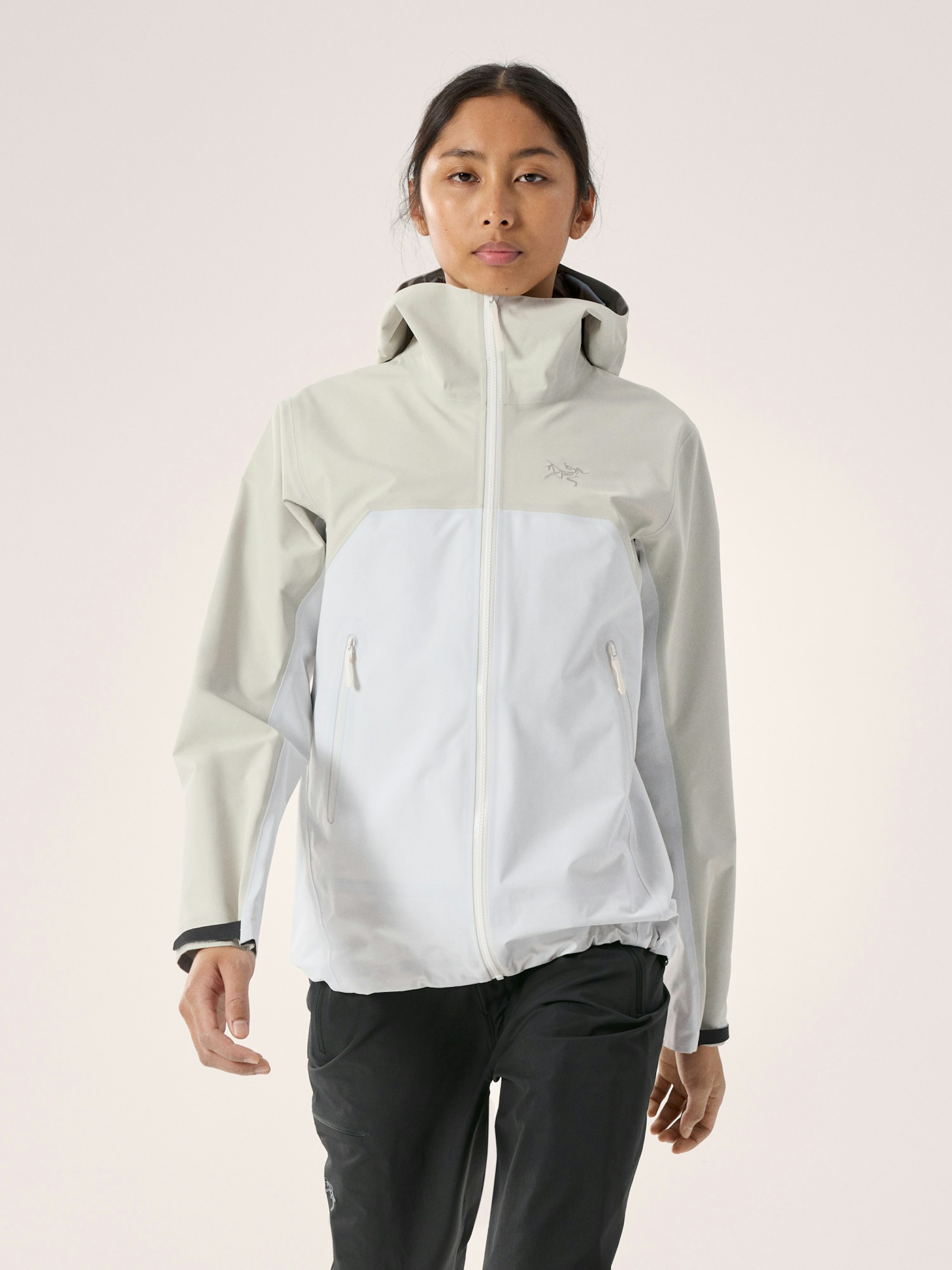
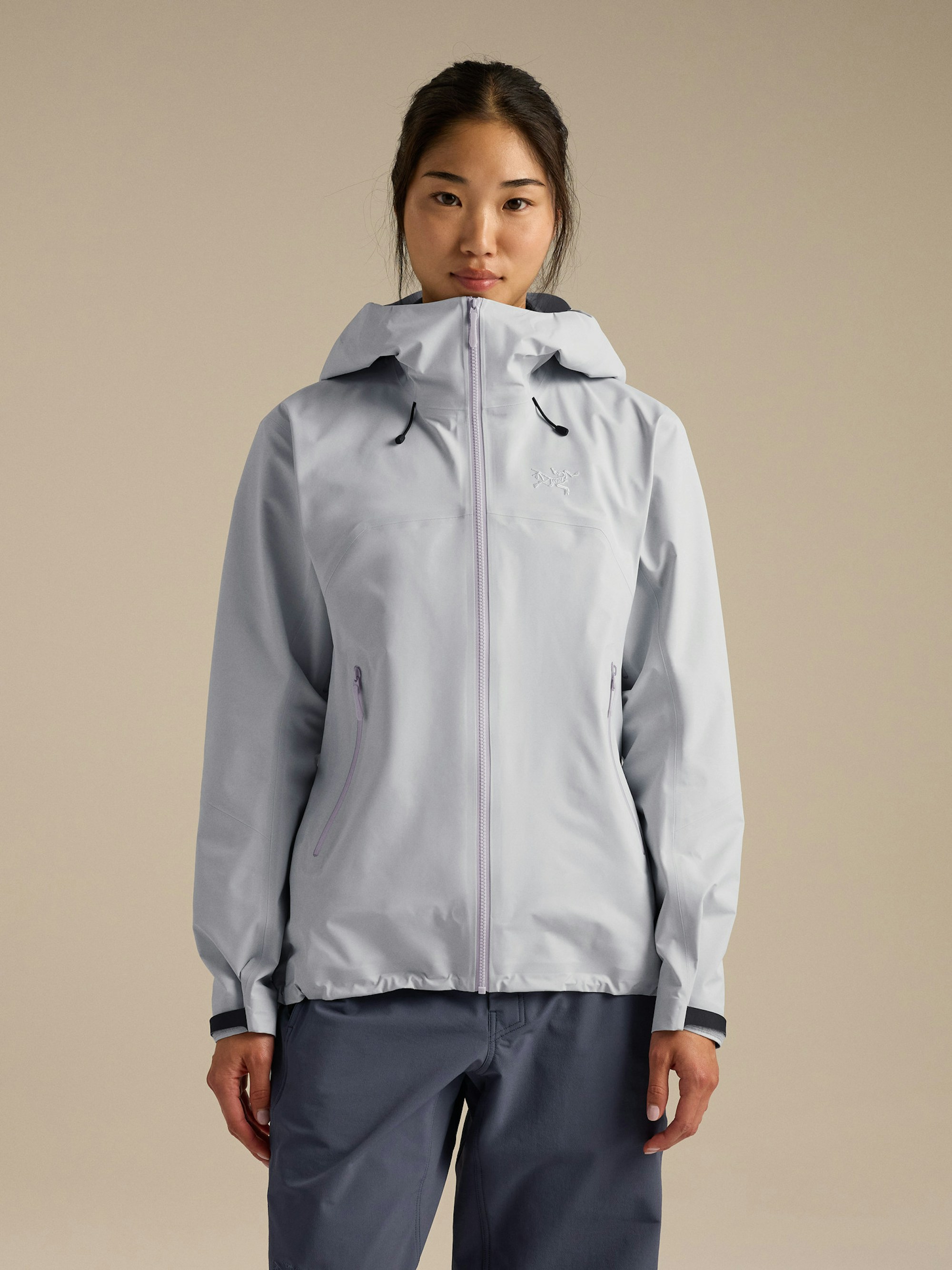
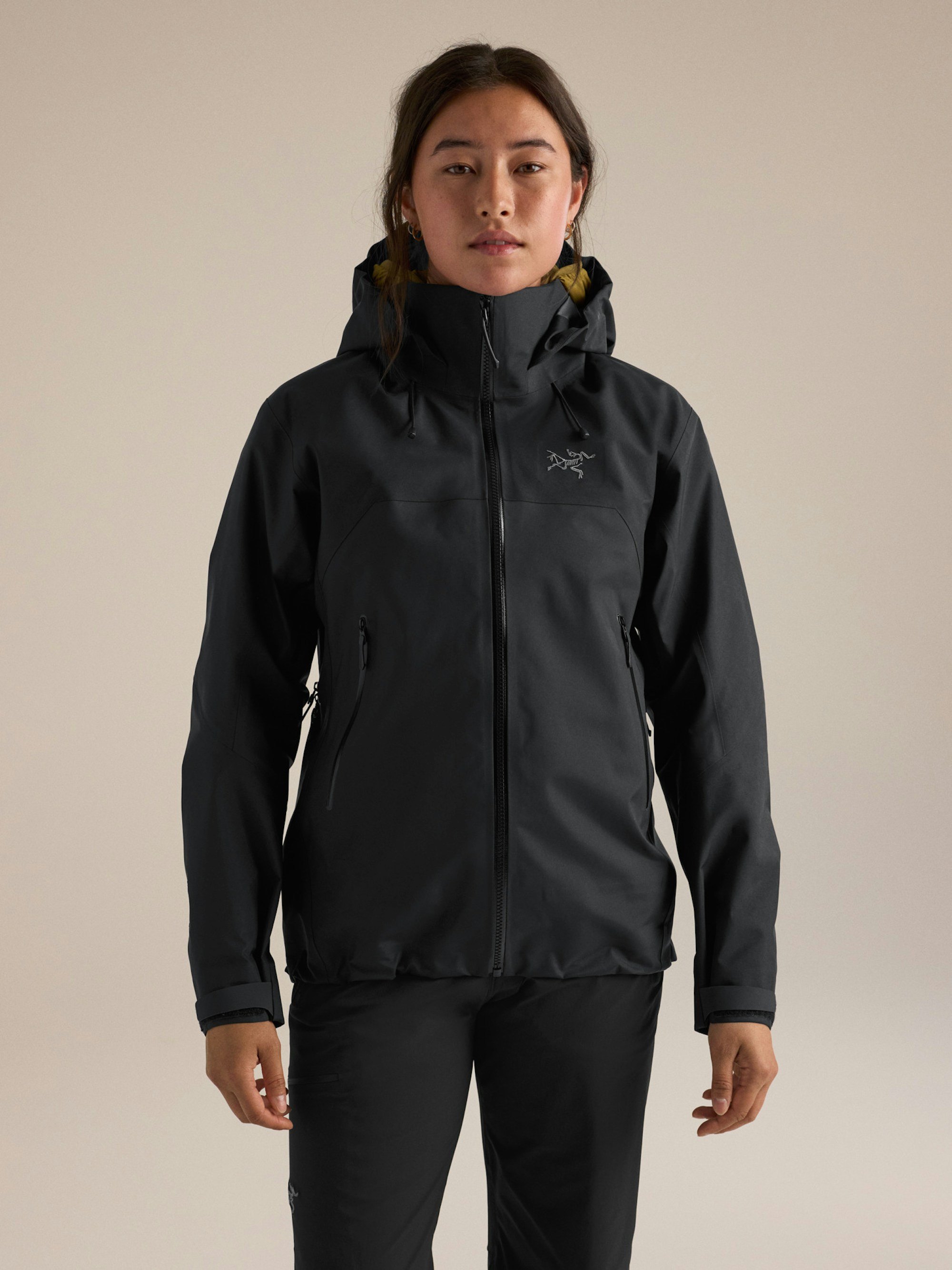
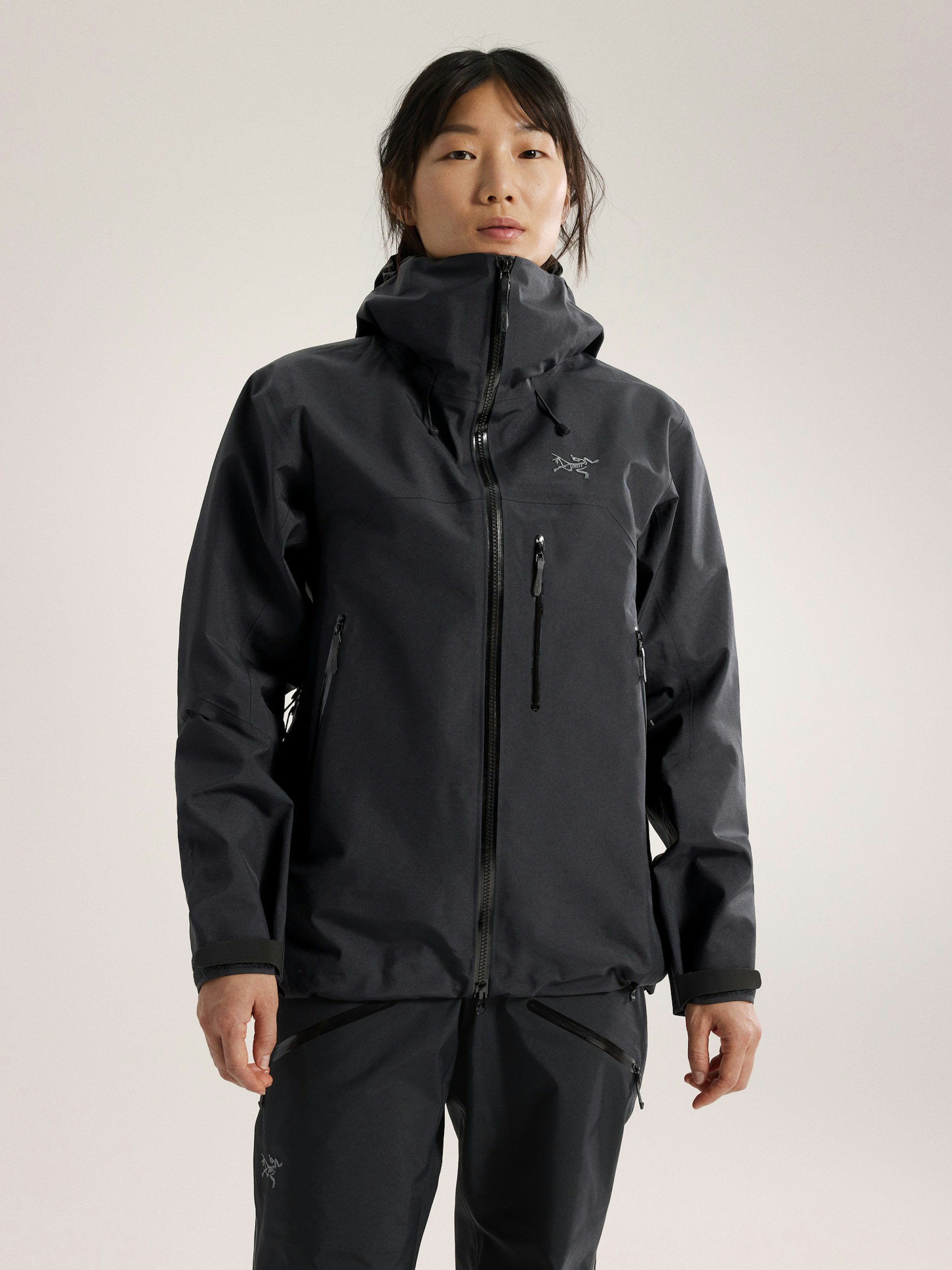
Every Beta comes in a women's version, cut on a women's-specific pattern and running a little lighter than the men's as a result, while using the exact same Gore-Tex constructions and sitting at the same price tier for tier. The decision is identical to the men's: pick your tier by how tough the jacket needs to be, then buy it in your fit.
- The women's Beta (~£350) is the balanced all-rounder, the one-jacket choice for most walkers.
- The women's Beta SL (~£450) is the superlight, most packable option at around 300g, for fast-and-light days.
- The women's Beta AR (~£600) is the tough, Gore-Tex Pro all-rounder for winter and rough ground, around 395g.
- The women's Beta SV (~£700) is the full-armour severe-weather shell, around 429g.
Which Arc'teryx Beta for which walker?
Line the four up and the decision comes down to the kind of walker you are.
- The one-jacket UK hillwalker: the Beta. Standard three-layer Gore-Tex, balanced weight and durability, and enough jacket for the coast path, the hills and most of a British winter. The default choice, and the right one for most people reading this.
- The gram-counter and fast-and-light walker: the Beta SL. The lightest, most packable Beta, built for moving quickly and for carrying just in case. Accept the softer face fabric and lighter-duty use that come with it.
- The winter, scrambling and rough-ground walker: the Beta AR. Gore-Tex Pro with its toughest fabric where the wear happens, a helmet-compatible hood, and the durability for hard, cold days. The right step up for serious hill and mountain use.
- The alpinist in genuinely severe conditions: the Beta SV. Full heavyweight Gore-Tex Pro armour, the most protective and durable Beta there is. More than UK hillwalking needs, but the one for high, exposed, storm-bound days.
Notice that price is not the axis you are choosing on. The SL sits between the Beta and the AR on cost while being the lightest and least hard-wearing of the four. That is the whole reason people get this wrong, and the whole reason the answer is capability, not cash. Work out how tough your jacket needs to be, and the right Beta picks itself.
Cheaper Gore-Tex alternatives to the Arc'teryx Beta
Arc'teryx is a lot of money, and it is worth knowing that it is not the only route to a top-tier Gore-Tex shell. Our best waterproof jackets guide puts the Rab Kangri and Rab Latok in the frame, both Gore-Tex shells that play in this space for meaningfully less than the equivalent Beta. The Kangri lines up against the standard Beta, and the Gore-Tex Pro Latok against the tougher Beta AR. If you want this level of protection without Arc'teryx pricing, read those up before you commit. The Beta earns its price on fit, finish and longevity, but the Rab pair are strong, cheaper alternatives that deserve a look.


