


Quick verdict
Rab Cirrus Jacket: 4.9/5
The lightweight insulated mid layer I take on every hike. Packs small, weighs almost nothing and made me rethink how much cheap kit I'd been buying.
- Maximum winter warmth: Rab Nebitron Pro (~£230)
The full review is below.
Before I got into hiking properly I bought coats because they looked nice and warm. Not because anyone had tested them, not because the insulation was technically superior, not because the weight-to-warmth ratio made sense. They looked good and I bought them. I wore them and they were fine and I moved on.
The Rab Cirrus was the jacket that ended that approach. Two and a half years in, it has outlasted almost every other coat I own. Most of them have found their way to the charity shop. The Cirrus is still here, still going in the Osprey Talon 33 pocket on every serious hike, still being worn to the shops and to watch football and on dog walks with Maple when the temperature drops.
It was my first real premium outdoor purchase. It was the one that converted me to buying kit on the basis of performance rather than appearance. Here is why.
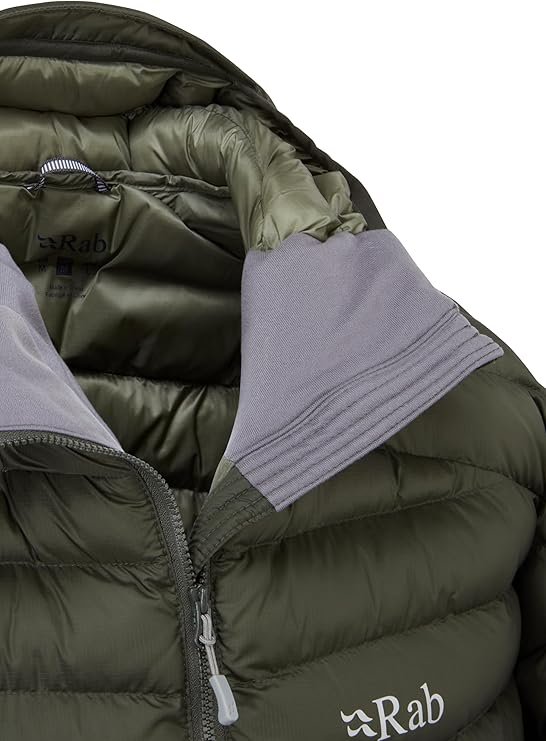
Why I bought it
When I transitioned from running to hiking I started researching layering properly for the first time. Up to that point my approach to cold weather was a fleece or a coat depending on how cold it looked outside. The concept of a system, base layer, mid layer, shell, was new to me, and the more I read the more it became clear that the mid layer was the part I was getting most wrong.
The Rab Cirrus kept coming up. Lightweight synthetic insulation, highly compressible, warm enough to use as a standalone layer in reasonable conditions or under a shell in anything worse. Rab's Cirrus Featherless synthetic fill is designed to mimic down in terms of loft and warmth-to-weight while outperforming it in wet conditions. In the UK, where damp air and persistent drizzle are the default, a synthetic fill that stays warm when wet makes more sense than down that clumps and loses its insulating properties in moisture.
At around £158 it was the most I'd spent on a single piece of clothing at that point. It felt like a significant purchase. It turned out to be one of the best I've made.
The moment I understood what good kit actually means
A few days after I bought it I wore it to work. On my lunch break I walked into a cold, cutting wind. The kind of day where it gets into everything. My hands were cold. My face was cold. My legs were cold.
My body was completely, genuinely warm.
Not slightly insulated. Not managing. Actually warm, in the way you feel when you're sitting inside. The Cirrus was doing its job so effectively that I spent the walk back to the office slightly amazed, thinking about all the times I'd been unnecessarily cold on walks and hikes because I'd bought things that looked warm rather than things that were.
That is the moment the penny dropped on buying kit for technical performance. I haven't really gone back.
How I actually use it
The honest answer is constantly. It goes on when I leave the house in cold weather regardless of what I'm doing. Popping out to the shops. Watching a football match outside. Dog walks. Hiking. It doesn't care. It's warm and light and comfortable and it packs into almost nothing.
My wife used to raise an eyebrow when I bought yet another coat I'd apparently never use. She doesn't anymore.
On trail it comes into its own in the later stages of longer hikes, exactly the situation the Jurassic Coast Ultra Challenge put it through. When you've been moving for six or seven hours and the sun goes down and the temperature drops and your tired legs aren't generating heat the way fresh legs do, having a layer that goes on quickly and actually works is not a luxury. It's the difference between the final miles being manageable and being genuinely unpleasant.
Packability and why it lives in my Osprey
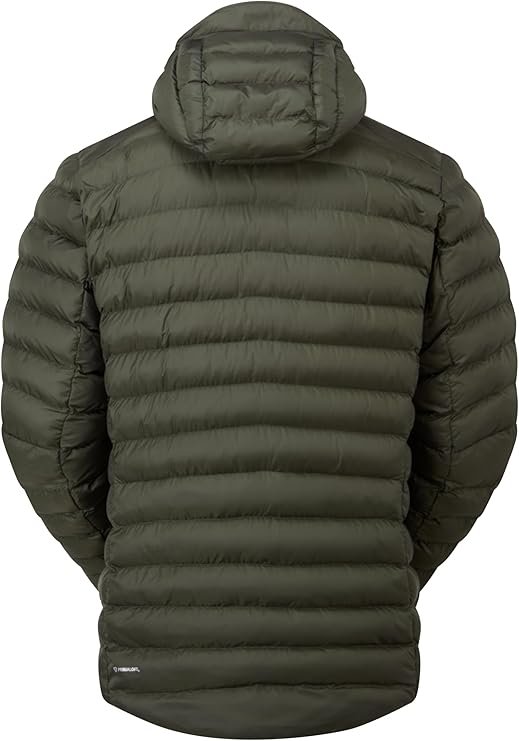
The Cirrus compresses into its own pocket to roughly the size of a small water bottle. It lives permanently in the lid pocket of the Osprey Talon 33. Unless it is genuinely warm with no prospect of getting cold, I take it on every hike without thinking about it.
This is the detail that makes an insulated layer worth having on day walks. A jacket that needs its own stuff sack and takes up meaningful space in your pack is a jacket you'll leave behind when you're trying to keep weight down. The Cirrus doesn't create that calculation. It's just always there, small enough to ignore until you need it.
Layering it properly
On most UK hiking days the Cirrus works as a standalone layer over a base layer or light fleece. On the colder or wetter days it goes under my Patagonia Torrentshell, which is where it really earns its place. The shell cuts the wind and keeps the rain out. The Cirrus provides the warmth underneath. Together with Mountain Equipment gloves on the hands the combination has handled everything the UK has thrown at me so far, including Pen y Fan in January and a long stretch of the Jurassic Coast Ultra Challenge in the dark.
The Cirrus fits cleanly under a shell without bunching or restricting movement. The slim, fitted cut is deliberate for exactly this reason. It's designed to layer, not to be the outermost thing you wear when the weather turns serious.
The honest limitation
The Cirrus is not waterproof or water resistant in any meaningful sense. It will cope briefly with light drizzle the way most woven fabrics do, but it is not a layer you wear in rain without a shell over the top. Water will soak through and the insulation, while synthetic rather than down, will lose effectiveness when wet enough.
This isn't a flaw in the design. The jacket isn't trying to be a waterproof. What it is trying to be is a lightweight, warm, packable insulating layer and it does that extremely well. The Patagonia Torrentshell goes on over the top in anything more than the lightest rain. System sorted.
Which Cirrus? The three variants explained
Rab now sell the Cirrus in three versions, all built around the same PrimaLoft Silver RISE synthetic fill, and the names are easy to muddle. Mine, and the jacket this review covers, is the standard Cirrus. Here is how the three differ, straight from how Rab specify them:
- Cirrus (around £160): the classic do-it-all, non-hooded jacket. Pertex Quantum Pro shell, the most weather-resistant of the three, YKK Vislon front zip, two zippered hand pockets and an internal chest pocket. This is the one I own and the one to buy for general UK walking.
- Cirrus Alpine (around £170 to £180): the hooded version. Elasticated hood and cuffs, a regular fit with room for winter baselayers, and a dual-sided rear hem adjustment that stays secure under a harness or a pack. The pick if you want a hood on your insulator.
- Cirrus Flex Hoody (around £150): the mobility version and the cheapest. Stretchy fleece side panels, slim fit, articulated sleeves and an under-helmet hood. The pick if you run warm, move fast, or want an insulator that climbs and scrambles with you.
The upgrade: Rab Nebitron Pro
Next winter I'm adding the Rab Nebitron Pro to the kit. It's Rab's warmest synthetic jacket, using PrimaLoft Silver RISE insulation and a Pertex Quantum Pro shell that offers genuine wind and light weather resistance. Warmer, heavier and considerably more substantial than the Cirrus.
The reason the Cirrus keeps its place in the kit despite this upgrade is packability. The Nebitron Pro is bulkier and heavier. For anything serious in deep winter it will be the right tool. For everything else, every hike where the Osprey pack needs to stay sensible and the jacket needs to compress into nothing and be forgotten until needed, the Cirrus is still the answer.
The Nebitron is the Cirrus on steroids, as someone more eloquent than me might put it.
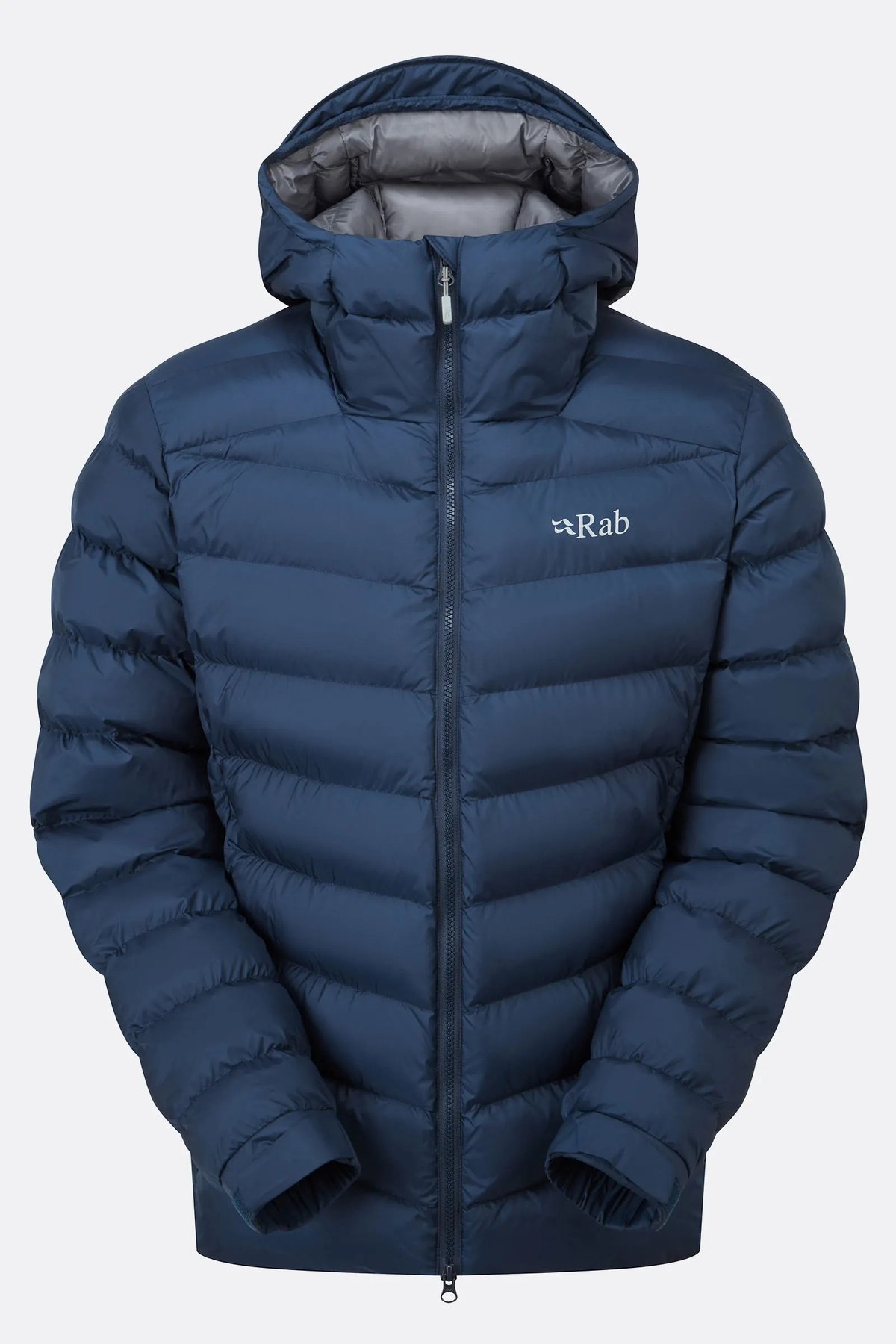 Buy the Rab Nebitron Pro on Amazon
Verdict
The Rab Cirrus is the piece of kit I'd recommend most readily to anyone transitioning from casual walking to proper hiking. Not because it's the most technical thing on the site, and not because it's the most expensive. Because it works exactly as described, it lasts, and the first time you wear it in conditions that would previously have left you cold and uncomfortable you will understand immediately why buying kit for performance rather than appearance is the correct approach.
Two and a half years. Still going. Still in the Osprey. Still being worn to the shops.
Brand guide: for the full Rab story, the technology behind the kit and where the range fits, read our Rab brand review.


