


Quick answer
The best power cut lighting is a lantern per living space plus a head torch per adult, never candles: official Be Ready guidance says torches are safer than candles, and candle fires killed people after last year's Iberian blackout. For rooms, a rechargeable camping lantern such as the Blukar 2000L (around £25) or a battery-powered hanging set like the Garden Mile three-pack (£18.99) lights everyone at once; for hands-free jobs a head torch does the rest. Add a wind-up or battery radio for information when the broadband is down, a stock of AA and AAA batteries including lithium ones for the cold, and you have covered the official checklist's light and radio lines for under £60, with kit that goes camping the rest of the year.
Our pick: Blukar 2000L Rechargeable Camping Lantern
The lights went out for tens of thousands of UK homes during Storms Austen and Boelo, the government's new Be Ready checklist went live the same week, and the nation responded by sending searches for emergency candles up five thousand percent. This guide is the better answer: the lanterns, torches, radios and batteries that light a blackout safely, every one of them kit that earns its keep camping and walking the rest of the year. Most of what follows hangs in our own tent each summer.
| Image | Product | Price | Buy |
|---|---|---|---|
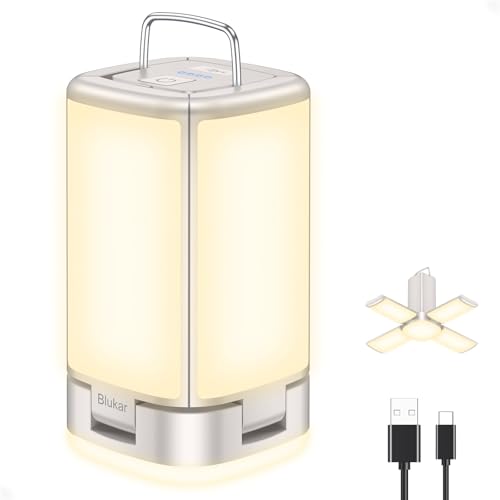 | Best overallBlukar 2000L rechargeable lantern | £24.99 | |
| Expanding panels · USB rechargeable · runs all night on lowBest for The main room or the whole tent | |||
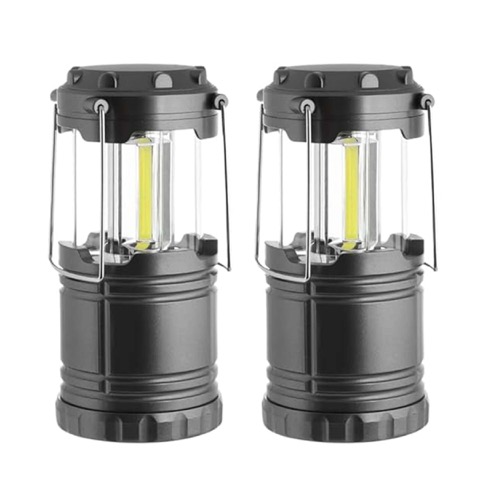 | The ones we ownGarden Mile hanging lanterns (3-pack) | £16.99 | |
| 3 COB lanterns · battery powered · pull-down to light, carabiner hangBest for A comfortable light per bedroom | |||
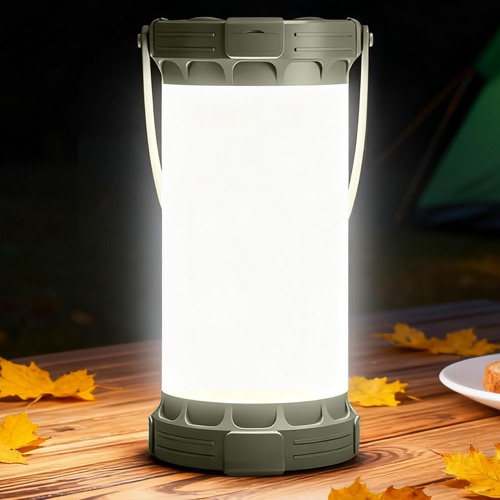 | Glocusent 1200LM rechargeable | ~£26 | |
| 135 LEDs · USB-C · 7 modesBest for Proper brightness on demand | |||
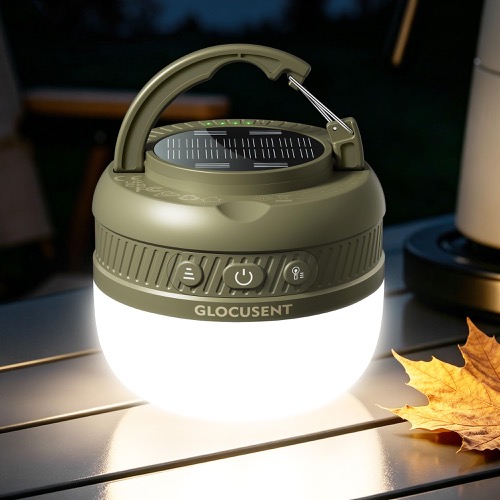 | Glocusent pocket solar lantern | £22.99 | |
| Pocket size · solar top-up panel · USB-CBest for Daytime free top-ups in a long outage | |||
 | LuminAID solar inflatable | £33.04 | |
| Inflatable, packs flat · solar · 200,000+ donated to disaster reliefBest for The car boot and the windowsill | |||
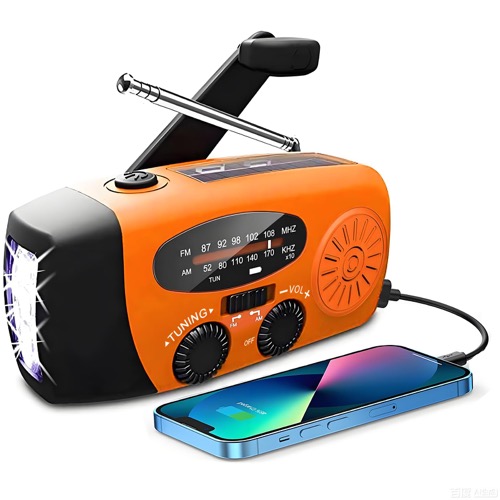
 | The one we ownWind-up emergency radio | £21.89 | |
| Hand crank · torch · USB phone chargeBest for News with no batteries at all | |||
 | Philips TAR1609 rechargeable radio | ~£36 | |
| FM/AM · internal rechargeable battery · proper speakerBest for The named-brand radio option | |||
 | Energizer Ultimate Lithium AA (10) | £18.93 | |
| Lithium AA · long shelf life · strong cold-weather performanceBest for The torches and the car kit | |||
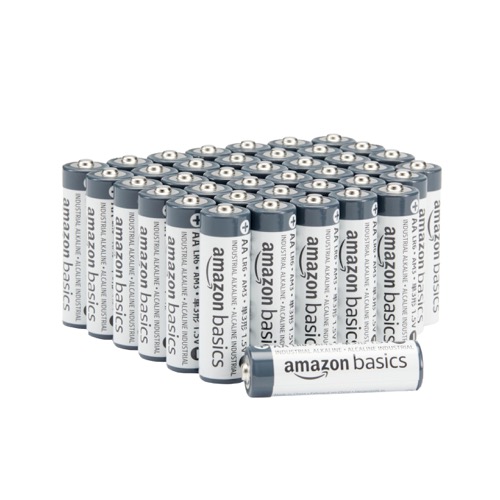 | Amazon Basics AA alkaline (40) | £10.16 | |
| 40 cells · ~25p eachBest for The volume layer of the battery drawer | |||
First: torches, not candles
The official Be Ready wording is literally "torches are safer than candles", and it is there for a hard reason: when Spain and Portugal went dark for ten hours last year, several of the deaths that followed came from candle fires, not the blackout. A candle is an open flame you are asking to share a house with bored kids, pets and draughts, for hours. The failure mode of everything else on this page is a flat battery. Buy the £19 lantern; the maths is not close. The fuller power-cut picture, including the 105 number and the honest power bank arithmetic, is in our Be Ready guide.
Lanterns: light the room
A torch lights a point; a lantern lights the people. For a power-cut evening, one lantern per occupied room is the difference between a blackout and a slightly novel night in.
The ones we own: Garden Mile hanging COB lanterns (3-pack, £18.99). These are our family's workhorses. They are not mega bright, and sometimes that is better: a nice comfortable light rather than an interrogation. The kids like them, and we hang them in the tent bedrooms with a carabiner clip; pull the bottom down and they come on, close them up a touch for a lower light. They run on batteries, which is exactly what you want in a backup light, nothing to have forgotten to charge, as long as the battery drawer is stocked (see below). Three for under £19 means every bedroom gets one.
The rechargeable all-rounder: Blukar 2000L (~£25). The expanding-panel lantern from our camping gift guide, and the pick if you want one bright unit for the main room: panels out for the full glow, USB recharging, and it runs all night on low. Pair it with a power bank and it is never truly flat.
The high-power option: Glocusent 1200LM (£25.99). 135 LEDs, USB-C charging and seven modes for when you want genuine brightness, with a little solar sibling worth knowing about: the Glocusent pocket lantern (£22.99) adds a small solar panel on top. We would not rely on a panel that size to charge it, but as a free daytime top-up during a longer outage it is a genuinely nice touch.
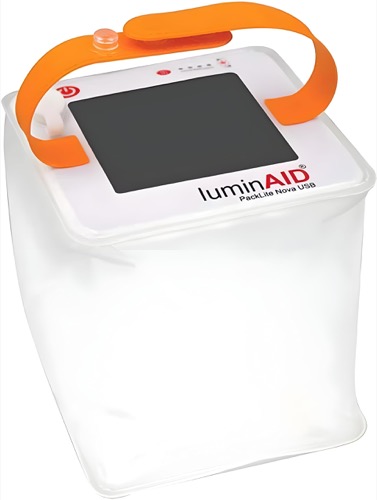
The feel-good flat-pack: LuminAID solar inflatable (£33.04). An inflatable solar lantern that packs flat, originally designed by its two founders to bring safe light to Haiti after the earthquake; the company has since distributed over 200,000 solar lights through disaster-relief programmes. It charges in a window, weighs nothing, and is the one to keep in the car.
Head torches: light the job
The lantern holds the room; the head torch does the work: the fuse box, the dog's last garden trip, reading a meter, the loo run. Both hands free, light where you look.
We review head torches properly and often, so the short version: the full head torch guide ranks every torch we rate, from the £25 Petzl Tikka that is all a kitchen-drawer torch needs to be, through the Petzl Actik Core all-rounder, to the Black Diamond Storm 500-R, which happens to be the torch in our current giveaway, running until 23 November if you fancy winning your power-cut light instead of buying it.
One buying note for the backup role specifically: a torch that takes AAA batteries never greets an emergency flat, while a USB-rechargeable one is only as ready as the last time you remembered it. The Tikka and the Actik Core both take Petzl's rechargeable CORE battery and ordinary AAAs, which is the best of both.
Radios: hear the news
When the router is dead and you are rationing the phone, local radio is how you find out what your network operator is doing and when the power is coming back. The Be Ready checklist includes it for good reason.
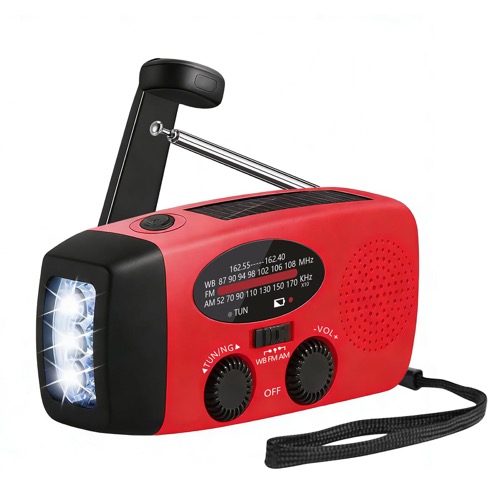
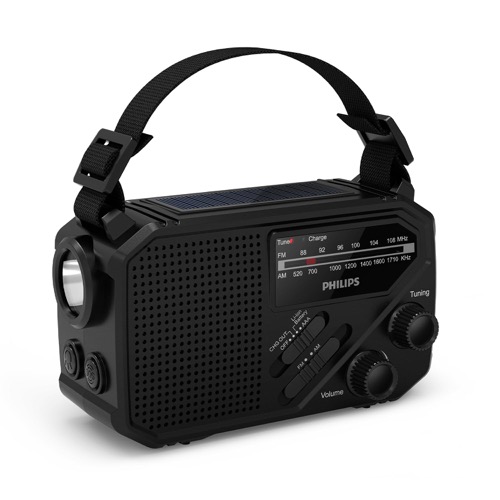
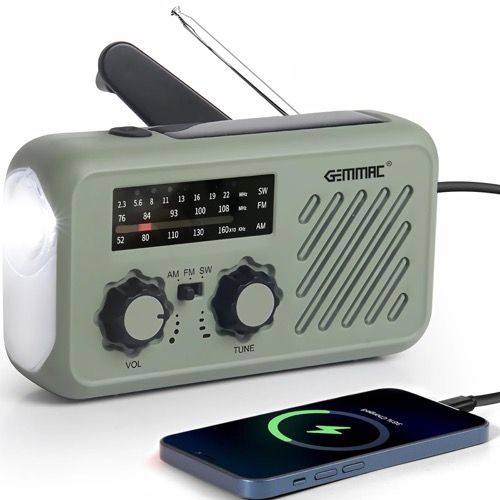
The one we own is a basic wind-up emergency radio (£21.89) with a torch and a USB port on it: it is basic, but it works well in my limited testing, and I am genuinely hoping never to need it in anger. That is the correct relationship with a £22 radio. The SOLARBABY wind-up solar radio (£19.99) adds a solar strip on the same formula, and a beefier 2000mAh crank radio (£38.99) stores more hand-cranked charge if you want the bigger battery. If you would rather a household name, Philips has been making radios for a very long time: the rechargeable TAR1609 (£35.78) is the named-brand pick, mains-rechargeable with a proper speaker, just remember it has no crank, so it needs the same charge-it-first discipline as a power bank.
The battery strategy
Every battery-powered thing on this page is only as good as the drawer that feeds it, and "spare batteries" is on the official checklist in the same breath as the torch. The sensible stock is three layers:
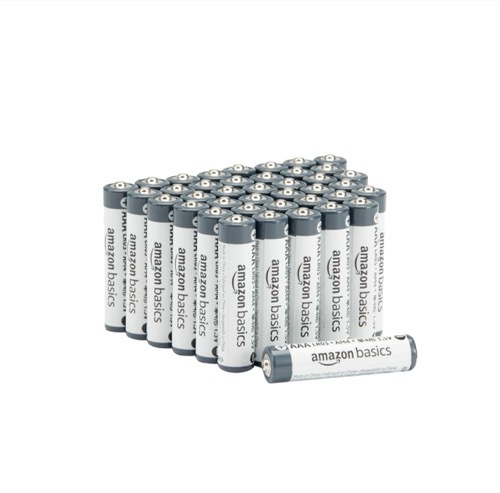
Everyday alkalines in bulk. Amazon Basics 40-packs of AA (£10.16) and AAA (£9.05) are the volume layer: lanterns, remotes, toys, the works. At roughly 25p a cell, running out is a choice.
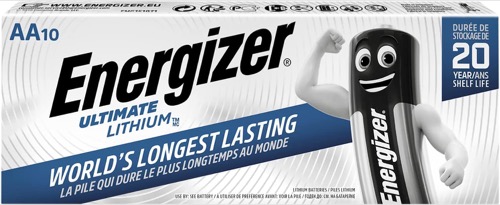
Lithium cells for the kit that matters. Energizer Ultimate Lithium AAs and AAAs cost several times more per cell and earn it twice over: a much longer shelf life, and far better performance in the cold, which is precisely a winter power cut. These are the cells for the head torches and anything that lives in the car. The 10-pack of AAs (£18.93) covers the critical kit; 20-packs of AA and AAA stock a family properly.
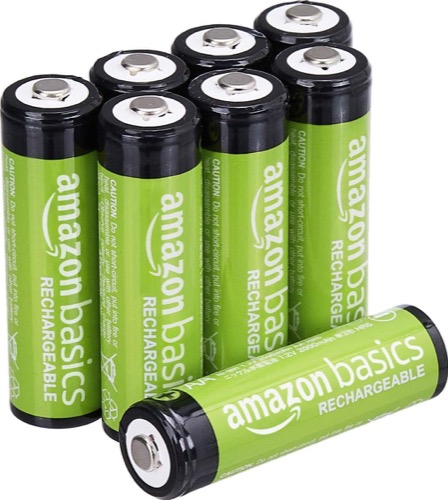
Rechargeables for the heavy rotation. Amazon Basics NiMH 8-packs (AA £8.24, AAA £6.33) plus a charger make the lanterns effectively free to run year-round, and paired with a power bank or a small solar panel they can be recharged even mid-outage.
The complete setup
For a typical family home, the whole lighting-and-information layer of the Be Ready list comes to roughly £60 to £90: a lantern per living space (the Garden Mile three-pack covers the bedrooms, one Blukar or Glocusent for the main room), a head torch per adult, one wind-up radio, and the three-layer battery drawer. Every item of it goes camping, walking or in the Christmas-toy drawer the rest of the year, which is the test all preparedness kit should pass. The power side of the plan, banks, stations and solar, lives in the Be Ready guide and the power banks roundup, and the finder tool will size the right battery for your household in a couple of questions.