


Quick answer
Liner socks are thin, snug, fast-wicking socks worn under your main hiking socks, and yes, used correctly they genuinely help prevent blisters: friction happens between the two sock layers instead of against your skin, and sweat is moved off the skin that blisters when damp. The evidence detail everyone misses: a US Marine Corps study found the two-sock system only works with a thick, dense outer sock over the liner, and a liner under a thin standard sock actually performed worst of all. Expect to pay £12 to £15: the Injinji Liner Crew (£11.69) adds five-toe construction that stops toe-on-toe rubbing, and the merino Sealskinz Suffield (£15) doubles as a summer sock. One warning: liner socks are not waterproof, and the big waterproof-sock brands disagree about whether you need one at all.
Our pick: Injinji Liner Crew (Toe Socks)
For something that costs about twelve quid and weighs nothing, liner socks carry more genuine science than almost any item in a hiking kit list, and more misunderstanding too. Worn right, they are the cheapest blister prevention that exists. Worn wrong, and the wrong way is common, the evidence says they can make things worse. Here is the whole picture: what they are, what the studies actually found, and the two liners worth your money.
What liner socks are
A liner sock is a thin, close-fitting sock worn as a base layer under your main sock. The theory is simple mechanics: your foot moves inside your shoe with every step, and something has to absorb that rubbing. In a single-sock setup, the rubbing happens where sock meets skin. Add a snug liner, and the main sock slides against the liner instead; the friction relocates to a sock-on-sock interface where no skin is involved. The second job is moisture: a wicking liner pulls sweat off your skin and passes it outward to the main sock, which matters because damp skin is soft skin, and soft skin blisters dramatically faster (NHS guidance notes friction blisters form more easily on moist skin; the full mechanism is in the blister section of our waterproof socks guide).
Materials are chosen for wicking and low friction: Coolmax polyester, fine merino, polypropylene, and traditionally silk. They should fit like a second skin, snug, zero wrinkles, because a wrinkled liner is itself a friction point.
The actual evidence (including the bit everyone misses)
Two proper studies anchor this category, and they are more interesting than the folklore version.
The Marine study. Knapik and colleagues ran a trial on 357 US Marine recruits in basic training, comparing sock systems. Recruits wearing a thin polyester liner under a thick, dense wool-blend outer sock had blisters at a rate of 40%, against 69% in the standard-issue single sock. But, and this is the finding everyone skips, recruits wearing the liner under the standard thin sock did worst of all, at 77%. The liner is not a magic layer you add to any sock: the system that works is liner plus a properly cushioned, dense outer sock. The British Mountaineering Council's medic-authored guidance recommends exactly that pairing: a low-friction synthetic layer against the skin, a thick wool-type sock against the boot.
The fibre study. Herring and Richie's double-blind trial on distance runners found cotton socks produced more and larger blisters than identically-built acrylic socks, with moisture handling the difference. The lesson transfers to liners directly: the layer against your skin should never be cotton.
So the honest claim is this: liners help as part of a two-sock system with a dense outer, they help most on long, sweaty, high-mileage days, and the fibre against your skin matters as much as the layer count.
How to wear them properly
Snug, smooth, seam-flat. The liner goes on first and should fit tighter than a normal sock with no wrinkles; most people size them true or even down. Dense sock over the top. Your main hiking sock provides the cushioning the system needs: a proper walking sock, not a thin everyday one, or you recreate the study's worst-performing setup. Solo wear works in heat: a liner alone in warm weather is a legitimately good minimal sock inside trail shoes, though it gives up all cushioning against a stiff boot. Keep them dry-day kit or pair them wisely: liners are not waterproof (the Sealskinz Suffield's own listing states it twice), so in proper wet they live under either a waterproof sock or inside waterproof footwear.
Toe liners vs regular liners
Regular liners handle sock-on-skin friction everywhere except one place: between your toes, where skin rubs skin and no conventional sock can intervene. That is the niche Injinji built its five-toe liners for: each toe separately wrapped in wicking fabric, so toe-on-toe rubbing, a notorious blister site on long descents, is engineered out. The trade-offs are honest ones: toe socks take a few wears to stop feeling strange, and they are slower to put on when your tent is cold. If your blisters happen between toes, toe liners are the targeted fix; if they happen at heel and ball, a regular liner system covers you.
Under waterproof socks? The brands disagree
If you own waterproof socks, should a liner go underneath? Enjoyably, the two biggest brands give opposite answers: Sealskinz says no, its waterproof socks are designed to sit directly against the skin, liner optional only for added warmth; DexShell says yes, liners wick the moisture that increases friction, and it designs liner socks for exactly that pairing. Our read, consistent with the evidence above: next-to-skin is the right default (the wicking linings are built for it, and bulk is the enemy of fit), and the liner earns its place underneath when you run unusually sweaty, need more warmth, or have a blister history, the same conditions that justify liners generally. Full context in the Sealskinz vs DexShell comparison.
The two worth buying
Prices from our 31 October 2026 check.
| Image | Product | Price | Buy |
|---|---|---|---|
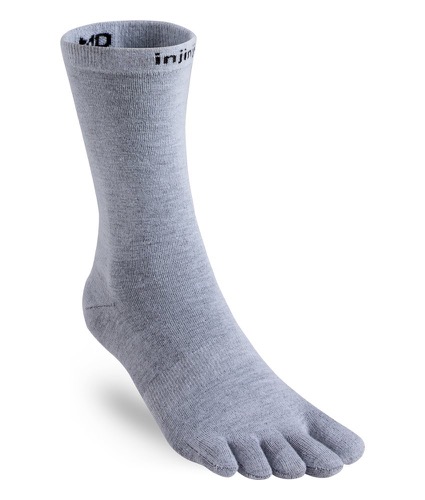 | Blister specialistInjinji Liner Crew (toe liner) | £11.69 | |
| 5-toe design · mesh top · arch support · 4.5★ (3,544)Best for Between-toe blisters and long days | |||
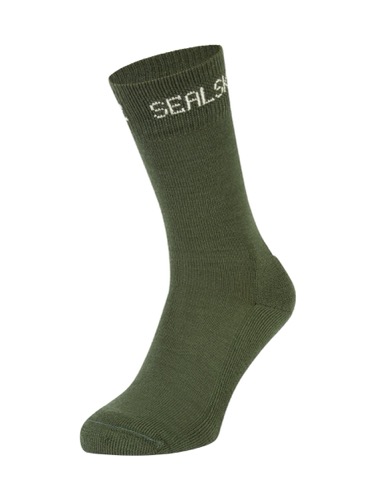 | Dual-purposeSEALSKINZ Suffield (merino liner) | £15.00 | |
| 42% merino blend · ankle length · 4.3★ (239)Best for Liner duty in winter, solo sock in summer | |||
The Injinji (£11.69) is the pure blister tool: Coolmax-style wicking, the five-toe layout, and the biggest review base in the liner world at 4.5 stars across 3,544 ratings. Note its size bands run differently from the sock brands: S covers UK 4.5 to 6.5 and M covers UK 7 to 9.5, so size by the chart. The Sealskinz Suffield (£15) is the versatile one: a 42% merino blend that works as a cold-weather base layer under bigger socks and as a standalone lightweight sock in summer, in colours up to and including pink. Its listing is admirably blunt about the thing buyers most need to know: this sock is NOT waterproof, stated twice. Wash cool (30°C) and drip dry, as with all technical socks, never on a radiator.
Both pair naturally with the dense outer socks the evidence demands, and if the outer layer question is still open, the waterproof socks guide and Sealskinz vs DexShell cover the heavyweight end of the drawer.