


Quick answer
Our pick: Darn Tough Hiker Micro Crew
- Best overall: Darn Tough Hiker Micro Crew (~£22)
- Best for winter: Darn Tough Hiker Full Cushion Boot (~£26)
- Best all-rounder alternative: Smartwool Hike Full Cushion Crew (~£24)
- Best for summer: Smartwool Hike Light Cushion (~£20)
- Best UK brand heavyweight: Bridgedale Explorer Heavyweight (~£20)
- Best UK brand lightweight: Bridgedale Hiker Lightweight (~£16)
- Best budget: Danish Endurance Merino 3-Pack (~£28)
- Best waterproof: SealSkinz Waterproof All Weather (~£32)
- Best premium: Falke TK2 Explore (~£28)
- Best anti-blister: Wrightsock Merino Hiking (~£18)
The full reasoning, and everything we ruled out, is below.
Most hikers spend a significant amount of money on boots and almost nothing on socks. This is the wrong order of priorities.
A good boot on the wrong sock will give you blisters. A mediocre boot on the right sock will often be fine. The sock is the thing that sits directly against your skin, manages moisture from the moment you start moving, and either prevents friction or causes it. It is not a footnote in your kit list. It is one of the more important decisions you make before a long day out.
I have worn the Darn Tough Hiker Micro Crew for two years and hundreds of miles on the Jurassic Coast, in the Brecon Beacons, and on long training walks including a 32km double loop of the Brockenhurst Tall Trees Trail. Not a single blister. In two years. That result is the baseline against which I measure every other hiking sock.
Before we get into the picks, here are the questions most guides skip.
Every sock in this guide, compared
The whole guide in one table. Tap a name to jump to the full write-up, or the buy button to check today's price.
| Product | Price | Buy |
|---|---|---|
| Best overallDarn Tough Hiker Micro Crew | £25.69 | Amazon |
| 64% merino, 33% nylon, 3% Lycra · seamless toe · lifetime guaranteeBest for The sock to buy first for three-season hiking, the benchmark on this list | ||
| Best for winterDarn Tough Hiker Full Cushion Boot | ~£26 | Amazon |
| 69% merino · full cushion, boot height · warmer, less breathableBest for A dedicated winter sock for cold weather, heavy boots and long days | ||
| Best all-rounder alternativeSmartwool Hike Full Cushion Crew | £25.71 | Amazon |
| Zoned cushioning, denser at heel and toe · narrower heel cup · soft from first wearBest for A softer premium alternative to Darn Tough, comfortable all day | ||
| Best for summerSmartwool Hike Light Cushion Crew | ~£20 | Amazon |
| Light cushion · better airflow, faster drying · closer feel in trail shoesBest for Warm days in spring and summer, trail shoes and low-cut footwear | ||
| Best UK brand heavyweightBridgedale Explorer Heavyweight Merino | £22.00 | Amazon |
| Heavyweight cushioning · boot height, substantial cuff · runs warmer than Darn ToughBest for Serious winter hill walking where warmth is the priority | ||
| Best UK brand lightweightBridgedale Hiker Lightweight | £17.74 | Amazon |
| Targeted cushioning · reinforced heel and toe · accessible price pointBest for Shorter walks and mild-condition day hikes without paying premium prices | ||
| Best budgetDanish Endurance Merino Wool 3-Pack | £24.95 | Amazon |
| Three pairs for less than one pair of Darn Tough · lower merino content · softer than expected at the priceBest for The best value entry point, rotate with a premium pair for everyday walks | ||
| Best waterproofSealSkinz Waterproof All Weather | £18.76 | Amazon |
| Waterproof hydrophilic membrane · merino inner lining · thicker, less breathableBest for Stream crossings and consistently wet ground, a specialist tool | ||
| Best premiumFalke TK2 Explore | £28.00 | Amazon |
| Midweight merino · targeted arch compression · left and right specific constructionBest for Anyone whose feet find standard hiking socks slightly imprecise | ||
| Best anti-blisterWrightsock Merino Hiking | £15.95 | Amazon |
| Double layer construction · merino inner layer · bulkier than a single layerBest for Hikers with a history of blisters who have tried everything else | ||
Amazon prices refresh automatically with the site’s nightly build, so they can lag a day and can change at any time. The price at checkout is the one that applies.
Is merino wool really the best material for hiking socks?
For the vast majority of UK hikers, yes. Merino wool has a combination of properties that synthetic materials have been trying to replicate for decades without fully succeeding.
It regulates temperature naturally, keeping feet warm in cold conditions and cool in warm ones. It wicks moisture away from the skin and releases it into the air, keeping feet dry during sustained effort. It is naturally antimicrobial, which means it resists odour significantly better than synthetics — relevant on multi-day routes or long event days like the Jurassic Coast Ultra Challenge where you may be wearing the same pair for sixteen hours. And it is soft against the skin in a way that synthetics rarely match.
The honest trade-off is durability. Pure merino wool wears faster than synthetic fibres. This is why the best hiking socks are merino blends rather than pure wool — typically 60-70% merino combined with nylon for durability and a small amount of elastane for stretch and fit. Anything over 60% merino is performing well. Below 40% and you're getting diminishing returns on the wool's natural benefits.
The one material to actively avoid for hiking is cotton. Cotton absorbs moisture and holds it against your skin, creating exactly the warm, damp environment that produces blisters. Leave the cotton socks at home.
What cushioning level do you actually need?
Hiking socks come in four main cushioning weights and choosing the right one matters more than most people realise.
Lightweight — thin, breathable, best for warm weather and trail shoes or low-cut footwear. Minimal padding, maximum airflow. Good for shorter walks and summer hiking where heat and sweat are the main concern.
Midweight — the most versatile option and the right choice for most UK day hikers. Enough cushioning to absorb impact on uneven terrain, enough breathability to stay comfortable over a full day. The Darn Tough Hiker Micro Crew sits here.
Full cushion — significantly more padding, warmer, better for heavy boots, heavy packs, cold conditions and long distances where foot fatigue becomes a factor. The right choice for winter hiking, multi-day routes and events like the JCC Ultra where you're on your feet for ten hours plus.
Heavyweight — maximum warmth and cushioning, designed for mountaineering boots and serious winter conditions. Overkill for most UK day hiking but essential for specific conditions.
What size hiking socks should you buy?
Sock sizing is more important than people assume and getting it wrong is a direct route to blisters.
The fit should be snug but not tight. A sock that's too loose will bunch and fold inside the boot, creating friction points. A sock that's too tight will restrict circulation and cause pressure points over a long day.
Most hiking sock brands size by UK shoe size. When you're between sizes, go smaller rather than larger — a slightly snug sock will stretch to fit, whereas a slightly loose sock will never stop moving around.
One practical tip: always try on hiking socks with the boots you'll be wearing them with. The thickness of the sock affects boot fit, and a pair of full-cushion socks in a boot fitted for lightweight socks can make the boot uncomfortably tight on the forefoot. If you're buying online and can't try before you buy, check the specific brand's size guide rather than assuming standard UK sizing applies.
How often should you change socks on a long hike to avoid blisters?
On a walk of up to 20km in moderate conditions, changing socks mid-hike is generally not necessary with a quality merino pair. The sock will manage moisture well enough to stay comfortable throughout.
On longer walks — anything over 25-30km, or in hot or wet conditions — changing socks at the halfway point makes a meaningful difference. Fresh, dry socks reduce friction significantly in the second half when feet are most vulnerable to blistering.
On last year's Jurassic Coast Ultra Challenge, 58km in warm May sunshine, I changed socks at the lunch stop around 29km and again at the 42km rest stop. Both changes were immediate improvements in comfort. I put a fresh pair in my bag drop at the finish. By the time I crossed the line at midnight, my feet were tired but completely blister-free.
The practical approach: on anything over 30km, pack a spare pair in your bag. Take them off at the halfway point, let your feet air for five minutes while you eat, and put on the fresh pair. It costs almost nothing in terms of weight and makes the second half significantly more manageable.
Patterned vs plain — does it actually matter?
No. Pattern has zero impact on performance. The cushioning, the merino content, the knit construction — none of it changes based on whether there's a stripe down the side or a repeating geometric print.
The honest practical argument for patterned socks is that they're easier to pair up after washing. If you own six pairs of identical plain grey merino socks, matching them from the laundry pile is a minor but genuine inconvenience. Six pairs of different patterned socks solve that problem immediately.
The argument for plain socks is that they look less conspicuous in sandals in the pub after a long walk, if that's something you care about.
Buy whichever appeals to you aesthetically. The performance difference is zero.
Do you need waterproof hiking socks?
For most UK day hiking, no — and here's why. A waterproof sock like the SealSkinz range is genuinely useful in specific conditions: stream crossings, waterlogged ground where your boot leaks, early morning dew on long grass. But they come with trade-offs. They're thicker, less breathable, and significantly warmer than standard merino socks. In anything other than specifically wet conditions they can be uncomfortable over a full day.
If you have good waterproof boots — the Salomon X Ultra 360 GTX for example — the boots are doing the waterproofing and a standard merino sock is the better choice. Waterproof socks make most sense as an addition to your kit for specific extreme conditions, not as a replacement for good waterproof footwear.
That said, the SealSkinz are worth knowing about if you do a lot of winter walking or regularly cross streams on your routes.
The 10 best hiking socks UK 2026
1. Darn Tough Hiker Micro Crew — the benchmark
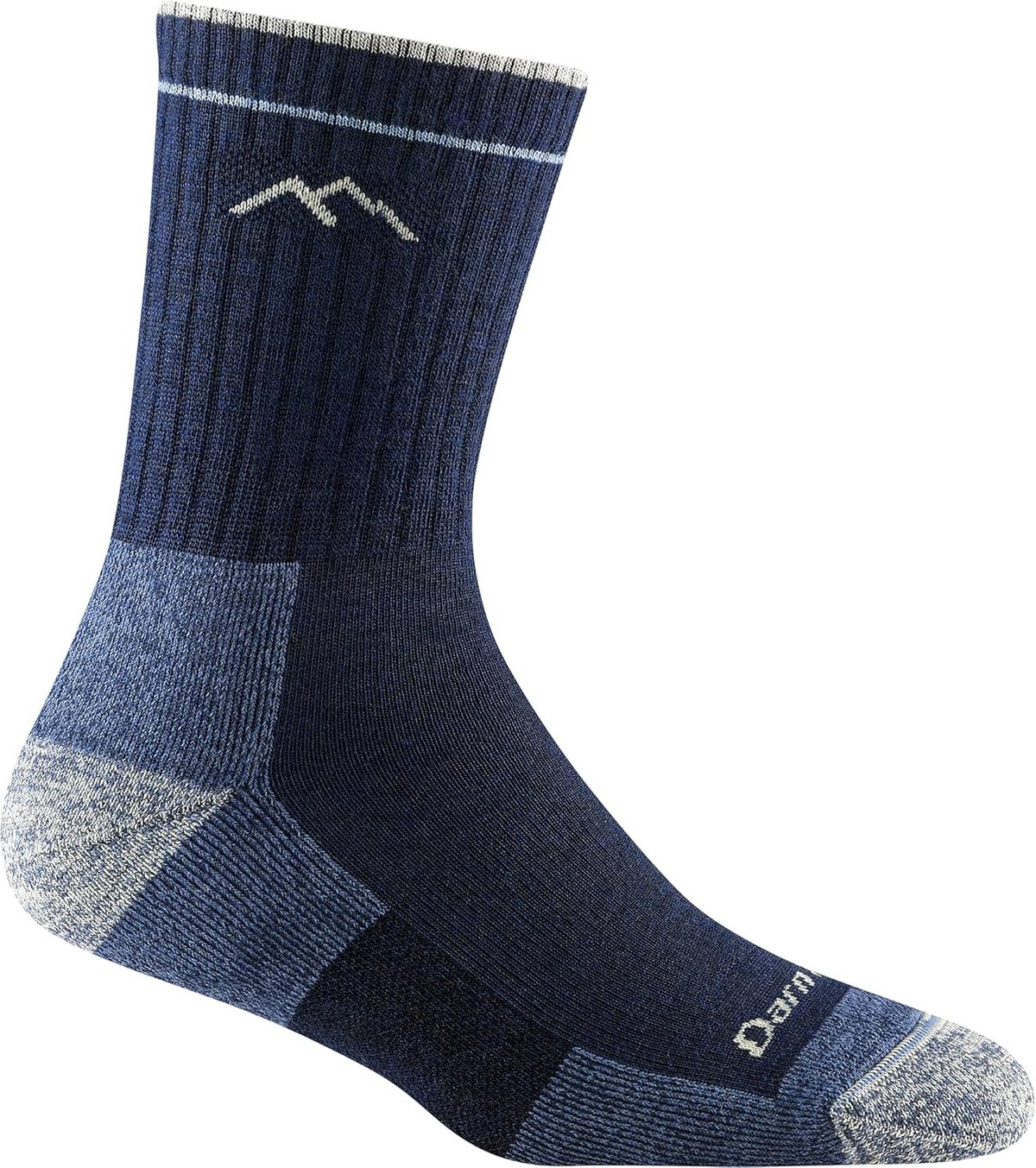
The sock I come back to every time. 64% merino wool, 33% nylon, 3% Lycra elastane — a blend that gets the balance right between wool's natural performance and nylon's durability. The micro crew height sits a few inches above the ankle, high enough to prevent boot rubbing on a mid-cut boot, low enough to avoid bulk.
The construction is dense and consistent. No bunching, no slipping, no movement inside the boot once it's on. The True Seamless toe technology means there is no raised seam to cause friction — run your finger inside the sock and you cannot find the join. Over a long day this matters more than it sounds.
The lifetime guarantee is genuine. Darn Tough will replace any pair that wears out, no questions asked, no receipt required. In two years of regular use on UK trails I haven't needed it, which tells you something about the construction quality.
For three-season hiking this is the sock I'd buy first, recommend first and reach for first. The full Darn Tough review has more detail if you want it.
2. Darn Tough Hiker Full Cushion Boot — the winter upgrade
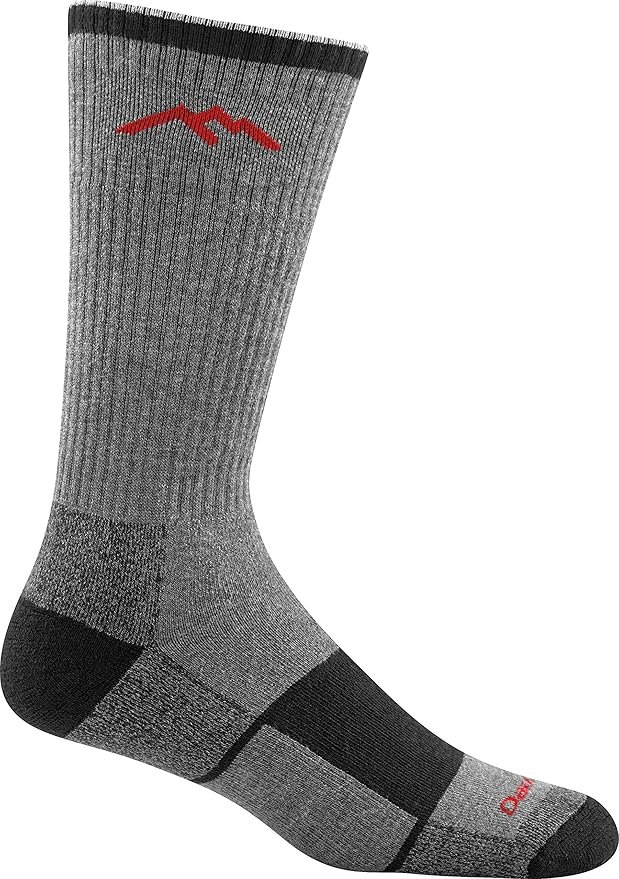
The same Darn Tough construction as the Micro Crew but with significantly more cushioning throughout the foot and a boot height that sits above the ankle collar. The higher merino content (69% versus 64%) adds warmth and softness, making this the right call for cold weather, heavy boots, and long days where foot fatigue is a genuine concern.
I wore these on Pen y Fan in January alongside the Salomon X Ultra 360 GTX. The combination was warm, well-cushioned and completely comfortable over four hours in cold wet conditions. The boot height protected against the boot collar in a way the Micro Crew doesn't.
The trade-off for the extra cushioning is breathability. On a warm day or a fast-paced walk, the Full Cushion can feel a little warm. Treat it as a dedicated cold weather and winter sock rather than an all-season replacement for the Micro Crew.
3. Smartwool Hike Full Cushion Crew — the best all-rounder alternative
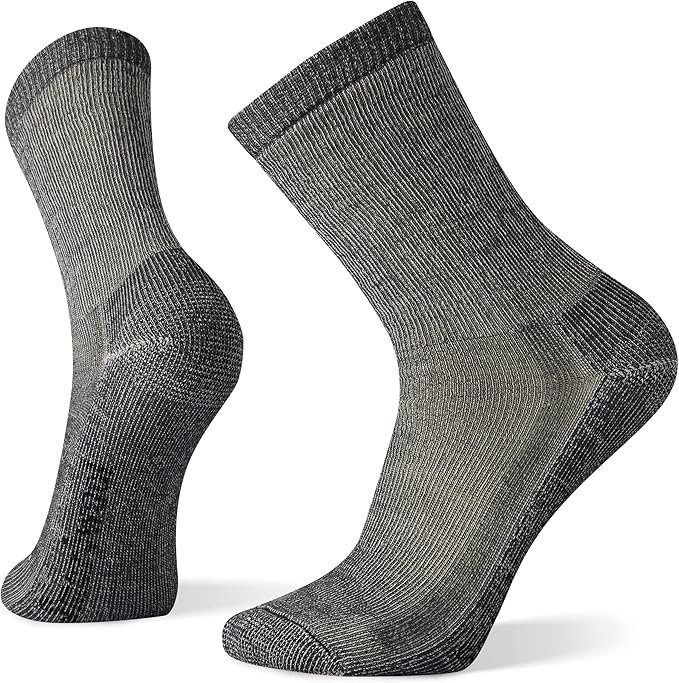
Smartwool has been making merino hiking socks for thirty years and the Hike Full Cushion Crew shows that experience. Zoned cushioning — denser at the heel and toe where impact matters most, lighter through the arch for breathability — makes for a sock that's comfortable all day without feeling bulky throughout.
The fit is precise. A narrower heel cup than some competitors keeps the sock locked in place without slipping, and the ribbed cuff stays up without constricting the calf. The merino blend is soft from the first wear rather than needing a breaking-in period.
For anyone who wants a premium alternative to Darn Tough, the Smartwool Full Cushion is the natural comparison point. Both are excellent. The Smartwool is softer, the Darn Tough is marginally more durable over the very long term. For most hikers either is an excellent choice.
4. Smartwool Hike Light Cushion Crew — the summer pick
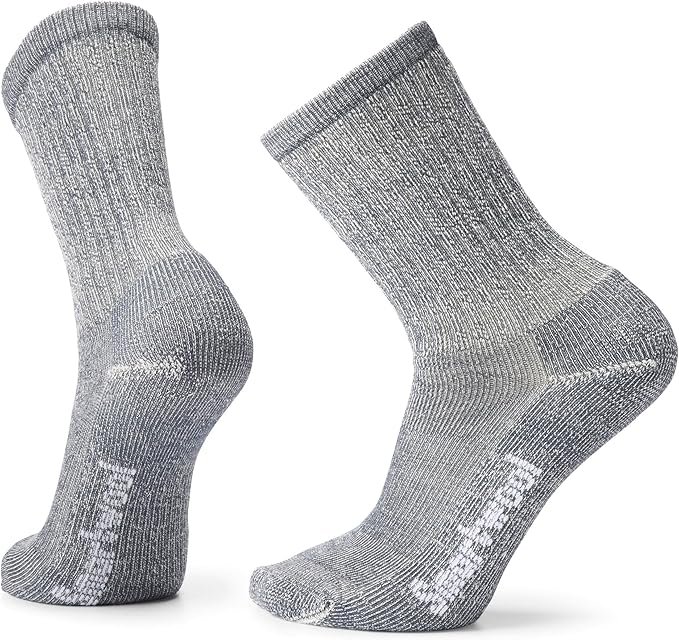
Where the Full Cushion is the three-season workhorse, the Light Cushion is the sock you reach for on warm days when breathability matters more than padding. Less bulk means better airflow, faster drying if your feet get wet, and a closer feel inside trail shoes and low-cut footwear.
On a hot day on the coast path or a summer morning in the New Forest, the Light Cushion stays comfortable where a heavier sock would leave you hot and damp inside the boot. The merino content is still high enough to manage odour and moisture effectively — you're not giving up the material's core benefits by going lighter.
The right buying decision: Light Cushion for spring and summer, Full Cushion or the Darn Tough Full Cushion Boot for autumn and winter. Having both covers the full UK hiking year.
5. Bridgedale Explorer Heavyweight Merino — the UK brand for serious winter
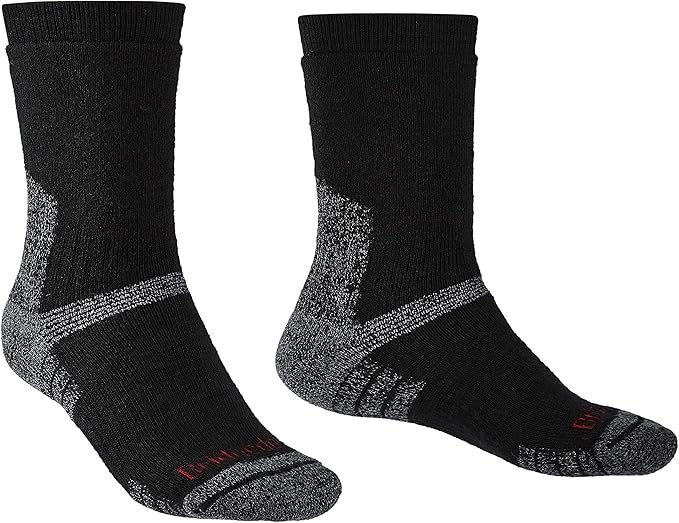
Bridgedale is a British brand with a long heritage in hiking socks and the Explorer Heavyweight is their most capable cold weather option. Substantial merino content, significant cushioning throughout the foot, and a construction built to handle the kind of sustained wet cold that characterises a British winter walk.
I have worn Bridgedale socks on long training walks and found them consistently comfortable and well-made. They run slightly warmer than Darn Tough at the same cushioning weight — a genuine advantage in cold conditions, less so in mild weather where they can become warm.
The boot height and substantial cuff make them particularly good with taller hiking boots. If you're doing serious winter hill walking where warmth is the priority and breathability is secondary, the Explorer Heavyweight is the right choice.
6. Bridgedale Hiker Lightweight — the accessible everyday option
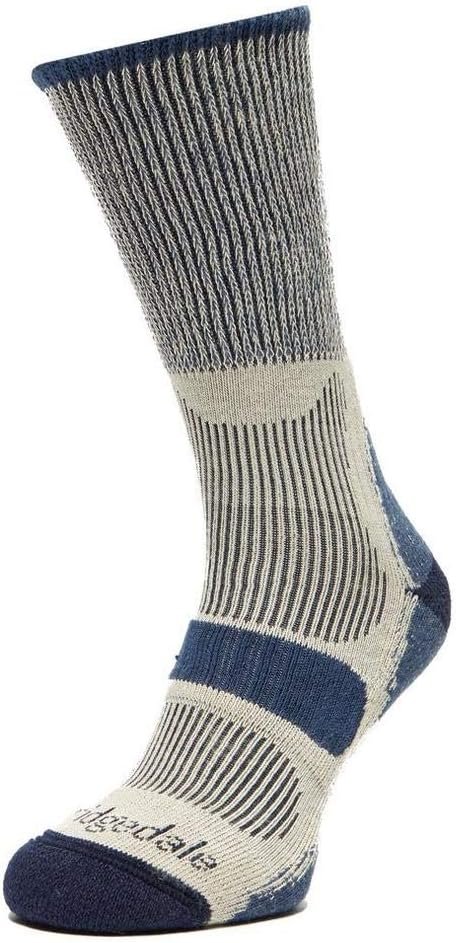
The lighter end of the Bridgedale range and a more accessible price point. Less merino content than the Explorer Heavyweight but still a proper hiking sock with targeted cushioning, reinforced heel and toe, and the Bridgedale construction quality that comes from decades of making socks specifically for UK conditions.
For shorter walks, day hikes in mild conditions, or anyone wanting a solid everyday hiking sock without paying premium prices, the Bridgedale Lightweight is a sensible choice. It is the sock you give someone as a gift when they're starting to take their walking more seriously.
7. Danish Endurance Merino Wool 3-Pack — the best budget buy
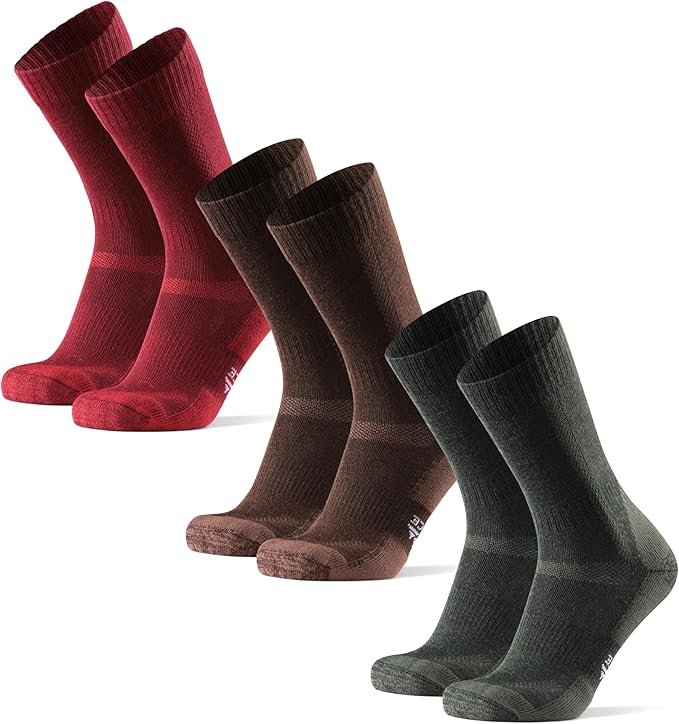
Three pairs for less than the price of one pair of Darn Tough. The Danish Endurance 3-Pack is the budget option that's genuinely hard to dismiss.
I've worn these and found them comfortable — softer than you'd expect at the price, with a decent fit and enough merino content to perform well on a day walk. The merino percentage is lower than Darn Tough or Smartwool, which means they don't regulate temperature quite as effectively and won't last as long under heavy use. But they're not trying to be those socks. They're trying to be a good, comfortable, affordable hiking sock and they succeed.
The practical argument for the 3-Pack: buy these alongside a pair of Darn Tough for big days, use the Danish Endurance for everyday walks and shorter outings, and rotate between them. You get the best of both without overspending on a sock for every walk.
The full Danish Endurance review covers how they perform on UK trails and the honest comparison against Darn Tough.
8. SealSkinz Waterproof All Weather — the waterproof option
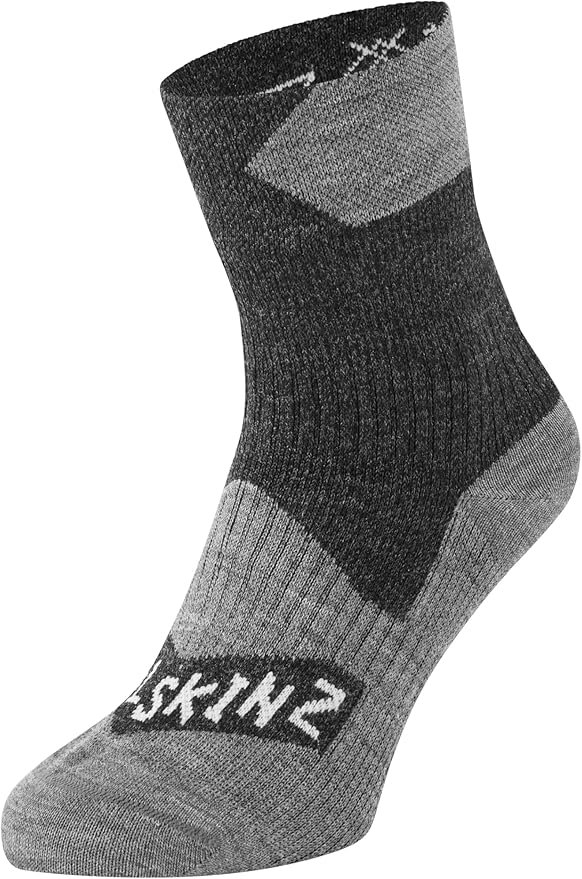
One of a very small number of brands that has genuinely cracked the waterproof sock. SealSkinz use a waterproof hydrophilic membrane sandwiched between an outer nylon layer and an inner merino lining. Water cannot get through from outside. Your feet stay dry even when the sock itself is wet.
This sounds like a universal solution and it is not. The membrane adds thickness and reduces breathability significantly. In anything other than specifically wet conditions these socks can make feet hot and damp from perspiration rather than external water. They work best for stream crossings, consistently wet ground, or early morning walking through heavy dew.
If you have genuinely waterproof boots the SealSkinz are a belt-and-braces addition for extreme conditions. If your boots are less waterproof than you'd like, they buy you meaningful protection. Either way they're a specialist tool rather than an everyday sock.
9. Falke TK2 Explore — the premium European option
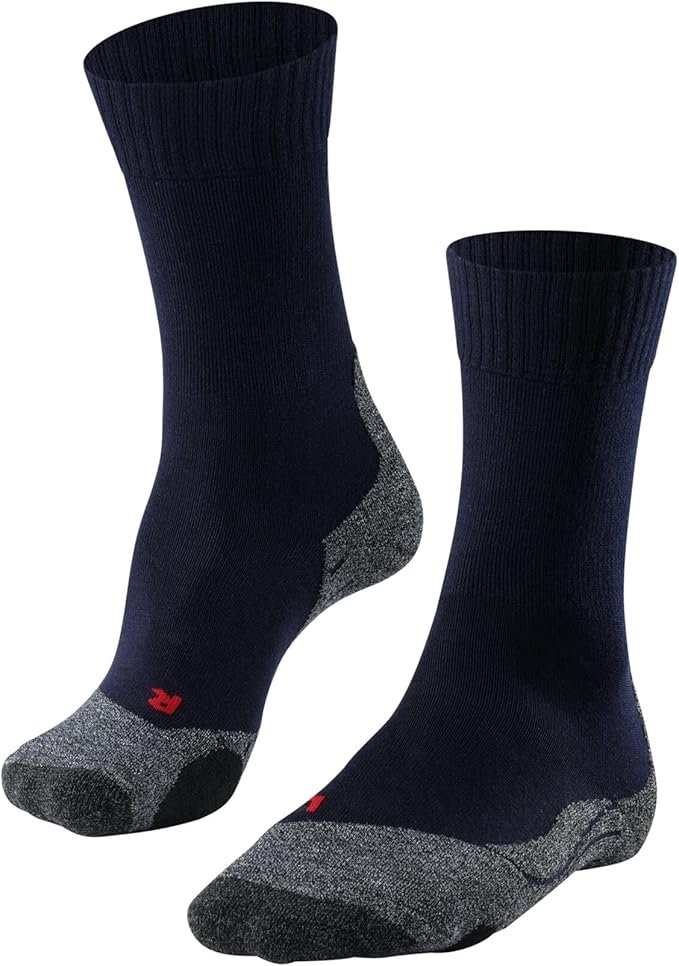
Falke is a German brand with a strong following in European hiking and trail running circles that doesn't get the attention it deserves in the UK market. The TK2 Explore is a well-constructed midweight merino sock with a precise fit, targeted compression through the arch and a construction that holds its shape well through repeated washing and use.
The fit is notably accurate — the anatomically shaped left and right specific construction means each sock is designed for the foot it's going on rather than being symmetrical, which in practice means a more consistent, blister-resistant fit across the whole foot. This is a detail most manufacturers skip.
At this price point they're competing with Darn Tough and Smartwool. They're not better, but they're different — the fit system is genuinely distinct, and for anyone with feet that find standard hiking socks slightly imprecise, the Falke fit is worth trying.
10. Wrightsock Merino Hiking — the double layer anti-blister option
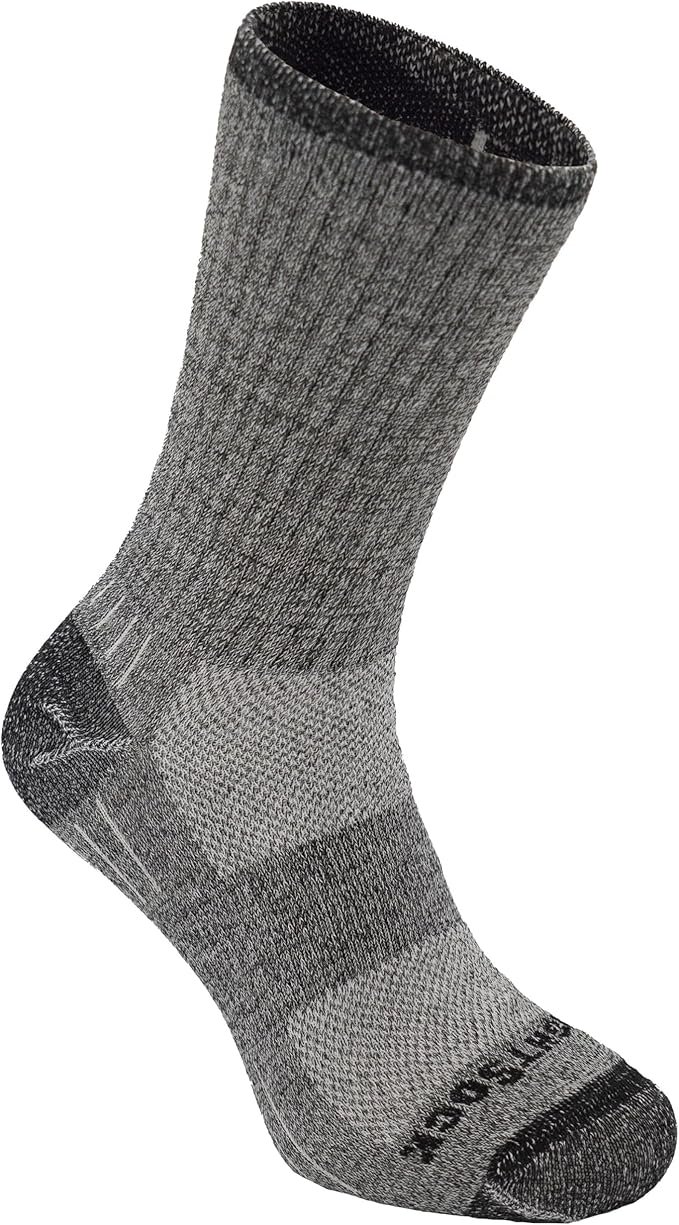
Wrightsock takes a fundamentally different approach to blister prevention from every other sock on this list. Rather than relying purely on the sock's material and cushioning to manage friction, Wrightsock uses a double layer construction — two layers of fabric that move against each other rather than against your skin. Any friction happens between the inner and outer layer, not between the sock and your foot.
The result is genuinely impressive blister prevention, particularly on long days where feet swell and movement inside the boot increases. The merino inner layer manages moisture and temperature, the outer layer handles the friction from the boot. Together they cover both the main causes of blisters independently.
The trade-off is thickness. A double layer sock is bulkier than a single layer at equivalent cushioning. Make sure your boots have the volume to accommodate them before committing.
For anyone with a history of blisters who has tried everything else, Wrightsock is the option that approaches the problem from a different angle entirely. Worth the experiment if nothing else has worked.
What you need to know — buying summary
Material: Merino wool blend (60% or above) for three-season hiking. Avoid cotton entirely.
Cushioning: Lightweight for summer and trail shoes. Midweight for most UK day hiking. Full cushion for winter, heavy loads and long distances.
Sizing: Snug but not tight. Go smaller when between sizes. Always try with the boots you'll wear them with.
Changing socks: On walks over 30km, carry a spare pair and change at halfway. On shorter walks a quality merino sock will see you through.
Pattern vs plain: Zero performance difference. Buy what you like the look of.
Waterproof socks: A specialist tool for specific wet conditions, not a replacement for waterproof boots.
Budget: The Danish Endurance 3-Pack is the best value entry point. The Darn Tough Micro Crew is the best sock for most hikers. The Smartwool Full Cushion and Falke TK2 are the best alternatives at a similar price. The SealSkinz and Wrightsock solve specific problems nothing else does as well.
Buy the Darn Tough Hiker Micro Crew on Amazon