


Quick verdict
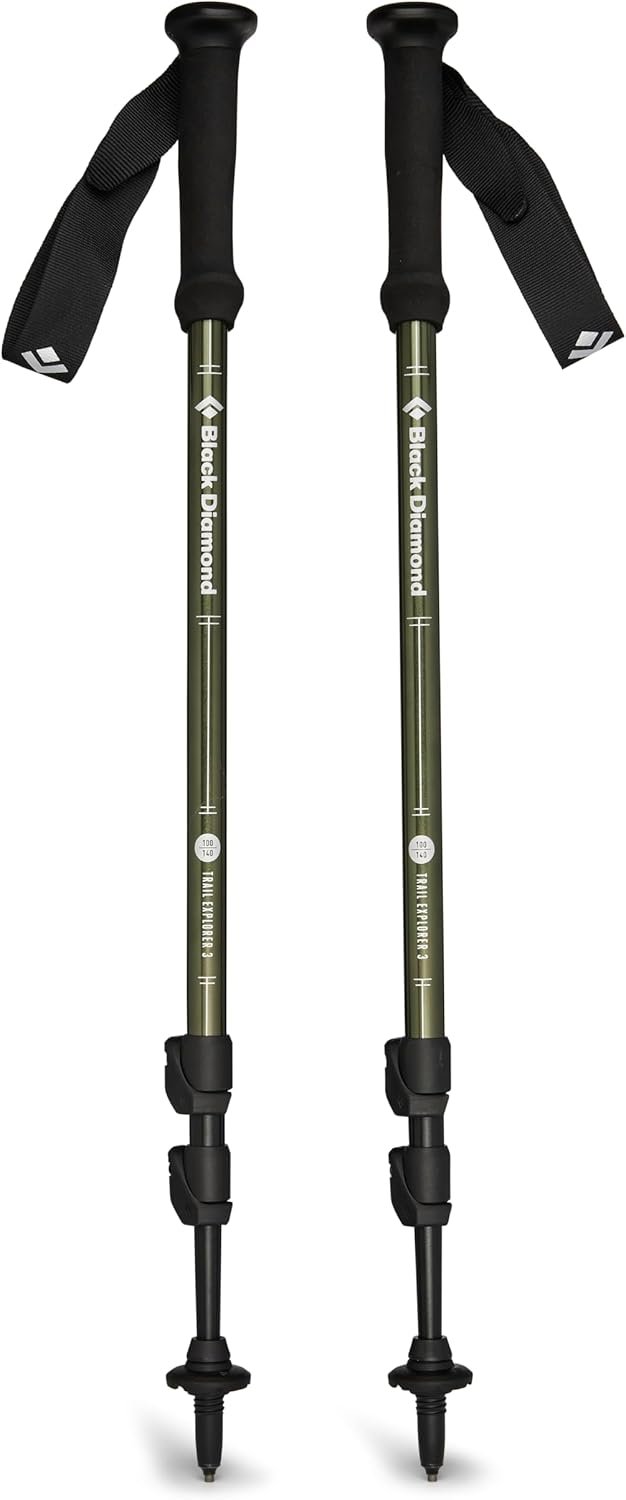
The Black Diamond Trail Explorer 3 is the trekking pole most UK day hikers should buy: three-section 7000-series aluminium, Black Diamond's FlickLock lever adjustment, EVA foam grips and a two-year warranty, at around £65 from Tiso. It is reliable, robust and comfortable over long days, and the FlickLock is genuinely better than budget twist-locks because it adjusts fast and works with gloves on in the cold and wet. The honest trade-offs are weight (around 531g per pair, heavier than carbon), a 58.5cm packed length that rides on the outside of the pack rather than inside it, and no anti-shock. If you want shock absorption for hard trails or sensitive knees, size up to the Leki Khumbu Lite AS; if you want a cork grip for hot days, look at the Leki Makalu Lite. For a first quality pair or a dependable all-rounder, the Trail Explorer 3 is the right call.
Black Diamond Trail Explorer 3 Trekking Poles: 4.5/5
Reliable all-terrain trekking poles with FlickLock adjustability and Black Diamond build quality. The right choice for most UK day hikers.
- Best all-terrain value: Black Diamond Trail Explorer 3 (~£70)
- Best packable upgrade: Black Diamond Distance Z (~£90)
- Best premium upgrade: Leki Makalu FX Carbon (~£195)
The full review is below.
Black Diamond has been making trekking poles since the 1990s. The FlickLock mechanism they developed is now the industry standard, copied by most competitors and referenced approvingly in almost every poles review written in the past decade. The Trail Explorer 3 is the most accessible expression of that heritage: a three-section aluminium pole with FlickLock adjustability, EVA foam grips and a two-year warranty, at a price that does not require serious deliberation.
For most UK hikers doing day walks, weekend trips and the occasional longer route, this is the pole to buy. Here is the full picture.
Who the Trail Explorer 3 is for
The Trail Explorer 3 is designed for comfort-conscious hikers who want a reliable, adjustable pole for day hikes and backpacking without paying for features they do not need. It is not an ultralight pole. It is not a packable folding pole. It is a straightforward, robust, well-made telescoping pole that does everything most UK hikers need it to do, reliably, at a sensible price.
It is the right pole for someone getting into trekking poles for the first time who wants to buy a quality product rather than a throwaway option. It is also the right pole for experienced hikers who want a durable all-terrain set without the premium pricing of carbon or folding alternatives.
On the Jurassic Coast Ultra Challenge, on long training walks in the New Forest, on the chalk descents above Lulworth Cove, poles like these earn their place in the pack. The Trail Explorer 3 is the version that makes the most sense for most people doing those kinds of days.
Construction and build quality
The Trail Explorer 3 uses a three-section 7000-series aluminium shaft. This is the same grade of aluminium used across Black Diamond's hiking pole range and it is significantly more durable than the cheaper aluminium found in budget poles at a similar price point.
Aluminium is heavier than carbon but it bends rather than snaps under lateral stress. On technical terrain, river crossings or any situation where a pole takes an unexpected sideways force, that characteristic matters. A bent aluminium pole is a damaged pole. A snapped carbon pole on a remote section of the South West Coast Path is a more serious problem.
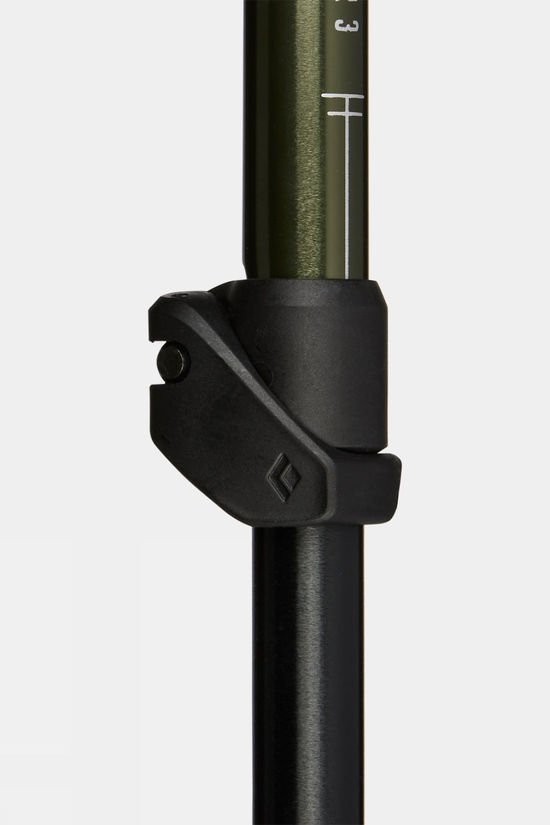
The build quality is immediately obvious compared to budget alternatives. The locking mechanisms feel solid. The shaft sections slide smoothly. The tip is carbide and interchangeable, compatible with both trekking and snow baskets, both of which are included in the box. Black Diamond backs all their poles with a two-year warranty.
Reviewers consistently note that the aluminium shafts make these poles durable and able to withstand a fair amount of abuse, without worrying about them getting bent or damaged when navigating through rough sections of trail or heavy vegetation.
FlickLock: why it matters
The FlickLock mechanism is the feature that separates Black Diamond poles from most of what the budget market offers. It is a simple external lever that locks the pole sections in place. Flip it open, adjust the length, flip it closed. The whole process takes three seconds and works reliably with gloves on, which is relevant for most UK hiking in anything other than midsummer.
The FlickLock clasp is compact, easy to use and very secure, with aluminium shafts that can be field-straightened if slightly bent.
The practical value of this becomes apparent on terrain that changes character regularly. A long descent on the Jurassic Coast calls for longer poles than the flat sections either side. Being able to adjust length quickly and confidently, without removing your gloves or stopping for more than a few seconds, makes you more likely to actually do it. Poles adjusted for the terrain you are on perform significantly better than poles set at one length and left there.
Budget twist-lock systems work, but they are harder to operate in the cold and wet, less reliable over time and not adjustable with gloves on. The FlickLock is the right mechanism for UK conditions.
The grips: comfortable but not cork
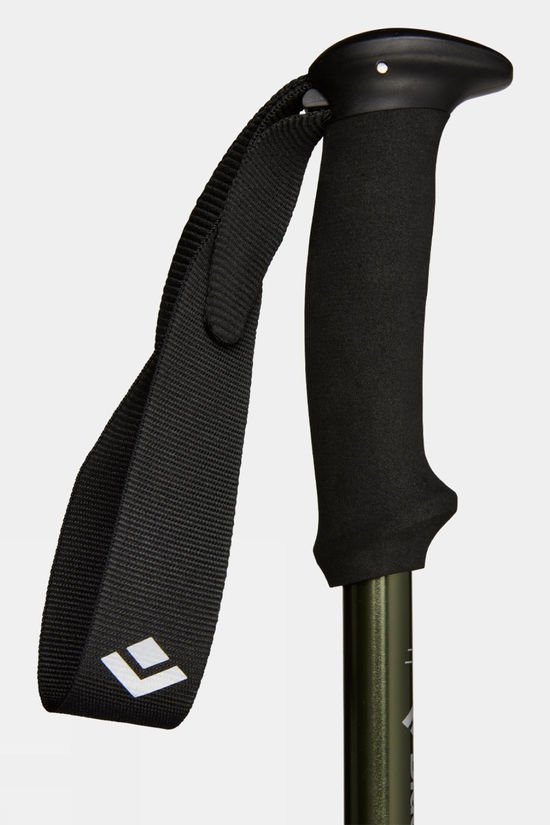
The Trail Explorer 3 uses EVA foam grips. This is honest mid-range grip material. It is lighter than cork, comfortable on the hand and works well in most conditions. It is not as moisture-wicking as cork on a warm day when your hands get sweaty, and it wears more quickly over years of heavy use.
Amazon UK reviewers note that the grip is very good though hands can sweat slightly on warmer days, with the straps occasionally chafing on longer outings until broken in.
The foam extension below the main grip is a useful feature for uphill sections where you naturally hold the pole lower than the top of the grip. It is softer than the grip head and more comfortable than holding bare shaft. Standard on Black Diamond hiking poles and worth having on longer days with sustained climbing.
The wrist straps are webbing with a foam-padded section. Adequate rather than exceptional. Thread your hand up through the strap from below rather than gripping the strap from above. This technique lets the strap take the load on the forward push rather than your hand, which reduces fatigue significantly over a long day.
Adjustability and packed size
The Trail Explorer 3 adjusts from 58.5cm collapsed to 130cm extended. That range covers virtually every adult hiker. The correct starting length for most people is with the elbow at roughly 90 degrees when the pole tip is on the ground beside your foot. Adjust slightly longer for descents and slightly shorter for sustained climbs.
The collapsed length of 58.5cm means these poles do not disappear into a pack the way folding poles do. They are designed to be carried on the outside of your pack via the side attachment loops most daypacks provide, which is the standard approach for telescoping poles. The Osprey Talon 33 handles this without issue.
If you regularly want poles that pack inside your bag entirely, the Black Diamond Distance Z or the Leki Makalu FX Carbon folding designs are the alternatives to consider.
On the trail: how they actually perform
The Trail Explorer 3 performs exactly as its specification suggests. Reliable on varied terrain, comfortable over long days, straightforward to adjust and robust enough to handle the kind of use UK day hiking puts them through.
On chalk and limestone paths the carbide tips grip well in dry conditions and adequately in wet ones. On wet grass descents, the tips provide meaningful stability that flat-soled hiking shoes alone do not. On sustained uphill sections, the poles give you something to push against that translates directly into reduced leg fatigue.
The FlickLock holds reliably under load. There are no reports in the user review base of locks slipping under body weight, which is the failure mode that affects cheaper twist-lock poles most commonly.
One Amazon UK reviewer who used them straight out of the box on a 40km two-day hike noted that the weight felt great and they never felt heavy even after 20km, with locking and adjustability described as quick and sturdy.
The poles handle scrambling and technical terrain adequately. They are not specialised mountain poles but they are robust enough for the kind of mixed terrain most UK day hikers encounter on routes like the South West Coast Path, the Brecon Beacons ridges or Highland approaches.
Others worth considering
The Trail Explorer 3 is the right pole for most people, but two Leki alternatives directly answer its two honest weaknesses if either matters to you.
Leki Khumbu Lite AS
~£82Adds anti-shock
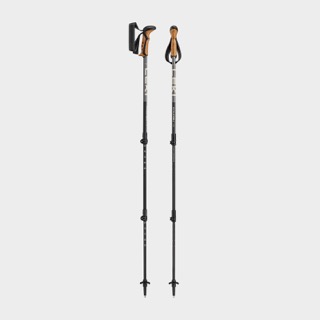
The one thing the Explorer 3 admits it lacks is anti-shock. The AS version of Leki's value all-rounder builds it in, which is worth the extra if you hit hard-packed trails or have knees that feel long descents.
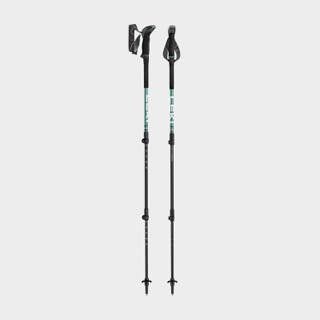
Leki Makalu Lite
from ~£77Cork grip
The Explorer 3's foam grips are comfortable but not cork. The Makalu Lite is Leki's buy-once aluminium pole with a cork-composite grip that handles sweat better on hot days and lasts, a step up in comfort and longevity for a little more.
What other hikers say
The user review picture across Amazon UK and specialist retailers is consistently positive with a few recurring themes.
Positive feedback centres on the FlickLock adjustment system, the build quality relative to price, and the reliability over multiple outings. One reviewer noted that the first time they used the poles they proved their worth immediately on rocky, uneven and steep paths, making a demanding walk considerably more manageable.
The most common criticism is weight. At around 531g per pair these are not light poles. Hikers who have compared them to carbon alternatives note the difference on long days, and for anyone prioritising low weight the Trail Explorer 3 is not the right choice.
A small number of reviewers have noted that the lock can slip if not tightened firmly. This is a user technique issue rather than a design flaw, but worth knowing: the FlickLock should be tightened until it offers slight resistance when closing, not just flipped shut loosely.
The honest limitations
The weight is the primary trade-off. At around 531g per pair the Trail Explorer 3 is noticeably heavier than carbon alternatives, and on longer outings the extra weight can contribute to arm fatigue compared to sub-400g carbon poles.
The packed length of 58.5cm means these poles need to go on the outside of your pack rather than inside it. Not a problem for most hikers but relevant if you regularly do routes with sections where poles need to be fully stowed.
The foam grips, while comfortable, are not the choice for very long hot days where cork's moisture management would be preferable. On a 58km event day in warm conditions, cork grips perform better over the full duration.
The poles are not anti-shock. There is no spring mechanism absorbing impact on hard surfaces. For most UK terrain, which is predominantly earth and grass rather than hard rock or paved paths, this is not a significant issue. On sustained hard-surface hiking it can become relevant.
Trail Explorer 3 vs Distance Z vs Leki Makalu
The three poles featured in the best trekking poles UK guide serve different needs. Here is where the Trail Explorer 3 sits relative to the two key alternatives.
vs Black Diamond Distance Z (~£90)
The Distance Z is a folding pole that packs to 40cm and deploys in seconds. It is lighter and more packable than the Trail Explorer 3 and works well on mixed terrain routes where you want poles for some sections and stowed for others. The trade-off is fixed length and higher cost. If packability and fast deployment matter to you, the Distance Z is the upgrade. If you want a straightforward adjustable telescoping pole at a lower price, the Trail Explorer 3 is the better call. See where the Distance Z sits in our best trekking poles guide.
vs Leki Makalu FX Carbon (~£195)
The Makalu FX Carbon is a premium folding carbon pole with Leki's Aergon Air grip, Speed Lock 2 Plus adjustment and decades of brand heritage. It packs to 40cm, has superior vibration dampening and is built for decades of use. The Trail Explorer 3 is a straightforward aluminium workhorse at less than half the price. For serious regular hikers who cover significant mileage in demanding conditions, the Leki investment justifies itself over time. For most UK day hikers, the Trail Explorer 3 covers everything they need at a fraction of the cost. Read our full Leki Makalu FX Carbon review if you are weighing the carbon upgrade.
Verdict: are they worth it?
Yes. The Black Diamond Trail Explorer 3 is the trekking pole most UK day hikers should buy.
The FlickLock adjustment is genuinely better than anything in the budget market. The aluminium construction is robust enough for years of hard use. The two-year warranty is real backing from a brand with six decades of outdoor equipment heritage. At around £70 it sits at a price point that is accessible without compromising on the features that matter for UK hiking.
It is not the lightest pole. It is not the most packable. But it is reliable, comfortable over long days and built to last, which for most people who are looking for their first quality pair of trekking poles or a dependable all-terrain set is exactly what they need.


