


Quick verdict
The Leki Khumbu Lite is Leki's value all-rounder and the pole to buy if you want a real Leki without a real Leki price. It gives you the two things that justify the brand, the external SpeedLock Plus lever and a cork-composite Aergon grip, on a tough three-section HTS 6.5 aluminium shaft with a wide 100 to 135cm range, at around £77. The common question is standard or anti-shock: the Khumbu Lite AS adds a DSS spring for about £10 more, worth it if you carry weight, have sore knees or do long descents on hard ground, but most hikers on soft UK terrain are better off with the standard. It is not the lightest or most packable pole, but with full Leki spares support it is the cheapest honest way into the range.
Leki Khumbu Lite Walking Poles: 4.5/5
Leki's value all-rounder. Three-section aluminium, the SpeedLock Plus lever and a cork-composite Aergon grip at a price that makes sense for most UK hikers.
- Best value Leki: Leki Khumbu Lite (~£77)
- Knee-friendly version: Leki Khumbu Lite AS (~£87)
- Mid aluminium upgrade: Leki Makalu Lite (~£107)
The full review is below.
The Leki Khumbu Lite is the pole I point most people towards when they want a real Leki without a real Leki price. It sits a rung above the budget Voyager and gives you the two things that make Leki worth the money in the first place: the external SpeedLock lever and a properly shaped Aergon grip. Three-section aluminium, a wide 100–135cm range and a sensible sub-£80 price. For coast-path days and hill walking, it is hard to fault.
The one pole I have tested to destruction is the Black Diamond Trail Explorer 3, which is the Khumbu's closest rival at this price. Where the Khumbu earns its place is covered below, along with the question most buyers actually have: standard, or the anti-shock AS version?
Who the Khumbu Lite is for
The Khumbu Lite is the value all-rounder in the Leki range. It is aimed at the hiker who has decided poles are worth having and wants a quality pair that will last, without stepping up to carbon or paying for the sculpted grips further up the line.
That covers a lot of people. First-time buyers who want to skip the throwaway tier. Regular walkers who cover mixed UK terrain, coast path, chalk downland, hill days, and want a dependable telescopic pole. Anyone sharing poles with a partner will appreciate the wide 100–135cm adjustment range.
It is not an ultralight pole and it is not a folding pole. If you want the smallest possible pack size for scrambling and stowing, look at the folding Makalu FX Carbon. If you want the aluminium sweet spot with an upgraded grip, the Makalu Lite is the natural step up. The Khumbu is the version that makes the most financial sense for the most people.
Specifications


- Material
- Aluminium HTS 6.5, three sections (16 / 14 / 12mm)
- Weight
- ~245g per pole
- Lock
- SpeedLock Plus external lever
- Grip (standard)
- Aergon with 2K CorTec cork composite
- Grip (AS version)
- Aergon trekking grip, PAS strap system
- Length range
- 100–135cm
- Packed length
- 67cm
- Strap
- Soft Strap 2.0, continuously adjustable
- Basket / tip
- Trekking 2.0 basket, Flex Tip (AS uses DSS tip)
- Price
- ~£77 standard / ~£87 AS
The headline numbers put the Khumbu in the middle of the aluminium market. At around 245g per pole it is not light by carbon standards, but it is competitive for a three-section aluminium telescopic pole, and the HTS 6.5 shaft is the same grade Leki uses across most of its aluminium line rather than a cheaper alloy. The 67cm packed length is standard for a telescopic pole and means these carry on the outside of a pack rather than inside it.
SpeedLock and the Aergon grip
Two features carry this pole, and both are the reason to choose it over budget alternatives.
The SpeedLock Plus lever. This is Leki's external clamping lock. Rather than expanding inside the shaft like a twist lock, it clamps from the outside, which makes it fast to adjust with gloves on and reliable in the wet and cold where cheap internal locks slip under load. On a long descent where you want to run the poles a couple of centimetres longer, you flip the lever, slide, and flip it shut in a few seconds without stopping. That is exactly the sort of thing you only bother doing if the mechanism is quick, and poles set for the terrain you are actually on work far better than poles left at one length all day. The Plus version is field-serviceable if the clamp force ever loosens over the years.
The Aergon grip. The standard Khumbu Lite uses the Aergon grip in 2K CorTec, a cork-and-rubber composite. This matters more than it sounds. Cork composite handles sweat and damp far better than the plain foam or moulded plastic you get on budget poles, so on a warm coast-path day your hands stay comfortable rather than clammy. The Aergon head is shaped to sit your wrist at a natural angle instead of leaving you gripping a straight cylinder, and the rubberised top lets you choke down over the grip on short steep pitches without swapping the pole length. Paired with the Soft Strap 2.0, it is a comfortable setup over a full day.
Standard or anti-shock (AS)?
This is the decision most Khumbu buyers get stuck on, so here it is plainly.
The Khumbu Lite AS is the same pole concept with an integrated anti-shock spring in the lower shaft, Leki's DSS suspension, and a DSS tip. The spring compresses slightly on each pole plant, taking some of the jolt out of the impact before it travels up your arm. The AS version uses the Aergon trekking grip with the PAS strap system rather than the standard's CorTec, and it costs around £10 more at roughly £87 the pair.
Who the AS version is for. Anti-shock earns its keep on hard surfaces and long descents. If you carry more weight, have dodgy knees or a history of joint issues, and you do a lot of steep downhill on firm ground, tarmac lanes, packed stone tracks, dry chalk, the AS spring takes the edge off the repeated impact. That is where the effect is most noticeable and where the extra tenner is easiest to justify.
Who does not need it. For most UK hiking on earth, grass and soft ground, the terrain already absorbs a lot of the impact, and the spring adds a small amount of weight and a little bounce that some walkers find they prefer without. If you are light on your feet, cover mostly soft ground, or you count grams, the standard Khumbu Lite is the better buy. The wider evidence on how much anti-shock actually protects joints is mixed, so treat it as a comfort preference rather than a medical fix.
My steer: if you are not sure, buy the standard. The people who really need anti-shock usually already know it from experience, because they feel descents in their knees. Everyone else is better off putting the difference towards a nicer grip further up the range.
For the standard Khumbu Lite:
Buy Leki Khumbu Lite on Amazon Or buy at BlacksFor the anti-shock Khumbu Lite AS:
Buy Leki Khumbu Lite AS on Amazon Or buy at BlacksBuild, durability and Leki spares
The Khumbu Lite is built the way Leki builds everything: to be repaired rather than replaced. The HTS 6.5 aluminium shaft bends rather than snaps under a sideways load, which is the failure mode that matters on rocky UK descents and between-the-boulders moments. A slightly bent aluminium pole can often be worked back into service. A snapped carbon shaft on a remote section of coast path cannot.
The quiet argument for Leki is spare parts. Baskets, tips, straps and the SpeedLock components are all replaceable, often by hand without tools, and Leki has supported its poles in the UK long enough that spares are readily available. A worn basket or a damaged Flex Tip does not write off the pole. That is the difference between a tool and a disposable, and it is the reason a well-kept pair of Lekis outlasts several cheaper sets. Over five or ten years, that changes the maths on the price.
The tips are interchangeable, the trekking baskets swap for snow baskets, and the whole thing is designed to keep going. This is the same durability story that runs through the entire Leki range, and at the Khumbu's price it is the cheapest way into it.
Others worth considering
The Khumbu Lite is the value sweet spot, but the pole either side of it is worth a look depending on your budget.
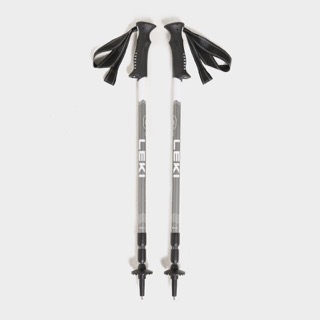
Leki Voyager
~£51Cheaper entry
The cheapest way into Leki at around £51. You drop the SpeedLock lever for the older twist-to-lock Super Lock and the cork-composite grip for soft rubber, but the build and spares backing are the same. The pick for occasional walkers.
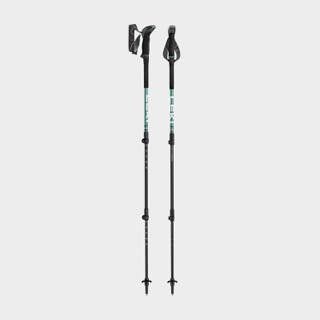
Leki Makalu Lite
~£107Grip upgrade
Same shaft, lever and range, but the sculpted Aergon Air grip steps up from the Khumbu's CorTec for around £30 more. The buy-once pick if you hike often and want the grip you will hold for years.
Pros and cons
- The SpeedLock Plus lever adjusts fast with gloves on and holds reliably in the wet
- Cork-composite CorTec grip handles sweat and damp far better than budget foam
- Tough HTS 6.5 aluminium that bends rather than snaps under lateral load
- Wide 100–135cm range suits tall walkers and sharing between partners
- Full Leki spares support: baskets, tips, straps and lock parts all replaceable
- Sensible sub-£80 price for a proper Leki
- At ~245g per pole it is not a lightweight option next to carbon
- Telescopic 67cm packed length rides outside the pack, not inside it
- The AS anti-shock version costs more and adds weight for a benefit not everyone feels
- Grip and refinement sit a step below the Makalu Lite and Aergon Air models above it
Verdict: is the Khumbu Lite worth it?
Yes. For most UK hikers who want a quality pair of poles without overspending, the Leki Khumbu Lite is the right call. It delivers the two features that define the brand, the SpeedLock lever and a proper Aergon grip, on a tough aluminium shaft, backed by real spares support, for under £80. That is a lot of pole for the money.
It is not the lightest and it does not pack down small, and if you hike often enough to want the sculpted Aergon Air grip you may prefer to spend up to the Makalu Lite. But as the value entry into serious Leki poles, the Khumbu Lite is exactly what most people need. Buy the standard version unless you know from experience that your knees want anti-shock on long, hard descents, in which case the AS is the £10 upgrade worth taking.


