


Quick verdict
The Leki Skytera Carbon Lite is the lightest telescopic pole in the Leki range, and the pick for a gram-counting hiker who wants carbon's low weight and damped feel but does not want a folding Z-pole. It runs a hybrid shaft, aluminium HTS 6.5 upper with a Carbon PRC 1000 lower, the SpeedLock 2 Plus lever and a light Verticon foam grip, at roughly 205g per pole and around £145 to £158. The hybrid is deliberate: metal stays at the top where leverage is highest and carbon goes lower where the weight saving counts, which makes it more forgiving under a sideways load than an all-carbon pole, though still less tough than an all-aluminium one. Buy it if low weight and long-day comfort matter and you place your poles with care; step to the aluminium Skysolo for maximum toughness, or the folding Makalu FX Carbon if you need the small pack size.
Leki Skytera Carbon Lite: 4.5/5
The lightest telescopic pole in the Leki line: a carbon and aluminium hybrid shaft with the SpeedLock 2 Plus lever and Verticon foam grip, at roughly 205g per pole. Carbon lightness without a folding pole's fixed length.
- Premium aluminium alternative: Leki Skysolo (~£119)
- Carbon folding flagship: Leki Makalu FX Carbon (~£186)
The full review is below.
The Leki Skytera Carbon Lite is the pole for a specific hiker: someone who wants carbon's low weight and damped feel, but who does not want a folding Z-pole. It sits in an unusual spot in the range. Most carbon poles on the market are folding designs built around pack size, and most telescopic poles are aluminium. The Skytera Carbon Lite is a carbon and aluminium hybrid in a conventional three-section telescopic shaft, and that combination is the whole point of it.
This review is built from Leki's published specifications, the UK retail listings and the pattern of independent feedback. The one pole I have put serious mileage on is the aluminium Black Diamond Trail Explorer 3, and I use that as the reference point throughout. Where the Skytera sits against its own siblings, the aluminium Skysolo and the folding Makalu FX Carbon, is covered below.


Who the Skytera Carbon Lite is for
This is a pole for the gram-counting day hiker and backpacker who has decided that a telescopic pole suits how they walk. At roughly 205g per pole it is the lightest telescopic option in the Leki range, and on a long day that weight sits mostly at the end of a swinging arm, where it is felt more than pack weight is.
It suits you if you want a wide, tool-free length range you can dial in for climbs and descents, and if you are happy to carry the poles on the outside of a pack rather than folded away inside it. It suits you if you cover big daily mileage and want the reduced trail buzz that carbon gives through the shaft.
It is not the pole for you if you scramble often and need to stow poles fast and small, or if you are hard on your kit and regularly wedge poles between rocks. For those uses the folding Makalu FX Carbon or a tougher aluminium pole is the better call, for reasons I will come to.
On the kind of ground I walk, long Jurassic Coast days, the Purbeck ridges, South Downs mileage, the argument for a pole like this is real but narrow: you are paying a premium and accepting a little fragility to shave weight off every pole plant across a 25km day.
Buy Leki Skytera Carbon Lite on AmazonSpecifications
- Type
- Telescopic, three-section
- Shaft material
- Aluminium HTS 6.5 upper, Carbon PRC 1000 lower
- Shaft diameters
- 16 / 14 / 12mm
- Locking system
- SpeedLock 2 Plus external lever
- Grip
- Verticon foam, with lower extension
- Strap
- D-Loop Mesh, individually adjustable
- Length range
- 100–135cm
- Packed length
- ~67cm
- Weight
- ~205g per pole (~410g pair)
- Basket / tip
- Trekking 2.0 basket, Flex carbide tip
- UK price
- ~£145–158
Carbon construction and weight
The Skytera Carbon Lite is not a full-carbon pole, and that is a deliberate design choice rather than a cost-cutting one. Leki uses an aluminium HTS 6.5 upper section and Carbon PRC 1000 in the middle and lower shafts. The metal stays at the top, where the SpeedLock lever clamps and where most of your leverage goes when you push off. The lighter, vibration-damping carbon goes lower down, where the shaft is thinner and where snapping matters less to the pole's function.
The number that sells this pole is the weight. At around 205g per pole, or 410g the pair, it is meaningfully lighter than a comparable aluminium telescopic. For reference, the aluminium Skysolo is close to 254g per pole and my Black Diamond Trail Explorer 3 pair is around 531g. Fifty grams per pole does not sound like much until you multiply it by the tens of thousands of arm swings in a long walking day. That is where carbon earns its keep: not in the pack, but in the swing weight.
The second thing carbon buys is feel. Carbon damps the high-frequency buzz that travels up an aluminium shaft when a tip strikes rock or hardpack. Over a full day on hard chalk or limestone the difference is subtle but real, and it is one of the reasons committed long-distance walkers gravitate to carbon shafts despite the price.
SpeedLock 2 Plus and the Verticon grip
The Skytera runs Leki's current SpeedLock 2 Plus lever, which is the mechanism I would want on any pole I was spending this much on. It is an external clamp: it holds by squeezing the shaft from the outside rather than expanding inside it, so it stays secure in the wet and the cold and adjusts in a second with gloves on. The "Plus" part is that the clamping force is tuneable by hand, so if the lever loosens over years of use you nip it back up without tools. On UK terrain, where you are adjusting length between a climb and the descent on the other side, a lever you can work with cold wet fingers is worth more than any weight saving.
The grip is Leki's Verticon foam. It is a race-influenced grip: an ergonomic, slightly angled head in low-density foam, with a rubberised section and a foam extension below so you can choke down on a short steep pitch without re-setting the pole. Foam is the right choice here because it is light and because it does not get slick with sweat the way a hard plastic grip can. It is not cork, so it will not wick moisture quite as well as a cork grip on a hot day, but it is more comfortable against a bare hand in summer and it keeps the weight down, which is the pole's entire reason for existing.
The strap is Leki's D-Loop Mesh: a lightweight, quick-drying, individually adjustable loop. Thread your hand up through it from below and let it take the load on the forward push, rather than gripping the grip head in a fist. That technique matters more on a light pole, because a light shaft rewards a relaxed hand and a loaded strap.
Carbon vs aluminium: the honest picture
This is the section that should decide the purchase, so I want to be straight about it.
Carbon is light and it is quiet. It is also more brittle than aluminium under lateral load. An aluminium pole that takes a hard sideways force, a pole caught between two rocks as you step down, a pole you fall onto, tends to bend. A bent aluminium pole is often still usable, and can sometimes be field-straightened. A carbon shaft under the same lateral load is more likely to crack or snap, and a snapped carbon pole is done. On a remote section of the South West Coast Path or a Brecon Beacons ridge, that is a worse problem to have than a slight bend.
The Skytera hedges this better than a full-carbon pole does. Keeping aluminium in the upper section means the most abused, highest-leverage part of the shaft is metal, and the carbon is confined to the lower, thinner sections. It is more forgiving than an all-carbon shaft. It is still less forgiving than an all-aluminium pole like the Skysolo or the Trail Explorer 3.
So the trade is simple. If you count grams, cover long days and place your poles with reasonable care, carbon is a fair bet and the weight and damping are worth it. If you are hard on kit, scramble over rock regularly, or want a pole you will not think twice about wedging into a crack for leverage, aluminium is the safer money and you should look at the Skysolo instead.
Telescopic vs folding
The other decision the Skytera forces is telescopic against folding, and this is really a question about pack size and adjustment.
The Skytera is a three-section telescopic pole. It adjusts across a wide 100 to 135cm range, which covers most adults and lets you run it long on descents and short on sustained climbs. It packs down to around 67cm. That is short enough to strap to the side of a daypack like the Osprey Talon 33, but not short enough to disappear inside the pack.
A folding pole, like the Makalu FX Carbon, breaks into segments on an internal cord and packs to roughly 40cm, small enough to bury in a daypack or clip to a small summit pack. The trade is a narrower length adjustment range and, usually, a slightly higher price.
The choice is about how you walk. If you use poles for most of a route and want to fine-tune length for the terrain, telescopic is more versatile and the Skytera is the light way to have it. If you stow and deploy poles constantly, on scrambles, for photos, when your hands are needed, folding wins on pack size and speed of deployment. The Skytera is the pole for the first hiker, not the second.
Others worth considering
The Skytera lives between tough aluminium and a folding carbon pole. If you lean one way, its two siblings are the honest alternatives.
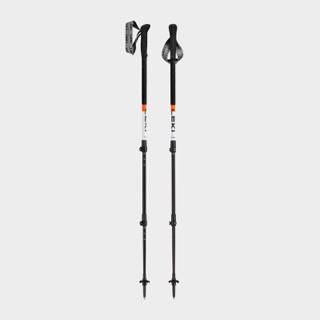
Leki Skysolo
~£119Tougher aluminium
Want maximum durability for less? The aluminium Skysolo bends rather than snaps and has a wider 110 to 145cm range, at the cost of around 50g per pole. The safer money if you are hard on kit.
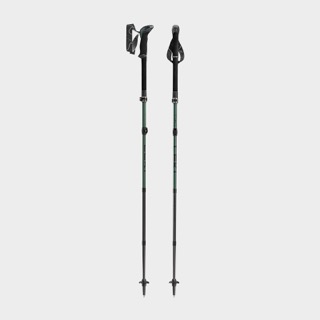
Leki Makalu FX Carbon
~£186Folds small
Same carbon lightness but need it to pack inside the bag? The folding Makalu FX Carbon collapses to around 40cm, trading some length range for a much smaller packed size.
Pros and cons
- Lightest telescopic pole in the Leki range at ~205g each
- Carbon lower shaft damps trail buzz over long days
- Aluminium upper section is tougher than a full-carbon shaft where it counts
- SpeedLock 2 Plus lever adjusts with gloves on and is hand-tuneable
- Wide 100–135cm range for climbs, descents and taller walkers
- Verticon foam grip is light, ergonomic and sweat-friendly
- Leki spares and replaceable parts back up a long service life
- Carbon lower shaft is more brittle than aluminium under a sideways load
- Foam grip does not wick sweat as well as cork on hot days
- 67cm packed length rides outside the pack, not inside it
- Premium price for a telescopic pole
- Not the pole for hard scrambling or careless placement
Verdict: is it worth it?
For the right hiker, yes. The Leki Skytera Carbon Lite does something few poles do: it puts carbon's low weight and damped feel into a proper adjustable telescopic pole, with the SpeedLock 2 Plus lever and Leki's spares support behind it. If you have decided you want a telescopic pole rather than a folder, and you want the lightest sensible version of that, this is the pole.
The caveats are the ones that come with any carbon shaft. It is more fragile under lateral load than aluminium, so it rewards careful placement and is not the pole for constant rock scrambling. And at this price you are paying a clear premium over an aluminium telescopic that would survive more abuse.
Where I land is this. If weight and long-day comfort are your priorities and you treat your kit with reasonable care, the Skytera Carbon Lite is a strong, well-judged pole and the hybrid construction takes the sharpest edge off the carbon fragility argument. If you want maximum toughness for the money, the aluminium Skysolo is the sibling to buy. If you want carbon lightness but need a small pack size, the folding Makalu FX Carbon is the one. The Skytera occupies the gap between those two, and for the hiker who wants light, adjustable and telescopic all at once, nothing else in the Leki line does the job as well.


