


Quick verdict
Salomon S/Lab Ultra Carbon ~£140
The race version. A 160g carbon folding pole with a click-in glove strap and a stiffer, very robust build, for runners who want fast transitions and efficient power transfer.
Salomon Ultra Carbon Foldable ~£140
The everyday version. The same 160g carbon folding pole with a simpler soft strap that works with or without gloves, for fast hikers and runners who want comfort over race features.
Our rating: 4.6/5. The full comparison is below.
Salomon makes two carbon folding poles that trail runners keep asking me to compare, and the confusing part is how alike they are. The S/Lab Ultra Carbon and the Ultra Carbon Foldable are both 100% carbon, both fold into three sections, both weigh around 160g each, and both cost about £140 the pair. On paper there is almost nothing between them.
So rather than write two near-identical reviews, here is one that covers what they are, who they are for, and the single decision that actually separates them. The short version is that this is a strap choice, not a weight or price choice. My own long-term pair is the aluminium Black Diamond Trail Explorer 3, which answers a very different question, so what follows draws on Salomon's specifications, the wider trail-running-pole category and how these two line up against each other.
What these poles are
Both are carbon folding poles built for trail running and fast-and-light days, not for general hiking. Each one is a light carbon shaft that breaks into three sections on an internal cord using Salomon's Split Second system, collapsing to about a third of its length so it stows in a running vest or a pole quiver and deploys again in seconds. Each has an extended foam grip so you can choke down on a steep pitch, and each is a fixed length rather than an adjustable telescopic pole. The whole design brief is minimum weight and maximum packability for people moving fast over long distances.


What does S/Lab mean?
If you have seen the S/Lab label on Salomon shoes, packs and poles and wondered what it actually signifies, it is worth knowing before you weigh up the price. S/Lab is short for Salomon Lab: the brand's elite, athlete-driven line, developed in and around its racing team. It is where Salomon puts its best materials and its race-proven ideas, designed with and for the sponsored runners and skiers who compete at the front of the field. The kit is built for performance first and tends to sit at the top of the range.
In practical terms, when you see S/Lab on a pole it means the racing version: the stiffest, most efficient build with the features a competitor cares about, rather than the more forgiving, everyday version of the same idea. That is exactly the relationship between these two poles. The S/Lab Ultra Carbon is the race pole. The Ultra Carbon Foldable is the accessible version of the same carbon folding concept, pitched by Salomon at "every summer adventurer."
Who they are for
These are poles for runners. They suit trail and ultra runners, fastpackers and anyone chasing a fast-and-light day who wants poles that weigh almost nothing, fold away small and go on and off the hands quickly. If you power up climbs on the poles, run long descents and want a compact pole you can stow in a vest between climbs, either of these is aimed at you.
They are the wrong poles if you want to adjust length across a hiking day, if you scramble over rough rock and treat poles roughly, or if you want one do-everything pair for general walking. Carbon race poles reward a runner's cadence and careful placement, not a hiker's abuse, and neither of these adjusts. For that, an adjustable aluminium pole is the better and cheaper buy, and I come back to the hiking question below.
Specifications side by side
Salomon S/Lab Ultra Carbon
- Shaft material
- 100% carbon
- Type
- Folding, Split Second, three sections
- Weight
- ~160g per pole
- Length
- Fixed (no adjustment), sized to height
- Grip
- Extended foam
- Strap
- Click-in / click-out glove-style, breathable
- Robustness
- Very robust (race build)
- Best for
- Trail running, ultra racing, fast-and-light
- Price
- ~£140 the pair
- Article ref
- LC2724100
Salomon Ultra Carbon Foldable
- Shaft material
- 100% carbon
- Type
- Folding, Split Second, three sections
- Weight
- ~160g per pole
- Length
- Fixed (no adjustment), sized to height
- Grip
- Soft extended foam
- Strap
- Soft strap, works with or without gloves
- Robustness
- Robust
- Best for
- Trail running, fast hiking, fast-and-light
- Price
- ~£140 the pair
- Article ref
- L47043200
Carbon and the Split Second fold
This is the part both poles share, and it is most of what you are paying for.
The shaft is 100% carbon on both. On a running pole that matters more than on a hiking pole, because the weight sits at the end of a fast-swinging arm and you lift it thousands of times an hour. At around 160g each these are genuinely light, and carbon also damps the buzz that travels up the shaft when a tip strikes rock, which takes the edge off a long, rough descent. The trade-off is the one carbon always carries: it is strong along its length but can crack under a hard sideways load rather than bending the way aluminium does. Run with them and place them well and they last; wedge them in a rock gap and lever, and you risk a snap. That is the deal with any carbon race pole, and it is why runners, not scramblers, are the audience.
The fold is Salomon's Split Second system on both poles. The shaft breaks into three sections held on an internal cord and collapses to about a third of its length, small enough to stow on the move and deploy again in seconds. That fast, tidy pack-down is the whole reason a runner chooses a folding pole over a fixed one: you carry them out of the way until the climb, then have them ready in a moment.
The one real difference: the strap
Everything above is identical between the two poles. Here is what is not, and it is the thing to base your choice on.
The S/Lab Ultra Carbon uses a click-in, click-out strap. The strap is a lightweight, breathable band that fits like a glove and clicks into the pole and releases from it in an instant. For a racer that solves two problems at once. First, transitions: at an aid station, a gate or a technical step where you need your hands, you click out and back in without fully removing a strap or breaking stride. Second, power transfer: because the strap wraps the hand and loads cleanly, the drive from your arm on a climb goes into the pole rather than being lost in a loose grip. Over the thousands of plants in an ultra, that efficiency adds up. It also runs the stiffer, "very robust" race build.


The Ultra Carbon Foldable uses a simple soft strap. It is a comfortable, adjustable loop rather than a click-in system, it works happily with or without gloves, and Salomon leans on the shock-absorbing quality of the carbon for a slightly more forgiving feel. It is pitched at the broader fast-and-light crowd rather than the racer, and for a lot of runners a soft strap is simply less fuss than a click system they do not need.


Which should you buy?
Because the weight, the fold, the grip material and the price are the same, this comes down to one honest question: will you use the click-in glove strap?
Buy the S/Lab Ultra Carbon if you race or run long and the quick click-in strap and clean power transfer will earn their keep. At the same £140 as the standard pole, the race strap and the stiffer build come at no premium, so if you will use them, take them. This is the pole for the pointy end of the field and for anyone who takes their long-distance running seriously.
Buy the S/Lab Ultra Carbon at SalomonBuy the Ultra Carbon Foldable if you want the same light carbon folding pole with a simpler strap. For fast hikers, weekend trail runners and anyone who finds a race strap more faff than help, the soft strap is more comfortable day to day and just as capable on the climbs. You lose nothing on weight, pack size or price.
Buy the Ultra Carbon Foldable at SalomonThere is no wrong answer here, and no upsell either, because they cost the same. Pick the strap that suits how you move.
Fixed length: how to size them
Both poles are fixed length. There is no adjustment mechanism, and that is deliberate: dropping the adjuster is a big part of how the weight and price stay where they are, and a runner tends to settle on one pole length and stay there anyway.
That does mean sizing matters, because you are committing to it. You buy the pole in the size closest to your ideal length rather than dialling it in on the trail. As a rough guide, stand with the tip on the ground and your upper arm vertical: your elbow should sit at roughly a right angle. Most runners size slightly shorter than a hiker would, because a shorter pole suits a quicker uphill cadence. If you are between two sizes and mostly run your climbs, take the shorter; if you use poles heavily on steep, walked climbs, the longer size gives more to push against. Check Salomon's size guidance against your height before you buy, because you cannot change it later.
Are these good for hiking?
Not really, and it is worth being blunt because a lot of people arrive at carbon folding poles expecting a do-everything hiking set. Both of these are fixed-length running poles. They do not adjust, so you cannot lengthen them for a long descent or shorten them for a steep climb the way you would with a telescopic hiking pole, and carbon is less forgiving than aluminium if you are hard on your kit on rocky ground.
For hiking, an adjustable pole is the better tool. If you want carbon and folding for the pack size, the Leki Makalu FX Carbon folds just as small but adjusts across a proper range. If you want a tough, adjustable, do-everything pair for day walks, the aluminium Black Diamond Trail Explorer 3 is the sensible buy, and the best trekking poles UK 2026 guide covers the hiking options across every budget. Buy the Salomon Ultra Carbon poles because you run, not because you walk.
Others worth considering
Realised you want a pole you can actually adjust for the terrain? These are the hiking alternatives to reach for instead.
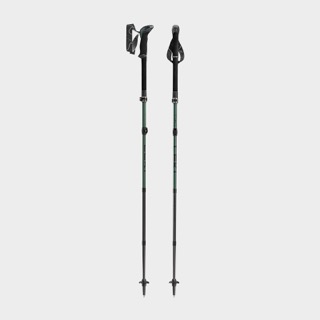
Leki Makalu FX Carbon
~£186Adjustable carbon
The carbon folding pole for hikers: it packs just as small as the Salomons but adjusts across a proper range, with Leki's cork-composite Aergon Air grip. The one to buy if you liked the fold but need to change length.
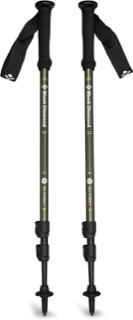
Black Diamond Trail Explorer 3
~£65Tough all-rounder
The aluminium do-everything workhorse I own: adjustable, bends rather than snaps, and less than half the price. The sensible pair for day walks rather than running.
Verdict
Both are excellent at what they are built for: light, compact carbon folding poles for trail runners who want minimum weight and fast, tidy packability. The S/Lab Ultra Carbon is the race version, with the click-in glove strap and the stiffer, very robust build that reward a competitor. The Ultra Carbon Foldable is the everyday version of the same pole, with a simpler soft strap and a comfort focus for the broader fast-and-light crowd. They are the same 160g, the same Split Second fold and the same £140, so the choice is genuinely just the strap and how you run.
The caveats apply to both. They are fixed length, so size carefully because you cannot change it later, and carbon rewards a runner's careful placement rather than a scrambler's abuse. If either of those is a dealbreaker, you want an adjustable pole and probably an aluminium one. But for a runner who wants the lightest, most packable poles Salomon makes, this pair is as good as folding carbon gets, and the only real question is which strap goes on your hands.
Buy the S/Lab Ultra Carbon at Salomon Buy the Ultra Carbon Foldable at Salomon


