


Quick verdict
The Black Diamond Pursuit Carbon FLZ is the carbon folding flagship of Black Diamond's pole range, and the one to buy if low weight and pack size matter more than shrugging off abuse. It is a 100% carbon three-section Z-fold pole with a natural cork grip, the FlickLock+ lever and a Speed Cone fold to around 36cm, so it drops inside a daypack rather than riding on the outside, at roughly 490g the pair and around £150. It comes in two sizes at the same price: choose the 125cm version if you are up to about 5ft10 and the 135cm version if you are taller, because getting the length right matters more than the colour. The honest catch is that carbon can crack or snap under a sharp sideways or levering load rather than bending, so it suits careful, weight-conscious hikers; if you want one tough do-everything pair to abuse, the aluminium Trail Explorer 3 is the wiser buy.
Black Diamond Pursuit Carbon FLZ: 4.6/5
Black Diamond's carbon folding flagship: cork grip, FlickLock+ and a Speed Cone fold to 36cm. The pick for weight-conscious hikers who look after their kit. Choose the 125cm or 135cm length by height.
- For most hikers (up to ~5ft10): Pursuit Carbon FLZ 125cm (~£150)
- For taller hikers: Pursuit Carbon FLZ 135cm (~£150)
- Tested aluminium alternative: Black Diamond Trail Explorer 3 (~£70)
The full review is below.
The Black Diamond Pursuit Carbon FLZ is the top of Black Diamond's trekking pole range and the only full-carbon model in it. It is a three-section folding pole with a cork grip, the larger FlickLock+ lever and a Speed Cone that snaps the segments rigid, and it packs down to around 36cm. If you have read the Black Diamond range guide and landed on the carbon flagship, this is the pole that guide points to.
The Pursuit Carbon FLZ is the pole for weight-conscious hikers who want the packability of a folder and the damping of carbon, and who look after their kit. It is not the pole for someone who wants one tough do-everything pair to abuse for five seasons. That is the aluminium Trail Explorer 3, which I own and have put real miles on. The Pursuit is the upgrade you buy when low weight and pack size matter more than shrugging off abuse.
The one thing most buyers get wrong is the length. It comes in two sizes, 125cm and 135cm, at the same price, and choosing right matters more than the colour. I cover exactly how to pick below.
A note on this review
I have not hiked on the Pursuit Carbon FLZ. This review is research-led: it draws on Black Diamond's own specifications, independent reviews from OutdoorGearLab, CleverHiker, Better Trail and others, the wider carbon-folding-pole category, and my own first-hand time with the aluminium Black Diamond Trail Explorer 3, which shares the FlickLock mechanism, the cork-and-foam grip logic and the brand's build standards.
Where I lean on that owned experience, I say so. Where the assessment is research-based, I flag it rather than dressing it up as trail time I have not done. If I get a pair on the Purbeck Hills, this piece gets updated with hands-on notes.
Who the Pursuit Carbon FLZ is for
This is a fast-and-light pole. It suits hikers who count grams, who want poles that vanish inside a daypack or lash tight to a running vest, and who will treat carbon with a bit of care. Fastpackers, mixed scramble-and-walk days, travel where pack size is at a premium, long summer mileage where the cork grip and carbon damping earn their keep: that is the brief.
It is also the pole for anyone whose hands or joints notice the difference on a long hard-ground day. Carbon soaks up more of the trail buzz that comes back up through the shaft on chalk and rock than aluminium does, and at around 490g the pair it is light enough that your arms are fresher at the end of a big day.
It is the wrong pole if you want a knock-about set to jam into rock gaps without thinking, or if you are buying your first pair and want maximum toughness for the money. For that, buy the aluminium Trail Explorer 3 and spend the difference elsewhere. The Pursuit is a considered upgrade, not a default first pole.
Buy Pursuit Carbon FLZ on AmazonSpecifications


- Material
- 100% carbon shaft, three-section Z-fold
- Locking
- FlickLock+ lever plus push-button Speed Cone
- Grip
- Natural cork head with Bloom foam grip extension
- Wrist strap
- Breathable air mesh
- Length options
- 110 to 125cm, or 120 to 135cm
- Weight (pair)
- ~490g (125cm) / ~502g (135cm)
- Collapsed length
- ~36cm (125cm) / ~39cm (135cm)
- Tips
- Replaceable carbide flex tips
- Baskets
- Trekking and snow baskets included
- Warranty
- Black Diamond practical lifetime warranty (defects)
- Price
- ~£150 to £160
Carbon and folding, explained
Two things separate the Pursuit from the rest of the Black Diamond line, and it helps to take them one at a time.
The first is carbon. The shaft is 100% carbon with a deliberately wide diameter, which Black Diamond uses to claw back some of the stiffness and strength that a thin carbon tube gives up. The payoff is weight and feel. At around 490g the pair the Pursuit is lighter than every aluminium pole in the range, and carbon damps the high-frequency buzz that travels up the shaft when a tip lands on stone. On a long day of chalk descents your hands notice that.
The second is the fold. This is an FLZ pole, so instead of sliding sections into each other like a telescopic pole, it breaks into three segments joined by an internal cord, like a tent pole. The Speed Cone is the push-button mechanism that pulls the segments tight and snaps them rigid in one motion, and it packs down to roughly 36cm. That is small enough to go inside a 33-litre daypack rather than flapping on the outside, which is the practical reason to buy a folder over a telescopic pole.
The FlickLock+ sits on top of the fold. Once the pole is deployed and locked by the Speed Cone, the single FlickLock+ lever gives you around 15cm of fine length adjustment. So you get fold-flat packability and proper on-trail adjustability, rather than the fixed length some folding poles saddle you with.
If you want a fuller breakdown of folding versus telescopic and where each wins, the general trekking poles guide covers it, and the aluminium Trail Vista FLZ is the cheaper folder to weigh against this one.
125cm or 135cm? Pick by height
This is the decision that actually matters, and it is the one Black Diamond makes least obvious. The Pursuit Carbon FLZ comes in two length ranges at the same price, and unlike a telescopic pole that adjusts across a huge span, a folder gives you a narrower window. Pick the wrong size and you are stuck at the top or bottom of its range.
The two options are:
- 125cm version: adjusts from 110cm to 125cm.
- 135cm version: adjusts from 120cm to 135cm.
As general guidance, not gospel:
- If you are up to around 5ft9 to 5ft10 (roughly 175 to 178cm), the 125cm version is the one. Its 110 to 125cm range sits your elbow at a comfortable right angle on the flat with room to shorten for climbs.
- If you are taller than that, or you simply like long poles for descents and pushing off, go for the 135cm version. The extra reach at the top of the range is the point.
There is a deliberate overlap between 120 and 125cm, so hikers right on the boundary can go either way. The rule of thumb is to think about where you want to sit within the range, not just whether you can reach a given length. You want headroom to lengthen for descents and shorten for climbs, so aim to have your normal walking length roughly in the middle of the pole's window rather than pinned at one end.
If you are between the two and unsure, err towards the shorter pole if you mostly walk gentle to moderate terrain, and the longer pole if you do a lot of steep descending where extra length under you is welcome.
Build, grip and the FlickLock+
The build follows the same logic as the rest of the Black Diamond range, which is a big part of why the brand is worth paying for.
The grip head is natural cork. Cork moulds to your hand over a season, wicks sweat and stays comfortable on warm days, which is exactly what you want on long summer mileage. It is the same reasoning behind the cork on the Black Diamond Trail, and it is a step up from the foam grips on the cheaper Trail Explorer 3 for anyone whose hands run hot. Below the cork sits a Bloom foam extension, so you can choke down without regripping on a short steep climb. The wrist strap is a breathable air mesh design rather than plain webbing.
The locking is FlickLock+, the larger, easier version of Black Diamond's external cam lever. The FlickLock is the mechanism the whole industry copies, and for good reason. It works with gloves on, it does not seize in the cold and wet, and it never slips the way a worn twist lock does. If it ever loosens over years of use, you tighten one small screw a quarter turn and it is right again. I have used exactly this lever on my Trail Explorer 3 across wet Purbeck descents and it has never crept under load.
Tips are replaceable carbide flex tips, and both trekking and snow baskets come in the box. Because everything is replaceable, a set of Black Diamond Tech Tips will bring worn poles back to life for a couple of quid rather than a new pair. The Pursuit carries Black Diamond's practical lifetime warranty against defects, though note that snapping a carbon shaft by levering it in a rock gap is not a defect, which brings us to the one thing you have to be honest about with this pole.
The carbon question, honestly
Carbon buys you weight and damping. It costs you a specific kind of toughness, and pretending otherwise does nobody any favours.
Aluminium bends before it breaks. Wedge an aluminium pole in a rock gap, lean the wrong way, and the shaft usually takes a set you can straighten by hand in the field and carry on. That is why I recommend aluminium as a first pole and for anyone hard on their kit. Carbon behaves differently. Under a sharp sideways or levering load it can crack or snap rather than bend, and a snapped pole on a remote section of the South West Coast Path is a worse problem than a bent one, because there is no field fix.
The wide-diameter shaft Black Diamond uses on the Pursuit is their answer to this, and it does make the pole stiffer and more robust than a skinny ultralight carbon shaft. Independent reviewers consistently describe it as a confidence-inspiring carbon pole rather than a delicate one. But the underlying material behaviour does not change. Carbon is strong in the direction it is loaded in use and vulnerable to sharp point and lever loads it was never meant to take.
In practice this means: use them as poles, plant them and push off them, and they will serve you well for years. Do not use them to lever a wedged boot free, do not jam them between rocks and haul, and do not throw the pack down on top of them. For a careful hiker chasing low weight, that is an easy trade to accept. For someone who wants to stop thinking about their poles entirely, the aluminium Trail Explorer 3 or the folding aluminium Trail Vista FLZ is the more relaxing buy.
Others worth considering
If carbon's fragility or the price gives you pause, two aluminium siblings do a similar job for less and take more abuse.
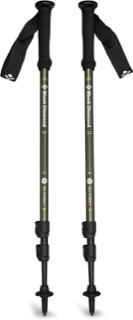
Black Diamond Trail Explorer 3
~£65Tougher and cheaper
The aluminium workhorse I own: it bends rather than snaps and costs less than half as much, for a small weight and pack-size penalty. The sensible first pole.
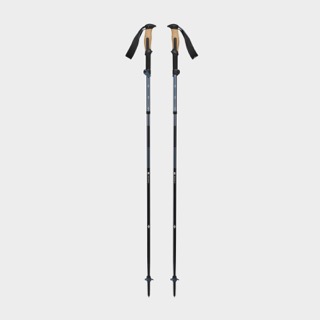
Black Diamond Trail Vista FLZ
~£120Aluminium folder
Want folding packability without carbon's care needs? The Trail Vista FLZ is the aluminium Z-fold with the same cork grip, heavier but happy to be knocked about, and it won LFTO Poles of the Year 2026.
Pros and cons
- Light for a full-featured pole at around 490g the pair
- Packs down to roughly 36cm, small enough to go inside a daypack
- Carbon damps trail buzz better than aluminium on hard ground
- Natural cork grip with Bloom foam extension, ideal for long warm days
- FlickLock+ lever works with gloves and holds securely under load
- Two length options and everything, tips to baskets, is replaceable
- Carbon can crack or snap under sharp lever loads rather than bending
- Narrower length range than a telescopic pole, so size choice matters
- Premium price at around £150, more than double the Trail Explorer 3
- Warranty covers defects, not carbon broken by misuse in the field
Verdict: are they worth it?
Yes, for the right hiker. The Black Diamond Pursuit Carbon FLZ does exactly what a carbon folding flagship should: it is light, it packs away small, it damps the trail nicely on a long hard day, and it carries the cork grip and FlickLock+ that make Black Diamond poles a pleasure to use. For weight-conscious hikers, fastpackers and anyone who wants poles stowed inside the pack rather than lashed to the outside, this is the Black Diamond pole to want, and at around £150 it is priced fairly against carbon folders from Leki and others.
Buy it if low weight and pack size are your priorities and you look after your gear. Choose the 125cm version if you are up to around 5ft10 and the 135cm version if you are taller. If you want one tough, cheaper, do-everything pair and you are not chasing grams, buy the aluminium Trail Explorer 3 instead and put the saving towards boots.
Buy Pursuit Carbon FLZ on Amazon


