


Quick verdict
The Black Diamond Trail is the lightest and most refined telescopic pole in Black Diamond's affordable Trail line, and the sensible default for a hiker who wants one dependable aluminium pole and cares enough about weight to spend a little more. It runs dual FlickLock adjustment, part-recycled 7075 aluminium shafts and a soft-touch dual-density grip, at around 480g the pair and roughly £85. It is not cork, despite what the name leads many to expect: the standard UK Trail uses soft-touch foam, and the cork version is the separate Trail Ergo Cork. Against its siblings it is about 50g lighter than the Trail Explorer 3 I own and reaches a taller 140cm, which is what the small premium over the cheaper Trail Back buys you.
Black Diamond Trail Trekking Poles: 4.6/5
The lightest and most refined telescopic in Black Diamond's Trail line. Dual FlickLock, part-recycled 7075 aluminium and a soft-touch dual-density grip at around £85.
- The light all-rounder: Black Diamond Trail (~£85)
- Cheaper way in: Black Diamond Trail Back (~£70)
- The tested sibling: Black Diamond Trail Explorer 3 (~£70)
The full review is below.
The Black Diamond Trail is the pole most people mean when they talk about a benchmark aluminium walking pole. It is the do-it-all telescopic that sits at the centre of Black Diamond's affordable Trail line, above the entry Trail Back and alongside the Trail Explorer 3 I own and have tested. Three sections, dual FlickLock, part-recycled 7075 aluminium and a soft-touch dual-density grip, at around £85. For a lot of UK hikers this is the sensible default, and the reason is simple: it does everything a day-walk pole needs to do and weighs less doing it than either of its Trail-line siblings.
At 480g per pair it is the lightest of the three telescopic Trail poles, which is the detail that quietly justifies the small step up in price. Here is the full picture.
A note on this review
The Black Diamond pole I own and use week to week is the Trail Explorer 3, and this review leans on that first-hand experience alongside Black Diamond's own specifications, the wider UK retail listings and the independent review picture.
That carries across more cleanly than it might sound. The Trail shares the same dual FlickLock mechanism and the same 7000-series aluminium shafts as the pole I own, so how the lock behaves under load, how the shaft handles abuse and how the foam extension works on a climb are all things I know first-hand from a near-identical pole. Where the Trail differs, chiefly in weight and grip finish, I say so.
Who the Trail is for
The Trail is for the hiker who wants one reliable telescopic pole for day walks, weekends and the occasional longer route, and who cares enough about weight to spend a little more to shave a bit off. It is not an ultralight carbon pole and it is not a folding pole. It is a straightforward, well-made, adjustable aluminium pole that does the core job better than the budget market and lighter than the rest of its own line.
It suits a first-time buyer who has decided to buy once and buy properly, and it suits an experienced walker who wants a dependable all-terrain set without paying carbon prices. On the chalk descents above Lulworth Cove, on long New Forest training days and on the Purbeck ridges, a pole like this earns its place in the pack.
If your budget is tight, the Trail Back gets you the same FlickLock for less. If you want cork specifically, Black Diamond makes a separate cork model, which I cover below.
Buy Black Diamond Trail at BlacksSpecifications


- Weight
- ~480g per pair
- Sections
- Three, telescopic
- Shaft material
- 7075 aluminium (30% pre-consumer recycled)
- Locking mechanism
- Dual FlickLock
- Grip
- Soft-touch dual-density top with EVA foam extension
- Length range
- 100 to 140cm usable
- Collapsed length
- ~64cm
- Tips
- Carbide flex tips, interchangeable
- Baskets
- Trekking and snow baskets included
- Warranty
- Two years
- UK price
- ~£85
The number that matters most here is the weight. At around 480g per pair the Trail undercuts both the Trail Explorer 3 I own, at 531g, and the Trail Back, which independent scales put closer to 517g. That is not a dramatic saving on paper, but it is the lightest telescopic in the line, and on a long day your arms notice the pole you lift a few thousand times.
The grip: soft-touch, not cork
Let me clear up the most common confusion first, because a lot of people search for the Black Diamond Trail expecting cork. The standard Trail sold in the UK, the iron-red model on the shelves at Blacks and elsewhere, does not have a cork grip. It uses a soft-touch dual-density grip top with an EVA foam extension below. Black Diamond does make a cork-grip pole, the Trail Ergo Cork, but that is a different model at a higher price.
So what you actually get is a moulded grip head that is a step more refined than the plain foam on the Trail Explorer 3 or the ribbed rubber on the Trail Back. The soft-touch top has a little more give and a slightly more contoured shape, which reads as a marginally nicer pole in the hand rather than a transformative one. It is warm to hold in the cold, light, and comfortable over a long day.
The limit is the same one every foam-family grip has. On a warm afternoon it manages sweat less well than cork, so your palm can feel slightly clammy on a hot 20km-plus day. For most UK hiking, which happens in cool damp conditions far more often than warm dry ones, that rarely matters. If it matters to you, cork is the reason to look at the Ergo Cork rather than this pole.
The foam extension below the head is more useful than it looks. On a sustained climb you naturally choke down on the pole rather than stop to shorten it, and gripping soft foam there beats gripping bare shaft. The strap is comfortable webbing. Thread your hand up through it from below so the strap takes the load on the forward push rather than your fingers, which cuts hand fatigue over a long day.
Dual FlickLock: why it matters
The Trail uses dual FlickLock, meaning both shaft joints are held by Black Diamond's external cam lever rather than an internal twist collar. This is the feature that separates a proper Black Diamond from the budget poles it is priced near, and it is the reason I trust the same mechanism on my own poles.
A FlickLock is a lever that clamps the shaft from the outside. Flip it open, slide the section, flip it shut. It takes three seconds, it works with gloves on, and it does not seize in the cold and wet the way twist locks do. On my Trail Explorer 3, which uses the identical mechanism, the locks have never slipped under body weight in the time I have owned them, and the only maintenance is a quarter turn of a single small screw if a lever ever loosens.
The practical value shows on terrain that keeps changing character. A long chalk descent on the Jurassic Coast wants a longer pole than the flat either side of it, and being able to adjust in a few seconds without stopping means you actually do it. A pole set for the ground you are on beats one set once and left there, and dual FlickLock is what makes that quick enough to bother with.
Build and durability
The shafts are 7075 aluminium, 30 percent of it pre-consumer recycled, and this is the same grade Black Diamond runs across the Trail line. Aluminium is heavier than carbon but it bends rather than snaps under a sideways load, which is the behaviour you want on a rocky descent or a river crossing when a pole takes a force it was never designed for. A bent aluminium pole can often be field-straightened and walked out. A snapped carbon pole on a remote stretch of the South West Coast Path is a worse afternoon.
The tips are interchangeable carbide, which grip chalk, limestone and wet grass well and can be swapped for rubber tips on hard paths. Trekking and snow baskets both come in the box. Tips, baskets, grips and straps are all replaceable, which is the quiet reason these poles tend to outlast their price, and Black Diamond backs the pole with a two-year warranty.
Nothing about the construction is a compromise over the more expensive folding poles in the range. The Trail is simply the telescopic, adjustable expression of the same build quality, and for mixed UK terrain that is usually the format that makes most sense.
Weight and packed size
At 480g per pair the Trail is light for an aluminium telescopic, and it is the lightest of the three Trail-line poles. It will not match a sub-400g carbon pole, but among robust adjustable aluminium options it sits at the better end, and that is the main thing you are paying the small premium over the Trail Back for.
It collapses to around 64cm, which means it is a telescopic pole rather than a folding one. It rides on the outside of a pack rather than inside it, and the side compression straps on the Osprey Talon 33 hold a pair without fuss. If you specifically need poles that stow inside a daypack, that is a Z-fold design like the Trail Vista FLZ, not the Trail.
The 100 to 140cm range covers effectively every adult and reaches taller than the Trail Explorer 3, which tops out at 130cm. Set the length so your elbow sits at roughly 90 degrees with the tip on the ground beside your foot, then shorten a little for sustained climbs and lengthen for long descents.
Trail vs Trail Back vs Trail Explorer 3
These three poles look almost identical on a shelf and confuse a lot of buyers. Here is where the Trail sits.
vs Black Diamond Trail Back (~£70)
The Trail Back is the cheapest way into a genuine dual FlickLock Black Diamond pole, with a ribbed rubber grip and a heavier build at around 517g measured. The Trail costs roughly £15 more and gives you a noticeably lighter pole at 480g plus the more refined soft-touch grip. If money is tight the Trail Back does the core job for less. If you value low weight and a nicer grip head, the Trail is the better pole and the extra spend is easy to justify.
vs Black Diamond Trail Explorer 3 (~£70)
This is the closer call, and it is the pair I actually own. The Trail Explorer 3 is the workhorse I have used on the Jurassic Coast, in the New Forest and on the chalk above Lulworth Cove, and it has never let me down. It uses a plain EVA foam grip, weighs 531g, collapses shorter to about 58.5cm and tops out at 130cm. The Trail is around 50g lighter, has the slightly more polished soft-touch grip and reaches a taller 140cm.
For most people the choice comes down to price on the day and how much the weight and grip finish matter. If you find the Explorer 3 cheaper, it is a proven pole and I stand behind mine. If the lighter weight and longer reach appeal and the small premium is fine, the Trail is the more refined pick. The Black Diamond poles roundup lays out where each one wins, and the best trekking poles UK 2026 guide sets them against Leki and the wider market.
Others worth considering
The Trail sits between two siblings that do the same core job. Here is where each earns its place.
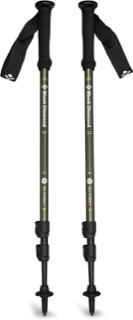
Black Diamond Trail Explorer 3
~£65The tested sibling
The aluminium workhorse I own and use week to week: same FlickLock, foam grip, often a little cheaper, and it collapses shorter. The Trail is lighter and reaches taller, so this is the closer, proven call.
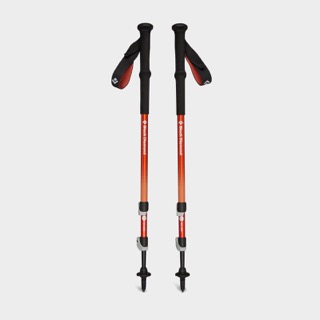
Black Diamond Trail Back
~£70Cheaper way in
The same dual FlickLock and 7075 aluminium for roughly £15 less. You give up the Trail's lighter weight and soft-touch grip, but the core pole is identical.
Pros and cons
- Lightest telescopic in the Trail line at ~480g per pair
- Dual FlickLock that adjusts in seconds and works with gloves
- Refined soft-touch dual-density grip head
- 7075 aluminium that bends rather than snaps, 30% recycled
- 100 to 140cm range reaches taller than the Trail Explorer 3
- Carbide tips and both baskets included, all parts replaceable
- Foam-family grip manages sweat less well than cork on hot days
- Not cork, despite what many buyers expect from the name
- Heavier than carbon and folding alternatives
- Collapses to ~64cm, so it lives on the outside of a pack
- No anti-shock mechanism
Verdict: is it worth it?
Yes, if you want the lightest and most refined pole in Black Diamond's affordable telescopic range. The Trail gives you the dual FlickLock and the tough aluminium shaft that make this brand worth buying, in a pair that is lighter than both its Trail-line siblings and finished with a slightly nicer grip. Everything I trust about my Trail Explorer 3, the lock that never slips and the shaft that shrugs off abuse, is here in a lighter package that reaches taller.
The trade-offs are the same aluminium trade-offs they always are. It is heavier than carbon, it lives on the outside of a pack, and the grip is soft-touch foam rather than cork. If low weight above all is the goal, look at carbon and folding designs. If you specifically want cork for hot hands, step across to the Trail Ergo Cork. But as one dependable telescopic pole for UK day walking, bought once and used for years, the Trail is an easy pole to recommend and the pick of the affordable Black Diamond line.
Buy Black Diamond Trail at Blacks


