


Quick verdict
Rab Microlight Alpine: 4.6/5
153g of 700FP recycled hydrophobic down in a 30D Pertex Quantum shell. Packs to the size of a water bottle. The baseline packable down jacket for most hikers.
- Step up in warmth: Rab Electron Pro (~£300)
The full review is below.
Some pieces of kit earn their reputation by being technically superior to everything else. Some earn it by being exactly right for what most people need, at a price that does not require a lengthy justification. The Rab Microlight Alpine is the second kind.
It uses 153g of 700FP recycled hydrophobic down in a 30D Pertex Quantum shell. It compresses to roughly the size of a 500ml water bottle. It has been a reference point in packable down insulation for years. At around £210, it sits in the range where the quality is genuine and the price is manageable.
This review is research-based rather than from personal extended use on trail. Specs, construction, user experience from multiple sources, and context from spending time with the broader Rab insulated range.
What the Microlight Alpine is
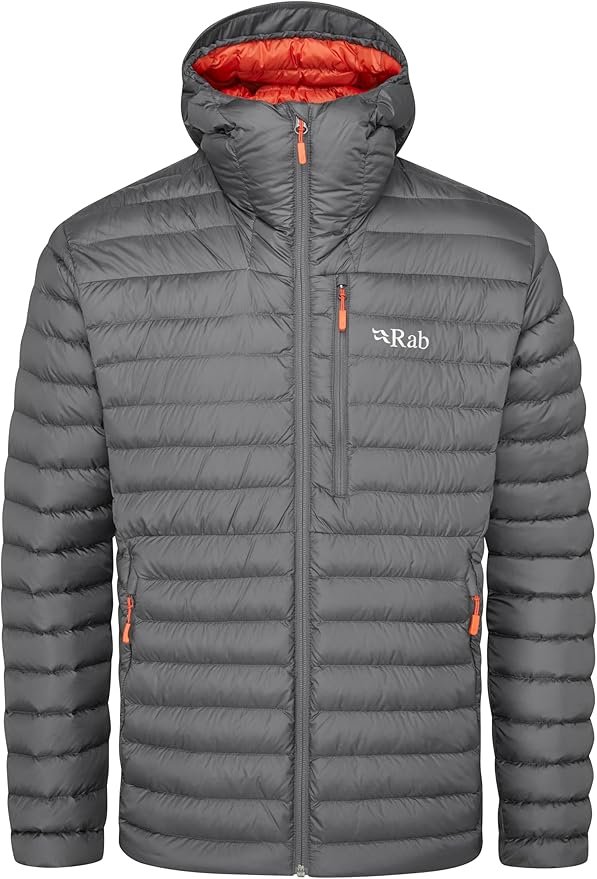
The Microlight Alpine is a packable insulated down jacket designed for use as a mid layer in cold conditions or as a standalone outer in mild dry cold. It is not the warmest jacket in the Rab range — that is not its job. Its job is to provide genuine down warmth in a package small and light enough that you carry it on every hike and forget about it until the temperature drops.
It achieves this with a combination that Rab has refined over many iterations: hydrophobic 700FP down, a lightweight but durable Pertex Quantum shell, and a construction that prioritises packability without sacrificing the warmth that makes down worth using in the first place.
The down: 700FP hydrophobic
700FP is the entry point to serious down performance. Fill power measures how much air a gram of down traps — the more air, the better the warmth-to-weight ratio. 700FP produces noticeably more warmth per gram than cheaper 550FP or 600FP fills, and at 153g of fill in the Microlight Alpine, that warmth adds up.
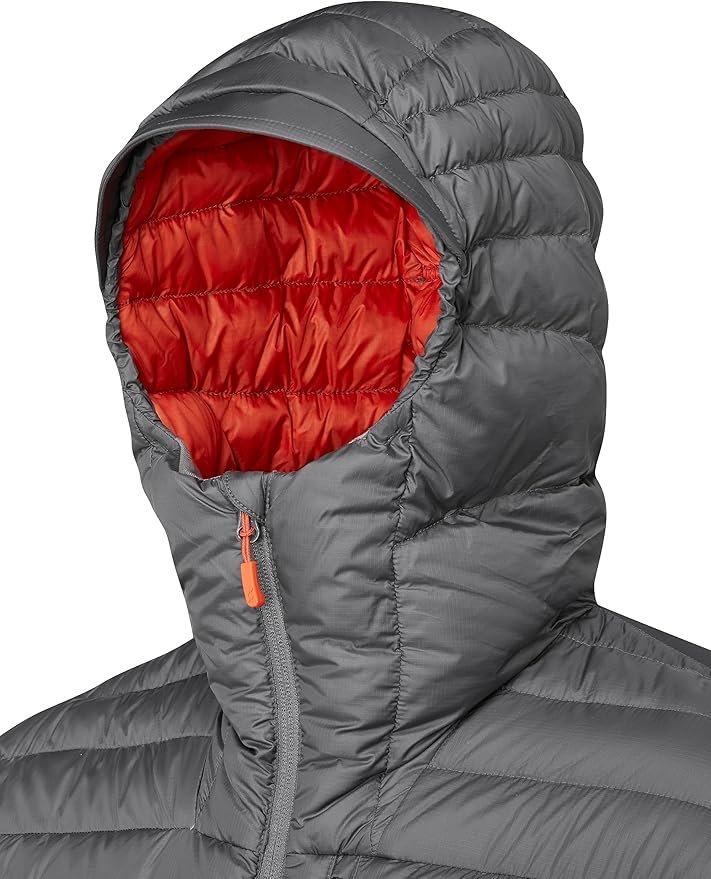
The down is recycled and treated with a hydrophobic finish. Recycled down comes from reclaimed sources — existing garments and bedding — rather than new production, which reduces environmental impact without compromising performance. The hydrophobic finish causes water to bead on the individual down clusters rather than being absorbed, which slows the rate at which the insulation loses loft in damp conditions.
This does not make the Microlight Alpine a jacket for hiking in rain without a shell. What it means is that the down handles the ambient moisture of UK conditions — the humidity, the condensation, the light drizzle before you have managed to get your waterproof out — better than untreated down would. In a heavy and sustained downpour, you still want a waterproof shell over the top.
Packability and what it means in practice
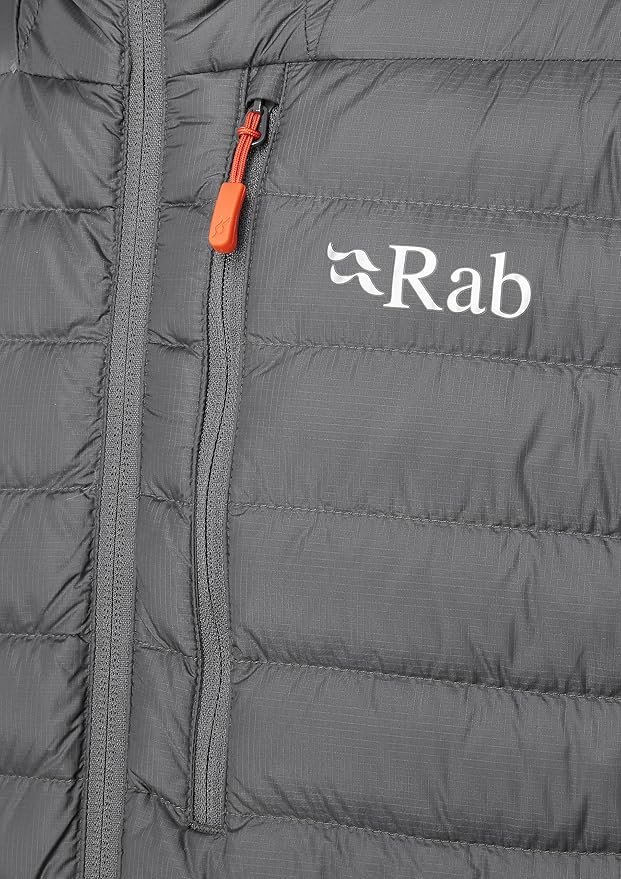
The Microlight Alpine stuffs into its own chest pocket to roughly the size of a 500ml bottle. That is the detail that separates it from heavier insulated jackets.
A jacket that packs this small stops being a decision. You do not leave it behind because the forecast looks mild and you are trying to keep weight down. It goes in the pack every time, takes up almost no space, and is available when the temperature drops at the summit or when a long afternoon hike ends with tired legs and a temperature that has fallen faster than expected. The situations where you are glad you brought it are exactly the situations where hikers who left theirs behind wish they had not.
How warm is 700FP down?
Warm enough for most UK hiking conditions between October and April, used as a mid layer under a shell or as a standalone outer in dry cold above about 5°C. Below that, or in sustained cold at elevation, a 700FP jacket starts to feel like it is on the edge of sufficient rather than definitively warm.
The honest comparison is with the Electron Pro, which steps up to 800FP European goose down. That step up is real and noticeable: 800FP fill lofts more per gram, which means more warmth from a similar fill weight. If you have used a 700FP down jacket in the coldest conditions and found it not quite enough, the step up to 800FP addresses that directly.
For most UK day hiking in autumn and spring, 700FP is fine. For regular winter hiking at elevation or in genuinely cold conditions, it is worth considering whether the Electron Pro is the better long-term purchase.
Down vs synthetic in UK conditions
The alternative to the Microlight Alpine in the Rab range is the Cirrus (entry-level synthetic) or the Nebitron Pro (warmest synthetic). The question of which to choose is worth thinking through.
Down compresses smaller, lofts more per gram, and is the right choice when weight and packability are priorities and the weather is dry or only marginally damp. The Microlight Alpine is lighter than any synthetic jacket offering equivalent warmth.
Synthetic handles moisture better and is often the more reliable choice for UK conditions where sustained damp is common. The Nebitron Pro with PrimaLoft Silver RISE will perform more consistently across the full range of British weather. The Microlight Alpine will perform better on the days it does not get properly wet.
The practical conclusion for most UK hikers: if you are confident in forecasting and tend to hike in drier conditions, the Microlight Alpine is a better pack item. If your routes involve the full spectrum of UK weather, a synthetic option is more reliable across the board.
The limitations
The Microlight Alpine is not the warmest jacket in the Rab range and is not designed to be. In very cold conditions — sustained temperatures below 0°C, significant wind chill, serious winter elevation — it may not be enough as a standalone layer. The Electron Pro or Positron Pro address that.
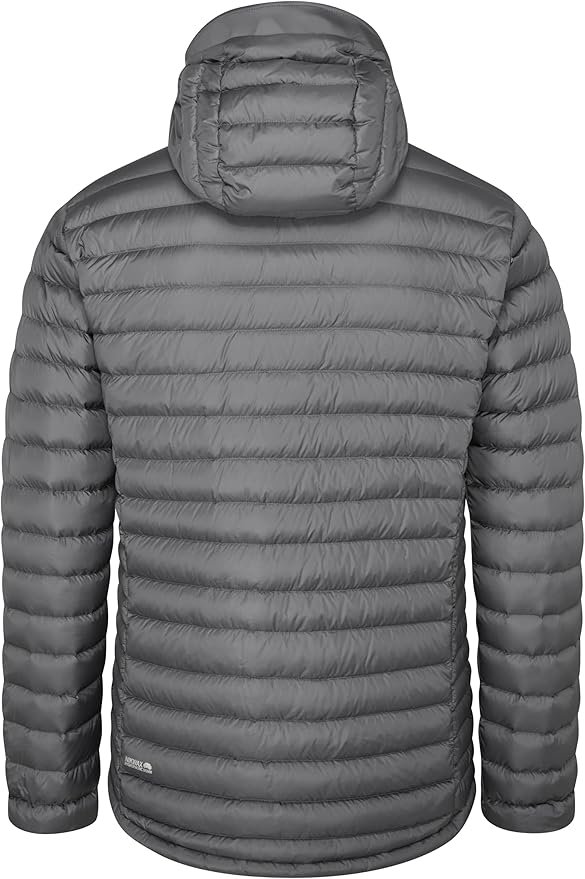
It is also not the most durable jacket in the range. The 30D Pertex Quantum shell is lightweight and functional but will show wear more quickly than a heavier shell if subjected to regular abrasion against pack straps, rough rock surfaces, or belt loops. This is not a jacket to use as a work layer in conditions that will punish the fabric.
Where it sits in the Rab range
The Microlight Alpine is the entry point to Rab's down range. Below it, synthetically speaking, is the Cirrus. Above it in down are the Glaceon Pro (similar fill power, more technical and lighter construction), the Electron Pro (800FP, meaningfully warmer), and the rest of the lineup up to the Mythic G.
For the full picture across all eight Rab insulated options, the complete guide has a spec comparison and a clear breakdown of what each jacket is actually for.
Verdict
The Rab Microlight Alpine earns its reputation. 700FP recycled hydrophobic down in a jacket that packs to the size of a water bottle, at a price that does not require significant justification. It is not the warmest option in the Rab range and it is not designed to be. It is the one you carry on every hike and pull out when you need it, and it has been doing that job reliably for years.
If you want a packable down layer for UK autumn and spring hiking on routes where the weather is broadly cooperative, this is the one. If you need something warmer or more moisture-resistant, the Electron Pro and Nebitron Pro are the places to look next.
 Buy the Rab Microlight Alpine on Amazon


