


Quick verdict
The Silentnight Dual Control Electric Blanket is an electric underblanket that goes on the mattress under your sheet, and it is the cheapest genuine comfort upgrade we know: around 1p to 3p per hour at the current price cap, against pounds per hour for heating the whole house. We put ours on about ten minutes before bed so nobody gets into a cold bed, let the auto shut-off turn it off, and on properly cold nights run the lowest setting on a longer timer. Each side has its own controller so couples stop arguing about temperature, it washes in the machine once the controllers are unclipped, and Silentnight also makes single-controller Comfort Control and Teddy Fleece versions from around £30.
Silentnight Dual Control Electric Blanket: 4.8/5
The one on our bed: an electric underblanket with a separate controller for each side, elasticated corner straps that keep it flat, and detachable controls so the whole thing goes in the washing machine. Warm bed for pennies.
The full review is below.
It's a game changer in the winter, and I don't really need another reason to look forward to getting into bed, but here we go. This is the first piece of kit on this site that never leaves the house, and it has earned its place: on cold nights the Silentnight electric blanket is the most-used, most-argued-over item our family owns, and it costs pennies to run.
What it is (and what it isn't)
First, the thing the name gets wrong: this is called an electric blanket, but it isn't a blanket you pull over yourself. It's an electric underblanket, a heated sheet that lies flat on top of the mattress and under your bottom sheet, warming the bed itself. In the UK, "electric blanket" almost always means this type; the ones designed to go over you are sold as heated throws or overblankets, and they're a different product for a different job. If you've been picturing a duvet with a plug, recalibrate now, because the underblanket is the one that fixes the real problem: getting into a freezing cold bed.
The version on our bed is the Silentnight Dual Control, which gives each side of the bed its own controller with four heat settings, so one of you can sleep warm and the other can opt out entirely. Silentnight also makes a single-controller Comfort Control version and a Teddy Fleece version with a soft pile top, both covered below. All of them come in the usual bed sizes, all strap to the mattress with elasticated corners, and all go in the washing machine once the controls are unclipped.
They are also quietly one of the most popular products in the country right now: the Silentnight listing shows over 4,000 bought in the past month, sitting on more than 47,000 reviews. Britain has clearly done the maths on heating beds rather than houses.
Check the Dual Control price on AmazonHow we actually use ours
We absolutely love ours, and the routine is simple. We put it on, say, ten minutes before we get into bed, and it means you don't have to get into a freezing cold bed. That's the whole trick, and it never stops being brilliant.
We tend not to leave it on past the hour it sets by default when you switch it on; it warms the bed, we get in, it turns itself off, and the duvet holds the warmth from there. But sometimes, if it is really cold, I'll lower the temperature right down to the lowest setting and set the timer for a few more hours, which keeps the bed at a gentle background warmth rather than a toasting heat.


One honest note that isn't in the marketing: I find it really helps with aches and pains too, which I tend to get in my lower back, especially after long hikes. Climbing into a pre-warmed bed after a long cold day on the trail does more for my back than anything else I've tried at bedtime. That's my experience rather than a medical claim, but it's a real part of why this gets used so much in this house.
The whole family has opinions
Here's how you know a product has actually worked its way into a household. Quite often I will find that if we have been out in the cold, the kids have come back and got into our bed with the electric blanket on, to warm up and watch TV. Our bed, our blanket, their film. Even Maple has started to enjoy finding a snuggly spot on cold nights, which for a dog that spends her life charging around Dorset clifftops tells you something.
None of that was the plan when we bought it. It was supposed to be a grown-ups-get-into-a-warm-bed purchase, and it has turned into the warmest square footage in the house from November onwards.
Living with it: fitting and washing
The practical stuff is where cheap electric blankets fall down, and this one doesn't. It has elastic in each corner, which has always held it in place so it doesn't gather. A bunched-up electric blanket is both uncomfortable and bad for the wiring, so corners that actually stay put matter more than any other feature. We tend to use a mattress protector over the top of it too, which helps, and then a sheet over the whole thing; layered like that, honestly, you wouldn't know it was on there when it's turned off. There's no crinkle, no ridges, no lying on cables.
The electric adapters are detachable, so it is easy to wash: unclip the controllers, machine wash on a gentle cycle, dry it fully, clip back in. Silentnight's own care guidance is a 40 degree wool cycle, and the wires sit in stitched channels that stop them tangling in the wash. A bed item that can't be washed is a bed item on borrowed time, so this is a bigger deal than it sounds.
What it costs to run
This is why I think the electric blanket is the single most efficient comfort purchase of a British winter. Silentnight puts most electric blankets at 40 to 100 watts; the Dual Control is listed at around 60 watts per side. At the current Ofgem price cap (26.32p per kWh for October to December 2026), that works out at roughly 1p to 3p per hour depending on model, size and setting. Silentnight's own figure is about 13p for a full night on a 60W model, and our ten-minutes-plus-an-hour routine costs a fraction of that, call it 2p a night.
Compare that with what it replaces. Typical estimates put gas central heating at £1 to £2 per hour for a whole house. Nobody is suggesting a blanket heats your living room, but if the only cold problem left at 10pm is the bed, running the boiler for an extra hour to solve it is paying pounds for a pennies job. Warm the person, not the postcode.
The three versions compared
All three Silentnight underblankets share the same bones: elasticated corner straps, overheat protection, detachable controls, machine washable, wired in stitched channels, three-year guarantee. The differences are the controllers and the fabric. Prices shown are for the sizes linked and vary by bed size, with most of the range starting around £30.
| Image | Product | Price | Buy |
|---|---|---|---|
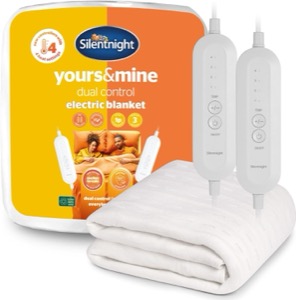 | The one we ownSilentnight Dual Control | £40.00 | |
| Two controllers, one per side · 4 heat settings each · double to super kingBest for Couples who never agree on temperature | |||
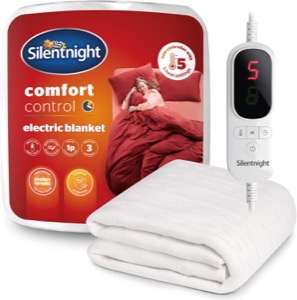 | Silentnight Comfort Control | £39.99 | |
| Single digital controller · microfleece top · single to super kingBest for One sleeper, or beds that agree | |||
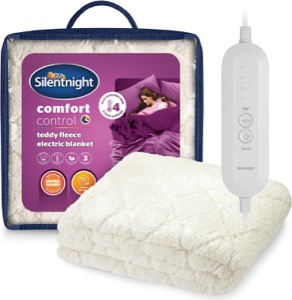 | Silentnight Teddy Fleece | £38.25 | |
| Teddy fleece pile top · 4 heat settings · single to kingBest for Maximum softness under the sheet | |||
Choosing is simple. Sharing a bed with someone who runs at a different temperature, which in our experience is every couple in Britain, get the Dual Control. That's exactly why we bought it: so we could each decide, without any arguments, what temperature to have it on. Sleeping alone, or in rare thermal harmony, the Comfort Control does the same job with one controller. If the idea of a fleecy, teddy-soft layer under your sheet appeals more than a smooth one, that's the Teddy Fleece, and it's often the cheapest of the three.
Sensible use and safety
Electric blankets have an old reputation problem from decades-old models, and modern ones are a different animal: overheat protection that shuts the blanket down if it detects a hot spot, wires held in stitched channels, proper certification. But the official guidance from London Fire Brigade and Electrical Safety First is worth following, and it matches how we use ours anyway:
- Warm the bed, then switch off before you sleep. Silentnight's own recommendation is to turn the blanket off before you go to sleep rather than sleeping on it at full heat, which is exactly the pre-heat routine above. Blankets designed for all-night use exist, but run them as the maker intends.
- Never use a hot water bottle on the same bed as an electric blanket. Water and heated wiring must not meet.
- Store it rolled or loosely folded, never creased, and leave it flat on the bed through the season rather than cramming it in a cupboard every morning.
- Check it each autumn for scorch marks, frayed fabric, exposed wires or a buzzing controller, and replace any blanket over ten years old.
- Buy new, from a reputable brand. A second-hand electric blanket is the one bed bargain never worth taking.
For what it's worth, the kids-watching-TV scenario is the blanket on, attended, on top of the bed, which is exactly what it's for. The rules are about unattended heat and worn-out kit, not about enjoying a warm bed.
The power cut question
Honesty time, because we've written a lot lately about being ready for power cuts: an electric blanket is mains-powered, so the night the power goes off is the night it can't help you. It warms your winter, not your emergency. For the power cut itself, the answer is the layering and kit in our power cut guide, not anything with a plug.
The interesting middle ground is a portable power station, because an electric blanket's draw is tiny by appliance standards. A 60W blanket side running off a mid-size station is hours of warm bed from a battery, which is covered properly in the FAQ below, and it's one of the smartest low-drain uses for a power station we know: warmth for a fraction of what a heater would pull.
Verdict
The Silentnight Dual Control Electric Blanket is the cheapest thing we own that gets used every single cold night, by every member of the family, including the dog. It fits flat and stays put, washes like bedding, costs pennies an hour at the worst energy prices in memory, and solves the one winter misery no thermostat fixes: the freezing cold bed. It's a game changer in the winter. The only warning I can offer is the one our kids demonstrate regularly, which is that once one bed in the house has it, everyone migrates there.
Check the Dual Control price on Amazon