


Quick verdict
The Mammut Alnasca IV Low GTX is an approach shoe built for grippy, waterproof scrambling, and its strongest reason to buy is edging precision on wet rock. It runs a Vibram XS Trek outsole with a low-profile lug for smearing and edging, a GORE-TEX membrane for waterproofing, a High Rebound Critical EVA midsole with a FLEXTRON propulsion plate for stability, and a rubber toe cap and rand for protection. It weighs around 410g per shoe (US 9.5), sits in the lightweight approach class, and suits scramblers and hikers on technical, rocky UK ground rather than long, soft-mud trails. Priced at £150 direct from Mammut.
Mammut Alnasca IV Low GTX: 4.6/5
Vibram XS Trek grip, a GORE-TEX membrane and a FLEXTRON stability plate make this the sharpest edging shoe in Mammut's low-cut range for wet British rock.
The full review is below.
The Mammut Alnasca IV Low GTX is an approach shoe first and a hiking shoe second. That distinction matters. Where most of the shoes in our best waterproof trainers roundup are built to eat up miles of downland and coast path, the Alnasca IV is built to stand on a wet edge of Purbeck limestone and hold. It has the Vibram XS Trek outsole, the sticky rubber and low-profile lugs of a proper scrambling shoe, wrapped around a GORE-TEX membrane so your feet stay dry when the rock is running.
That combination is rarer than it sounds. Plenty of trainers are waterproof and plenty of shoes grip. Getting climbing-grade rubber and a full waterproof membrane into one £150 low-cut shoe is where the Alnasca IV earns its place.


Who the Alnasca IV is for
This is a shoe for people who spend time on rock. If your walks take in scrambly ground, via ferrata, boulder-hopping, chalk edges above the Jurassic Coast or the rockier fell paths in the Brecon Beacons, the Alnasca IV is designed for exactly that. The precise, low-volume last and the sticky Vibram compound reward you on ground where a softer trail shoe would smear and slide.
It is less at home doing what a lot of buyers ask a hiking shoe to do, which is grind out long, flat, muddy miles. The lugs are shallow for grip on rock, not for shedding claggy Dorset mud, and the last is snug rather than roomy. If you want an all-day cushioned cruiser for the South Downs Way, look at the Mammut Sertig III Low GTX instead. If you want the sharpest edging tool, this is it.
Waterproofing
The Alnasca IV Low GTX uses a GORE-TEX membrane bonded inside the upper. In practice that means the shoe keeps out rain, wet grass, puddle splash and the standing water you cross on a British scramble approach. Through the wet British half of the year, that membrane is the difference between dry feet and cold, macerated ones by lunch.
The limit is the one every low-cut shoe shares, and it is worth being straight about. The waterproofing stops at the ankle collar. Step into a bog deeper than the cuff, or take a wave over the top on a tidal coast-path section, and water comes in over the top of the membrane rather than through it. That is physics, not a fault of the shoe. For deep bog and sustained wet, a mid-cut boot is the honest answer. For everything short of that, the GORE-TEX layer does its job and dries slower than a non-membrane shoe would, which is the usual trade for staying dry in the first place.
Grip and outsole
The outsole is where this shoe justifies itself. Mammut has fitted a Vibram XS Trek compound, a sticky rubber tuned for the mix of smearing and edging that approach terrain demands, with a low-profile lug pattern and a flatter climbing zone at the toe. On dry chalk and limestone it is confident. On wet rock it holds far better than a standard trail-shoe compound, which is the whole point of buying this over a cheaper waterproof trainer.
The toe area is deliberately smoother so you can stand precisely on small edges and smear on slabs, while the heel keeps enough lug to brake on descents. A rubber toe cap and a raised rand run around the front and sides to protect against rock and take the abrasion that scrambling throws at a shoe. Underfoot, a FLEXTRON propulsion plate stiffens the platform so the shoe supports an edge instead of folding over it.
The trade-off, again, is mud. Those shallow lugs pack out on soft ground and the shoe skates on wet grass slopes in a way it never does on rock. Match the shoe to the terrain and it is superb. Ask it to be a bog shoe and it will disappoint you.
Fit and cushioning
The Alnasca IV runs on a precise, fairly low-volume last, which is what you want in an approach shoe. A snug fit stops your foot sliding around when you weight an edge, and it lets you feel the ground. If you have a wide or high-volume foot, try before you commit or size with that in mind.
Cushioning comes from a High Rebound Critical EVA midsole with an Ortholite insole on top. It is a firmer, more responsive platform than a plush trail shoe, tuned for stability and ground feel rather than pillowy comfort. On rock and shorter technical days that firmness is an asset. Over very long, hard-surface distances you notice it more than you would in a cushioned cruiser. Weight sits at around 410g per shoe for a US 9.5, which is light for a shoe with this much rubber and protection built in.
Colours
The men's Alnasca IV Low GTX comes in two colourways. Both share the identical Vibram XS Trek outsole, GORE-TEX membrane and £150 price, so choose on looks alone.
Marine / white
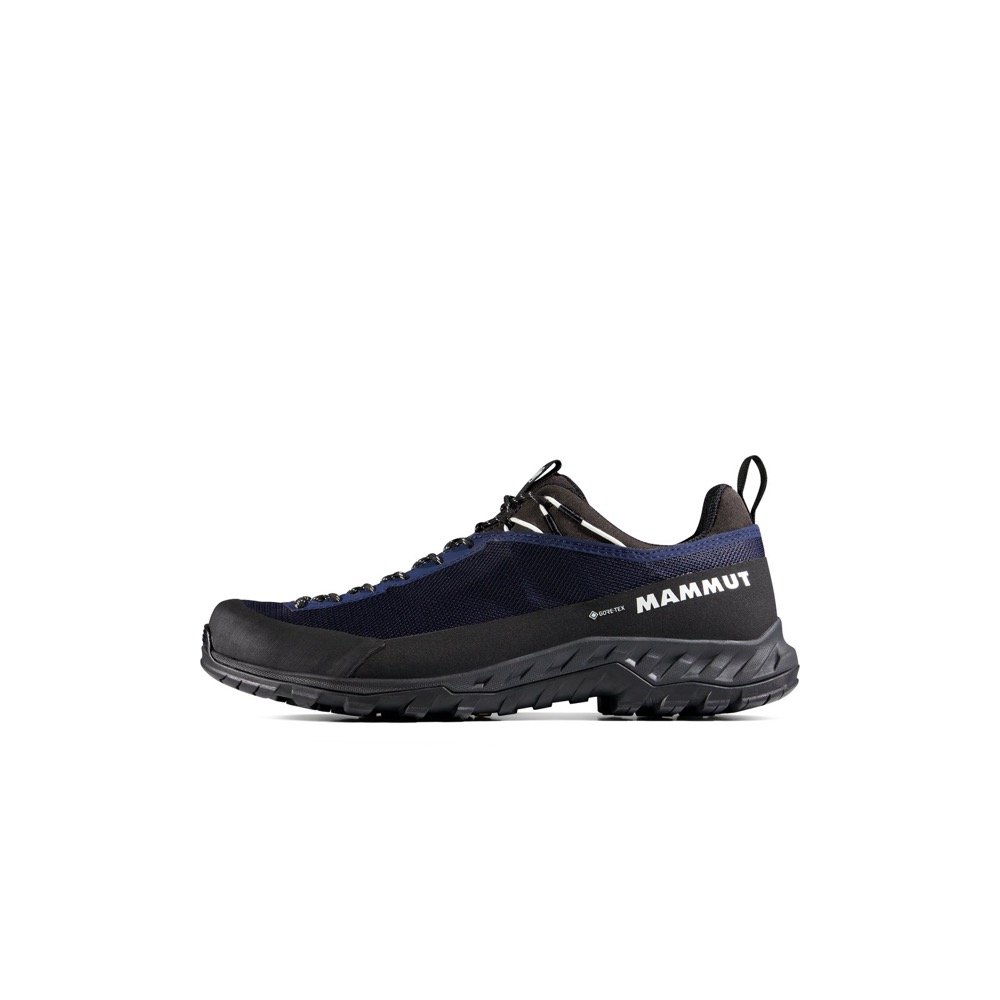 Buy the Mammut Alnasca IV Low GTX (Marine / white) at Mammut
Deep silver sage
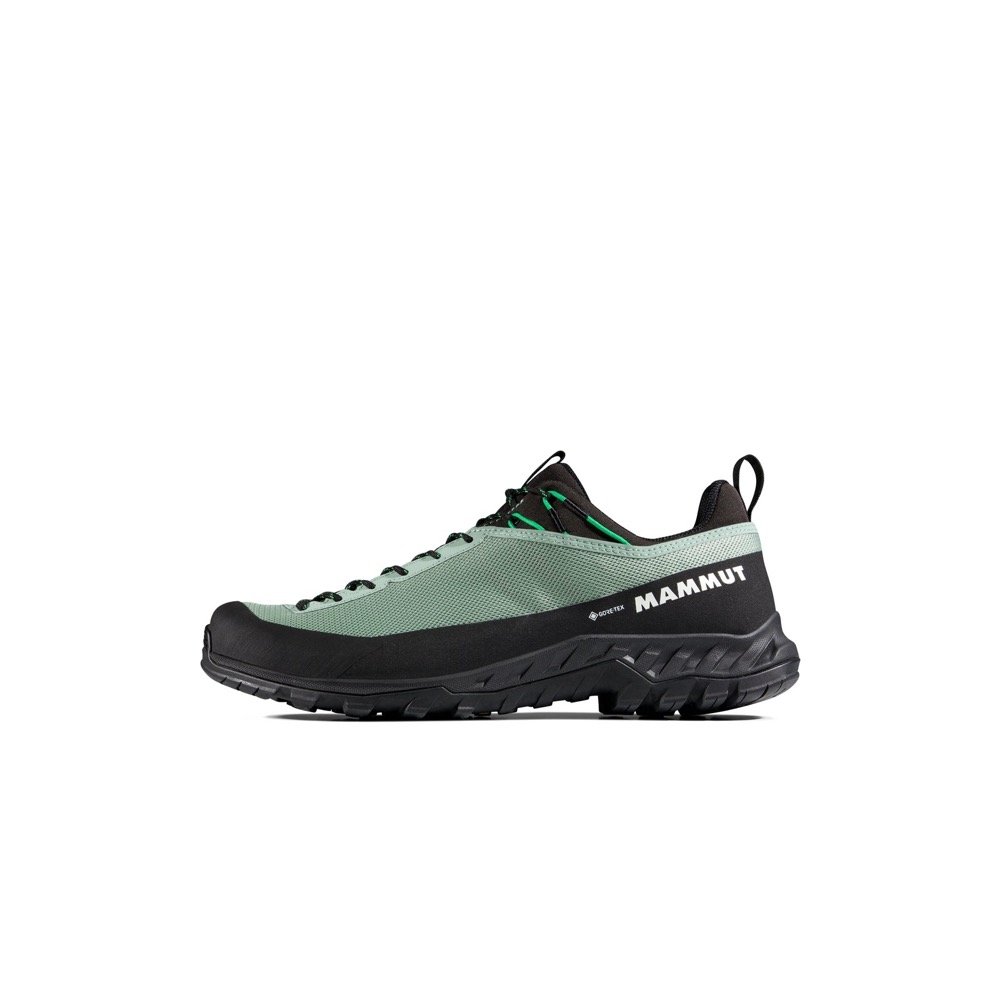 Buy the Mammut Alnasca IV Low GTX (Deep silver sage) at Mammut
Specs at a glance
| Spec | Detail |
|---|---|
| Membrane | GORE-TEX (waterproof, breathable) |
| Outsole | Vibram XS Trek, low-profile lug with climbing zone |
| Midsole / cushioning | High Rebound Critical EVA with FLEXTRON plate, Ortholite insole |
| Weight | Approx. 410g per shoe (US 9.5) |
| Protection | Rubber toe cap and raised rand |
| Price | £150 |
| Best for | Approach, scrambling and technical rock |
Pros and cons
- Vibram XS Trek outsole grips wet rock, chalk and slab far better than a standard trail compound
- GORE-TEX membrane keeps feet dry through British rain and puddle splash
- Precise, low-volume last gives real edging confidence on technical ground
- Rubber toe cap and rand handle the abrasion scrambling throws at a shoe
- Light for the amount of rubber and protection, at roughly 410g
- Shallow lugs pack out and slip on soft mud and wet grass
- Firm midsole is less comfortable than a cushioned cruiser over long flat miles
- Snug last will not suit wide or high-volume feet
- Low cut lets water in over the collar in deep bog, as any low shoe will
Verdict
The Mammut Alnasca IV Low GTX earns a 4.6/5. Judged as what it is, a waterproof approach shoe for technical rock, it is one of the best you can buy at £150. The Vibram XS Trek grip and the FLEXTRON-backed edging precision put it ahead of ordinary waterproof trainers on the ground it is built for, and the GORE-TEX membrane means you get that performance without wet feet through the British seasons.
Buy it if your walks involve scrambling, rock, chalk edges or via ferrata and you want grip and waterproofing in one shoe. Look elsewhere if you mostly do long, soft, muddy trail miles, where a deeper-lugged, more cushioned shoe will serve you better. If you want the leather-upper version of the same shoe, see the Mammut Alnasca IV Low LTH GTX, and for the closest rival in this class read our Arc'teryx Konseal GORE-TEX review. You can also browse the full waterproof trainers category.
Buy the Mammut Alnasca IV Low GTX at Mammut


