


Quick verdict
The Mammut Ducan III Low LTH GTX is a leather, low-cut hiking shoe built for durability over long UK seasons. A Mastrotto suede upper with a rubber rand, a GORE-TEX Prism waterproof lining, and a Vibram XS Trek outsole with Traction Lug handle chalk, bog and wet rock. It runs a 10mm drop on a 35/23mm stack with a dual-density EVA midsole and FLEXTRON plate, weighing roughly 490g per shoe (US 9.5). At £175 it suits hikers who want a hard-wearing all-rounder for coast paths and downland rather than the lightest possible mesh trainer.
Mammut Ducan III Low LTH GTX: 4.6/5
Leather upper for durability, GORE-TEX Prism lining and a Vibram XS Trek outsole. A hard-wearing low-cut all-rounder for wet UK trails at £175.
The full review is below.
The Ducan III Low comes in two builds: a lighter mesh version and this one, the LTH, which swaps the fabric upper for Mastrotto suede leather. If you have worn through the toe of a mesh trainer on flint or dragged a soft upper across gabbro scree, you already understand the case for the leather model. This is the Ducan you buy when you want the shoe to outlast a couple of British winters rather than shave off a few grams.
At £175 it sits at the premium end of the waterproof-trainer bracket, and the spec sheet backs that up: a GORE-TEX Prism lining, a Vibram XS Trek outsole, and Mammut's FLEXTRON propulsion plate under a dual-density EVA midsole. It is pitched as a long-hike, multi-day all-rounder, and on chalk downland and coast path that is exactly where it lands.


Who the Ducan III LTH is for
This is a shoe for hikers who put miles in year-round on mixed British ground and want a low-cut that will not fall apart by spring. The leather upper is the whole point. Where a mesh trainer gives way at the flex points and the toe after a season of flint and gorse, the Mastrotto suede and the wraparound rubber rand take the abuse and keep going.
It suits chalk downland, coast paths, forest tracks and moor edges rather than technical mountain scrambling. If you spend most of your time on the South Downs, the Jurassic Coast or through the New Forest, this is squarely in its lane. It is also a sensible pick if you find pure trail runners too soft underfoot and want something with a bit more structure and a proper hiking outsole.
If your priority is the lightest, most breathable warm-weather shoe you can find, the mesh Ducan or a lighter runner will serve you better. The leather build carries a small weight and breathability penalty in exchange for its durability. That trade is the deal here, and for a wet-climate hiker it is the right one. For alternatives, see our best waterproof trainers roundup.
Waterproofing: GORE-TEX Prism
The Ducan III LTH uses a GORE-TEX Prism lining. Prism is Gore's construction aimed at durable, lower-weight waterproofing, and paired with a leather upper it makes for a shoe that keeps water out reliably through sustained wet. On soaked chalk tracks and dew-heavy grass first thing, feet stay dry and stay dry mile after mile, which is where cheaper membranes tend to wet through over a long day.
The leather helps here too. Suede does not wet out and go heavy the way a saturated mesh does, so the shoe holds its weight better in prolonged rain. Keep the leather fed with a suede-safe proofer and it sheds surface water for longer between soakings.
The honest limit is the cut. This is a low shoe, so the waterproofing protects you only to the ankle collar. Step into a bog or a stream deeper than the top of the shoe and water comes in over the top, membrane or not. That is true of every low-cut waterproof shoe. For deep peat bog or serious stream crossings you want the Ducan III in its high-cut form or a proper boot. For everything short of that, on the wet British half of the year, the Prism lining does its job.
Grip and outsole
The outsole is Vibram XS Trek with Traction Lug Technology. This is a hiking-specific compound and lug pattern rather than a road-biased one, and it shows on the ground the Ducan is built for. On wet chalk, greasy roots and slick limestone it holds well, and the deeper lugs bite into soft downland turf and mud without clogging as badly as a shallower town-shoe tread.
XS Trek is a known quantity on British trails. It is a grippy, hard-wearing compound that does not glaze over quickly, which matters on a shoe you are buying for the long haul. On genuinely wet rock nothing is infallible, and steep polished stone still wants care, but for coast-path scrambles and downland descents the traction is confident.
Cushioning and fit
Underfoot you get a 35/23mm stack with a 10mm heel drop, a dual-density High Rebound EVA midsole, and Mammut's FLEXTRON propulsion plate for midfoot stability. The result is a shoe with more structure and rebound than a soft trail runner: it feels supportive and stable under a daypack over long distances rather than plush and squashy. On multi-hour days that stability is what keeps the feet fresh.
An Ortholite insole handles moisture management and adds a little step-in comfort. The FLEXTRON plate stiffens the midfoot so the shoe drives forward efficiently on undulating ground without feeling planky.
On fit, the leather upper needs a short break-in the way any suede shoe does, and it moulds to the foot over the first few walks. Mammut tends to run true to slightly snug through the midfoot, so if you are between sizes or wear thick winter socks, size up half. Try before you commit to long days if you can.
Colours
The Ducan III Low LTH GTX comes in two colourways. Both are the same shoe and spec; pick on looks.
Gabbro / black
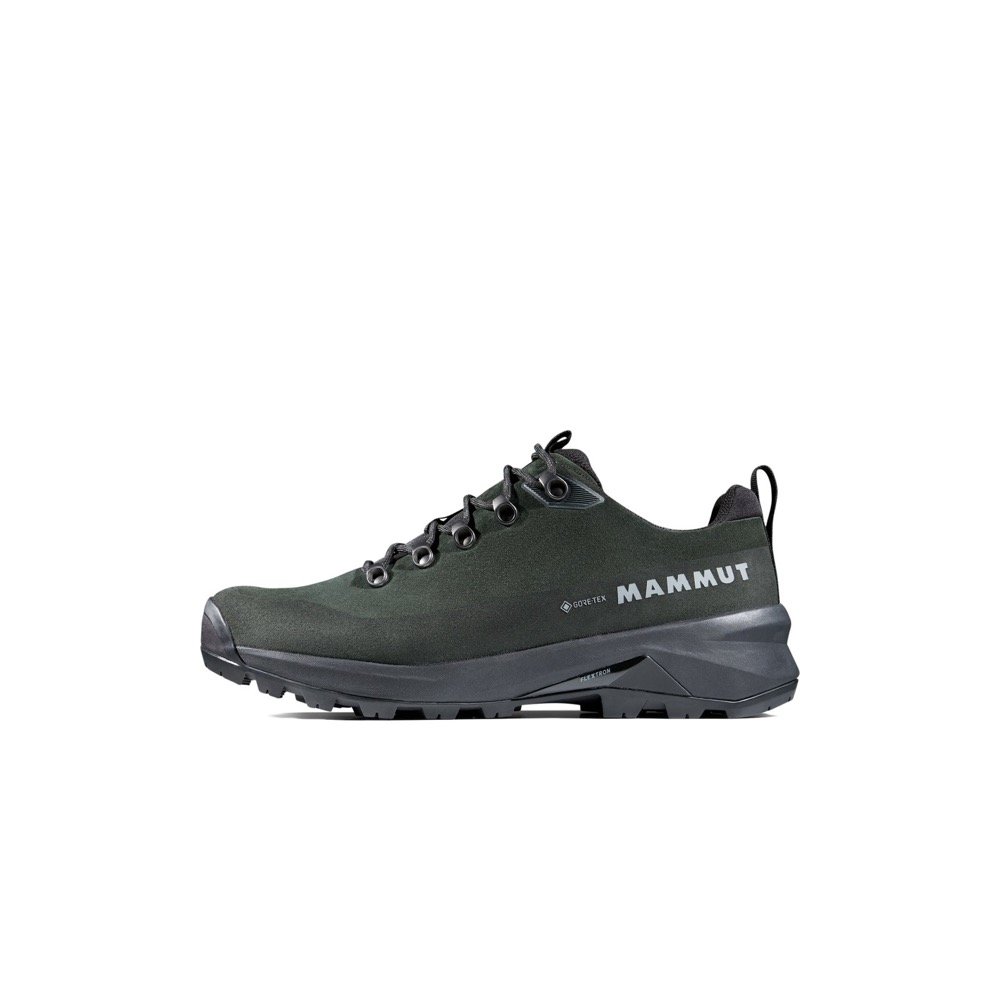 Buy the Mammut Ducan III Low LTH GTX (Gabbro / black) at Mammut
Moor / black
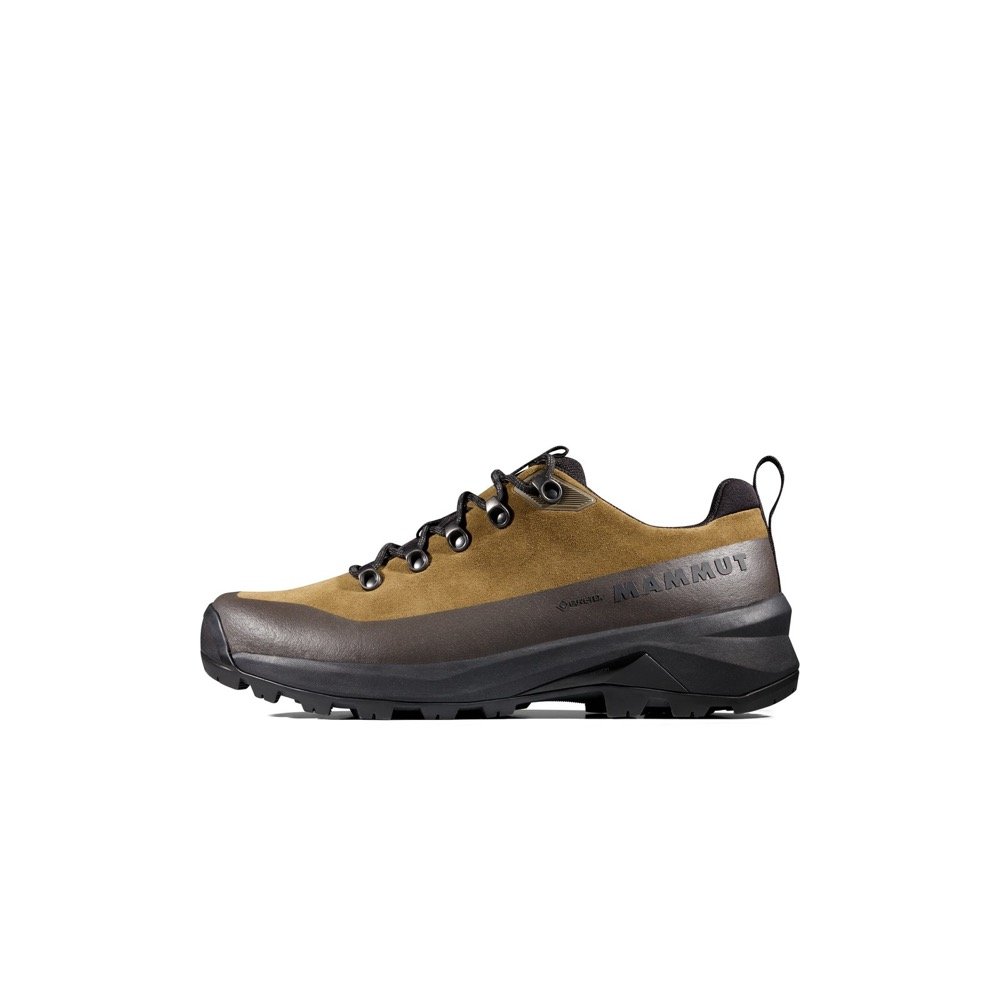 Buy the Mammut Ducan III Low LTH GTX (Moor / black) at Mammut
Specs at a glance
| Spec | Detail |
|---|---|
| Membrane | GORE-TEX Prism lining |
| Upper | Mastrotto suede leather, rubber rand |
| Outsole | Vibram XS Trek, Traction Lug |
| Midsole | Dual-density High Rebound EVA, FLEXTRON plate |
| Drop / stack | 10mm drop, 35/23mm stack |
| Weight | ~490g per shoe (US 9.5) |
| Price | £175 |
| Best for | Durable all-round hiking on wet UK trails |
Pros and cons
- Leather upper far more durable than mesh over British winters
- GORE-TEX Prism keeps water out reliably through sustained wet
- Vibram XS Trek grips wet chalk, roots and turf well
- Stable, supportive ride with the FLEXTRON plate under a pack
- Suede holds its weight better than mesh when soaked
- Low cut leaves you exposed above the ankle in deep bog
- Leather is less breathable and warmer in high summer
- £175 sits at the premium end of the bracket
- Needs a short break-in and suede care to stay proofed
Verdict
The Mammut Ducan III Low LTH GTX earns a 4.6/5. It is the Ducan to buy if durability is your first priority and you hike through the wet, gritty, abrasive ground that eats mesh shoes. The leather upper, GORE-TEX Prism lining and Vibram XS Trek outsole make a hard-wearing all-rounder that is happiest on coast paths, downland and forest track, and stable enough under a daypack for long days.
It is not the lightest or most breathable option, and the low cut means bog and streams still get you above the collar. But for a wet-climate hiker who wants one low-cut shoe to last, this is a strong, sensible buy. If you want a lighter, cheaper Mammut alternative, the Sertig III Low GTX is worth a look, and the Salomon Genesis 2 GTX is the closest rival for all-round hiking.
Buy the Mammut Ducan III Low LTH GTX at Mammut


