


Quick verdict
The Mammut Aenergy Hike Low GTX is a lightweight waterproof day-hike shoe built for fast, dry-footed miles on maintained trails. It uses a GORE-TEX membrane over a textile and TPU upper, a grippy Mammut Swiss Design outsole with roughly 4mm lugs, an EVA midsole with 35/27mm stack and an 8mm drop, and an Ortholite insole, at 420g per shoe (UK 8.5) and £125. It suits day hikers who want trainer comfort with genuine waterproofing on coast paths, downland and gravel, and it runs slightly short, so size up half a size.
Mammut Aenergy Hike Low GTX: 4.6/5
A 420g GORE-TEX day-hike shoe with an 8mm drop, generous EVA cushioning and a grippy Swiss outsole. Fast and dry-footed on maintained UK trails.
The full review is below.
The Mammut Aenergy Hike Low GTX sits in the growing space between a trail runner and a proper walking shoe. It is light enough to move quickly in, cushioned enough to stay comfortable over a long day, and it has a GORE-TEX membrane so your feet stay dry when the ground does not cooperate. For most of my summer and shoulder-season walking in Dorset, that combination is exactly what I want.
At 420g per shoe and £125, it is pitched at day hikers who have given up on stiff leather boots for anything short of proper mountain terrain. It is a fast-and-light waterproof shoe, and judged on that brief it is a strong one. If you want the wider picture, it sits alongside the other picks in my best waterproof trainers roundup.


Who the Aenergy Hike is for
This is a shoe for people who cover ground. If your typical day is 10 to 25km on the Jurassic Coast, the South Downs Way, a New Forest loop or a gravel-and-grass mix, the Aenergy Hike Low GTX is in its element. The low weight and 8mm drop let you keep a quick pace, and the EVA midsole soaks up the miles without feeling like a plank.
It is not a load-hauling boot and does not pretend to be. There is no ankle support, the sole flexes freely, and the low cut means deep bog and river crossings will get in over the collar. If you carry a heavy multi-day pack or scramble on wet rock regularly, look at a mid boot instead. For fast day hikes and long walks with a light pack, this is the right tool.
If lightweight and fast is your priority, it goes up against the Merrell Speed Strike 2 GORE-TEX and the Salomon Aero Blaze 4 GRVL GTX, both of which I rate in the same class.
Waterproofing
The GTX in the name is a GORE-TEX membrane bonded inside a textile and synthetic upper with non-sew TPU reinforcement. In practice that means wet grass at dawn, chalk puddles, drizzle and the general damp of the British walking year stay on the outside. Through a morning of soaked downland grass on the Purbecks, my socks came out dry.
The membrane also cuts wind chill across the top of the foot, which matters more than people expect on exposed coast paths in a stiff breeze. Breathability is reasonable for a waterproof shoe, though on a hot day any GORE-TEX shoe runs warmer than a mesh trainer. That is the trade every waterproof shoe makes.
The honest limit is the low cut. A membrane only keeps water out up to the height of the collar. Step into a bog deeper than the ankle or cross a stream over the top, and water pours straight in, then the same membrane that kept you dry now holds it there. For sustained wet-ground work you want a mid. For everything short of that, the waterproofing does its job well.
Grip and outsole
Underfoot is Mammut's Swiss Design outsole with lugs around 4mm deep. That is a sensible middle ground: enough bite for grass, gravel, dry chalk and hardpack, without the drag of a deep mud tread on firm trail. On the mixed terrain that makes up most UK day walking, it holds well and rolls through the stride smoothly.
Push it onto steep wet rock or greasy chalk and it reaches its limit, with the odd slip on the most polished surfaces. Thick clay mud is not its strength either, as the moderate lugs clog rather than shed. Match the shoe to firm and mixed ground and grip is a non-issue. Point it at a Welsh bog in November and you will want something more aggressive.
Cushioning and fit
The Aenergy Hike is generously cushioned for such a light shoe. The EVA midsole gives a 35/27mm stack with an 8mm drop, topped by an Ortholite insole, so there is real softness underfoot without the vague, tippy feel some maximal shoes have. Over a long day the cushioning is where you feel the benefit, with noticeably less fatigue late in a walk than a firmer, lower-stack shoe.
The fit is secure through the midfoot with a moderate toe box. It is not a wide shoe, so broad feet should try before committing. It also runs slightly short: I would size up half a size from your usual, both for length on descents and to leave room for a thicker sock in cooler months. The arch support is pronounced, which most people will like, though flat-footed walkers may notice pressure on long downhills.
Pair it with a good merino sock and the comfort is excellent from the first outing, with little break-in needed. If value matters more than outright weight, the Mammut Sertig III Low GTX is the cheaper sibling worth a look.
Colours
Four colourways are offered. The Black is the one I would pick: it is the cleanest of the set, hides trail dirt best and passes as an everyday trainer off the hill. The rest run from muted to bright, so there is a version to suit whether you want the shoe to disappear or stand out.
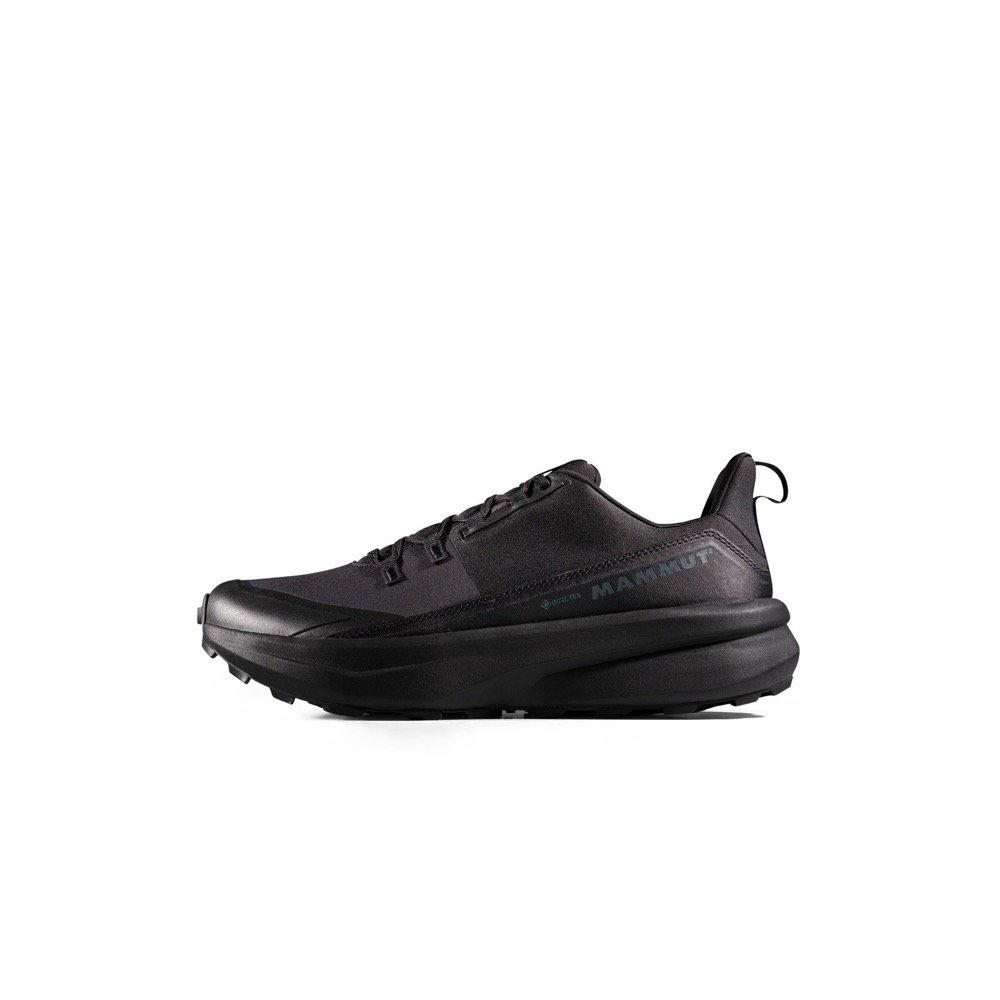 Buy the Mammut Aenergy Hike Low GTX (Black) at Mammut
Strata: a soft grey-toned finish that reads more casual and pairs easily with everyday kit.
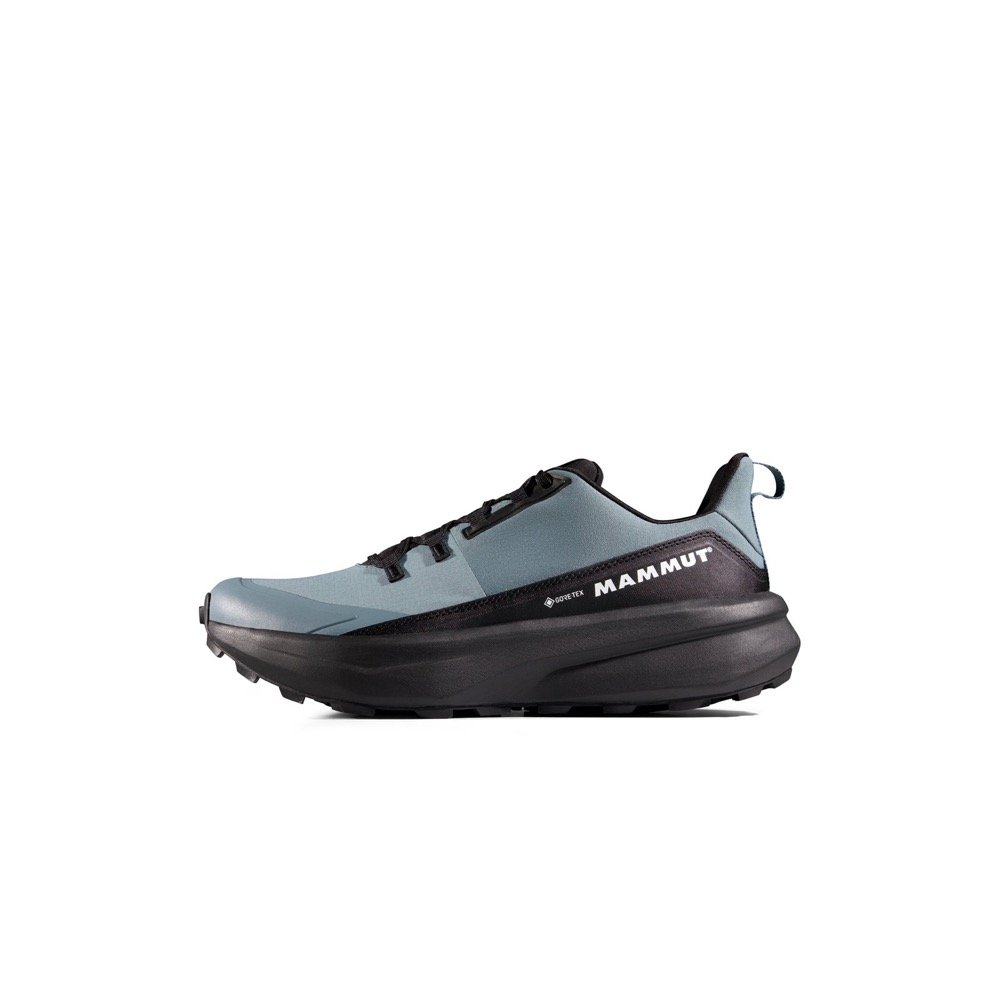 Buy the Mammut Aenergy Hike Low GTX (Strata) at Mammut
Black / Red: the sportiest option, with a red accent that gives it a proper trail-shoe look.
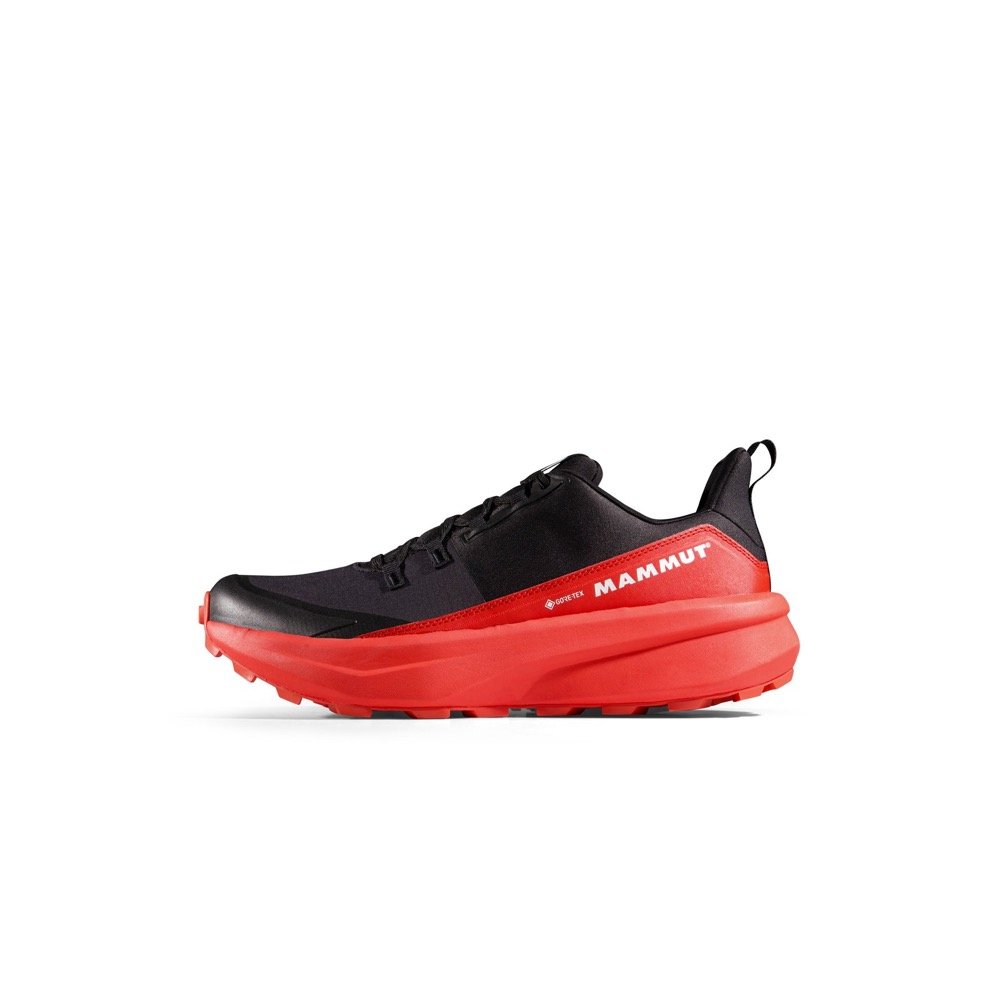 Buy the Mammut Aenergy Hike Low GTX (Black / Red) at Mammut
Marine: a deep blue with a cooler glacier accent, the most understated of the coloured options.
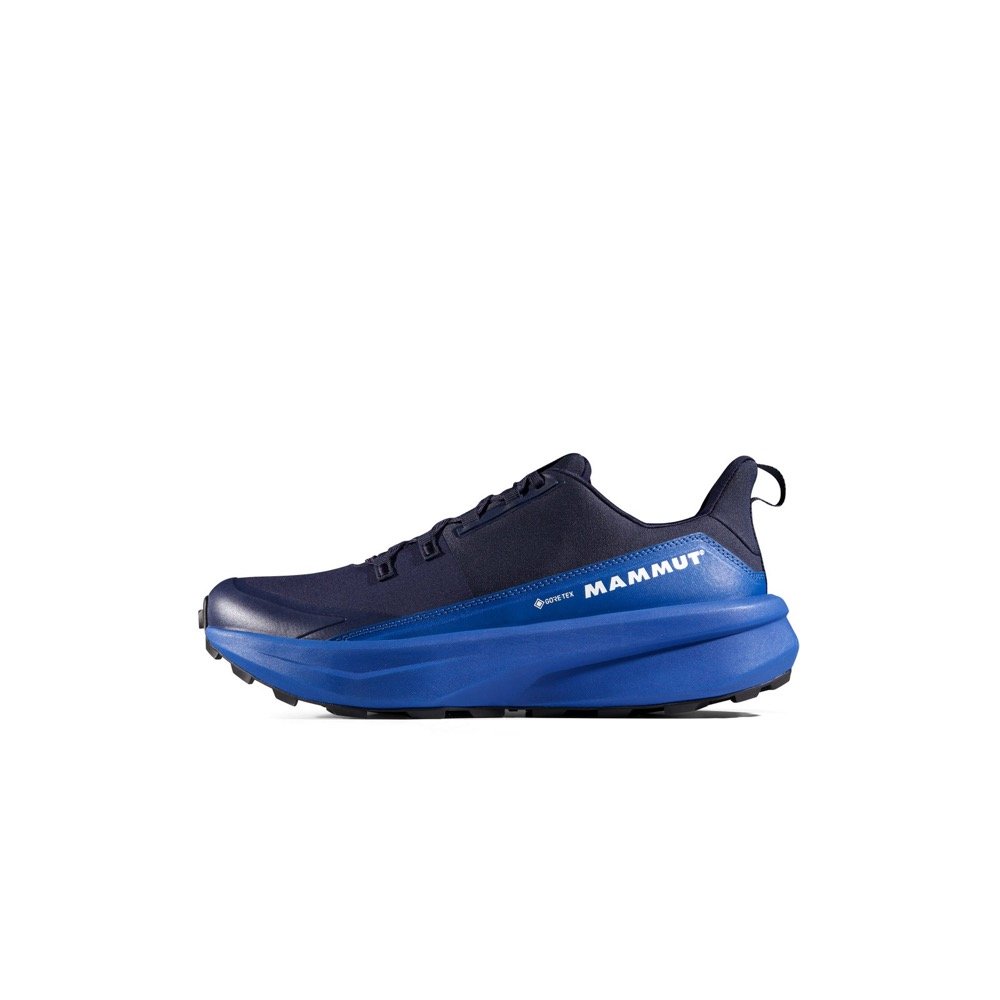 Buy the Mammut Aenergy Hike Low GTX (Marine) at Mammut
Specs at a glance
| Spec | Detail |
|---|---|
| Membrane | GORE-TEX (waterproof, breathable) |
| Outsole | Mammut Swiss Design, roughly 4mm lugs |
| Midsole | EVA with Ortholite insole |
| Stack / drop | 35/27mm, 8mm drop |
| Weight | 420g per shoe (UK 8.5) |
| Price | £125 |
| Best for | Fast, dry-footed day hikes on firm to mixed terrain |
Pros and cons
- Light at 420g yet well cushioned for long days
- Reliable GORE-TEX waterproofing for typical UK trail conditions
- Grippy Swiss outsole that suits firm and mixed ground
- Comfortable from the first outing with little break-in
- Four colourways, including a clean black that doubles as an everyday shoe
- Low cut lets water in over deep bog or stream crossings
- Moderate lugs clog in thick clay mud
- Runs slightly short and not wide, so size up and try broad feet first
- Pronounced arch may not suit flat-footed walkers on long descents
Verdict
The Mammut Aenergy Hike Low GTX earns a 4.6/5. It does the fast-and-light waterproof day shoe brief very well: it is light, comfortable straight out of the box, waterproof enough for the wet British half of the year, and grippy on the firm and mixed terrain most of us actually walk. The limits are the ones every low-cut shoe shares, plus a fit that runs a touch short and narrow.
Buy it if you want trainer-level speed and comfort with proper GORE-TEX for day hikes and long walks on maintained trails. Skip it if you need bog-proof coverage, a wide fit, or big-pack support. For the walking it is built for, it is one of the better options at the price. Size up half a size and it will serve you well. See how it stacks up against the rest of the field in the waterproof trainers hub.
Buy the Mammut Aenergy Hike Low GTX at Mammut


