


Quick verdict
The Mammut Ducan III Low GTX is a stability-first GORE-TEX hiking shoe, best for hikers who carry a pack and want a steady platform on uneven ground. A GORE-TEX membrane over an engineered-mesh upper keeps water out, a Vibram XS Trek outsole with Traction Lug grips wet rock and chalk, and a FLEXTRON midfoot plate cuts twist and flex on rough trails. It runs a 10mm drop on a 35/23mm stack at around 460g per shoe (US 9.5), which suits long, loaded days on British coast paths, downland and bog more than fast, minimal terrain. Priced at £160.
Mammut Ducan III Low GTX: 4.7/5
A GORE-TEX hiking shoe with a FLEXTRON stability plate and Vibram XS Trek grip, tuned for support on long, loaded UK days.
The full review is below.
The Mammut Ducan III Low GTX is the shoe I reach for when the day is long, the pack is loaded and the ground underfoot is doing its best to roll an ankle. It is a low-cut GORE-TEX hiking shoe rather than a trail runner, and Mammut has built the whole thing around staying steady: a FLEXTRON midfoot plate to resist twist, a Vibram XS Trek outsole for bite, and a supportive 35/23mm platform under a waterproof engineered-mesh upper.
That focus is the point. If you want something feather-light and springy for fast miles, this is not it. If you want a shoe that holds its line when you are tired, off-camber and carrying weight, the Ducan III earns its place. It sits in our best waterproof trainers roundup as one of the support-and-stability picks, and at £160 it is priced as a serious piece of kit.


Who the Ducan III is for
This is a shoe for hikers who value a stable platform over a low weight. The FLEXTRON plate through the midfoot means it does not fold or twist much when you plant a foot across a root, a rut or a wet stone step, and that pays off on the kind of uneven, churned-up ground the British hills throw at you between October and April.
I would put it in the hands of anyone who carries a real pack. Day loads on the Purbeck coast, a heavier overnight bag on the South Downs, or a full day on Brecon Beacons ridges in changeable weather. The extra structure that makes it feel planted under load is the same structure that makes it feel a touch firm and deliberate when you are moving light and fast. That is the trade you are accepting.
If your priority is nimble, minimal-feeling footwear, look at a Salomon-style trail shoe instead. For a lighter, more agile stablemate with the same stability brief, the Salomon X Ultra 360 GORE-TEX is the natural rival. For a more affordable Mammut, the Sertig III Low GTX gives up some of the plated support to save money.
Waterproofing
The Ducan III Low GTX uses a GORE-TEX membrane bonded inside a double-layer engineered-mesh upper, with a PFC-free DWR on the outer face to help water bead and shed before it soaks the fabric. In practice that means dry feet through wet grass, chalk runoff, shallow bog and standing puddles, which covers most of what a British walker meets on a normal wet day.
The membrane also blocks wind, so the shoe stays warmer than a non-membrane mesh trainer once the weather turns. On cold, blowy downland that matters more than people expect.
The honest limit is the cut. This is a low shoe, so the waterproofing protects you only as high as the collar. Step into a bog or a stream deeper than the ankle and water comes in over the top, and once a GORE-TEX shoe floods it is slow to drain and slow to dry. If you routinely cross ground that deep, a mid-height boot is the better tool. For everything short of that, the membrane does its job.
Grip and outsole
Underfoot is a Vibram XS Trek outsole with Traction Lug lugs, and it is the strongest part of the shoe. XS Trek is a compound built for a balance of grip and durability on mixed hiking ground, and it holds well on the surfaces that catch people out in the UK: wet limestone, greasy chalk, slick tree roots and packed mud.
The lug pattern is deep enough to clear soft ground and bite on descents without feeling like an aggressive fell-running sole on hardpack or road. That makes the Ducan III a sensible choice if your walk mixes trail with the odd stretch of tarmac or a car-park approach.
On truly slick wet rock nothing is infallible, but the XS Trek compound is among the better performers I have used, and paired with the shoe's stable platform it inspires confidence on technical descents where a softer, twistier shoe would leave you picking your way down.
Cushioning and fit
The midsole is a dual-density high-rebound EVA on a 35/23mm stack, which gives a 10mm drop. That is a fairly traditional hiking-shoe geometry: enough heel to take the sting out of long days, a moderate drop that most walkers get on with, and a firm rather than plush feel because the FLEXTRON plate is doing structural work as well as the foam.
An Ortholite insole sits on top for a bit of extra cushioning and long-term loft, and the elastic GORE-TEX tongue construction wraps the foot cleanly and keeps grit out.
On fit, the Ducan III runs true to size for length but the toe box is on the snug side, especially over the little toes. If you have a wider foot or you like room to splay on long descents, size up or try before you commit. At around 460g per shoe (US 9.5) it is not a light shoe, and you feel that on fast ground, but the weight buys the stability and structure that are the whole reason to choose it.
Colours
Two colourways in the men's Ducan III Low GTX. The Black Platinum is the lead, and the plain Black is the low-key option if you want a shoe that reads as everyday footwear off the trail.
Black Platinum
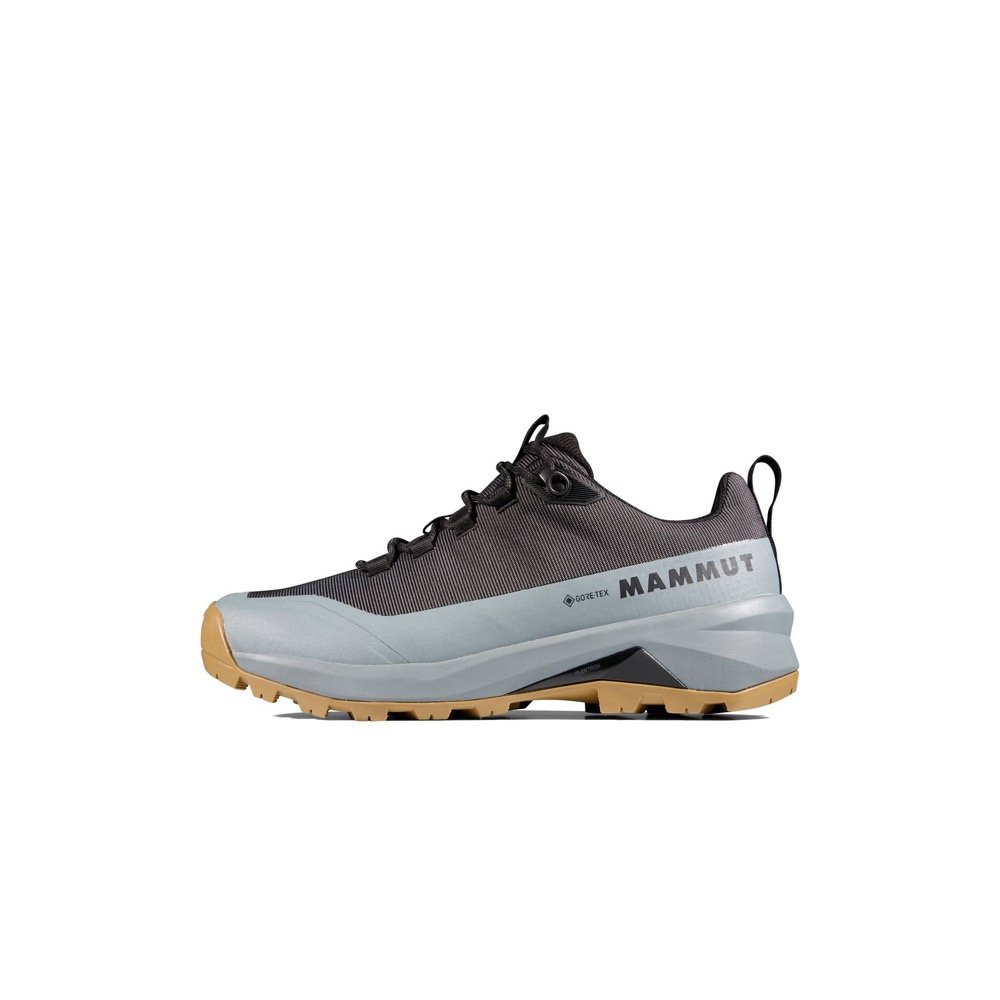 Buy the Mammut Ducan III Low GTX (Black Platinum) at Mammut
Black
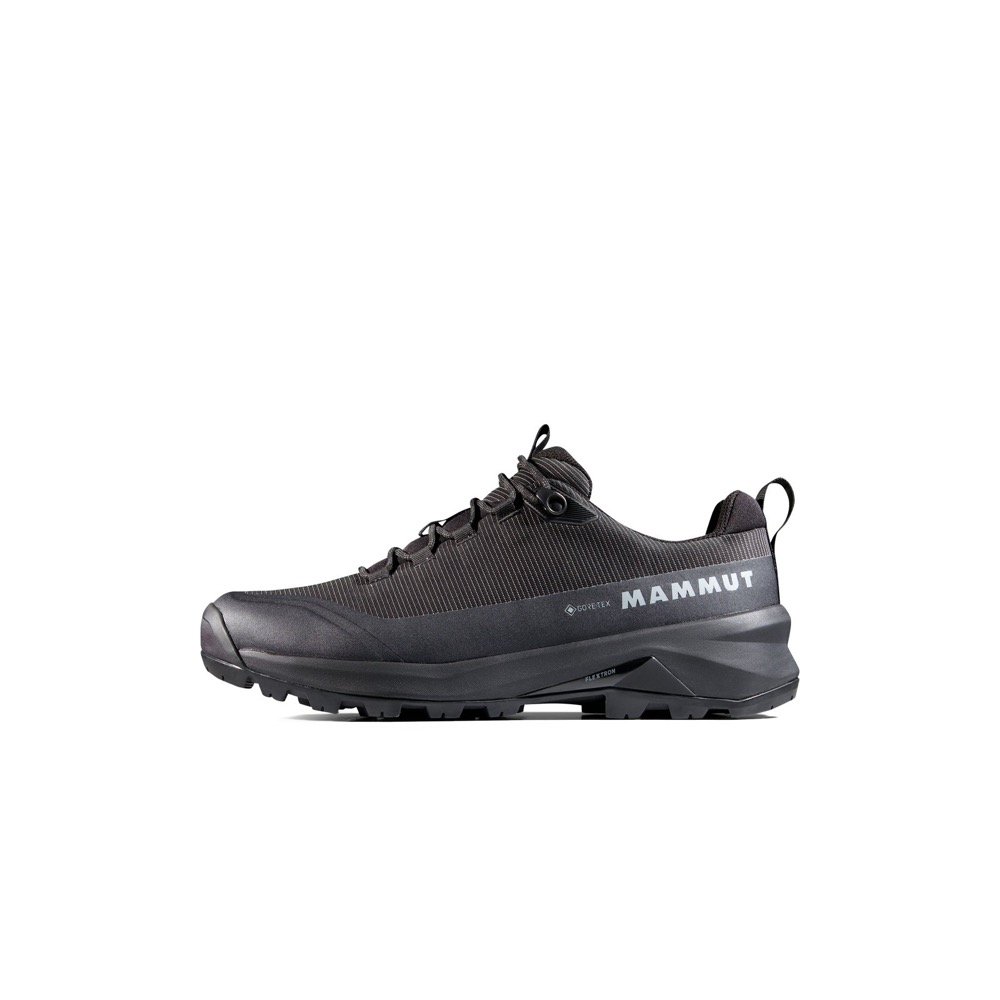 Buy the Mammut Ducan III Low GTX (Black) at Mammut
Specs at a glance
| Spec | Detail |
|---|---|
| Membrane | GORE-TEX, PFC-free DWR on the upper |
| Outsole | Vibram XS Trek with Traction Lug |
| Midsole / drop | Dual-density EVA, 35/23mm stack, 10mm drop |
| Support | FLEXTRON midfoot stability plate |
| Weight | Around 460g per shoe (US 9.5) |
| Price | £160 |
| Best for | Support and stability on loaded, uneven days |
Pros and cons
- FLEXTRON plate makes it genuinely stable underfoot with a pack on
- Vibram XS Trek grips wet rock, chalk and mud well
- GORE-TEX keeps feet dry through wet grass, bog and puddles
- Deep-enough lugs that still work on mixed trail and tarmac
- Warmer and more wind-resistant than a non-membrane mesh shoe
- Heavier and firmer than a light trail shoe, so it feels deliberate on fast ground
- Snug toe box, wider feet should size up or try first
- Low cut floods over the collar in deep bog or streams
- Premium price at £160
Verdict
The Mammut Ducan III Low GTX earns 4.7/5 as a support-and-stability shoe. It is not the one to buy if you want light and quick, and the snug toe box means wider feet need to try before buying. But if you carry a pack, walk long, uneven British trails and want a waterproof shoe that stays planted when you are tired, the FLEXTRON plate and Vibram XS Trek outsole deliver exactly that. It is a considered, capable shoe that does one job very well.
Buy it if steadiness under load matters more to you than saving grams. For the alternatives, weigh it against the rest of the waterproof trainers we rate.
Buy the Mammut Ducan III Low GTX at Mammut


