


Quick verdict
The Leki Voyager is the cheapest way into Leki, and the right first pair for occasional and day walkers who want genuine Leki build without a premium price. It is a hardened HTS 6.0 aluminium telescopic pair with a soft rubber grip, the TUV-certified Super Lock (rated to 140kg so it does not slip) and a wide 110 to 145cm range, at around £51. The one thing to know is that it uses Leki's older internal twist-to-lock Super Lock rather than the external SpeedLock lever the rest of the range is known for, so adjustment is slower and harder in thick gloves. If you walk most weekends, cover real distance or spend a lot of time in gloves, step up to the Khumbu Lite for the SpeedLock lever and a better grip; but as a dependable first pair that will not let you down, the Voyager is the cheapest Leki worth owning.
Leki Voyager Trekking Poles (Pair): 4.4/5
The budget entry into Leki. Hardened aluminium, the Super Lock adjustment system and Leki's spare-parts backing, at the lowest price the brand does. The right first pair for occasional and day walkers.
- Budget entry into Leki: Leki Voyager (~£51)
- Value step up (SpeedLock): Leki Khumbu Lite (~£77)
- Mid aluminium classic: Leki Makalu Lite (~£107)
The full review is below.
Leki is the specialist's pole brand, the one you see on the wrists of people who walk a lot and expect their kit to last. The Voyager is the cheapest way into that brand. It is a hardened aluminium telescopic pair with a soft rubber grip, Leki's Super Lock adjustment system and the same repair and spare-parts backing that runs across the whole range, at a price that sits well under most of the poles Leki sells.
That is the pitch, and it is a fair one. The Voyager is not the pole for someone chasing low weight or the flick-lever convenience Leki is best known for. It is the pole for someone who wants a real Leki without a real Leki price: a first proper pair, or a set for occasional walking that will not fall apart. Here is the full picture.
Who the Voyager is for
The Voyager is aimed at occasional and day walkers, and at anyone buying their first proper pair of poles. If you walk a few times a month on coast paths, bridleways and the kind of hill days that do not involve serious scrambling, this pole covers it.
It is also the sensible buy for someone who is not yet sure how much they will use poles. Rather than spend twenty pounds on a supermarket set that slips and rattles, or a hundred and twenty on a pole you might barely touch, the Voyager gives you Leki build quality at a price that does not sting if poles turn out not to be your thing. The parts are replaceable and the brand backing is real, so if you do get into it, the pole earns its keep for years.
Who should look higher up the range? Regular hikers who cover real mileage, anyone who adjusts pole length constantly across changing terrain, and anyone who walks a lot in gloves. Those are the people who benefit from Leki's external SpeedLock lever and the better grips, and I would point them at the Khumbu Lite or the Makalu Lite instead.
Buy Leki Voyager on AmazonSpecs at a glance


- Price
- ~£51 (RRP £55)
- Weight
- ~540g per pair (~270g per pole)
- Shaft material
- Hardened aluminium HTS 6.0
- Sections
- 3-section telescopic, 18 / 16 / 14mm
- Locking system
- Super Lock (SLS) internal, TÜV-certified, 140kg holding force
- Length range
- 110–145cm, continuously adjustable
- Packed length
- ~65cm
- Grip
- PAS Soft, soft rubber covering
- Strap
- Adjustable Soft Strap
- Tip
- Flex Tip carbide
- Basket
- Removable trekking basket included
Two numbers matter most here. The wide 110 to 145cm length range covers virtually every adult, including taller walkers who often find budget poles top out too short. And the 140kg holding force on the lock means the Super Lock is not the weak point it would be on a cheaper twist pole. The weight, at around 540g the pair, is the trade-off: this is a solid aluminium pole, not a featherweight.
Super Lock and the aluminium build
This is where the Voyager differs from the rest of the Leki range, and it is worth being clear about. Most Leki poles use the external SpeedLock lever, a clamp that sits on the outside of the shaft and flips open and shut. The Voyager does not. It uses Leki's older internal Super Lock system, which adjusts by twisting the sections to expand a plug inside the shaft.
That is a twist-and-set mechanism rather than a flick of a lever. In practice it means adjustment is a little slower, and it is harder to do with thick gloves on than the SpeedLock lever would be. What it is not is a cheap, slip-prone twist lock of the kind budget poles use. The Super Lock is TÜV-certified and rated to a 140kg holding force, with reverse-rotation prevention built in so it does not creep loose under load. Set it firmly and it stays put on a long descent, which is the whole point.
The shaft is hardened aluminium, Leki's HTS 6.0 grade, in three sections. Aluminium is the right material for this kind of pole. It is tougher than carbon and it bends rather than snaps if you catch it between rocks or take a sideways load on a river crossing. A slightly bent aluminium pole is usually still a usable pole. On the mixed, rocky ground of the Purbeck Hills or a Brecon Beacons ridge, that forgiveness matters more than saving a hundred grams.
The Flex Tip carbide tip grips well and is replaceable, and the trekking basket clips off by hand so you can swap in a wider basket for soft ground. That replaceability is a large part of what you are paying Leki for: a worn tip or a split basket is a two-minute fix, not a reason to bin the pole.
The grip and strap: comfortable, not premium
The Voyager uses Leki's PAS Soft grip: a firm core with a soft rubber covering. It is comfortable in the hand and warm to hold in cold weather, which rubber does better than bare foam. It is a step below the sculpted Aergon and CorTec grips further up the Leki line, and you feel that mainly on long, warm days, because rubber does not wick sweat the way cork does. For a few hours on a cool coast-path walk it is fine. On a hot all-day route your hands will get a little clammy.
There is no extended lower grip section on the Voyager, so on steep climbs where you naturally choke down on the pole, you are holding bare shaft below the grip. Poles higher in the range add a foam extension there. It is a small thing, but a real one if you do a lot of sustained ascent.
The strap is a simple adjustable webbing design. Adequate rather than special. As with any pole, thread your hand up through the strap from below and let the strap take the load on the forward push, rather than gripping the strap from above. That technique does more for hand fatigue over a long day than any grip material.
Where the Voyager sits in the Leki range
The Voyager is the floor of the Leki range, and understanding what the next tier up buys you is the key decision here.
Step up to the Khumbu Lite (~£77). This is the jump most regular hikers should make. The Khumbu Lite moves you onto the external SpeedLock Plus lever, so adjustment is a fast flick you can do in gloves, and it swaps the soft rubber grip for a 2K CorTec cork-and-rubber grip that handles sweat and damp far better on long days. It is also a touch lighter per pole. If you walk most weekends, the extra outlay pays for itself in convenience and comfort. Read the full Khumbu Lite review for the detail.
Step up again to the Makalu Lite (~£107). Same SpeedLock lever, but the grip becomes the sculpted Aergon Air foam with a rubberised top and a proper lower extension for climbing. This is the aluminium sweet spot for committed hill walkers.
The short version: the Voyager gives you Leki's aluminium build, a secure lock that holds under load and the brand's spares backing. What it does not give you is the SpeedLock lever or a premium grip. If those two things matter to how and how often you walk, spend the extra. If they do not, the Voyager is the right pole and the rest is money you do not need to spend.
If you want to compare across brands, Black Diamond's FlickLock poles are the closest rival to Leki's system. The Trail Explorer 3 is the one pole I have logged serious miles on, and the general trekking poles guide pulls both brands together across budgets.
Others worth considering
The Voyager is the value floor. If you will walk more than occasionally, two poles are worth the small step up.
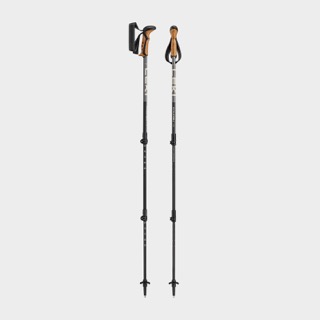
Leki Khumbu Lite
~£77The step up most make
For around £26 more you get the external SpeedLock lever, a fast flick you can do in gloves, and a cork-composite grip that handles sweat far better on long days. The jump most regular walkers should make.
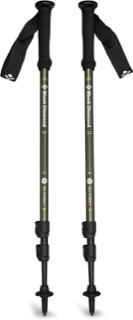
Black Diamond Trail Explorer 3
~£65Tested rival
At a similar price, the aluminium Black Diamond Trail Explorer 3 is the FlickLock workhorse I own and use. You get lever adjustment instead of the Voyager's twist lock for a few pounds more.
Pros and cons
- Cheapest way into Leki build quality and spare-parts backing
- Hardened HTS 6.0 aluminium shaft that bends rather than snaps
- Super Lock rated to 140kg holding force, TÜV-certified, does not slip
- Wide 110 to 145cm range suits tall walkers and running long on descents
- Warm, comfortable soft rubber grip; replaceable tips and baskets
- Internal Super Lock is slower to adjust than Leki's SpeedLock lever and harder in thick gloves
- Rubber grip does not wick sweat as well as cork on hot days
- No lower grip extension for choking down on steep climbs
- Heavier at ~540g the pair than carbon or premium aluminium poles
- Basic webbing strap
Verdict: is the Voyager worth it?
Yes, for the right walker. The Leki Voyager does exactly what an entry pole should: it gives you the brand's tough aluminium build, a lock that actually holds and the reassurance of replaceable parts, all at the lowest price Leki does. For occasional walkers, day hikers and anyone buying their first proper pair, it is a sound, sensible buy that will outlast far more than its price suggests.
The compromises all point in one direction. The internal Super Lock is slower than the SpeedLock lever the rest of the range uses, the rubber grip is a tier below Leki's cork and Aergon grips, and at around 540g the pair it is not a light pole. None of that is a fault. It is simply where the money has been saved, and for the walker this pole is built for, none of it gets in the way.
If you walk most weekends, cover real distance or spend a lot of time in gloves, spend the extra on the Khumbu Lite and get the SpeedLock lever and a better grip. If you walk occasionally and want one good pair that will not let you down, the Voyager is the cheapest Leki worth owning, and it is worth owning.
Buy Leki Voyager on Amazon Or buy at Blacks


