


Quick verdict
Birkenstock Arizona Birko-Flor: 4.5/5
The classic Arizona look with the same cork-latex footbed as the leather versions, at a lower price and with no leather break-in. The days-out and post-hike recovery pick.
- Waterproof, hoseable, ultralight: Birkenstock Arizona EVA (~£45)
- An actual walking sandal: KEEN Newport H2 (~£105)
The full review is below.
Let me get one thing straight at the top of this Birkenstock Arizona review: this is not a hiking sandal, and nothing in this article will pretend otherwise. No toe protection, no grippy outsole, no heel strap. If you're after a sandal for the coast path, you want the KEEN Newport H2 or the best walking sandals roundup.
So why is it on a hiking site at all? Because the Arizona is superb at a job every hiker actually has: the hours after the walk, and the days between them. Pulling your boots off after 20km on the Purbeck ridges and strapping into a contoured cork footbed while your feet spread out and breathe. The drive home. The campsite. The easy day out where the furthest you'll walk is a seafront and a pub garden. For all of that, the Arizona has been the default answer for decades, and the Amazon numbers back it up: 4.4 stars across 2,700+ reviews for the Birko-Flor version, 4.6 across 9,600+ for the EVA.
This review covers both versions worth your money: the classic Birko-Flor at around £75, and the all-foam EVA at around £45. They look almost identical from a few paces away and do quite different jobs up close.
What the Arizona is (and what it isn't)
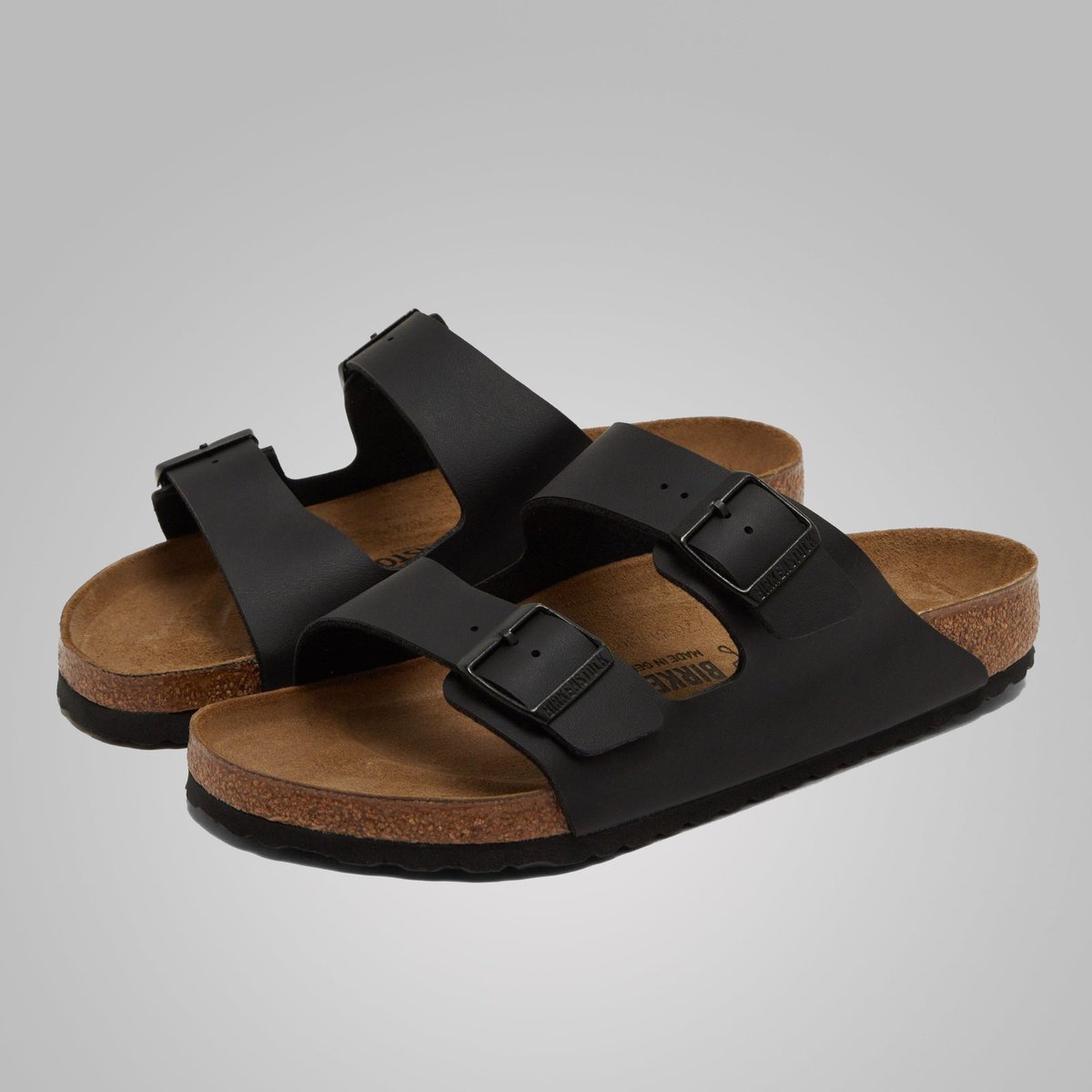
The Arizona is Birkenstock's two-strap sandal, in production since 1973 and barely changed since. Two wide straps, each with its own metal pin buckle, over an anatomically shaped cork-latex footbed with a deep heel cup, pronounced arch support and a raised toe bar. The sole is shock-absorbing EVA. That footbed is the entire point of the sandal: it holds your foot in its natural shape rather than letting it flatten out, which is exactly what tired post-hike feet want.
What it isn't: secure. There's no heel strap, so your foot can lift out of it on steep ground. The sole is flat with minimal tread, so wet rock and muddy slopes are off the menu. The open toe offers zero protection from roots and rock. None of that is a design flaw. It's a sandal built for firm, level ground, and on firm, level ground it's excellent.
Who is this for?
The Arizona suits you if:
- You want something to change into after a day in boots, so your feet can breathe, spread and recover
- You do easy days out: seafront walks, National Trust gardens, town, the pub, the beach
- You camp, and you want a slip-on for the site, the shower block and the middle-of-the-night exit from the tent (the EVA especially)
- You've been told you need arch support in your casual footwear and want it without wearing trainers all summer
- You want one sandal that works with normal clothes, not just technical kit
It's the wrong buy if:
- You want a sandal to actually walk trails in. No heel strap, no toe protection, no real grip. Buy the KEEN Newport H2 instead
- You hate firm footbeds. Cork-latex is supportive, not squashy, and it stays that way
- You need half sizes and a precision fit. Birkenstock does whole EU sizes and two widths, and that's it
Specs
- Versions covered
- Birko-Flor (~£75) and EVA (~£45)
- Footbed (Birko-Flor)
- Anatomically shaped cork-latex, suede lined
- Footbed (EVA)
- Moulded EVA echo of the cork shape, one-piece construction
- Upper (Birko-Flor)
- Birko-Flor synthetic with soft fleece backing against the skin
- Upper (EVA)
- One-piece EVA, fully waterproof
- Straps
- Two, individually adjustable, metal pin buckles
- Sole
- Shock-absorbing EVA
- Weight (EVA)
- ~110g per sandal, size dependent
- Sizing
- Whole EU sizes only
- Widths
- Regular and narrow
- Waterproof
- EVA version fully; Birko-Flor version wipes clean but the cork footbed shouldn't be soaked
- Amazon ratings
- Birko-Flor 4.4 (2,762+ reviews); EVA 4.6 (9,634+ reviews)
What Birko-Flor actually is
Birko-Flor confuses a lot of first-time buyers, so here's the plain version. It's Birkenstock's own synthetic strap material: a durable, tear-resistant outer with a soft fleece-like backing on the side that touches your skin. From a metre away it passes for smooth leather. Up close it's obviously synthetic, which bothers some people and not others.
The practical differences from the leather Arizona are all in its favour at this price. Birko-Flor doesn't need breaking in the way stiff oiled leather does, it wipes clean with a damp cloth, it shrugs off suncream and sand, and it costs £20–40 less. Critically, you're not getting a lesser footbed to go with the cheaper straps: the Birko-Flor Arizona sits on exactly the same cork-latex footbed as the leather versions. The part of the sandal that does the work is identical.
If you do want leather, the oiled-leather Arizona exists at a premium (around £100, available on Amazon) and ages beautifully, but for a sandal that lives in a rucksack lid and a car boot, Birko-Flor is the sensible buy.
The cork footbed and the break-in reality
The cork-latex footbed is why people own five pairs of these. A deep heel cup keeps your heel centred, the contoured arch supports both the long arch and the one across the ball of your foot, and the raised toe bar gives your toes something to grip, which subtly works the muscles in your feet as you walk. Over time the cork takes on the impression of your foot, so a worn-in pair fits like nothing else.
Now the part the marketing glosses over: that arch is assertive, and if you're coming from flat flip-flops or soft trainers, the first week can be uncomfortable. The consistent pattern in owner reviews is arch pressure, sometimes bordering on soreness, for the first several wears. This is normal. The fix is patience: an hour or two a day for the first week or two, building up as the cork softens slightly and your feet adapt. Don't wear a box-fresh pair for a full day out. Give the footbed a fortnight of gentle wear and the pressure turns into the support you bought them for.
The suede lining is worth a mention too. Worn barefoot it's soft and breathable, though like any suede footbed it will darken with wear and can get slick with sweat on hot days until it's bedded in.
Buy Arizona Birko-Flor on AmazonAre Birkenstocks good for walking?
This is the question people actually search, so here's a straight answer.
For pavements, promenades, firm tracks and easy days out: yes, comfortable for hours at a time, and better for your feet than most flat casual footwear because of the arch support and heel cup. Plenty of people rack up serious urban mileage in Arizonas once the footbed is broken in.
For post-hike recovery: this is where they're at their best. After a long day in hiking boots, feet are hot, compressed and often slightly swollen. An open sandal with a contoured, supportive footbed is close to ideal, and the two adjustable straps mean you can buckle them a notch looser to accommodate the swelling. This is the use case I'd buy them for.
For trails: no. Say it plainly. No heel strap means no security on descents, the flat EVA sole has nothing like the grip of a proper outsole on wet rock or mud, and your toes are exposed. A twisted ankle or a stubbed toe on the coast path is a bad trade for breathability. If you want an open shoe for actual walking routes, that's what the best walking sandals UK guide is for.
The Arizona EVA: the £45 all-foam version
The Arizona EVA takes the classic shape and moulds the entire sandal, straps, footbed and sole, from a single piece of EVA foam. The result weighs around 110g per sandal, which is so little you'll forget it's in your pack, and it's completely waterproof. Sand, mud, river water, campsite shower floors: rinse it under a tap or literally hose it off and it's clean.
The footbed is a softer foam echo of the cork original. Same shape, same heel cup and toe bar, but with give underfoot rather than the firm cork platform. Some people prefer it immediately; there's essentially no break-in. The trade-offs are real, though. The foam footbed compresses over a couple of summers of regular wear and loses its contours in a way cork doesn't, so treat it as a £45 sandal with a lifespan rather than a decade-long investment. And the smooth EVA surface can get slippy underfoot when your feet are sweaty or wet, exactly the conditions you'll often wear it in.
For the campsite, the beach, post-swim and the back of the car, it's the best £45 in this category. The 4.6-star average across more than 9,600 Amazon reviews says most owners agree.
Buy Arizona EVA on Amazon Or buy at Blacks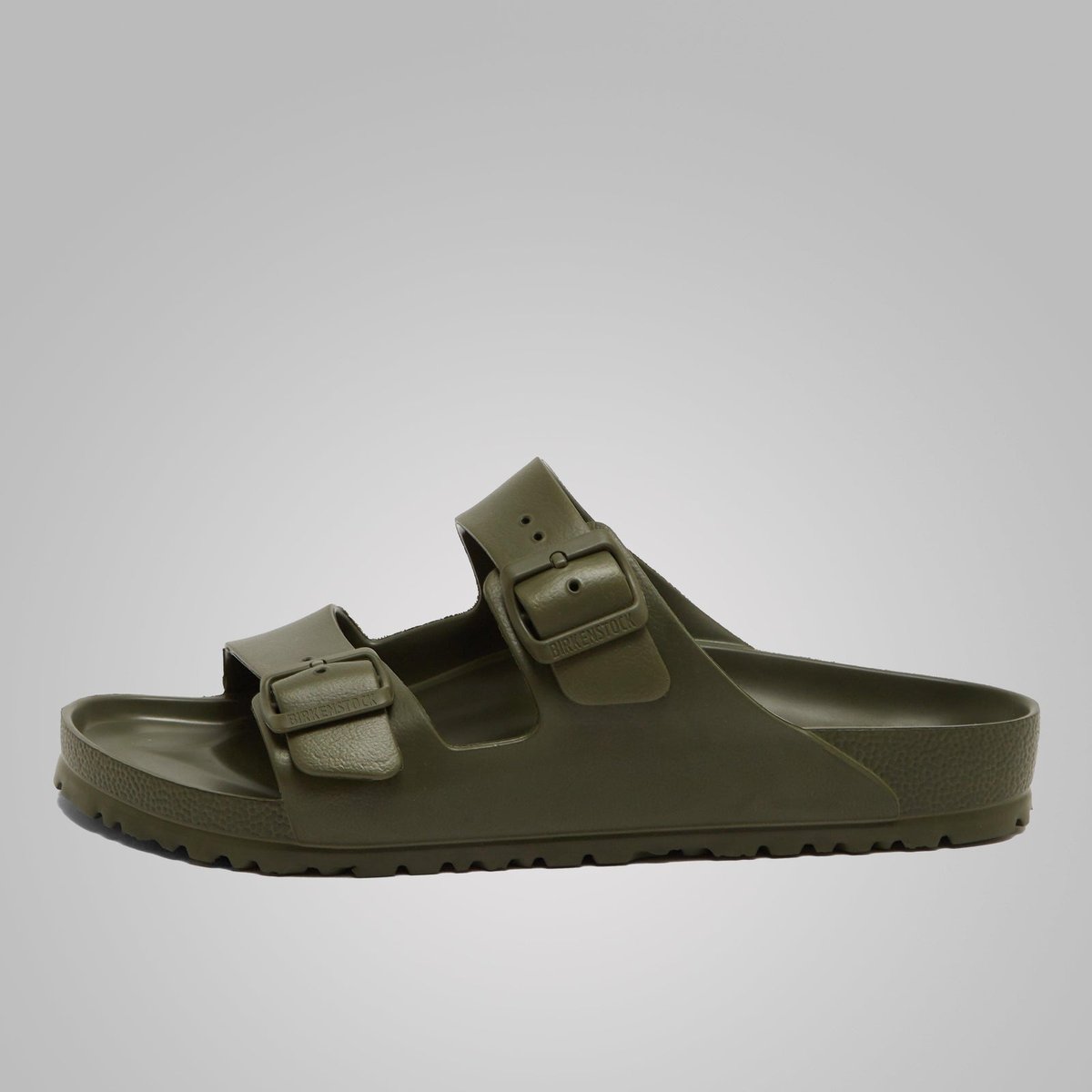
Arizona EVA or original: which should you buy?
The two versions look like siblings and behave like different products. Here's how I'd split the decision.
Buy the Birko-Flor (or leather) original if:
- You want the real cork-latex footbed, which is firmer, more supportive and moulds to your foot over time
- The sandal will be your everyday summer footwear, worn with normal clothes, where the classic look matters
- You want something that lasts: cork footbeds can be professionally resoled and refurbished, foam can't
- You're buying primarily for the foot support
Buy the EVA if:
- Water is involved: campsite, beach, swimming, boats, festival mud
- Weight matters because it's travelling in a rucksack as your camp and recovery shoe
- You want zero break-in and zero maintenance
- £45 is the budget, and you accept the footbed will flatten after a couple of summers
My take for hikers specifically: the EVA is the pack shoe and the Birko-Flor is the life shoe. If it's going to live in the boot of the car and come out after walks, the EVA's weight and washability win. If you'll wear it three months solid every summer, spend the extra £30 on the cork footbed.
Sizing and widths
Birkenstock sizing trips people up in two ways, so read this before ordering.
First, sizes. Birkenstock makes whole EU sizes only. UK retailers list UK conversions, but if you're between sizes the general advice is to go down rather than up: the footbed has a raised lip around the edge, and you want your heel seated in the heel cup with a few millimetres of lip visible ahead of your toes, not a shelf of footbed sticking out. Too big and the sandal slaps and your foot slides forward off the arch.
Second, widths. Most models come in regular and narrow, and the width is marked by a footprint symbol stamped on the footbed: a solid footprint means regular, an outlined (hollow) footprint means narrow. Regular suits most men's feet and wider women's feet; narrow suits slim feet that swim in the regular. The men's Blacks stock is regular width. Get the width wrong and no amount of buckle adjustment fixes it, because the contours of the footbed won't sit under the right parts of your foot.
The two independently adjustable straps are the saving grace: once the size and width are right, you can dial the fit across the instep and forefoot separately, and loosen off a notch when your feet swell at the end of a hot day.
When to buy this vs a proper walking sandal
Simple test: will you walk anything you'd call a route in them?
If yes, buy a walking sandal. The KEEN Newport H2 (~£105) gives you a full toe bumper, a heel strap and a proper razor-siped outsole, and it's my top pick in the category. The Teva Hurricane XLT3 (~£70) is the lighter, quicker-drying strap-sandal alternative. Both will handle firm trails, river crossings and proper mileage in ways the Arizona structurally cannot.
If no, and the honest answer for a lot of "walking sandal" purchases is no, the Arizona is the better buy. It's more comfortable than a technical sandal on pavement, it looks right away from the trail, and the footbed is better for your feet than almost anything else you'd wear casually. Plenty of hikers should own both: a Newport or Hurricane for the walk, an Arizona for everything around it. The full field is in the best walking sandals UK 2026 roundup, and the walking sandals hub covers the category.
Pros
- The cork-latex footbed: deep heel cup, real arch support, moulds to your foot over time
- Superb post-hike recovery shoe, with straps that adjust for end-of-day foot swell
- Birko-Flor gives the classic look for £20–40 less than leather, with the identical footbed
- EVA version is ~110g per sandal, fully waterproof and hoseable: the ideal campsite and pack shoe
- Two individually adjustable straps for a surprisingly dialled fit
- Strong owner consensus: 4.4/5 (Birko-Flor) and 4.6/5 (EVA) across thousands of Amazon reviews
- Wearable with normal clothes, not just outdoor kit
- Not a hiking sandal: no heel strap, no toe protection, minimal grip
- The cork footbed's arch takes a week or two of gentle wear to feel right
- Whole EU sizes only, so between-size feet have to compromise (go down)
- EVA footbed compresses and flattens after a couple of summers of regular wear
- EVA can be slippy underfoot when feet are sweaty or wet
- Suede footbed liner darkens with barefoot wear
Verdict
The Birkenstock Arizona earns its place in a hiker's kit by not being hiking kit. It's the sandal for everything around the walking: the recovery hours after a big day in boots, the easy days out, the campsite, the drive home. Judged as that, it's excellent, and the tens of thousands of Amazon reviews across both versions land where I do.
The Birko-Flor at ~£75 is the version to buy for most people: the proper cork-latex footbed and the classic look, without the price or break-in of leather. The EVA at ~£45 is the one to keep in the car or strap to the pack: near-weightless, waterproof, and rinseable, with a shorter lifespan you accept going in. Just don't buy either expecting to walk the coast path in them. For that, spend your money on the KEEN Newport H2 and keep the Arizona for afterwards.
Rating: 4.5 / 5
Buy Arizona Birko-Flor on Amazon Buy Arizona EVA on Amazon Buy Arizona EVA at Blacks