


Quick answer
Our pick: Apple Watch Ultra 3
- Best for serious hikers: Garmin Fenix 8 Solar (~£870)
- Best all-rounder: Garmin Forerunner 970 (~£600)
- Best value: Coros Apex 4 (~£429)
- Best display / most reviews: Garmin Fenix 8 (AMOLED) (~£750)
- Best for expeditions: Garmin Enduro 3 (~£769)
- Best budget: Garmin Vivoactive 6 (~£212)
The full reasoning, and everything we ruled out, is below.
I've worn an Apple Watch Ultra since launch. First the original Ultra, then the Ultra 2, now the Ultra 3. It is, by a significant margin, the watch I would least like to be without on a day out. Health data, Apple Pay, calls and messages without touching my phone — on shorter hikes I leave the phone at home entirely. It has changed how I move through the day.
But there is a problem that becomes more obvious the further I walk.
Battery life. On a 32km day — the kind of distance I cover regularly on sections of the South Downs Way or along the Jurassic Coast — the Ultra 3 needs help. I carry an Anker MagSafe battery pack in the lid pocket of my pack. It snaps to the back of the watch case, charges it on the go, and I barely notice it. That solution works. But it adds a dependency, and it made me think seriously about what I'd actually be giving up if I switched to a Garmin Fenix 8 Solar for the battery life alone.
The answer is: quite a lot. And quite a lot in the other direction too.
This is the tension at the centre of the GPS watch market in 2026. On one side, the Apple Watch Ultra 3: the most capable piece of wrist technology ever made, with GPS that is accurate enough for serious trail use, but battery life that falls short of a long summer day without external power. On the other, the Garmin Fenix 8 Solar: a dedicated GPS watch that will run for two days in continuous GPS mode, three months in smartwatch mode, and has preloaded topographic maps built in — but that can't take a phone call or pay for a coffee.
Neither is the obviously correct answer. The right choice depends entirely on who you are, what you carry, and how long you're out.
This guide covers seven GPS watches across every price point: the Ultra 3, the Fenix 8 Solar, the Fenix 8 AMOLED, the Forerunner 970, the Coros Apex 4, the Garmin Enduro 3, and the Garmin Vivoactive 6. Real specs, real prices, and no attempt to pretend any of them is perfect.
Quick comparison: all 6 watches
- Price
- ~£749
- Battery
- 42h normal / 72h low power
- Weight
- 62g
- GPS
- Dual-freq L1+L5 (GPS, GLONASS, Galileo, QZSS, BeiDou)
- Maps
- ✗ Breadcrumb only
- Music
- ✓ Onboard storage
- Payments
- ✓ Contactless
- Water
- 100m
- Price
- ~£870
- Battery
- 52h GPS / 92h with solar
- Weight
- 65g
- GPS
- Multi-band multi-GNSS (GPS, GLONASS, Galileo, QZSS, BeiDou)
- Maps
- ✓ Offline topo maps
- Music
- ✓ Onboard storage
- Payments
- ✓ Contactless
- Water
- 100m
- Price
- ~£750
- Battery
- ~43h GPS / 16 days smartwatch
- Weight
- 65g
- GPS
- Multi-band multi-GNSS (GPS, GLONASS, Galileo, QZSS, BeiDou)
- Maps
- ✓ Offline topo maps
- Music
- ✓ Onboard storage
- Payments
- ✓ Contactless
- Water
- 100m (10ATM)
- Price
- ~£600
- Battery
- 26h GPS / 21h all-systems multi-band
- Weight
- 56g
- GPS
- Multi-band multi-GNSS SatIQ
- Maps
- ✓ Offline topo maps
- Music
- ✓ Onboard storage
- Payments
- ✓ Contactless
- Water
- 50m (5ATM)
- Price
- ~£429
- Battery
- 65h GPS
- Weight
- 64g
- GPS
- Dual-frequency GNSS
- Maps
- ✓ Offline topo maps
- Music
- ✗ None
- Payments
- ✗ None
- Water
- 50m (WR50)
- Price
- ~£769
- Battery
- 120h GPS / 320h with solar
- Weight
- 63g
- GPS
- Multi-band multi-GNSS SatIQ
- Maps
- ✓ Offline topo maps
- Music
- ✓ Onboard storage
- Payments
- ✗ None
- Water
- 100m (10ATM)
- Price
- ~£212
- Battery
- 21h GPS / 11 days smartwatch
- Weight
- 23g
- GPS
- Standard GNSS
- Maps
- ✗ Breadcrumb only
- Music
- ✓ Onboard storage
- Payments
- ✓ Contactless
- Water
- 50m (5ATM)
What makes a good hiking GPS watch
Before getting into the individual watches, it's worth being clear about what actually matters for trail use — because the spec sheets can be misleading if you're coming from a general smartwatch background.
Battery life is the single most important spec. Not in normal smartwatch mode, but in GPS recording mode. The Garmin Vivoactive 6 lasts 11 days in smartwatch mode, but only 21 hours recording a GPS route. That's the number that matters when you're on day two of a multi-day walk. If battery life is marginal for your longest trips, it will stress you out every time.
GPS accuracy determines whether your recorded track is useful. Multi-band GPS (sometimes called dual-frequency GPS) pulls signals from both the L1 and L5 bands simultaneously, which significantly improves accuracy in tree cover, deep valleys, and urban canyons. Single-band GPS is fine on open terrain; in a forest or a steep Welsh valley, multi-band makes a visible difference to track quality.
Offline topographic maps change how you navigate. A watch with preloaded OS-quality topo maps lets you navigate directly from the watch. Without offline maps, you're looking at breadcrumb navigation — your recorded route plotted against a blank background. That's useful, but it's not the same as a proper map on your wrist.
Durability ratings matter less than you think. Almost every watch in this list is waterproofed to 50m or 100m. UK hiking conditions — rain, sweat, river crossings — are well within the capability of any of them. The bigger durability question is whether the glass and case will survive a drop onto granite, and on that front the watches with sapphire crystal (Fenix 8, Enduro 3, Coros Apex 4) have a meaningful advantage over the mineral glass alternatives.
Weight compounds over a long day. A 60g watch is not heavy. But it's on your wrist for eight hours, and wrist weight matters more than pack weight per gram. The Vivoactive 6 at 23g is remarkably light. The watches with large titanium cases with sapphire lenses settle in the 60-70g range and you'll notice the difference on a long day.
Apple Watch Ultra 3
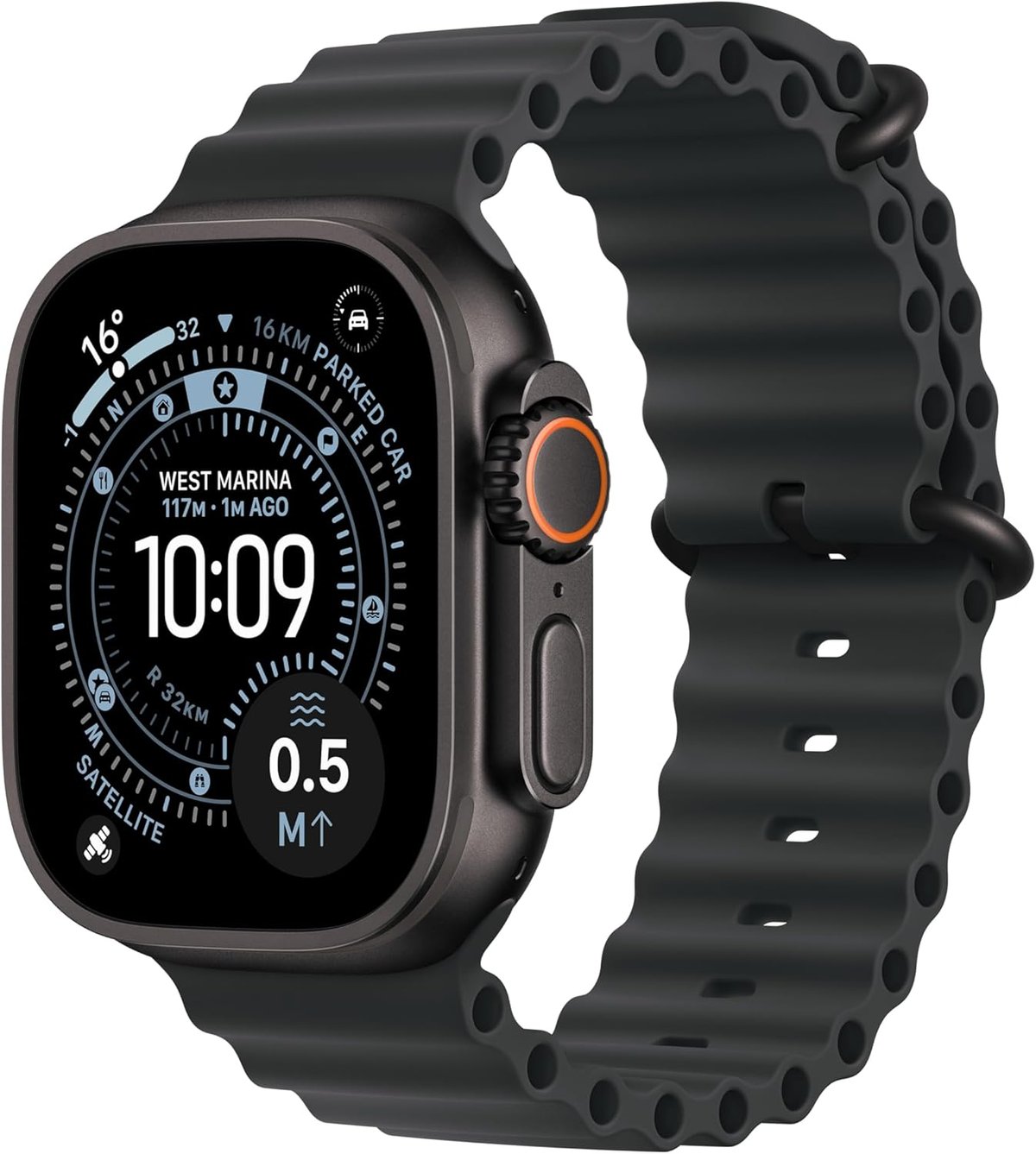
The most capable hiking smartwatch if you live in the Apple ecosystem. Better than any Garmin at daily life. Weaker than any Garmin at multi-day battery.
- Best-in-class GPS accuracy — L1+L5 dual-frequency on all five satellite systems
- Leave your phone at home for shorter hikes: calls, messages, Apple Pay from the watch
- 100m water resistance — tougher than it looks
- Massive, readable titanium screen even in direct sunlight
- Health ecosystem is unmatched: ECG, blood oxygen, crash detection, heart rate zones
- Action button and siren earn their place on trail
- 42 hours in normal use — not enough for a long day plus overnight without charging
- No offline topographic maps — breadcrumb navigation only
- Requires an iPhone — zero value if you're on Android
- Most expensive watch in this list alongside the Fenix 8
- MagSafe charger required — non-standard charging cable to remember
iPhone users who want one watch that does everything — including replacing their phone on shorter hikes — and who are prepared to manage battery life with a portable charger on longer days.
For the full review, including the Anker MagSafe workaround and how the Ultra 3 compares directly to the Fenix 8 Solar for serious hiking: Apple Watch Ultra 3 review.
Buy Apple Watch Ultra 3 on AmazonThe Ultra 3 runs L1+L5 dual-frequency GPS across GPS, GLONASS, Galileo, QZSS and BeiDou simultaneously. That is the same grade of GPS precision as the Garmin Fenix 8 Solar. In terms of raw satellite accuracy, these two watches are effectively equal. The difference is everything else.
The Ultra 3's GPS battery life in outdoor workout mode with full GPS and heart rate is around 14 hours. That's enough for most UK day hikes. It is not enough for a 12-hour day on a demanding route if you also want to use the watch for navigation, music and communication throughout. This is where the Anker MagSafe power bank becomes part of the kit.
On routes up to around 25km I don't worry about it. On longer days — anything approaching a full South Downs Way section or a big Purbeck circuit — the Anker goes in the lid pocket as a matter of routine. It snaps to the back of the watch case and charges it continuously. The arrangement works. But it is an arrangement, and the Garmin Fenix 8 Solar doesn't require one.
Garmin Fenix 8 Solar (47mm)
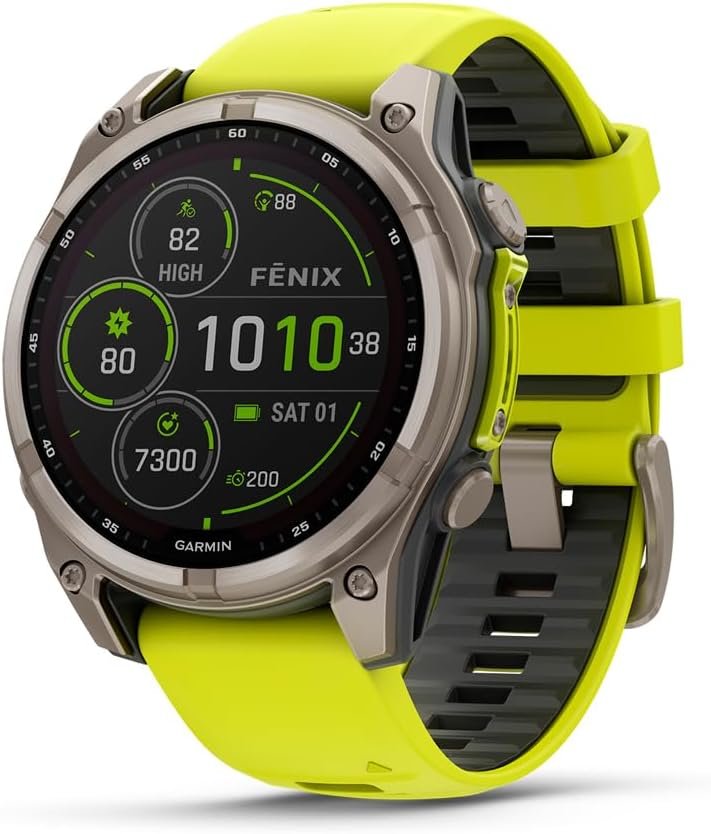
The benchmark GPS watch for serious hikers. Better battery than anything else at this size. Preloaded TopoActive maps. Built-in torch. The watch Garmin's entire lineup is measured against.
- 52 hours GPS / up to 92 hours with solar — multi-day routes without a charge point
- Preloaded TopoActive European maps with 32GB storage
- Multi-band GPS across all major satellite systems
- Built-in LED torch — practical on early starts and late finishes
- 100m water resistance, sapphire lens, titanium case
- Dive rated — useful if your hiking trips include coastal swimming
- Voice commands and built-in speaker/mic
- ~£870 is a significant investment — among the most expensive watches on this list
- Solar charging requires 50,000 lux conditions — limited benefit in UK overcast
- Bigger and heavier than a running watch at 65g
- No Apple Watch integration — losing ecosystem features if switching from Ultra 3
- The AMOLED version has a brighter screen but trades battery life for it — covered separately below
Committed hikers who want the best GPS performance and multi-day battery life without compromises, and who are prepared to pay for it.
For the full review including an honest look at solar charging in UK conditions and the direct comparison with the Apple Watch Ultra 3: Garmin Fenix 8 Solar review.
Buy Garmin Fenix 8 Solar on AmazonThe Fenix 8 Solar's MIP display — the memory-in-pixel screen, not the AMOLED option — is the right choice for hikers. It's readable in direct sunlight, which the AMOLED version struggles with, and it dramatically extends battery life. The 47mm Solar is the balance point in the Fenix 8 range: large enough to be a proper navigation device, small enough to be wearable.
On preloaded maps: the Fenix 8 carries TopoActive European maps on 32GB of internal storage. You can navigate to a waypoint or follow a route directly from the watch face without needing a phone or a downloaded route. On a UK ridge walk where you want to check what's over the next peak without stopping to pull out your phone, this is a significant practical advantage.
The solar charging is real but UK-limited. In Scottish June sunshine on an exposed ridge, the lens adds meaningful runtime. On a grey February day in the Brecon Beacons — which is most of what UK hiking looks like — the solar contribution is minimal. Buy the Fenix 8 Solar for the battery chemistry, not for the solar panels. The base 52-hour GPS runtime is why this watch makes sense for serious hiking, not the additional hours that depend on weather you can't guarantee.
Garmin Fenix 8 (AMOLED)
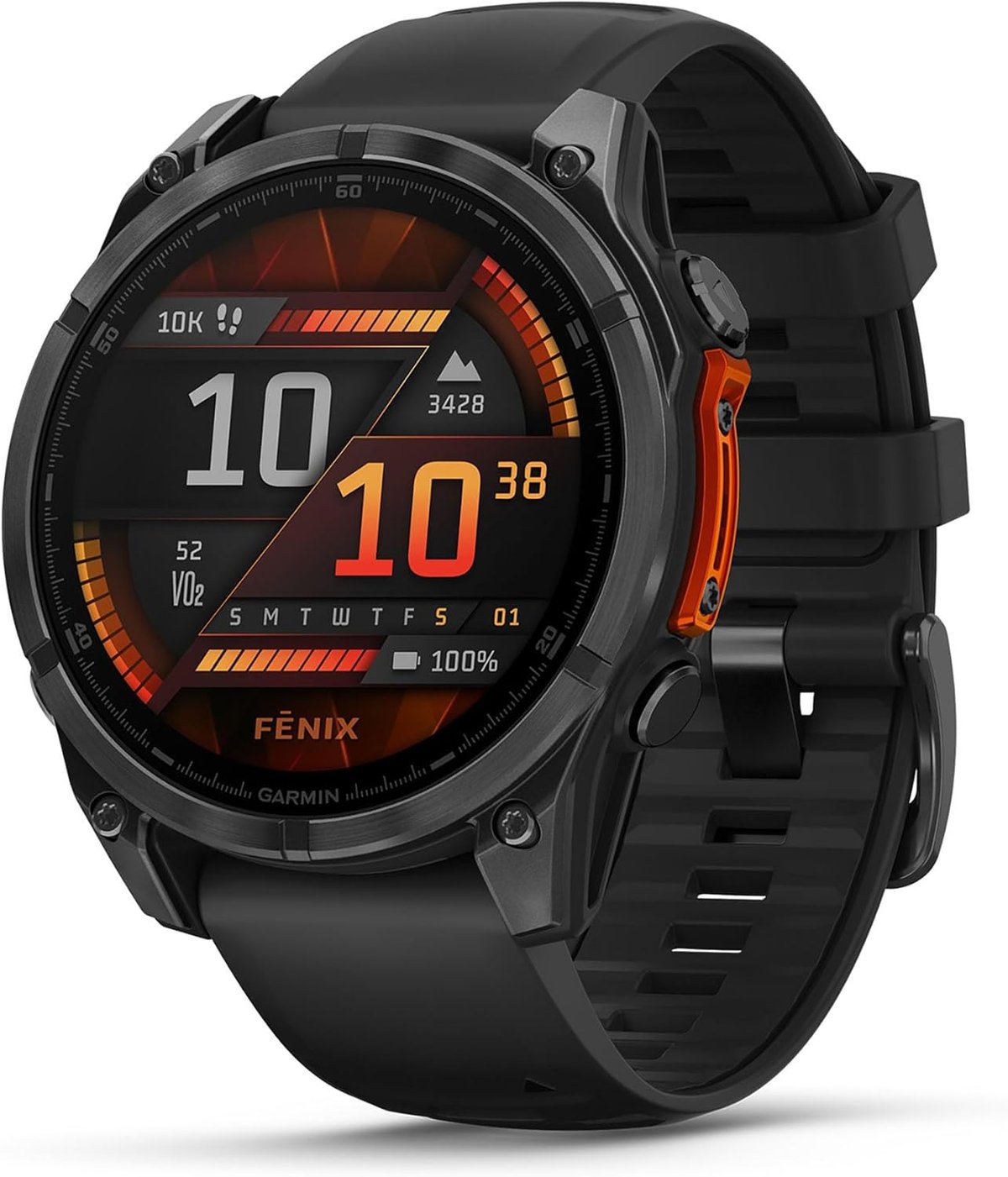
Same GPS, same topo maps, same 10ATM build as the Solar — but with a vivid AMOLED display and a lower price. The Fenix 8 AMOLED is the highest-reviewed Fenix 8 variant on Amazon UK and the right choice if you want the full Fenix 8 feature set without paying the Solar premium.
- Full TopoActive European maps and multi-band GPS — identical to the Solar
- AMOLED display: vivid and high-contrast, especially in dim conditions
- Same rugged titanium and sapphire build as the Solar model
- 100m water resistance (10ATM) — dive rated
- ~£120 cheaper than the Fenix 8 Solar
- Most-reviewed Fenix 8 variant on Amazon UK — strong consumer confidence
- ~43h GPS vs 52h on the Solar — shorter battery without solar extension
- No solar charging — requires a power source every 1-2 days of heavy use
- AMOLED can be harder to read in very bright direct sunlight vs MIP
- Still 65g — same physical bulk as the Solar model
Hikers who want the full Fenix 8 feature set at a lower price and don't need the Solar's battery extension. The better choice if most of your hikes are day walks under 30km and you have charging access each evening.
The key trade-off between the two Fenix 8 versions is straightforward: the Solar MIP screen extends battery life significantly but is less visually impressive than the AMOLED. The AMOLED is brighter and sharper in most conditions, costs less, but runs out of runway sooner on multi-day routes. For most UK day hikers, the AMOLED is the better value proposition. For anyone doing extended routes with limited charging, the Solar's base 52-hour GPS runtime is worth the premium.
Garmin Forerunner 970
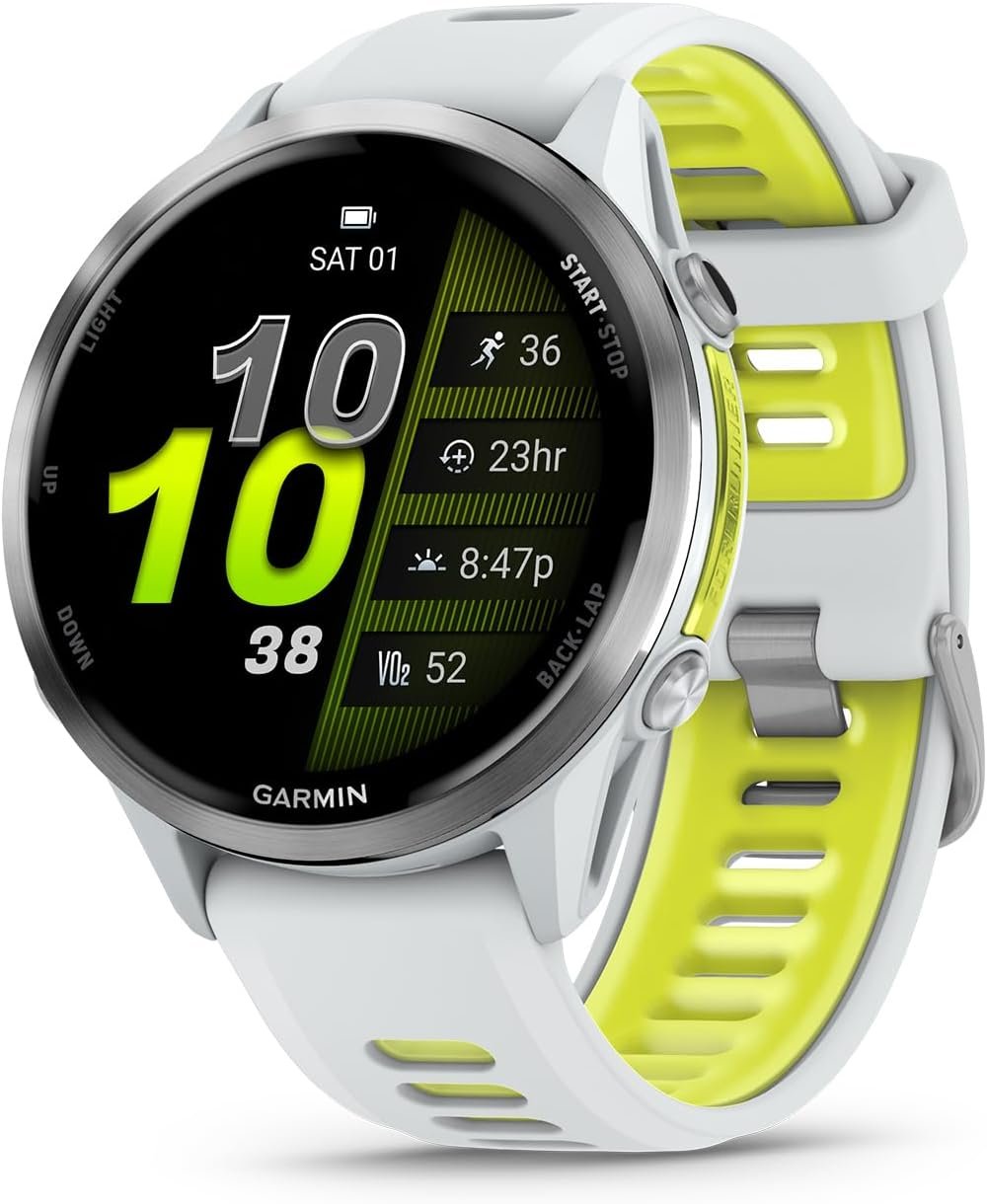
Garmin's best running watch crosses over convincingly into hiking territory. AMOLED display, onboard topo maps, 56g. The lightest fully-featured GPS watch in this roundup.
- 56g — lightest watch with full onboard topo maps in this list
- AMOLED display with 1.4-inch screen — excellent clarity
- Multi-band SatIQ GPS — accurate in challenging terrain
- Built-in LED torch, speaker and mic
- All Garmin's training analysis and health tracking
- Meaningfully cheaper than the Fenix 8
- 26 hours GPS-only — battery life trails the Fenix 8 significantly
- 5ATM waterproofing vs 10ATM on the Fenix 8 and Enduro 3
- Designed as a running watch — the hiking use case is secondary
- AMOLED can struggle in very bright direct sunlight
- Still expensive for what is essentially a running watch with map capability
Runners who also hike, or hikers who want Garmin's navigation features in a lighter package and can live with shorter battery life.
Full hands-on review: Garmin Forerunner 970 review.
Buy Garmin Forerunner 970 on AmazonThe Forerunner 970 is the watch that makes the Fenix 8 look over-engineered for many hikers. If you're doing day walks — even long ones — the 26-hour GPS battery is enough. The onboard topo maps work the same way as the Fenix 8. The GPS accuracy is comparable. And at 56g it sits more comfortably on the wrist for a 10-hour day than the heavier Fenix.
What you give up: multi-day battery, 10ATM waterproofing (the Forerunner is 5ATM — fine for rain and river crossings, not rated for diving), and the solar lens option. If your hiking is day walks and occasional weekend trips with charging access, the Forerunner 970 is a more honest answer than the Fenix 8.
Coros Apex 4 (46mm)
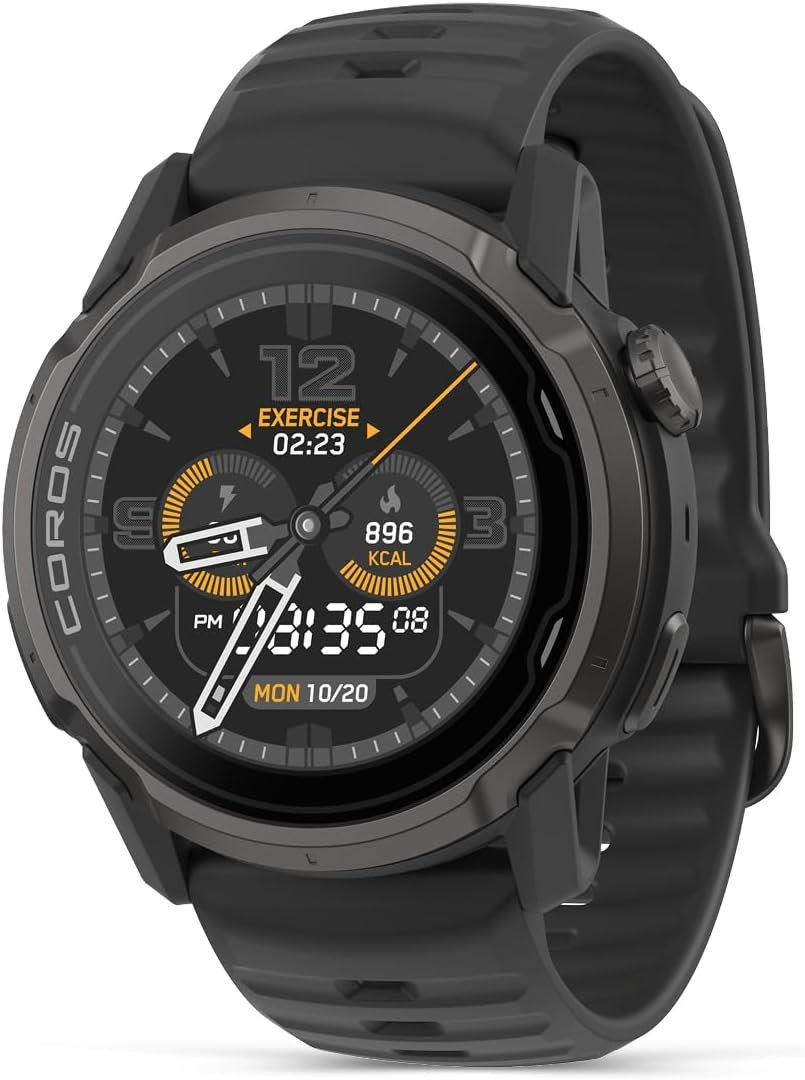
The best-value fully-featured hiking GPS watch. 65 hours GPS, offline maps, dual-frequency GPS, sapphire lens and titanium bezel at £429. Garmin's main rival for a reason.
- 65 hours GPS battery — beats everything except the Enduro 3
- Dual-frequency GPS for genuine accuracy in tree cover and valleys
- Titanium bezel with sapphire crystal — mountain-grade durability
- Offline topo maps included
- Built-in speaker and mic
- £429 vs £870 for the Fenix 8 — the value proposition is obvious
- No Garmin Pay or Apple Pay equivalent — cannot make contactless payments
- No onboard music storage — phone or nothing
- Memory-in-pixel display is less vivid than AMOLED alternatives
- Coros ecosystem is less mature than Garmin's — fewer apps and integrations
- Less established brand — fewer independent reviews and trail reports
Hikers who want serious GPS performance and multi-day battery life at half the Fenix 8's price, and who don't need contactless payments or music from the watch.
The Coros Apex 4 is the watch that should be getting more attention in the UK hiking community. At £429 it costs £440 less than the Garmin Fenix 8 Solar and delivers 65 hours of GPS battery versus the Fenix 8's 52 hours. The GPS accuracy is in the same ballpark, the offline maps work well, and the titanium bezel with sapphire glass is built for mountain use.
The gaps are real but specific. No contactless payments if you're buying a coffee at the summit café — the Fenix 8 has Garmin Pay, the Ultra 3 has Apple Pay, the Coros has neither. No music storage if you want to leave your phone behind on a long run. The Garmin ecosystem is deeper, with more sport profiles, more Connect IQ apps, and a more mature training analysis platform.
But if your primary use is navigating routes, tracking your hiking data and making sure the battery outlasts you on a long day, the Apex 4 does all of that for considerably less money.
Garmin Enduro 3
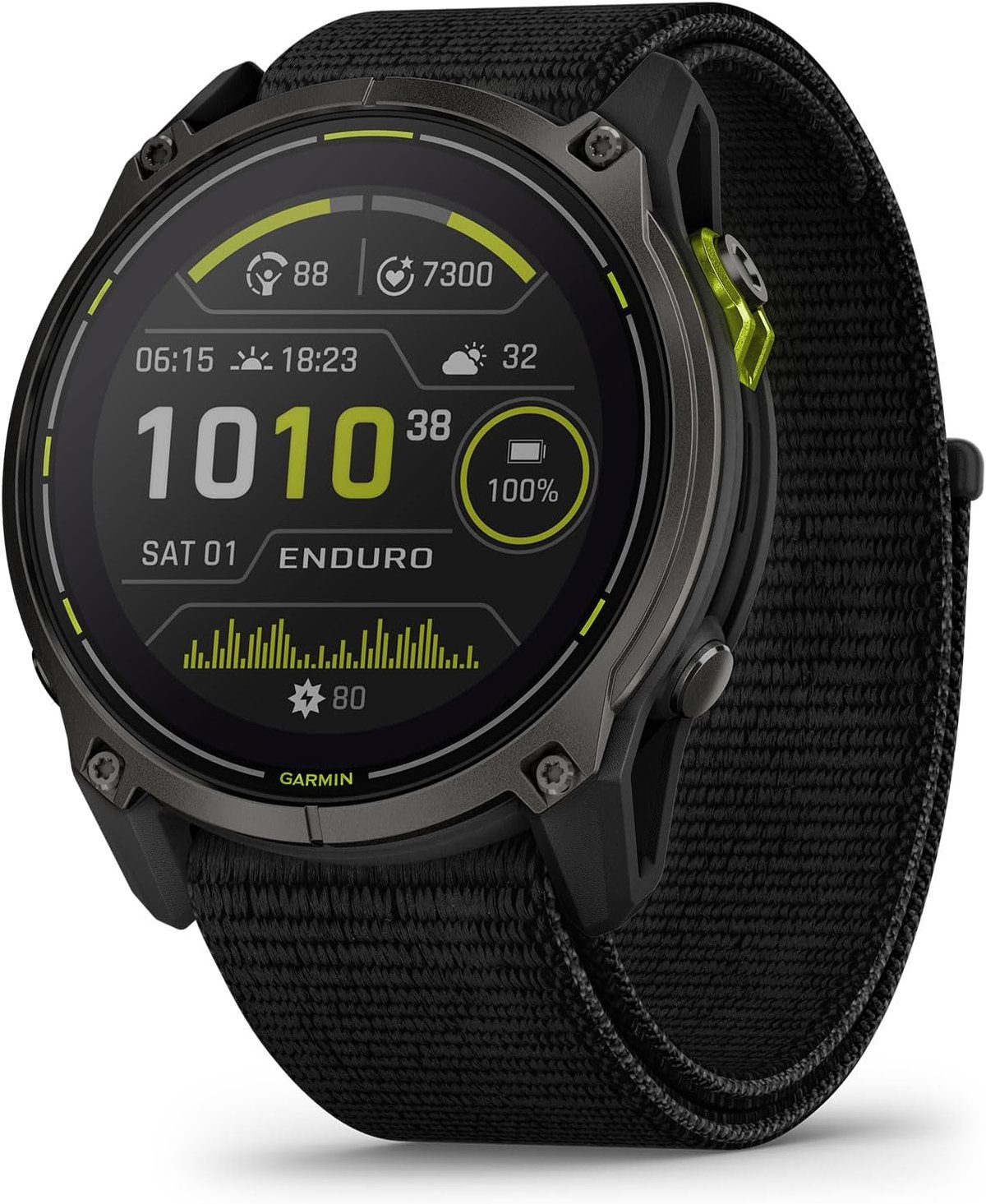
Built for thru-hikers and ultra-endurance athletes. 120 hours GPS, 320 hours with solar. If battery life is everything, nothing else in this list comes close.
- 120 hours GPS — up to 320 hours with solar. Five days of continuous recording
- Preloaded TopoActive topo maps
- Multi-band SatIQ GPS accuracy
- Built-in LED torch
- 63g — surprisingly light for its 51mm case
- 10ATM waterproofing — the most durable rating in this list
- Elevate Gen 5 heart rate with ECG capability
- No Garmin Pay — cannot make contactless payments
- £769 — more expensive than the Coros Apex 4, nearly as expensive as the Fenix 8
- 51mm case is large for everyday wear
- Solar dependency for maximum runtime: UK weather reduces real-world solar gain
- Aimed at ultra runners — overkill for weekend day hikers
Thru-hikers, multi-day expedition walkers, and anyone whose hiking involves days between charging opportunities. The Pennine Way, West Highland Way, or any multi-week route where you cannot guarantee a socket every night.
The Enduro 3 exists for one reason: to outlast you. At 120 hours of GPS recording without solar, it will run for five days of continuous tracking before it needs a charge. That is a different category of device from everything else in this list.
For UK day hikers and weekend walkers, the Enduro 3 is too much watch. The battery advantage becomes relevant only when you're on the third day of a multi-day route with no charging access. For the Brecon Beacons or the Lake District on a long weekend, the Fenix 8 or the Coros Apex 4 will see you through without issue.
But if you're planning a thru-hike — the South West Coast Path, the Pennine Way, anything that runs longer than a week in remote terrain — the Enduro 3 makes a different kind of sense. You stop worrying about the battery and start paying attention to the walk.
Garmin Vivoactive 6
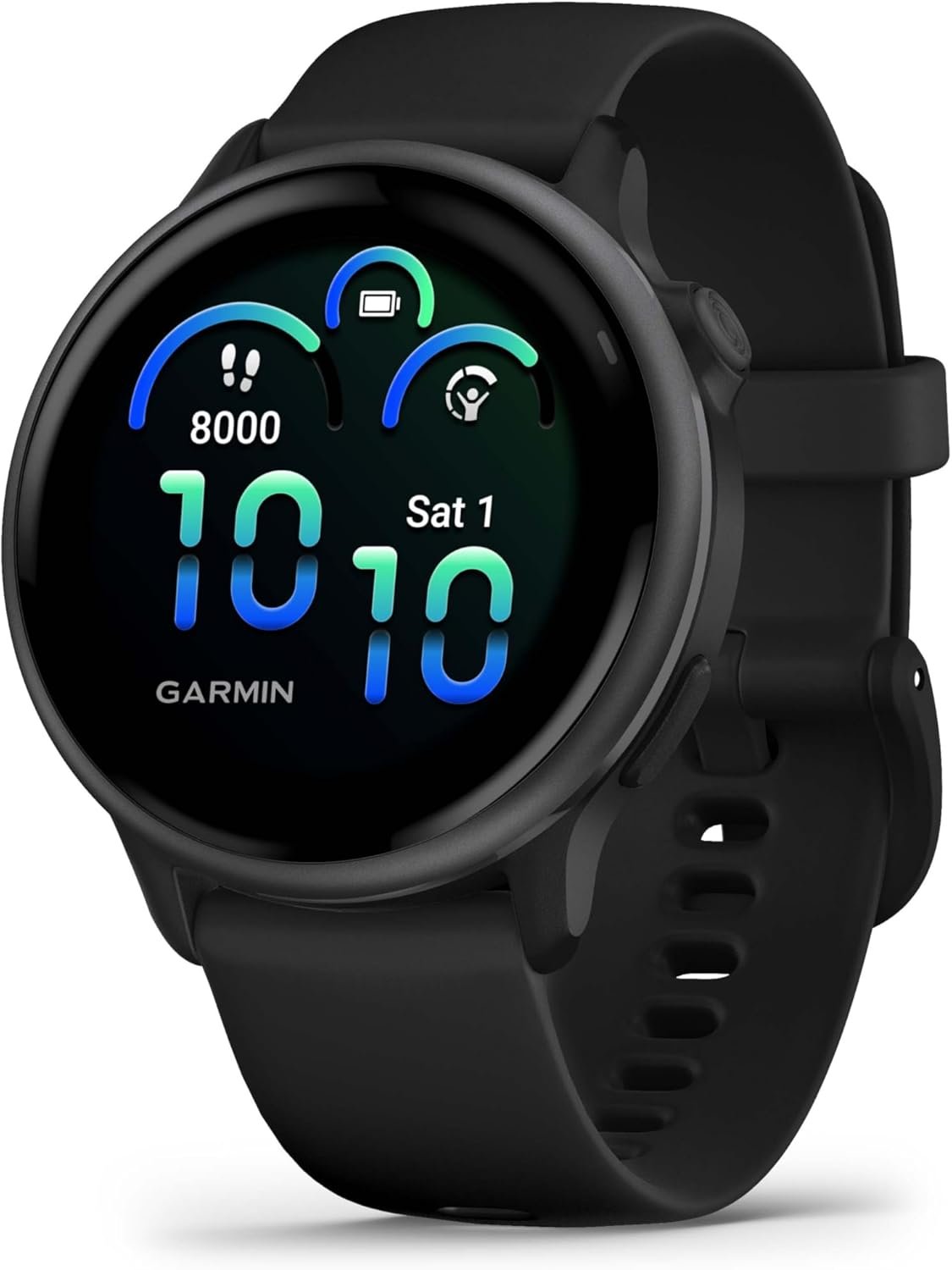
An entry-level GPS watch that makes sense for casual hikers who want step-up from a basic fitness tracker. Lightweight, capable GPS, Garmin Pay. The stepping stone before you commit to a serious hiking watch.
- 23g — extraordinarily light, you'll forget it's there
- 21 hours GPS — enough for most UK day walks
- Garmin Pay for contactless payments
- AMOLED display with clean, readable interface
- Music storage (8GB) for phone-free listening
- Substantially cheaper than the rest of this list
- No offline topographic maps — basic GPS breadcrumb navigation only
- Single-band GPS — less accurate in deep valleys and tree cover
- No multi-band GPS, no sapphire glass, no serious durability features
- Designed primarily as a fitness tracker, not a hiking watch
- Battery in GPS mode is limited for longer days
Casual hikers doing well-waymarked routes of up to 15-20km, who want GPS tracking and health data without spending serious money on a dedicated hiking watch.
The Vivoactive 6 is a fitness smartwatch that happens to have GPS. For casual hiking — the kind of walk where you're on a clear path, mobile signal is available, and you're back at the car by 4pm — it does the job. GPS tracking, heart rate, step count, Garmin Pay, music. At 23g it disappears on your wrist.
Where it falls short of the rest of this list: no offline topo maps, single-band GPS, and no real durability credentials. If you ever plan to hike in seriously remote terrain or conditions where navigation matters, the Vivoactive 6 is not the right foundation. It's a well-rounded fitness tracker with GPS bolted on. That's a legitimate thing to buy. It is not a hiking GPS watch in the same sense as the Fenix 8 or the Enduro 3.
The right buyer for the Vivoactive 6 is someone starting out with GPS watch ownership who wants to understand what they want before committing £600-£900 to a dedicated hiking watch. A year with the Vivoactive 6 will tell you exactly which features you'd pay more to have.
A note on navigation and safety
A GPS watch is an excellent hiking tool but should never be your only navigation method. Batteries die, screens crack, satellite fixes fail in deep valleys. Carry a printed OS map and compass on any serious route and know how to use them. For remote multi-day routes, a satellite communicator like the Garmin inReach is a sensible backstop — covered in the best hiking gadgets UK guide.
This applies to every watch in this list, including the ones with preloaded topo maps. A map on your wrist is a navigation aid, not a navigation system. The OS paper map in your jacket pocket does not run out of battery, cannot be cracked by a tumble on wet rock, and does not require satellite acquisition to show you where you are.
Use the watch. Carry the map.