


Quick answer
Our pick: Garmin inReach Mini 3
- Best satellite communicator: Garmin inReach Mini 3 (£379)
- Best GPS watch: Garmin Fenix 8 (£800)
- Best value GPS watch: Garmin Instinct 2 Solar (£229)
- Best headlamp: Petzl NAO RL (£85)
- Best power bank: Anker MagGo 10,000mAh (£45)
- Best action camera: GoPro Hero 13 Black (£350)
- Best tracker: Apple AirTag 4-pack (£99)
- Best traction: Kahtoola MICROspikes (£65)
There is a version of hiking that requires nothing more than boots, a waterproof and a map. That version is fine. It works. It is also leaving a significant amount of useful technology on the table.
The best hiking gadgets do not make the walk easier in a way that diminishes it. They make it safer, longer, better documented, and more possible in conditions where you'd otherwise be turning back. A satellite communicator on a solo winter walk in the Brecon Beacons is not a luxury, it is the difference between a situation you can manage and one that manages you. A good headlamp makes a five-hour walk achievable starting at 5am. A GPS watch that lasts three weeks on a charge removes one of the more persistent anxieties of long-distance hiking.
This is the tech worth carrying. Eight categories, multiple options at different price points, all on Amazon UK. None of it comes with a mountain printed on it.
1. Satellite communicators, from £249
The single most important safety gadget a UK hiker can carry, and the one most people keep meaning to buy and haven't. A satellite communicator works via the Iridium satellite network, which has 100% global coverage, no mobile signal required, no exceptions. It sends and receives messages, tracks your route, shares your live location with contacts, and has an SOS button that connects you to a 24/7 rescue coordination centre with your exact GPS position.
If you walk alone, walk in remote terrain, or regularly go into areas where mobile signal is unreliable, which describes most serious hiking in the UK beyond a well-signposted lowland trail, this is the gadget that changes what's possible.
All Garmin inReach devices require an active subscription plan to use satellite features. Plans start from around £10/month for basic SOS and messaging.
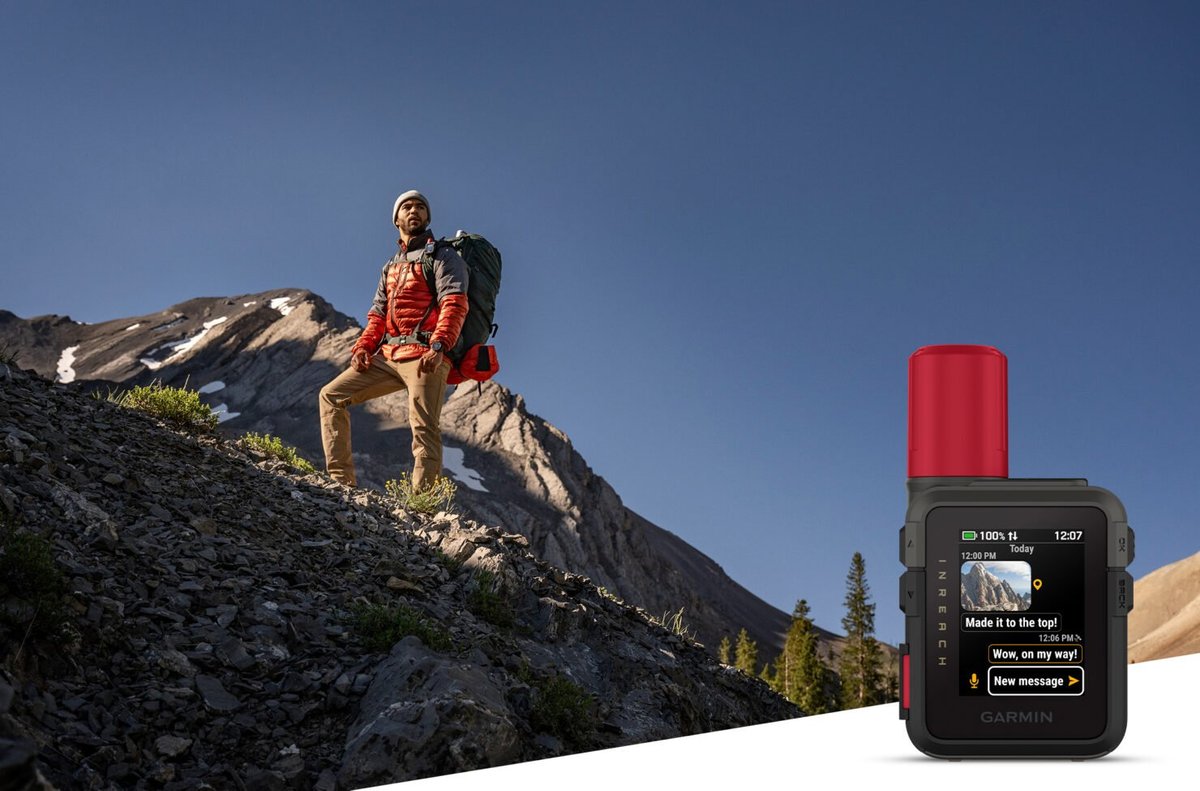
Garmin inReach Mini 3, £379, the lead pick
The newest inReach, launched in late 2025, and the most significant upgrade the Mini line has had. The headline change is a colour touchscreen, larger, brighter and far easier to use than the tiny monochrome display on the Mini 2. You can now compose messages directly on the device without it feeling like texting on a 1999 Nokia. The Mini 3 also follows GPX routes, stores waypoints and gives you a simple basemap, not a full navigation device, but more capable than its predecessors. At 100g it remains pocket-sized.
Buy Garmin inReach Mini 3 on AmazonGarmin inReach Mini 3 Plus, £429
The Plus adds the ability to send photos and voice clips via satellite, a meaningful quality-of-life improvement for longer expeditions or anyone who wants richer two-way communication. The same hardware as the Mini 3 with expanded messaging capability. Worth the extra if you'll use those features; the standard Mini 3 is the right call for most hikers.
Buy Garmin inReach Mini 3 Plus on AmazonGarmin inReach Mini 2, £299, the bargain pick
Now that the Mini 3 is out, the Mini 2 is available at a meaningful discount and remains an excellent device. The monochrome display is less pleasant to use, but the core functionality, two-way satellite messaging, SOS, route tracking, live location sharing, is identical. If the Mini 3 price is a stretch, the Mini 2 is not a compromise on the features that matter.
Buy Garmin inReach Mini 2 on AmazonGarmin inReach Messenger, £249, the budget pick
The most affordable inReach device. Better battery life than the Mini 2 (28 days versus 14 days at 10-minute tracking intervals), hockey puck form factor, and meaningfully cheaper. The trade-off: no navigation capability whatsoever, no waypoints, no route following. It is purely a messaging and SOS device that relies entirely on a paired phone for anything map-related. If your phone is your navigation and you just want satellite safety as a backstop, the Messenger delivers it for less.
Buy Garmin inReach Messenger on Amazon2. GPS watches, from £229
A GPS watch on your wrist is fundamentally different from a phone in your pocket. It logs your route continuously without you touching it. It tells you your elevation, pace, distance and heart rate at a glance. The battery lasts days or weeks rather than hours. And it sits on your wrist, accessible, while your phone stays dry in a dry bag at the bottom of your pack.
The Garmin ecosystem dominates this space for good reason, their GPS accuracy, battery life and trail-specific features are class-leading. The question is which Garmin.
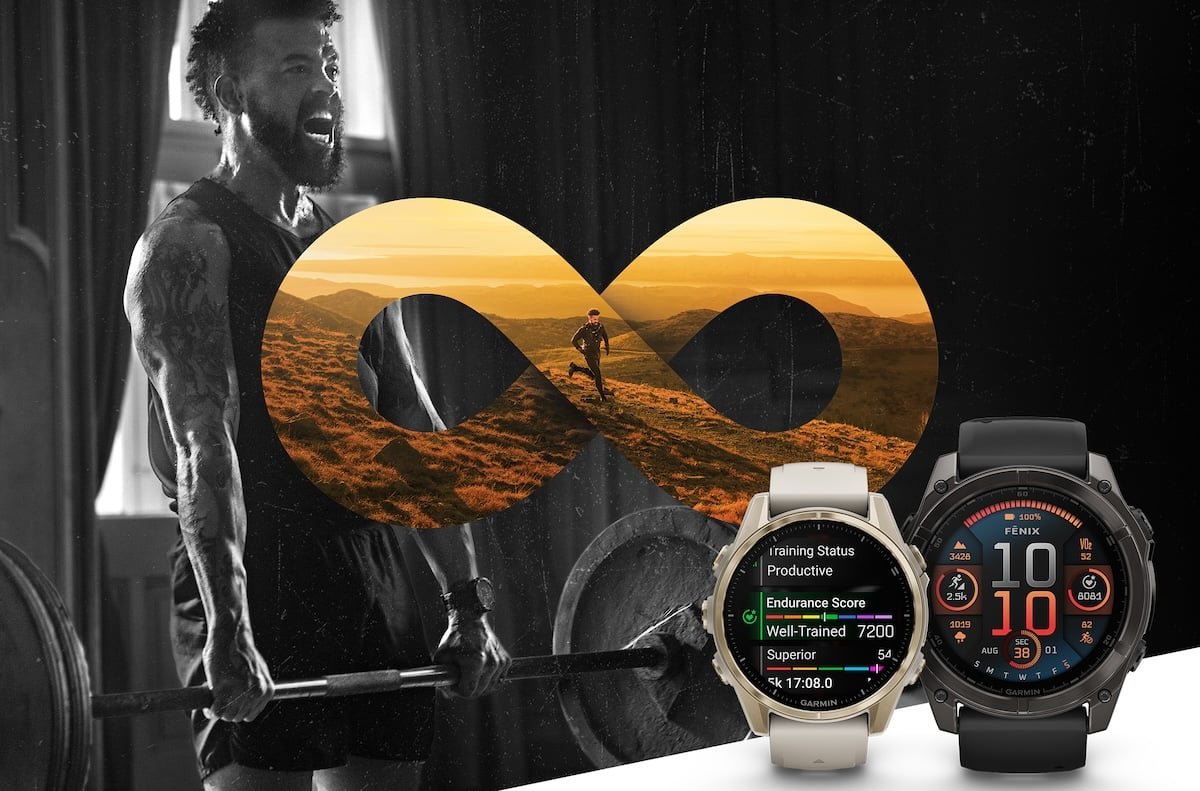
Garmin Fenix 8, £800, the premium pick
The best GPS watch money can buy for hiking. AMOLED display that is genuinely readable in direct sunlight. Built-in torch. Voice commands. Multi-band GPS for accuracy in tree cover, deep valleys and canyon terrain. Dive-rated to 40 metres. Pre-loaded TopoActive European maps with 32GB of storage. The Fenix 8 is the watch you buy when you want a single device that replaces your map, your head torch and your training logbook, and you're prepared to pay for it.
Buy Garmin Fenix 8 on AmazonGarmin Fenix 7, £379, the smart buy
At roughly half the price of the Fenix 8, the Fenix 7 delivers around 95% of the performance for the vast majority of hikers. Same class-leading GPS engine, same pre-loaded TopoActive maps, same rugged build quality. What you lose: the AMOLED display (the Fenix 7 uses a MIP screen, less vivid but better battery life), no built-in torch, no voice commands, no dive rating. If you hike rather than dive, and you'd rather spend the £400 difference on two weeks of trail food, the Fenix 7 is the right call.
Buy Garmin Fenix 7 on AmazonGarmin Instinct 2 Solar, £229, the value pick
The watch I reference most on Coast & Fell. No maps, no AMOLED, no torch, but GPS navigation, altimeter, barometer, three-axis compass, and a solar charging lens that extends battery life significantly in good light. Built to US military standard MIL-STD-810. Readable in direct sunlight. Simple enough to use without reading a manual. For a hiker who wants reliable GPS data and trail metrics without the Fenix price tag, the Instinct 2 Solar is the right entry point into serious GPS watches.
Buy Garmin Instinct 2 Solar on AmazonCoros Pace 4, £199, the lightweight alternative
Garmin's main competitor for trail athletes. The Coros Pace 4 is notably lighter than any Garmin equivalent, 30g with strap, and at £199 is genuinely affordable for a capable GPS watch. Battery life is excellent at 20 hours full GPS or 60 days in standard mode. No pre-loaded maps, less mature ecosystem than Garmin, but a serious option for trail runners and weight-conscious hikers who want GPS tracking without the bulk.
Buy Coros Pace 4 on Amazon3. Headlamps, from £45
A headlamp is not optional kit. It is the item you need exactly once before you start carrying one everywhere. On a late autumn walk where the light goes faster than expected, on an early morning start to beat the crowds, on any multi-day route, a good headlamp is a fundamental piece of hiking safety kit that happens to be genuinely cheap relative to what it provides.
The difference between a good headlamp and a bad one is not mainly about brightness, it is about runtime, rechargeability, usability in the dark and whether the beam mode system makes sense when your hands are cold and your brain is tired.
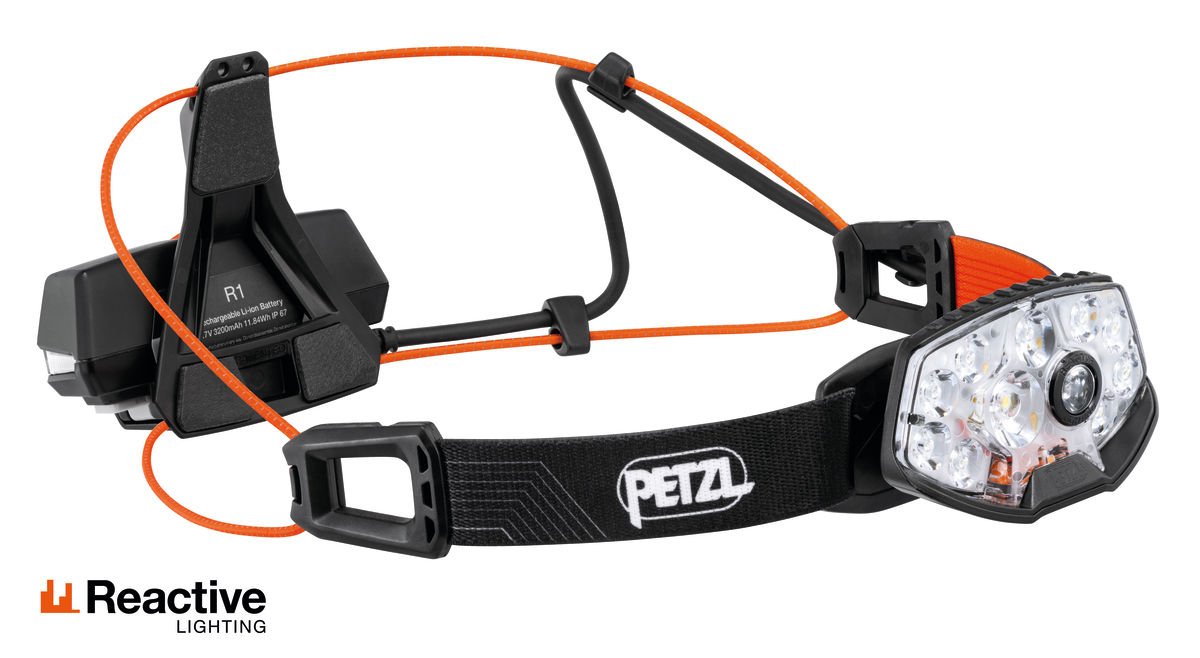
Petzl NAO RL, £85, the one I use
The headlamp I carry on every serious walk. The NAO RL has reactive lighting, it automatically adjusts beam intensity based on ambient light conditions and what you are looking at, which preserves battery on easier terrain and ramps up when you need it. 1500 lumens at maximum output, rechargeable via USB-C. The reactive mode is genuinely clever rather than a gimmick, runtime extends significantly compared to fixed-output headlamps because it is not blasting full power when half power is adequate.
Buy the Petzl NAO RL on AmazonBlack Diamond Spot 400-R, £45, the reliable everyday pick
400 lumens at full output. 40 hours at minimum output. A brightness dial rather than a cycling mode system. Red light for night vision. IPX8 waterproofing. USB-C rechargeable with AAA battery backup. At 96g it disappears on your head. This is the headlamp that covers every situation a UK day hiker will encounter and costs less than a round of drinks. It will last ten years if treated reasonably. For most hikers this is the right answer.
Buy Black Diamond Spot 400-R on AmazonPetzl Actik Core, £55, the mid-range option
450 lumens, rechargeable via USB with AAA battery backup, 160g and a clean three-mode system. The Actik Core sits between the Spot and the NAO RL, more output than the Spot, simpler operation than the NAO RL. A solid choice if the Spot feels too basic and the NAO RL feels like more than you need.
Buy Petzl Actik Core on Amazon4. Portable power banks, from £25
Your phone is your navigation device, your camera, your emergency communication tool and your music player. Running it to zero on a long day in unfamiliar terrain is not a situation you want to be in. A portable power bank is the simplest possible insurance against this, charge it the night before, drop it in your pack, forget about it unless you need it.
The key specs for hiking use: capacity in mAh (how many full charges you get), weight (every gram matters on a long day), and whether it charges via USB-C (faster, more universal).
I carry the Anker MagGo 10,000mAh on every long walk after running out of battery on a 32km training day in the New Forest. Learn from my mistake.
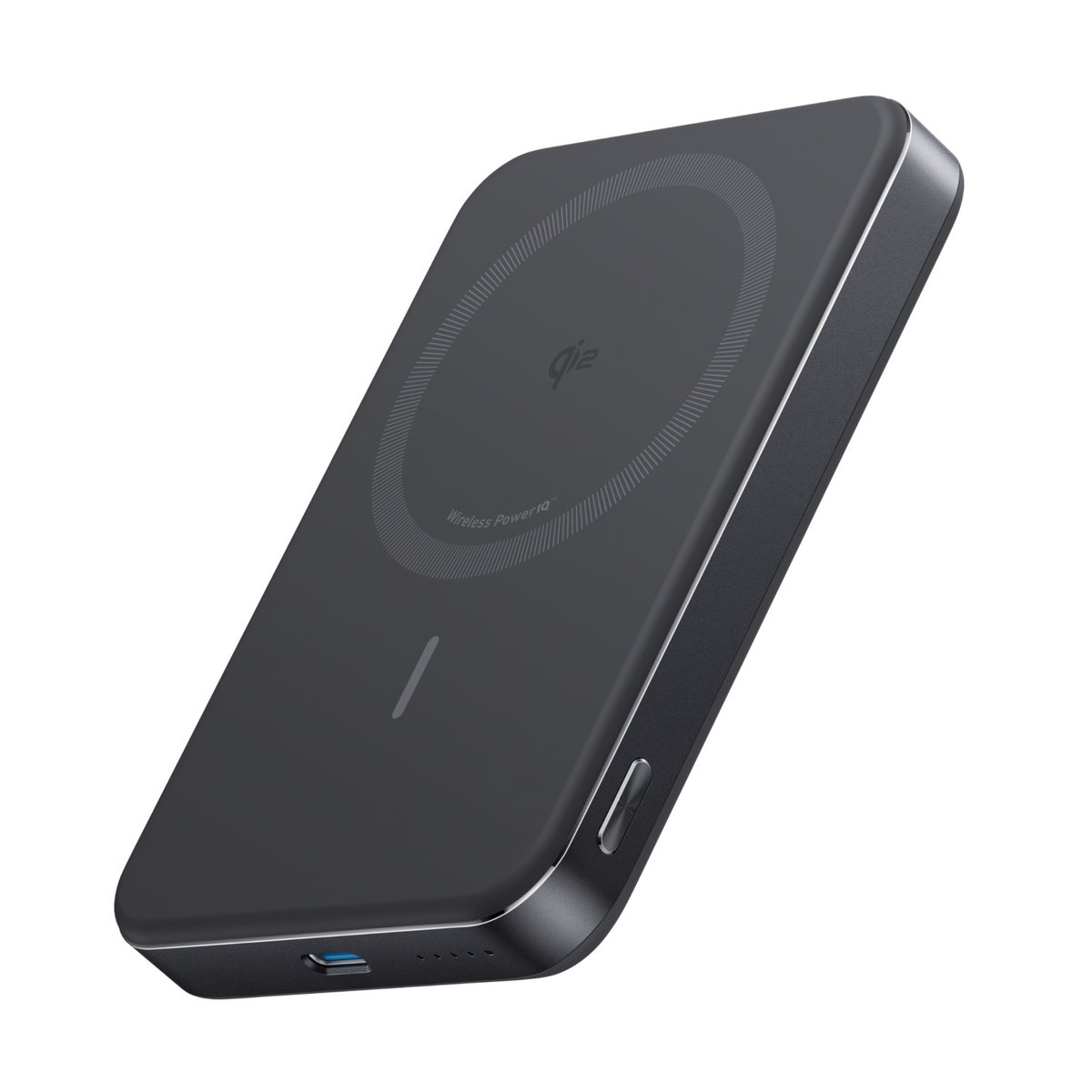
Anker MagGo 10,000mAh, £45, the one I use
Ultra-slim, MagSafe-compatible, USB-C output. Snaps magnetically to the back of an iPhone or sits in the Osprey lid pocket without adding meaningful bulk. 10,000mAh gives you roughly two full iPhone charges, more than enough for a full day's navigation, photography and music. This is the sweet spot for most day hiking: enough capacity to not worry, slim enough to not notice it.
Buy Anker MagGo 10,000mAh on AmazonAnker MagGo 5,000mAh, £28, the ultralight pick
Half the capacity, significantly lighter and slimmer. If you're doing shorter walks of four to six hours and mainly want the power bank as emergency backup rather than active charging, the 5,000mAh is the smarter choice. One full iPhone charge, pocketable, barely noticeable in a pack.
Buy Anker MagGo 5,000mAh on AmazonAnker PowerCore 20,000mAh, £55, the multi-day pick
Four to five full iPhone charges. The right option for multi-day routes, wild camping trips or anyone who uses their phone heavily for navigation all day. Heavier and bulkier than the slimmer models, but if you're out for multiple days without access to a charger, the capacity justifies the weight.
Buy Anker PowerCore 20,000mAh on Amazon5. Tracking devices, from £25
Attach a tracker to your pack, your poles, your keys or your car and you can locate any of them instantly from your phone. For hiking specifically, this has two main uses: finding kit you've left somewhere on the trail, and giving someone at home a secondary way to locate you in an emergency beyond whatever your phone or inReach device is doing.
Apple AirTags work within the Apple ecosystem, any iPhone, iPad or Mac passing nearby pings the tag's location back to you via Bluetooth. Coverage in remote areas is limited by how many Apple devices are nearby, so AirTags are more useful for urban lost property than remote trail emergencies. But for keeping track of your kit, pack left at a bothy, poles propped against a stile, they are genuinely excellent.
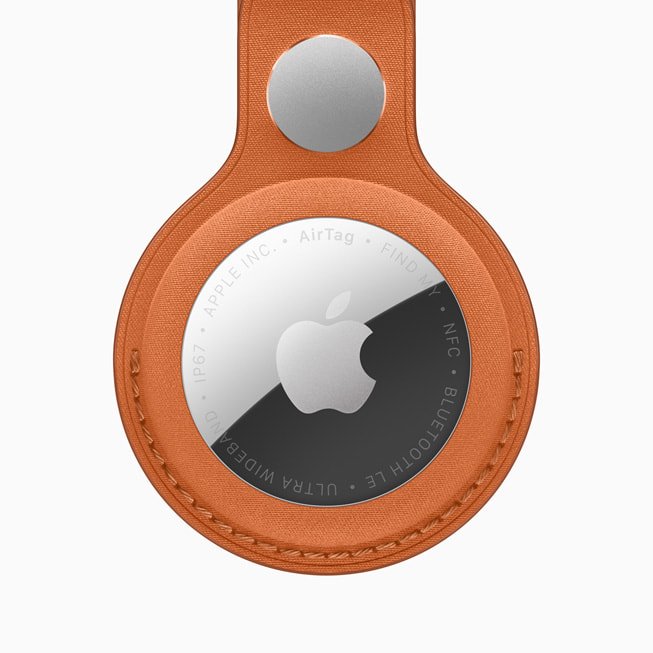
Apple AirTag 4-pack, £99, best value
Four tags. One for the pack, one for the poles, one for the car keys, one spare. The 4-pack is significantly better value than buying individually, works out at around £25 per tag versus £35 for a single. If you're buying AirTags, buy the 4-pack.
Buy Apple AirTag 4-pack on AmazonApple AirTag single, £35
The single tag for anyone who just wants to track their pack or their car. Precision Finding on iPhone 11 and later uses Ultra Wideband technology to guide you to within centimetres of the tag, useful when the pack has slid under something or been left in an unfamiliar spot.
Buy Apple AirTag single on AmazonTile Pro, £34, the Android alternative
AirTags require an iPhone. For Android users, Tile is the established alternative. The Tile Pro has a range of up to 400 metres, a loud built-in speaker for finding items nearby, and works on both iOS and Android. The Tile network is smaller than Apple's Find My network, so location accuracy in remote areas is similarly limited, but for kit tracking in everyday use it performs well.
Buy Tile Pro on AmazonTile Mate, £25, the budget option
Smaller, lighter and cheaper than the Pro, with a shorter range of around 250 metres. The right choice if you just want basic Bluetooth tracking on a budget and don't need the Pro's extended range or louder speaker.
Buy Tile Mate on Amazon6. Action cameras, from £299
A phone camera is impressive. An action camera is different. Waterproof, shockproof, mountable on a chest harness, a helmet, a pole or a pack strap, and capable of video quality that a phone simply cannot match in windy, wet or high-contrast outdoor conditions. If you want to document walks properly, for trail guides, for social media, for personal records, an action camera earns its place in the kit list.
The GoPro Hero series dominates this space. The Insta360 X4 is the main alternative for anyone who wants 360-degree footage rather than a fixed-direction camera.
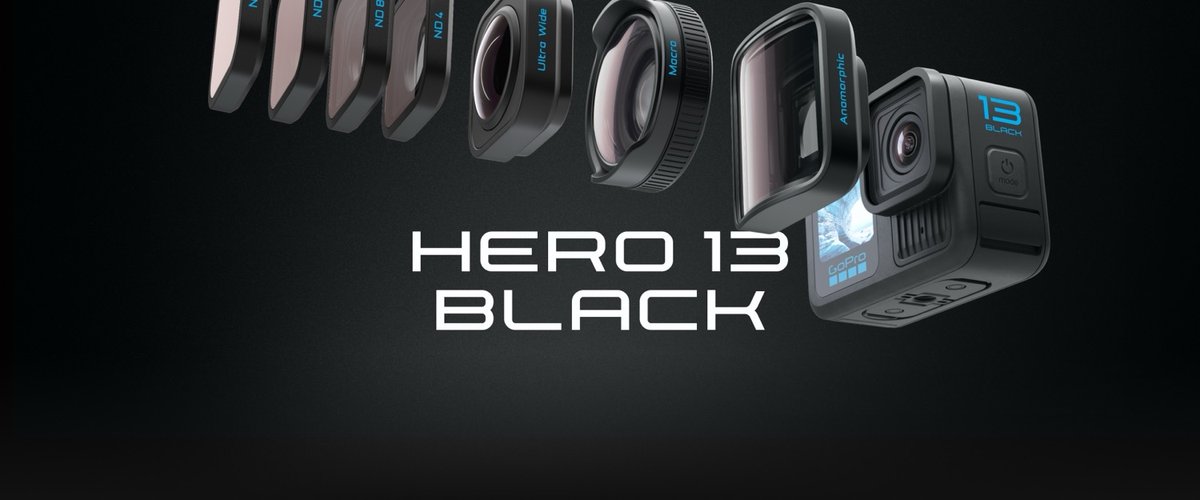
GoPro Hero 13 Black, £350, the lead pick
The current benchmark. 5.3K video at 60fps, 27 megapixel photos, HyperSmooth 6.0 stabilisation that handles running, scrambling and rough terrain without the footage looking shaken. Waterproof to 10 metres without a housing. The magnetic mounting system introduced in the Hero 11 means it clips to compatible mounts in a second rather than requiring a case and screw fitting. For trail documentation this is the standard other cameras are judged against.
Buy GoPro Hero 13 Black on AmazonGoPro Hero 12 Black, £299, the value pick
Now that the Hero 13 is out, the Hero 12 has dropped in price and offers excellent value. The same HyperSmooth stabilisation, the same magnetic mounting, 5.3K video, the Hero 13 adds slightly improved low-light performance and a longer maximum clip duration. For most hikers the Hero 12 is not a meaningful step down and saves around £50.
Buy GoPro Hero 12 Black on AmazonInsta360 X4, £399, the 360-degree alternative
A completely different kind of camera. The X4 shoots in all directions simultaneously via two fisheye lenses and lets you choose your framing in post, you decide what direction you were facing after the fact, which removes the need to think about camera angle while you're moving. Popular with trail runners for this reason. 8K 360-degree video, waterproof to 10 metres, and genuinely excellent stabilisation. The learning curve for editing 360 footage is steeper than standard video but the creative possibilities are significantly broader.
Buy Insta360 X4 on Amazon7. Traction devices, from £35
Ice and hard-packed snow turn a perfectly manageable path into something actively dangerous. Traction devices, spikes or chains that attach to your walking boots in seconds, are the solution most UK hikers know about and fewer than you'd think actually own. The moment you've used them once in proper conditions, they become a permanent fixture in your pack from October to March.
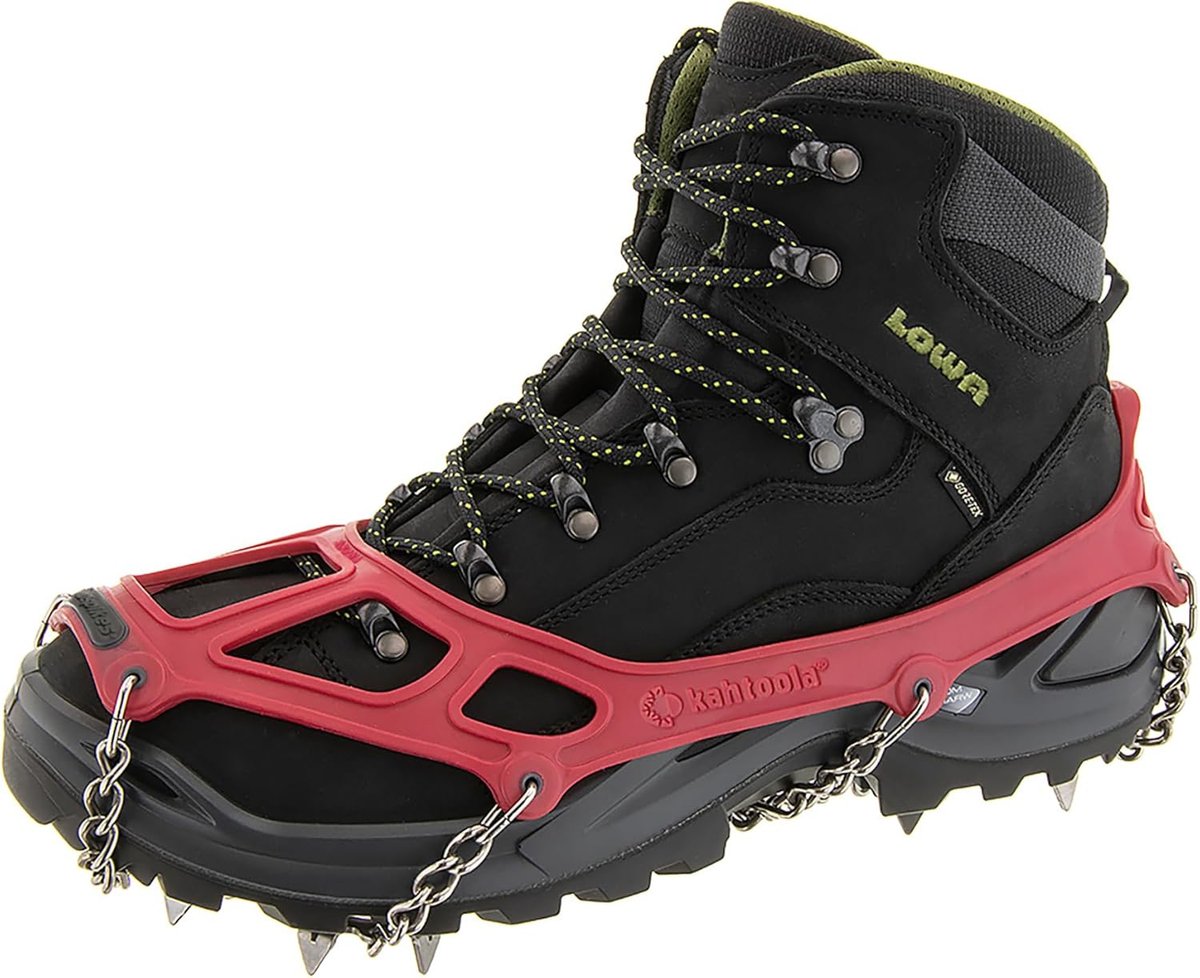
Kahtoola MICROspikes, £65, the benchmark
The standard against which other traction devices are judged. A stretchy elastomer harness with stainless steel chains and 12 spikes per foot, fitted over any walking boot in about 30 seconds. On frozen paths, hard-packed snow, icy boardwalks or glazed wet rock, they turn genuinely dangerous ground into manageable terrain. The harness stays flexible to -30°C, the hardware won't rust, and the whole thing packs into a small drawstring bag. If you only own one pair of traction devices, own these.
Sizing: S fits UK shoe size 3–6, M fits 6–9, L fits 9–12, XL fits 12+. When between sizes, go larger.
Buy Kahtoola MICROspikes on AmazonKahtoola NANOspikes, £55, the lighter option
Lighter and lower-profile than the MICROspikes, designed for hard ice and packed snow on roads and groomed trails rather than serious mountain terrain. The right choice for winter road walking, icy pavements and moderate winter paths where the full MICROspike is more than you need. If you walk in both urban winter conditions and serious mountain terrain, you arguably need both.
Buy Kahtoola NANOspikes on AmazonYaktrax Walk, £35, the budget entry point
Wire coil rather than chains and spikes, less aggressive grip than the Kahtoola range, but effective on moderate ice and packed snow at a significantly lower price point. The right entry point if you're not sure how much winter hiking you'll do and want traction capability without the MICROspike investment. Not suitable for serious mountain terrain or steep icy ground, for those conditions the MICROspikes are worth the extra.
Buy Yaktrax Walk on Amazon8. Hydration tech, from £40
Staying hydrated on a long walk is not complicated but it is important. The difference between carrying water in a bottle and carrying it in a bladder is underrated, a hydration bladder routes a drinking tube to your shoulder strap so you can drink continuously without stopping or removing your pack. On a hot day this makes a genuine difference to how well you stay hydrated, because the water is always accessible rather than requiring a deliberate decision to stop and drink.
The Katadyn BeFree adds a further layer for anyone going into remote terrain, it filters water from natural sources, removing bacteria and protozoa, so you can fill from streams and rivers rather than carrying all your water from the start.
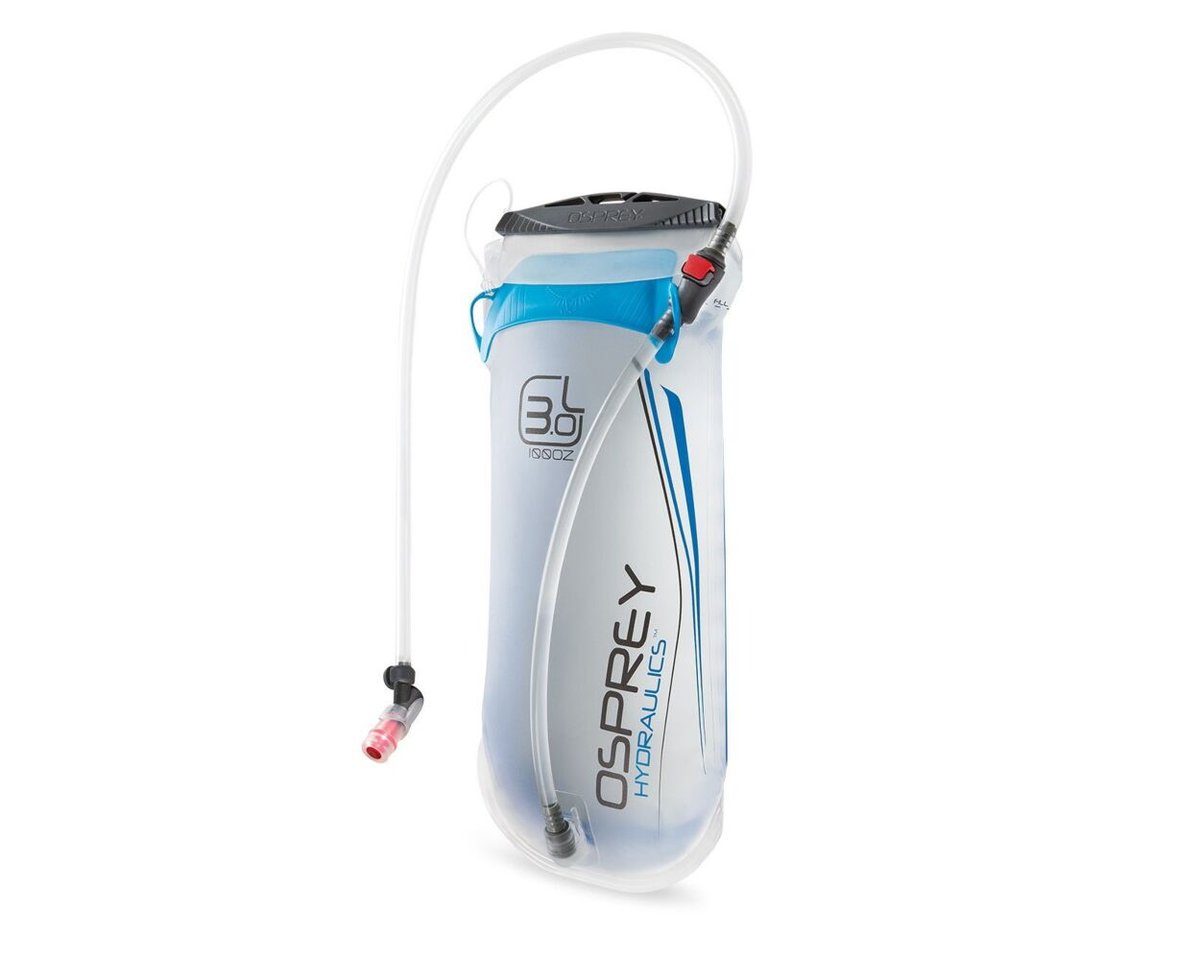
Osprey Hydraulics 3L Bladder, £40, the one I use
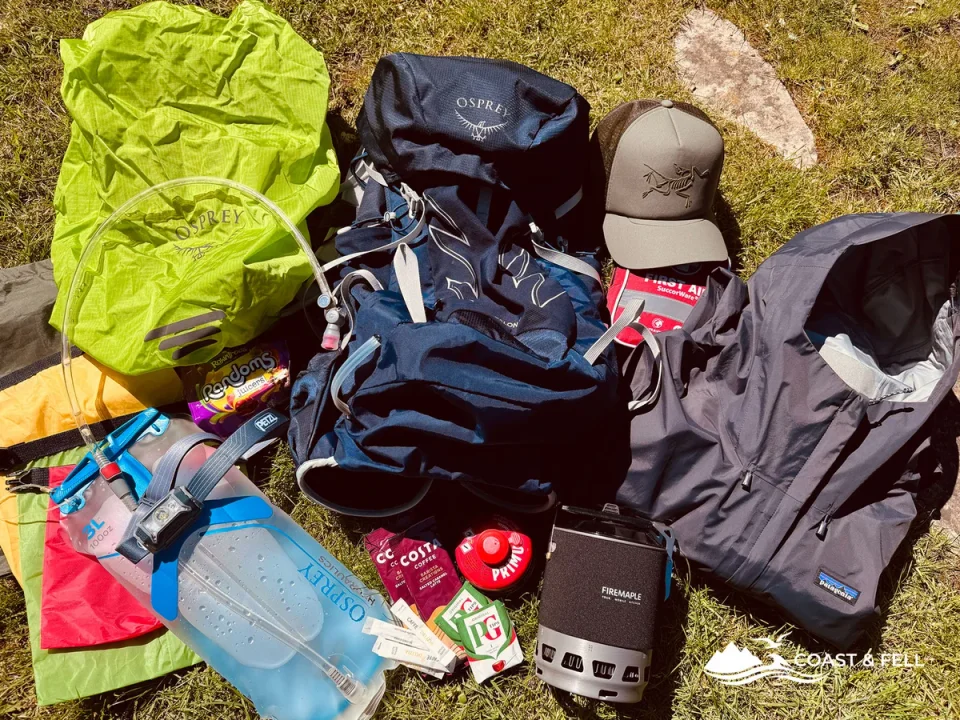
The hydration bladder that lives in my Osprey Talon 33 on every long walk. I fill it the night before, add ice cubes, put it in the fridge. On a hot day on the Jurassic Coast it is cold and accessible all day without stopping. The magnetic clip keeps the drinking tube on the shoulder strap where it belongs. The 3L capacity is the right size for a full day in warm conditions, I rarely finish it.
Buy Osprey Hydraulics 3L Bladder on AmazonCamelBak Crux 3L, £45, the main alternative
The primary alternative to the Osprey bladder. The Crux has a 20% wider opening than previous CamelBak reservoirs which makes filling and cleaning significantly easier, the historic weak point of bladder systems. The drinking tube has a shut-off valve to prevent leaks. Compatible with Osprey packs via the reservoir sleeve. The right choice if you prefer CamelBak's ecosystem or want the easier-cleaning opening.
Buy CamelBak Crux 3L on AmazonKatadyn BeFree 1L, £45, for remote water sources
Not a bladder, a squeeze filter bottle. Fill from any stream, river or lake and drink directly through the filter cap. Filters to 0.1 microns, removing bacteria and protozoa. Filter life is rated to 1,000 litres. For UK day hiking it is a niche pick, you're rarely far from a tap. For multi-day routes, wild camping or any remote terrain where you're dependent on natural water sources, it is essential kit. Pairs well with a separate hydration bladder, fill the BeFree from a stream, filter into the bladder.
Buy Katadyn BeFree 1L on AmazonA note on subscriptions and compatibility
Garmin inReach devices, all require an active subscription plan to use satellite messaging, SOS and tracking. Plans start from around £10/month for basic SOS capability. The hardware works out of the box for GPS location but the satellite communication features, the whole point of the device, require a paid plan.
Apple AirTag, requires an iPhone running iOS 14.5 or later. Does not work with Android devices. For Android users the Tile range is the alternative.
GoPro mounts, the Hero 12 and Hero 13 use GoPro's magnetic mounting system introduced with the Hero 11. Earlier GoPro accessories using screw mounts are not directly compatible without an adapter.
Hydration bladders, most bladders from Osprey and CamelBak are cross-compatible with packs from either brand via the reservoir sleeve. Check the sleeve dimensions of your specific pack before buying.