


Quick answer
Our pick: Garmin inReach Mini 2
- Best splurge: Garmin inReach Mini 2 (~£329)
- Best GPS watch: Garmin Instinct 2 Solar (~£229)
- Best jacket: Patagonia Nano Puff (~£195)
- Best trekking poles: Black Diamond Distance Z (~£110)
- Best multitool: Leatherman Signal (~£110)
- Best daypack: Osprey Talon 22 (~£95)
- Best winter kit: Kahtoola MICROspikes (~£65)
- Best headlamp: Black Diamond Spot 400-R (~£45)
- Best water filter: Katadyn BeFree 1L (~£45)
- Most thoughtful: Lifesystems First Aid Kit (~£32)
The problem with buying gifts for hikers is that we already have everything we think we need. Walking boots — bought them. Waterproof jacket — sorted. Base layers — several, thanks. The good gifts are the ones we'd never quite justify spending money on ourselves, or the pieces of kit we've been meaning to get for two years and still haven't.
That's what this list is. Ten picks ranging from £32 to £329, all on Amazon, all things a serious hiker would actually use. Nothing that comes in a novelty tin. Nothing with a mountain printed on it. Nothing that suggests you typed "gifts for dads who like walking" into Google and bought the first result.
Every gift in this guide, compared
The whole guide in one table. Tap a name to jump to the full write-up, or the buy button to check today's price.
| Product | Price | Buy |
|---|---|---|
| Best splurgeGarmin inReach Mini 2 | £249.00 | |
| Two-way satellite messaging via Iridium, works anywhere on earth · SOS to 24/7 rescue coordination · 100gBest for For dads who walk alone or anywhere remote; changes what's possible. | ||
| Best GPS watchGarmin Instinct 2 Solar | £222.99 | |
| Solar charging lens · 28 days battery in standard mode, 30 hours full GPS · Built to MIL-STD-810Best for Reliable GPS and trail data without paying for features he'll never use. | ||
| Best jacketPatagonia Nano Puff Jacket | £168.37 | |
| PrimaLoft Gold Eco synthetic, stays warm when wet · Stuffs into its own chest pocket · ~290gBest for The packable mid-layer that lives in the top of a pack and never gets left at home. | ||
| Best trekking polesBlack Diamond Distance Z poles | £139.99 | |
| Three-section folding aluminium, push-button deploy · Collapses to under 40cm · Fixed length, four sizesBest for For a dad with no poles, or one making do with an ageing adjustable pair. | ||
| Best multitoolLeatherman Signal | £154.95 | |
| 19 tools · Ferro rod, emergency whistle and hammer head · 213g with MOLLE-compatible sheathBest for Everyday trail utility plus safety features a standard multitool lacks. | ||
| Best daypackOsprey Talon 22 | £125.00 | |
| 22L, the day-hike sweet spot · AirScape tensioned mesh back panel · All Mighty Guarantee repair or replaceBest for For the dad without a proper daypack, or one clinging to a broken twenty-year-old bag. | ||
| Best winter kitKahtoola MICROspikes | £83.45 | |
| 12 stainless steel spikes per foot · Pulls on over boots in about 30 seconds · 500g (pair)Best for For a dad who walks through winter; turns frozen paths from impassable to manageable. | ||
| Best headlampBlack Diamond Spot 400-R | £48.99 | |
| 400 lumens, 40 hours at minimum output · Waterproofed to IPX8 · USB-C rechargeable with AAA backup, 96gBest for Covers every situation a UK day hiker will encounter. | ||
| Best water filterKatadyn BeFree 1L | £58.90 | |
| Filters to 0.1 microns, removes bacteria and protozoa · Rated to 1,000 litres · 64g (filter and bottle)Best for For multi-day routes, wild camping and trips where tap water isn't reliable. | ||
| Most thoughtfulLifesystems First Aid Kit | £51.30 | |
| CE-certified contents incl. SAM splint, burn gel and foil blanket · Water-resistant case with clear internal layoutBest for An obvious choice done properly; replaces the bag of old plasters he carries now. | ||
1. Garmin inReach Mini 2 — ~£329
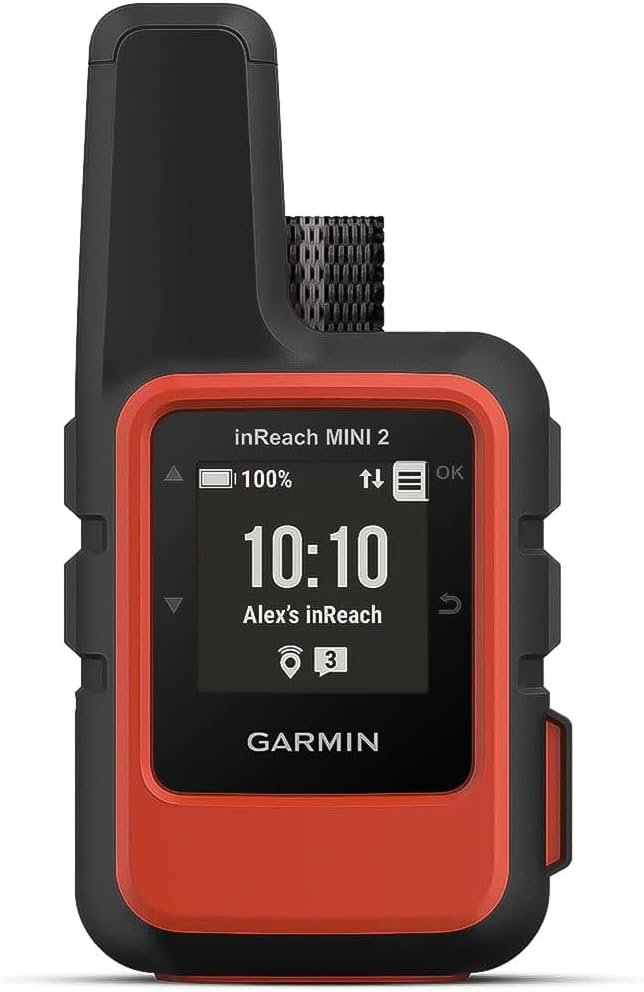
This is the one that will genuinely impress.
The inReach Mini 2 is a satellite communicator — a two-way messaging device that works anywhere on earth, on any terrain, regardless of mobile signal. In the Brecon Beacons in a blackout. On the Isle of Skye. In the middle of a Norwegian fjord. Anywhere. It sends and receives text messages via the Iridium satellite network, which has global coverage without exception.
The headline feature is the SOS button: press and hold, and you're connected to GEOS Emergency Response, a 24/7 international rescue coordination centre. They identify your GPS location to within a few metres and coordinate emergency services. The two-way communication means you can update them on your situation while help is on the way. This isn't a feature for showing off — it's the feature that matters when everything else has gone wrong.
Beyond emergencies, the Mini 2 tracks your route and shares your live location with a contact of your choice via a MapShare link. Your family can watch a dot move across a map rather than waiting for a check-in text that may or may not arrive. At 100g and the size of a small matchbox, it clips to a pack strap and stays there.
It requires a monthly subscription plan to use the satellite features — plans start from around £12/month — so it's worth including a year's subscription as part of the gift if the budget allows.
If your dad walks alone, or does anything more remote than a well-signposted National Trail, this is the gift that changes what's possible. The kind of kit he probably knows he should have and has never bought himself.
2. Garmin Instinct 2 Solar — ~£229
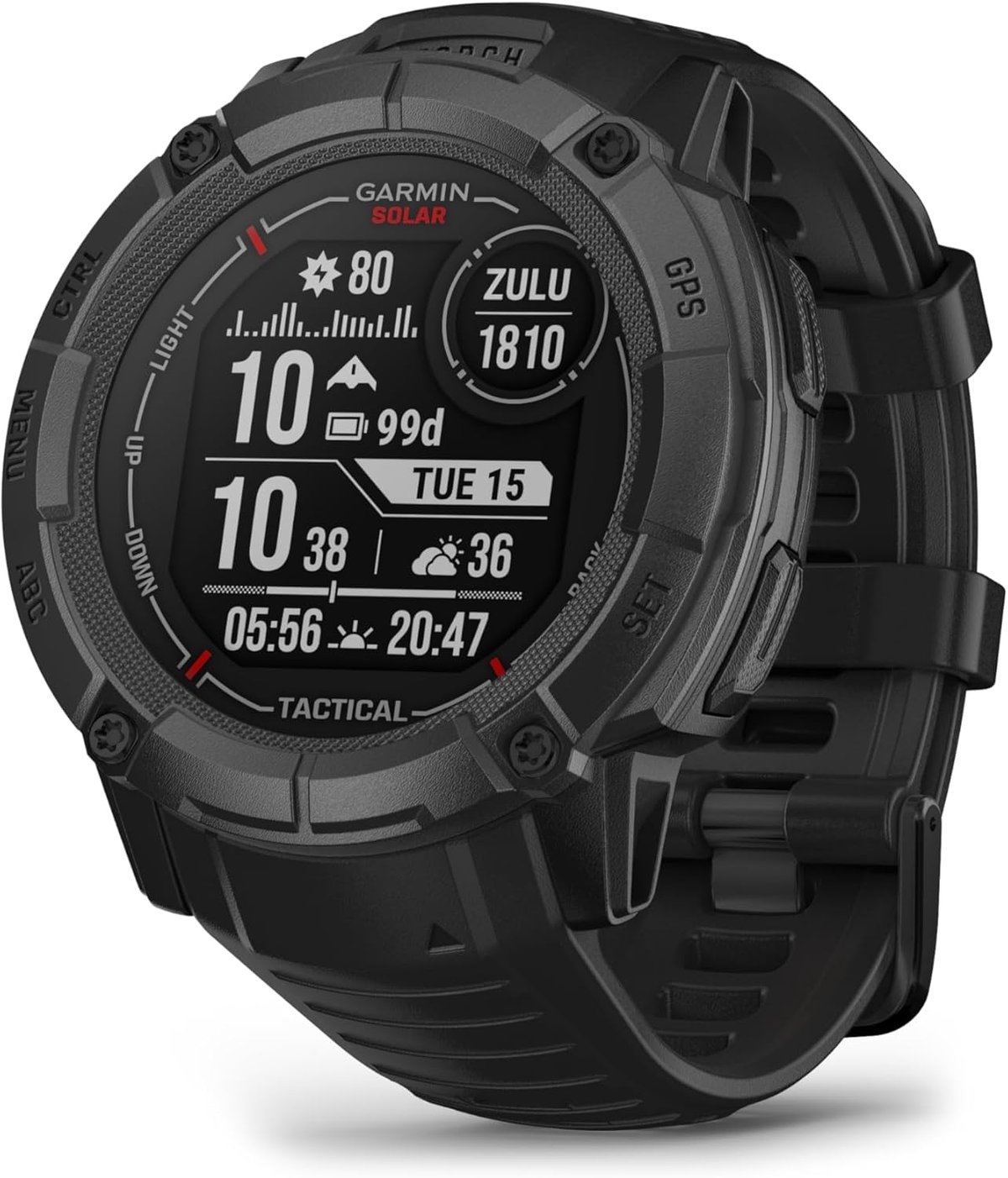
Not a smartwatch. Deliberately not a smartwatch. The Instinct 2 Solar doesn't care about notifications, doesn't sync with your email, and won't suggest you stand up if you've been sitting too long. What it does do: GPS navigation, altimeter, barometer, three-axis compass, sunrise/sunset times, and a battery that can charge itself in daylight.
The solar feature is the genuine selling point. The transparent charging lens around the dial harvests energy from sunlight — in strong sun it charges faster than it drains, meaning for a full summer day's walking the battery barely moves. For UK conditions it's more a supplement than a replacement for plugging in, but on multi-day walks or trips abroad it makes a meaningful practical difference. Battery life without solar input is still 28 days in standard mode, 30 hours in full GPS mode.
It's built to US military standard MIL-STD-810 for thermal, shock, vibration, altitude, humidity and immersion resistance. The display is readable in direct sunlight, which sounds like a low bar and somehow many watches still fail it. The interface is logical and doesn't require reading a manual to use.
The Instinct 2 sits in an interesting gap: more rugged and longer-lasting than most sports watches, but more straightforward and affordable than the Fenix series. For a hiker who wants reliable GPS and trail data without paying for features they'll never use, it's the right call.
3. Patagonia Nano Puff Jacket — ~£195
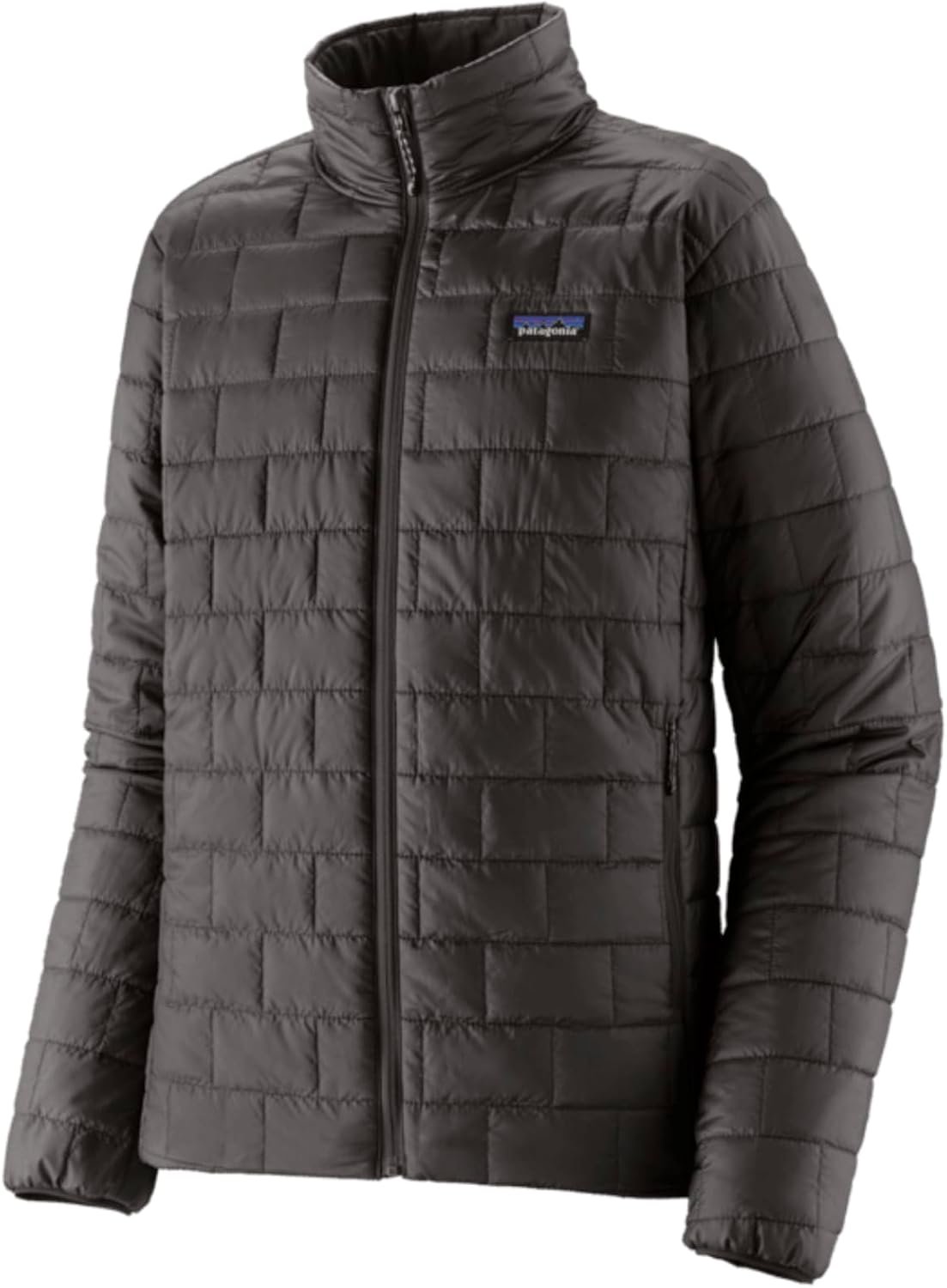
The Nano Puff is the jacket that lives in the top of a pack and never gets left at home. Stuffs into its own chest pocket to roughly the size of a water bottle. Weighs about 290g. Goes on at summit stops, during breaks, whenever the wind picks up and the temperature drops. Comes off again five minutes later. Into the pack. Done.
The insulation is PrimaLoft Gold Eco — synthetic, which matters because unlike down it maintains warmth when wet. Patagonia treats the outer with a Durable Water Repellent finish that sheds light moisture, though this isn't a waterproof jacket and shouldn't be treated as one. It's a mid-layer, designed to go under a shell on serious days or serve as the outer layer on cool dry ones.
What makes the Nano Puff worth the price over cheaper packable jackets is the cut — it's designed to layer, not to be shapeless. The sleeves are long enough to stay tucked into gloves. The hem sits at the right length. It doesn't bunch or ride up under a pack harness. These are small things that become significant over a long day.
Available in a wide range of colours and a mainstay of the hiking community for years for good reason. Check he doesn't already own one before buying — though the resale value is excellent if so.
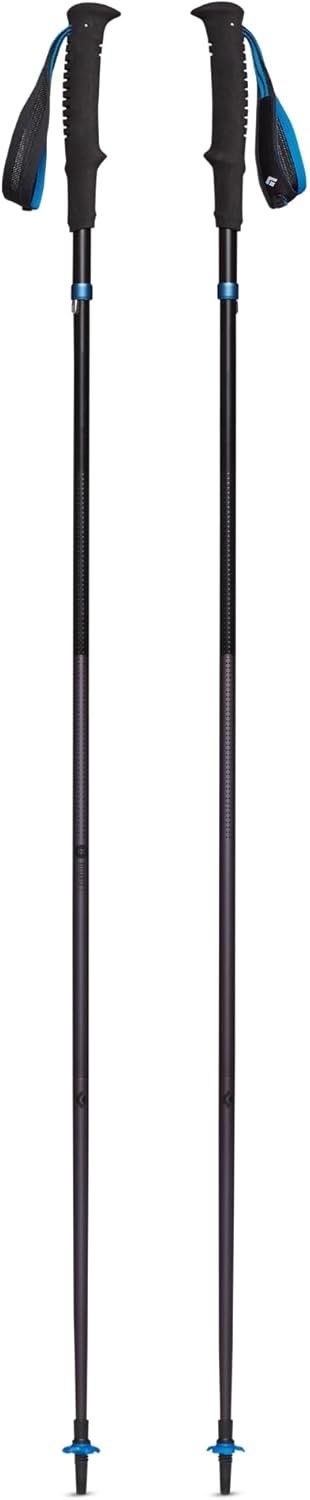
The Distance Z is the trekking pole that serious hikers and trail runners keep coming back to — a three-section folding aluminium pole that deploys with a single push-button click and collapses to under 40cm for packing. At around 365g for the pair it's one of the lightest aluminium folding poles available, competitive with many carbon alternatives.
The fold mechanism is the key feature. Unlike telescoping poles that twist-lock, the Distance Z clicks into place instantly and releases just as fast — genuinely useful when you need to stow them quickly on a technical section and retrieve them on the descent. The EVA foam grip is comfortable over long distances and handles sweat well. The wrist straps are simple, adjustable and stay out of the way.
One important thing to note before buying: these are fixed length, not adjustable. They come in four sizes — 110cm, 120cm, 125cm and 130cm — so you need to choose the right size at purchase. As a rough guide, hold the pole with the tip on the ground and the elbow should be at roughly 90 degrees. When between sizes, go longer rather than shorter for hiking use.
If he doesn't have poles at all, or has been making do with an ageing adjustable pair since 2015, these will immediately become the thing he takes on every walk. The kind of kit that takes a little convincing to start using and then never gets left behind.
5. Leatherman Signal — ~£110
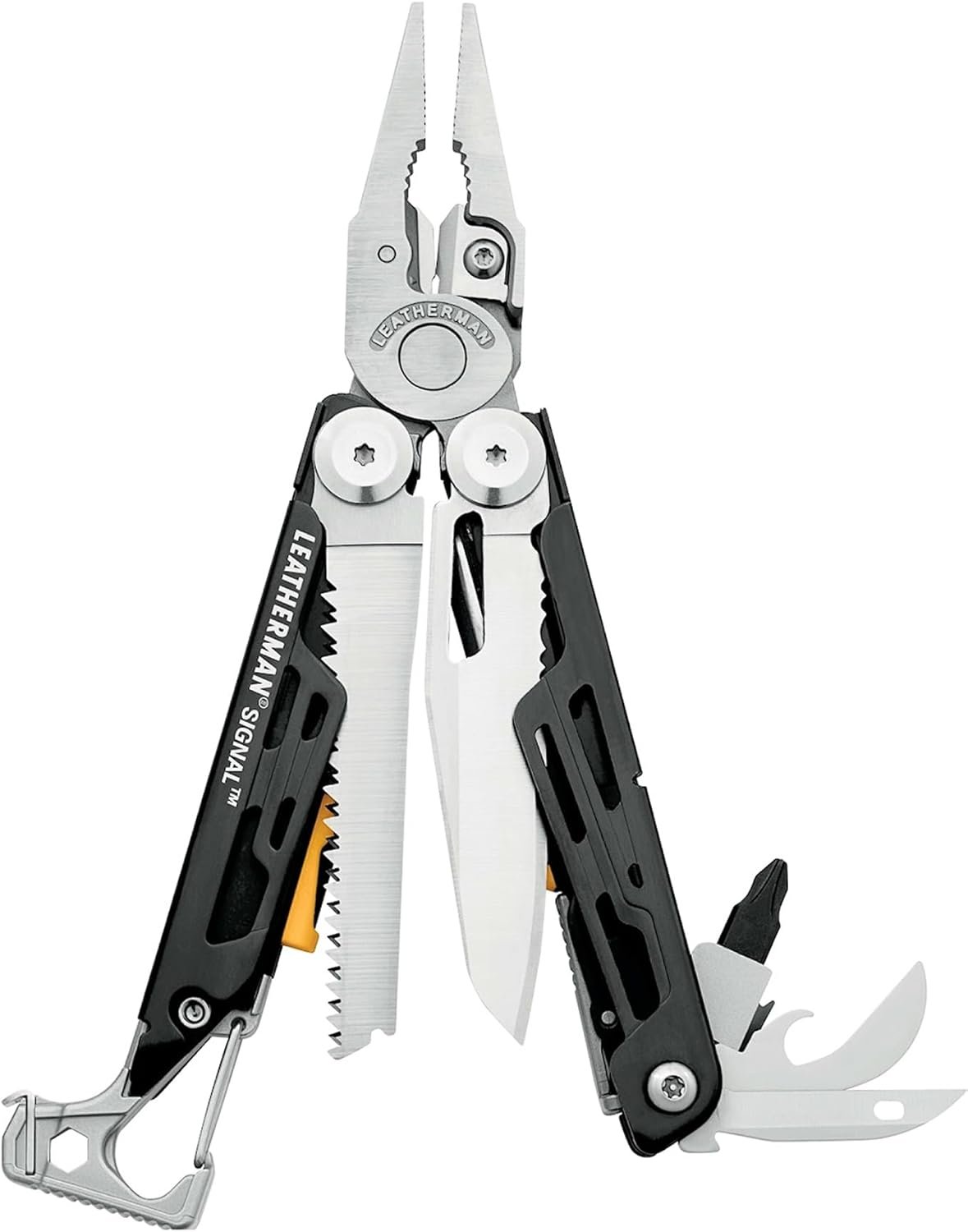
Most hikers carry something for cutting or fixing. The Leatherman Signal is the version built specifically for backcountry use, with features you won't find on a standard multitool.
The headline differences: a ferro rod integrated into the sheath for fire starting, an emergency whistle built into the handle — loud enough to be heard at distance — and a hammer head alongside the standard pliers, knife, saw, wire cutters, drivers and awl. Nineteen tools total, 213g, and it comes with a MOLLE-compatible belt sheath.
The whistle is more significant than it sounds. Most people's plan for signalling in an emergency is "wave arms and shout" — which has limited range and uses energy you might not have. A whistle carries much further, requires minimal effort, and the one built into the Signal is designed to the right volume rather than being an afterthought. The ferro rod similarly — a lighter works until it gets wet, runs out of fuel or fails under stress. A ferro rod doesn't.
What makes a Leatherman a good gift is that once someone starts carrying one, they never stop. There's barely a day on the trail where it doesn't come out for something — tightening a pole strap, cutting cord, removing a splinter, opening a tin. The Signal is the version that adds the safety features without sacrificing the everyday utility.
6. Osprey Talon 22 — ~£95
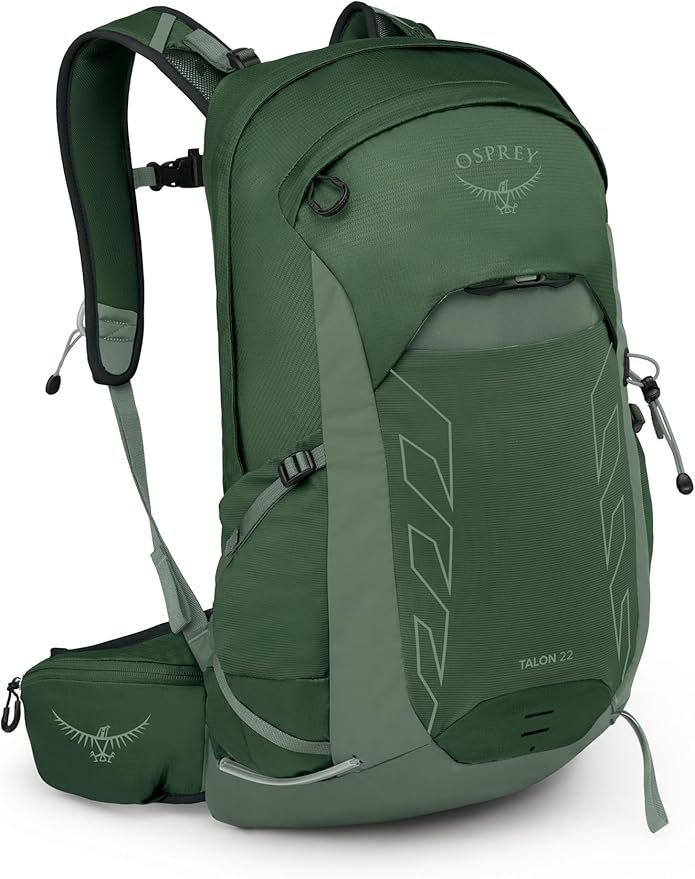
As close to a universal day hiking pack as exists. Twenty-two litres is the sweet spot: enough for a full day out with food, water, layers and first aid kit, not so big that it encourages overpacking. The AirScape back panel has a tensioned mesh suspension that holds the pack away from your back for airflow — less sweat, more comfort over distance. The hipbelt has pockets large enough for a phone. There's a reservoir sleeve for a hydration bladder.
Osprey back all their packs with the All Mighty Guarantee — they'll repair or replace any pack at any time for any reason, full stop. No time limit, no quibbling. It's one of the better product guarantees in outdoor kit.
The Talon 22 is a sensible gift if your dad either doesn't have a proper daypack or has one of those faded nylon bags with broken buckles that he refuses to replace because "it still works." It works. It's also twenty years old and actively making his walks worse. This is the intervention.
I use the larger Talon 33 myself — if you want the full picture on how the Talon family performs on a real day's hiking on the Jurassic Coast, read my Osprey Talon 33 review.
7. Kahtoola MICROspikes — ~£65
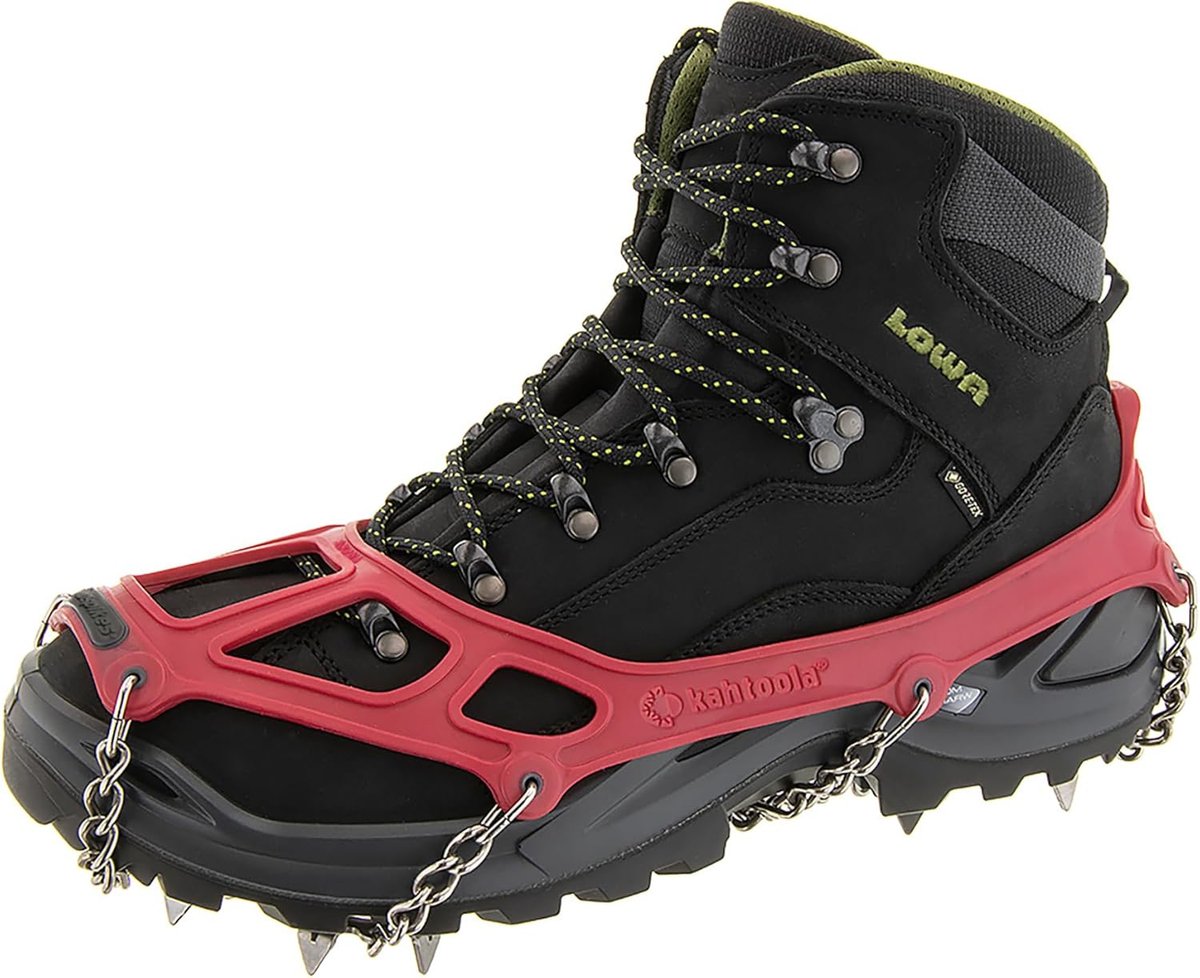
Here's the one that looks like an odd gift choice until you've seen them in action.
MICROspikes are traction devices — a stretchy elastomer harness with stainless steel chains and 12 spikes per foot, which pull on over regular walking boots in about 30 seconds. On frozen paths, hard-packed snow, icy boardwalks, or that particular kind of glazed wet rock that feels like walking on glass — they turn borderline impassable into completely manageable.
The harness stays flexible at temperatures down to -30°C. The stainless steel hardware won't rust. The whole thing packs into a small drawstring bag, weighs 500g for the pair, and sits in the bottom of a pack until the moment it matters.
Most UK hikers don't own a pair of MICROspikes. Most UK hikers who've used a pair now own a pair. They solve a problem most people had quietly accepted as unsolvable — either you cancel the walk when the ground freezes, or you slide around and pretend that's fine. These are the third option.
Very good gift for a dad who walks through winter. Particularly useful in the Lake District, Snowdonia, the Brecon Beacons, or anywhere that gets a hard frost.
Sizing: S fits UK shoe size 3–6, M fits 6–9, L fits 9–12, XL fits 12+. When between sizes, go larger.
8. Headlamp — £45 to £85
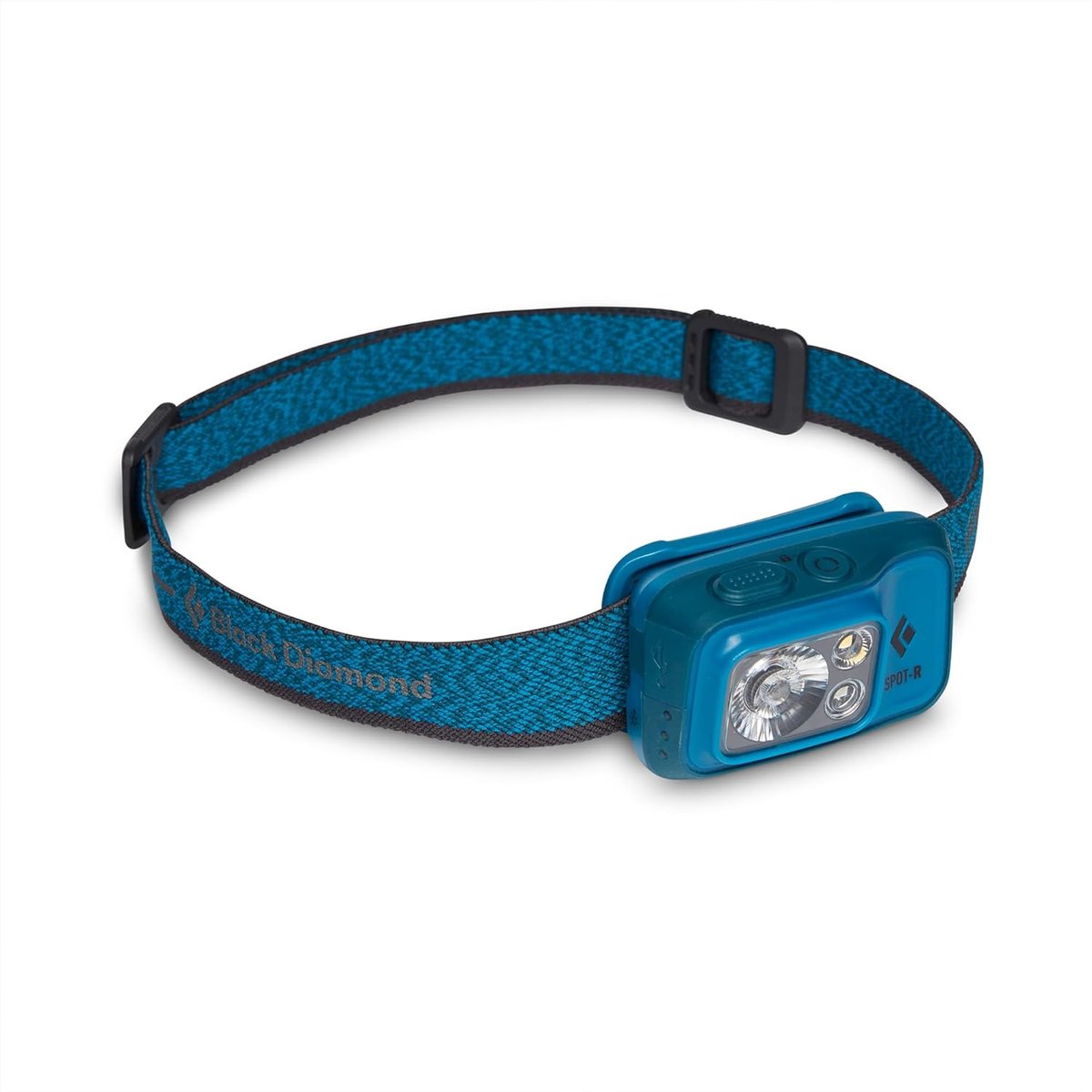
A headlamp. Not a disappointing headlamp.
Black Diamond Spot 400-R — ~£45
400 lumens at full output. 40 hours at minimum output. A brightness dial rather than a cycle of modes. Red light for night vision. Waterproofed to IPX8. Rechargeable via USB-C, with AAA battery backup for longer trips. At 96g it disappears on your head. This is the headlamp that covers every situation a UK day hiker will encounter and costs less than a round of drinks. It'll last ten years if treated reasonably.
Petzl NAO RL — ~£85
The one I use personally. The NAO RL takes the headlamp concept further — reactive lighting that automatically adjusts beam intensity based on ambient light and what you're looking at, preserving battery on easier terrain and ramping up when you need it. 1500 lumens at maximum output. Rechargeable via USB-C with a substantial built-in battery. The reactive mode is genuinely clever and extends runtime significantly over fixed-output headlamps.
It costs more and is a meaningful step up in technology. If the budget stretches and your dad does a lot of pre-dawn starts, night walking, or multi-day routes — the NAO RL is the version worth having. It's covered in full in our best hiking gadgets guide.
Buy the Petzl NAO RL on Amazon9. Katadyn BeFree 1L — ~£45
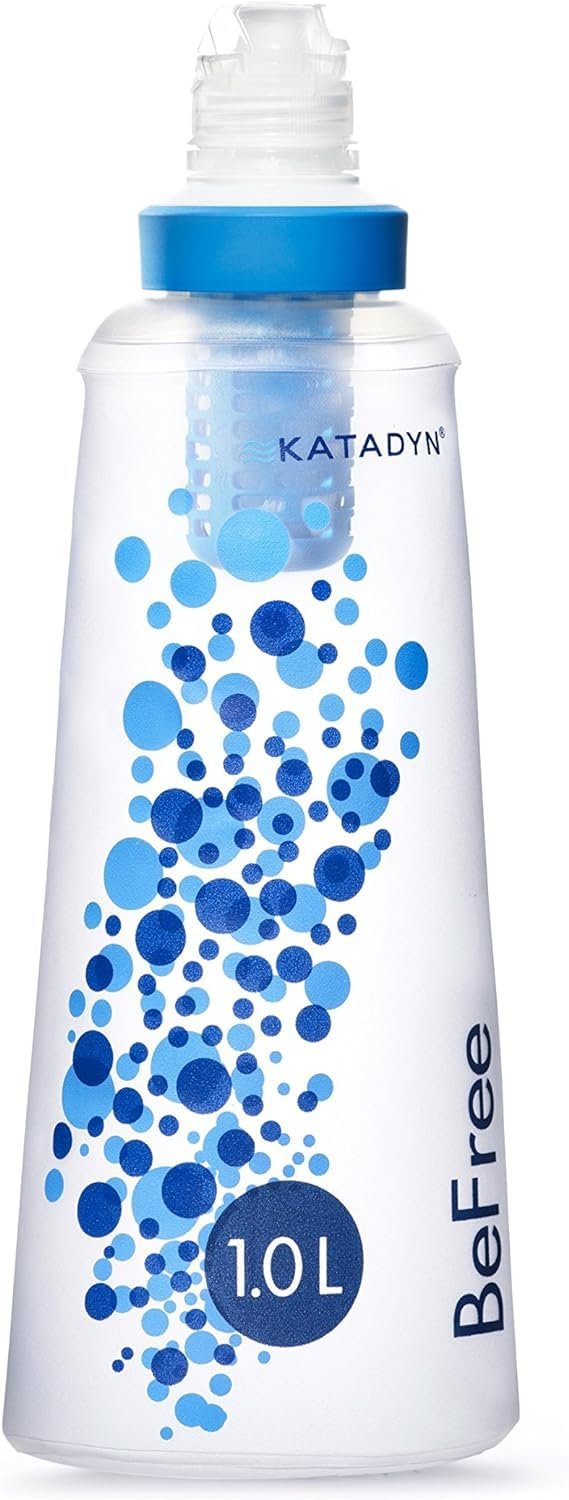
A squeeze water filter. Fill the soft bottle from a stream, river, lake or puddle of debatable provenance, and drink directly through the filter cap. No pumping, no chemical tablets, no waiting. Squeeze and drink. The whole process takes about ten seconds.
The hollow fibre membrane filters to 0.1 microns, removing bacteria and protozoa — the organisms that cause the significant waterborne illnesses on UK and European trails. Filter life is rated to 1,000 litres. The membrane cleans itself by swirling water inside the bottle, which takes five seconds and extends its life indefinitely in normal use.
For UK day hiking it's a niche pick — you're rarely more than a few miles from somewhere to fill a bottle. Where it earns its keep is on multi-day routes, wild camping, long ridge walks, or any international trip where tap water isn't reliable. It also provides a backstop for situations you didn't plan for — an extended day, getting lost, bad weather.
The BeFree lives in the pack permanently for many serious hikers. Light enough to forget it's there, useful enough to matter when conditions change.
10. Lifesystems First Aid Kit — ~£32
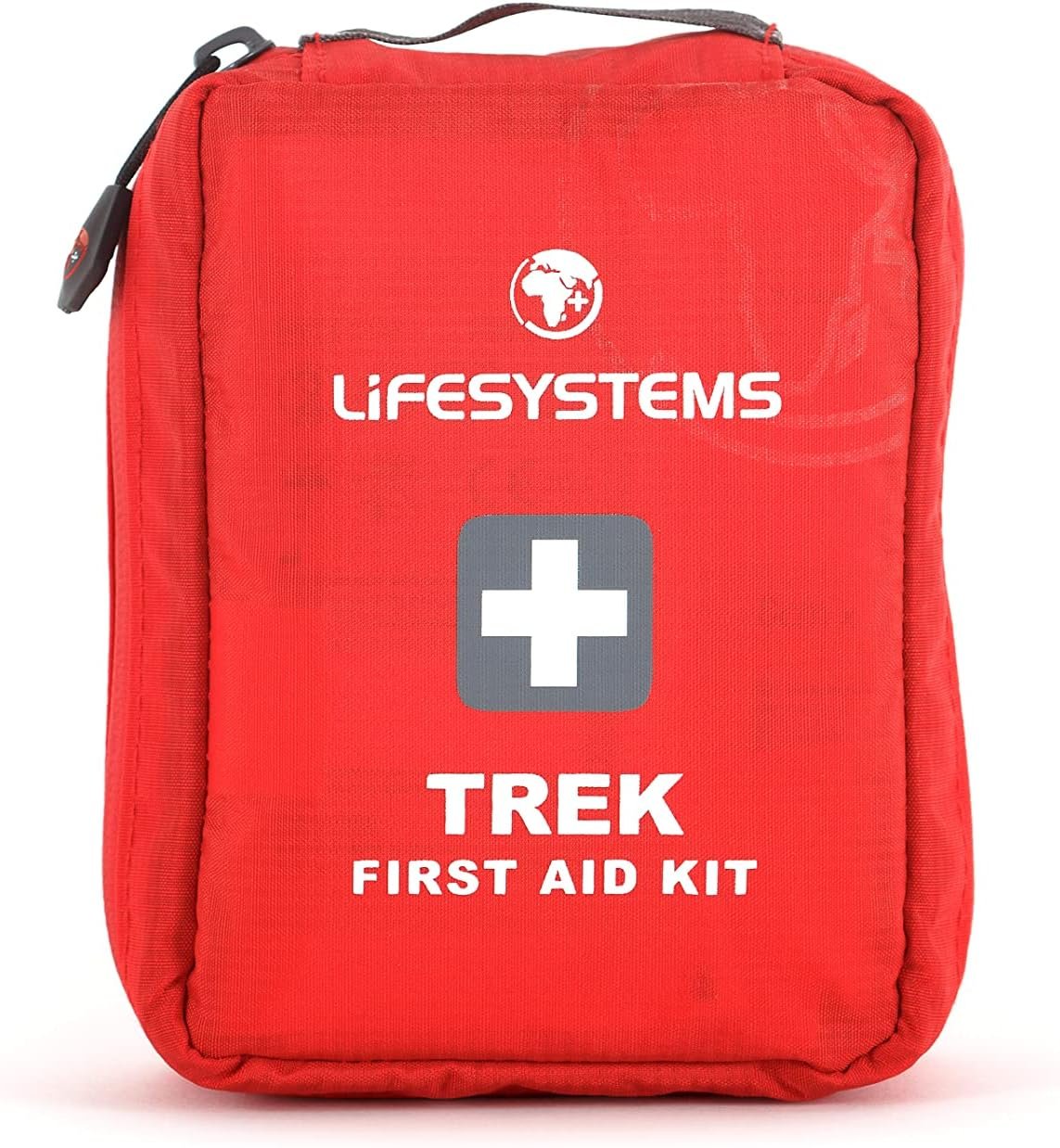
An obvious choice done properly.
Most hikers carry a first aid kit of some description. Many of them are a collection of old plasters, one antiseptic wipe, and whatever fell to the bottom of the bag sometime around 2019.
Lifesystems Mountain First Aid Kit — ~£32
The full version designed for serious outdoor use. CE-certified contents: wound closures, blister treatment, a SAM splint for limb injuries, a foil emergency blanket, burn gel, triangular bandage, irrigation syringe, safety pins, and a comprehensive first aid guide. Comes in a tough water-resistant case with a clear internal layout so you can locate what you need under stress rather than tipping everything out on the ground.
Lifesystems Pocket First Aid Kit — ~£18
For a dad who already has a full kit but needs a lighter, more packable version for shorter day walks — the Pocket version covers the essentials in a much smaller package. CE certified, designed for outdoor use, and fits easily in a hip belt pocket. A thoughtful addition rather than a replacement.
Buy Lifesystems Pocket First Aid Kit on AmazonA quick note on sizing and subscription
Trekking poles — the Black Diamond Distance Z is fixed length, not adjustable. Available in 110cm, 120cm, 125cm and 130cm. Hold the pole with the tip on the ground — elbow should be at roughly 90 degrees. When between sizes, go longer.
Jacket — the Patagonia Nano Puff runs true to size. When in doubt, size up — it layers, so a slightly roomier fit is better than one that's tight over a base layer.
MICROspikes — S fits UK shoe size 3–6, M fits 6–9, L fits 9–12, XL fits 12+. When between sizes, go larger.
Garmin inReach Mini 2 — requires an active Garmin subscription plan to use satellite messaging and SOS features. Plans from ~£12/month. Worth activating a 12-month plan as part of the gift.